 ワークシート
 ぬりえ
 迷路
この絵のために、アカデミーは新しいジャンルを作った!The Academy created a new category for this picture!
この作品のお話
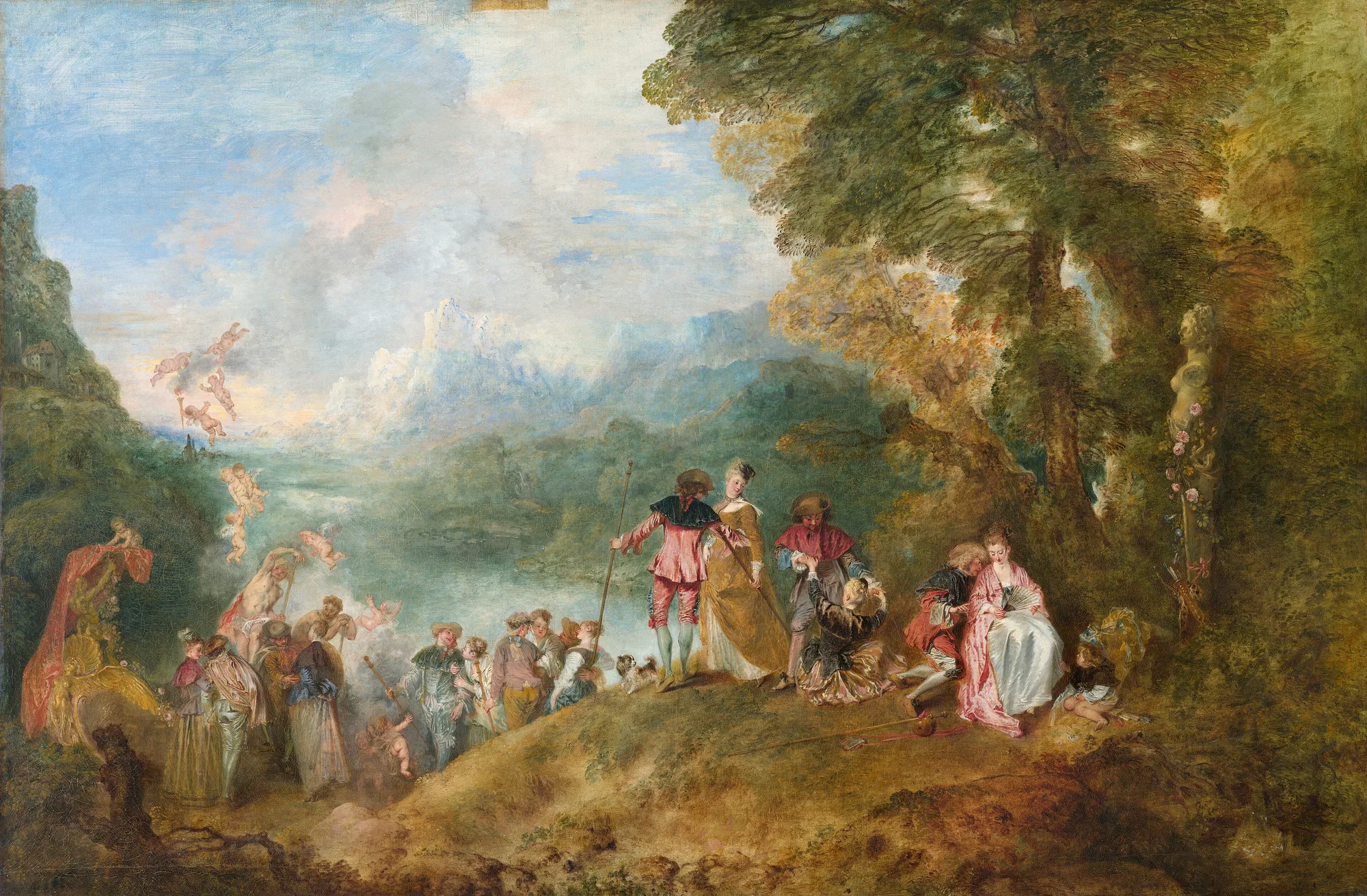
Storyギリシャ神話の愛の女神ヴィーナスの島、シテール島を思わせる場所で、着かざった男女が恋の巡礼を楽しむ様子を描いた絵です(島に着いたところか、帰るところかは意見が分かれます)。右のヴィーナス像のそばから、カップルたちが左の金色の船へと丘を下っていきます。空ではキューピッドたちがくるくると舞い、遠くの山々はやわらかな霧につつまれています。夢の中のような景色です。
This dreamlike painting evokes Cythera, the island of Venus, the Greek goddess of love. Elegant couples enjoy a pilgrimage of love, but experts still debate whether they are arriving or leaving. From the statue of Venus on the right, they walk down the hill to a golden boat on the left. Cupids fly in circles in the sky, and the far mountains are wrapped in soft mist. It looks like a dream.
ヴァトーはフランスの王立絵画彫刻アカデミーへの入会を認められたものの、正式な会員になるための作品を何年も提出せず、何度も催促されました。1717年、ようやく出したのがこの絵です。神話の物語画とも、ふつうの暮らしの絵ともちがうこの作品のために、アカデミーは「雅宴画(フェット・ギャラント)」という新しいジャンルを作りました。
Watteau was accepted by the French Royal Academy of Painting and Sculpture. But for years, he did not hand in the painting needed to become a full member, and the Academy kept reminding him. Finally, in 1717, he presented this work. It was neither a history painting nor a scene of daily life, so the Academy created a new category for it: the fête galante, or "elegant party."
その後、ヴァトーをまねた雅宴画は大流行し、18世紀フランスの華やかなロココ美術の始まりとなりました。ヴァトーはこの絵のもう一つの版も描き、それは今ベルリンのシャルロッテンブルク宮殿にあります。しかし彼は病のため、わずか36歳で亡くなりました。ルーヴルのこの絵は、フランス革命後の1795年に美術館に入りました。
After that, fêtes galantes became very fashionable and opened the way for French Rococo art in the 18th century. Watteau also painted a second version, which is now in Charlottenburg Palace in Berlin. But he died of illness at only 36. The Louvre's painting entered the museum in 1795, after the French Revolution.
男の人と女の人が、二人ずつ丘を下っていきます。金色の船へ向かっているのです。小さなキューピッドたちが空を飛んでいます。ここは恋の島のようです。この絵をきっかけに、新しい種類の絵が広まりました!
Men and women walk down a hill in pairs. They are going to a golden boat. Little cupids fly in the sky. The place looks like the island of love. This picture made a new kind of painting popular!
英語のレベルは上の「やさしい/ふつう」で切りかえられます。
えっ!?な裏ネタ
Secrets題名は「シテール島への船出」ですが、ヴィーナス像がすでにそばにあることから、人々は島に着いたあとで、これから帰るところではないかと考える美術史家もいます。ヴァトー自身は答えを残していません。楽しい時間が終わる名残おしさが、絵にただよっているようにも見えます。
The title says they are leaving for Cythera. But the statue of Venus is already here, so some art historians think the couples are on the island and are now going home. Watteau never explained. The picture seems to hold the sadness of a happy time coming to an end.
18世紀の終わり、華やかなロココは古くさいと思われるようになりました。ルーヴルでは、絵を学ぶ学生たちがこの絵に丸めたパンをぶつけていたという話が伝わっています。守るために、一時は倉庫にしまわれたほどでした。
By the end of the 18th century, Rococo art seemed old-fashioned. According to one account, drawing students at the Louvre threw little balls of bread at this painting. For a while, it was even put away in storage to protect it.
シテール島をテーマにしたヴァトーの絵は3枚あります。1710年ごろのシンプルな初期版がフランクフルトのシュテーデル美術館、このルーヴル版、そして1718〜1719年ごろのベルリン版。見くらべると、同じテーマがどんどん豪華になっていくのがわかります。
Watteau painted Cythera three times. A simpler early version from about 1710 is in the Städel Museum in Frankfurt. Then came this Louvre version, and a Berlin version from about 1718–1719. If you compare them, you can see the theme getting richer each time.
フランスの作曲家ドビュッシーが1904年に作ったピアノ曲『喜びの島』は、この絵から着想を得たのではないかと言われています。絵の中のきらめく空気が、音楽になって響いているのかもしれません。
The French composer Debussy wrote a piano piece called "L'isle joyeuse" (The Island of Joy) in 1904. It may have been inspired by this painting. Perhaps the shining air of the picture became music.
ここを見て!
Look Closer1ヴィーナス像Statue of Venus
バラの花に飾られた愛の女神の像。ここが恋の島であることを示しています。
A statue of the goddess of love, decorated with roses. It tells us this is the island of love.
2舞うキューピッドFlying cupids
空中でくるくると輪になって舞うキューピッドたち。船出を祝っているようです。
Cupids fly in circles in the air. They seem to celebrate the voyage.
3金色の船Golden boat
赤い布を張った、金色にかがやく船が岸辺で待っています。
A shining golden boat with a red cloth waits near the shore.
4語りあうカップルA couple talking
扇を持つ女性に、男性がやさしく語りかけています。まだ帰りたくないのかもしれません。
A man speaks gently to a woman holding a fan. Maybe she doesn't want to leave yet.
英語で名画を語ろう
Talk about Art in EnglishThe couples are on the way to the golden boat.
カップルたちは、金色の船へ向かう途中です。
💡 on the way to school(学校へ行く途中)のように、移動の途中を表します。
英語で説明すると… Describe it
これは夢のような屋外の場面です。右側には、高い木の下に像があります。まん中では、すてきな服のカップルたちが丘を下っています。左側には金色の船があり、空では小さなキューピッドたちが飛んでいます。
This is a dreamy outdoor scene. On the right, there is a statue under tall trees. In the middle, couples in fine clothes are walking down a hill. On the left, there is a golden boat, and little cupids are flying in the sky.
考えてみよう Think & Talk
- 人々は島に着いたところだと思いますか?それとも帰るところ?それはなぜですか?Do you think the people are arriving or leaving? Why?
- ヴァトーはなぜ、遠くの山々をこんなにやわらかくかすませて描いたのでしょう?Why do you think Watteau painted the faraway mountains so soft and misty?
この作品の英単語
WordsCythera is the island of Venus.
シテール島はヴィーナスの島です。
The couples wear elegant clothes.
カップルたちは優雅な服を着ています。
Are they arriving or leaving?
彼らは着いたところ?それとも出発するところ?
Venus is the goddess of love.
ヴィーナスは愛の女神です。
ミニクイズ
QuizQ. アカデミーがこの絵のために作った新しいジャンルは?What new category did the Academy create for this painting?
着かざった男女が野外で楽しむ絵として、「雅宴画」という新ジャンルが生まれました。
The fête galante, showing elegant people enjoying themselves outdoors, became a new category.
ウソ?ホント? ヴァトーは、アカデミーに入るための作品をすぐに提出した。Watteau handed in his painting to the Academy right away.
何年も提出せず、何度も催促されてから、1717年にやっと出しました。
He waited for years and was reminded many times before he finally presented it in 1717.
ウソ?ホント? この絵には、ヴィーナスの像が描かれている。There is a statue of Venus in this painting.
右側の木の下に、バラで飾られたヴィーナス像があります。
A statue of Venus decorated with roses stands under the trees on the right.
 画像の出典とライセンス / Image credit
- PDL'Embarquement pour Cythère, by Antoine Watteau, from C2RMF retouched.jpg(Wikimedia Commons)
ライセンス:Public domain(パブリックドメイン)/作者・撮影者の表記:Jean-Antoine Watteau/提供元:Retouched from File:L'Embarquement pour Cythere, by Antoine Watteau, from C2RMF.jpg, originally C2RMF: Galerie de tableaux en très haute définition: image page
この作品は、作者の死後長い年月がたち著作権の保護期間が終わった「パブリックドメイン」の作品です。画像は平面の作品を忠実に写したもので、新しい著作権は生じません(Wikimedia Commons の PD-Art の考え方)。 所蔵:ルーヴル美術館(Musée du Louvre)。画像は表示のために縮小・WebP 形式に変換しています。