

 ワークシート
 ぬりえ
 迷路
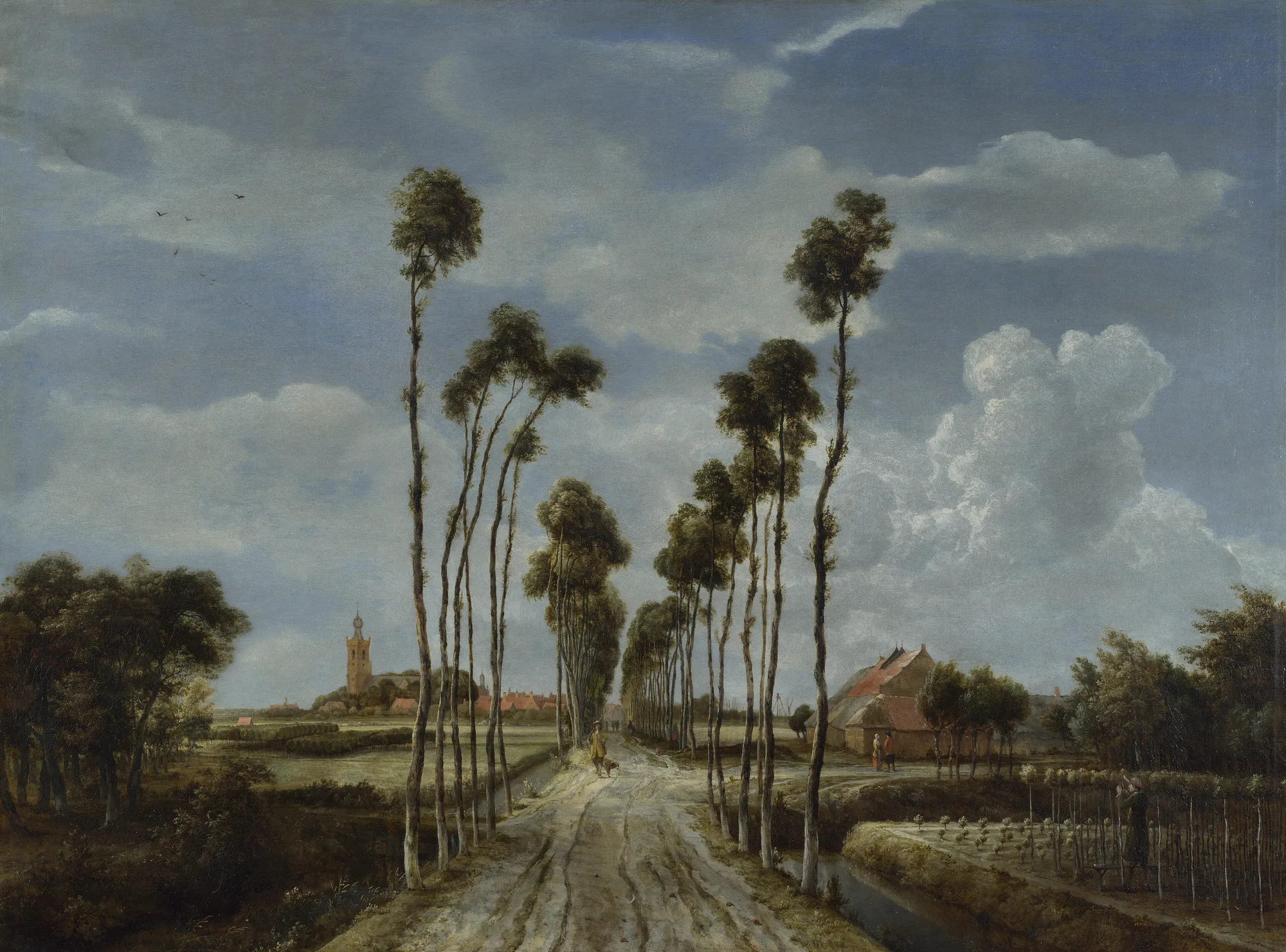
道がど真ん中に!大胆な構図で知られる並木道。A road straight down the middle! An avenue famous for its bold design.
この作品のお話
Storyオランダ南西部の村ミッデルハルニスへ続く並木道を描いた風景画です。道は画面のまん中をまっすぐ奥へのび、両側にはひょろりと背の高い木が並びます。道の先には犬を連れた猟師、右の畑では苗木の手入れをする人がいます。左奥には村の教会の塔。大きな空と平らな土地が、いかにもオランダらしい景色です。
This landscape shows the avenue leading to the village of Middelharnis in the southwest of the Netherlands. The road runs straight into the distance in the middle of the picture. Tall, thin trees line both sides. A hunter walks along the road with his dog. On the right, a man is caring for young trees. On the left, you can see the village church tower. The huge sky and flat land are typically Dutch.
ホッベマは風景画家ライスダールの弟子で、森や水車の絵で知られていました。ところが1668年に結婚すると、アムステルダム市の税のために、輸入ワインの量を測る役人の仕事につき、絵を描く量はぐっと減りました。この絵はその約20年後、1689年に描かれた作品です。道の両側の木は、1664年に植えられたことが記録されています。
Hobbema was a pupil of the landscape painter Jacob van Ruisdael. He was known for pictures of woods and watermills. But after he married in 1668, he took a job in Amsterdam measuring imported wine for the city's taxes. After that, he painted much less. This picture was made about twenty years later, in 1689. Records show that the trees along the road were planted in 1664.
ホッベマのほかの風景画では、曲がる道や池、木々のすき間を使って奥行きを表すことが多くありました。この絵のように道を画面のどまん中に置き、ほぼ左右対称にしたのは大胆なアイデアです。猟師の頭は、線が集まる「消失点」とちょうど同じ高さにあります。1871年にロンドンのナショナル・ギャラリーが買い入れ、今では遠近法の例としてもよく紹介されます。
In many of Hobbema's other landscapes, a winding road, a pond or a gap in the trees leads the eye into the distance. Putting the road right in the center, almost symmetrical, was a bold idea. The hunter's head is at the level of the vanishing point, where all the lines meet. The National Gallery in London bought the painting in 1871. Today it is often shown as an example of perspective.
長い道が、まっすぐ遠くへのびています。両側には、とても背の高い木が立っています。男の人が犬と歩いています。X線で調べると、絵の具の下にもう2本の木が見つかりました!画家が塗って消したのです。
A long road goes straight into the distance. Very tall trees stand on both sides. A man walks with his dog. An X-ray found two more trees under the paint! The painter covered them up.
英語のレベルは上の「やさしい/ふつう」で切りかえられます。
えっ!?な裏ネタ
Secrets1980年のX線調査で、ホッベマがはじめは手前にもう2本の木を描き、あとで塗りつぶしていたことがわかりました。木を減らしたことで、道が奥へ吸いこまれていく勢いがいっそう強まったと考えられています。
An X-ray study in 1980 showed that Hobbema first painted two more trees in the foreground and then painted over them. Removing them made the road seem to rush into the distance even more strongly.
サインと年は、右の水路の水面に映るように「M:hobbema/f 1689」と書かれています。かつては、ホッベマは1680年代には絵をやめていたと考えられ、年は「1669」と読まれていました。洗浄と、並木を植えた年の記録から、1689年と確かめられたのです。
The signature and date are painted in the reflection in the ditch on the right: "M:hobbema/f 1689." People once thought he had stopped painting before the 1680s, so they read the date as 1669. Cleaning and records of when the trees were planted confirmed 1689.
1972年の調査で、空の一部から、1680年代にはまだ発明されていなかった合成の青や黄色の絵の具が見つかりました。19世紀に大きく描き直されていたのです。その後の修復で、後から足された絵の具の多くが取りのぞかれました。
A 1972 study found synthetic blue and yellow paints in the sky. These paints did not exist in the 1680s. The sky had been heavily repainted in the 19th century. Later restorations removed much of the added paint.
左奥の教会の塔のとがった屋根は、1811年、フランス軍が信号を送る「腕木通信」の基地を作るために取りはずしてしまいました。絵の中には、今はもう見られない村の姿が残っているのです。
In 1811, French soldiers removed the spire of the church on the left to build a semaphore station for sending signals. The painting keeps a view of the village that no longer exists.
ここを見て!
Look Closer1犬を連れた猟師Hunter with a dog
銃をかついだ猟師と犬。頭の高さが、ちょうど消失点と同じです。
A hunter with a gun and his dog. His head is at the same height as the vanishing point.
2教会の塔Church tower
村の教会の塔。とがった屋根は1811年に取りはずされました。
The village church tower. Its spire was removed in 1811.
3苗木の手入れCaring for young trees
右の苗木畑で、若い木の手入れをする人。村の暮らしの一場面です。
A man takes care of young trees in the nursery on the right. It is a scene from village life.
4ひょろ長い並木Tall, thin trees
下の枝を切り落とされた、背の高い木。空と地面を一つにつなげています。
Tall trees with their lower branches cut off. They join the sky and the land together.
英語で名画を語ろう
Talk about Art in EnglishAll the lines of the road meet at the vanishing point.
道の線はすべて消失点に集まります。
💡 遠近法で、平行な線が遠くで一点に集まる所。in the distance(遠くに)と一緒に使えます。
英語で説明すると… Describe it
まん中に、長くてまっすぐな道があります。その両側には、背が高く細い木が立っています。遠くでは、男性が犬と歩いています。左側には教会の塔が見え、雲のうかぶ大きな青空が広がっています。
In the middle, there is a long, straight road. Tall, thin trees stand on both sides of it. In the distance, a man is walking with his dog. On the left, you can see a church tower, and there is a big blue sky with clouds.
考えてみよう Think & Talk
- まっすぐな道を見ていると、どんな気持ちになりますか?How does the straight road make you feel when you look at it?
- この道を歩いていけたら、その先には何があると思いますか?If you could walk down this road, what would you find at the end?
この作品の英単語
WordsTall trees line the avenue.
背の高い木が並木道に並んでいます。
The road is long and straight.
その道は長くてまっすぐです。
The village council planted the trees in 1664.
村の議会が1664年にその木を植えました。
The road disappears into the distance.
道は遠くへ消えていきます。
ミニクイズ
QuizQ. ホッベマが1668年からついた仕事は?What job did Hobbema take in 1668?
アムステルダム市の税のために、輸入ワインの量を測る仕事をしました。そのあと絵の数はぐっと減りました。
He measured imported wine for Amsterdam's taxes. After that, he painted much less.
ウソ?ホント? X線調査で、塗りつぶされた木が見つかった。An X-ray study found trees that had been painted over.
手前にあった2本の木を、ホッベマ自身が消していました。
Hobbema himself painted over two trees in the foreground.
ウソ?ホント? この絵の道は、画面の右へ大きく曲がっている。The road in this painting curves sharply to the right.
道は画面のまん中をまっすぐ奥へのびています。
The road runs straight into the distance in the center.
 画像の出典とライセンス / Image credit
- PDMeindert Hobbema 001.jpg(Wikimedia Commons)
ライセンス:Public domain(パブリックドメイン)/作者・撮影者の表記:Meindert Hobbema/提供元:[1]
この作品は、作者の死後長い年月がたち著作権の保護期間が終わった「パブリックドメイン」の作品です。画像は平面の作品を忠実に写したもので、新しい著作権は生じません(Wikimedia Commons の PD-Art の考え方)。 所蔵:ナショナル・ギャラリー(ロンドン)(The National Gallery, London)。画像は表示のために縮小・WebP 形式に変換しています。
