 ワークシート
 ぬりえ
 迷路
顔の見えない2人の労働者。この絵はもうこの世にない!?Two workers with hidden faces. This painting no longer exists!?
 美術館アンテナ:ギュスターヴ・クールベの作品に会える展覧会
全国の展覧会をさがす →この作品のお話
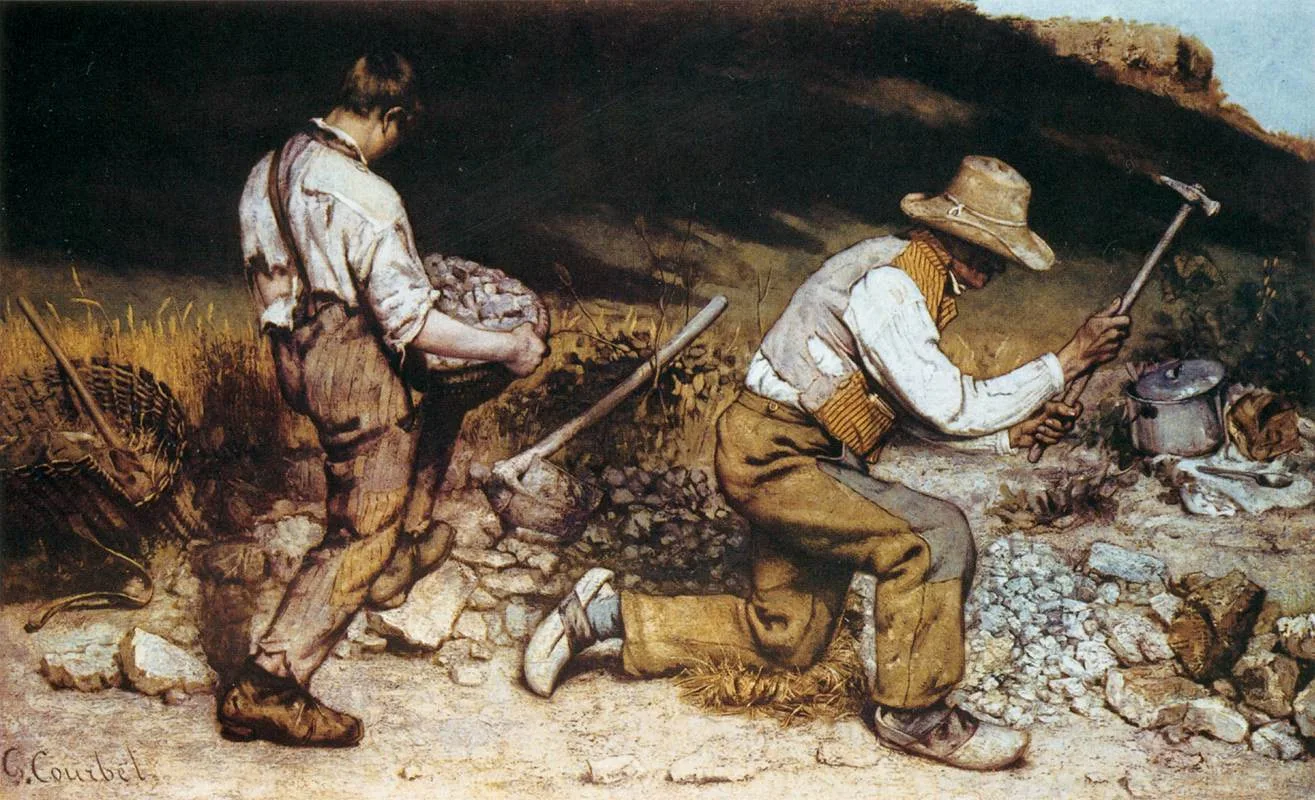
Story道ばたで、老人がハンマーをふり上げて石を割り、若者が重い石のかごを運んでいます。2人とも顔はほとんど見えません。描いたのはクールベ。神話や英雄ではなく、目の前の現実をありのままに描く「写実主義(リアリズム)」を代表する作品のひとつとなりました。
By the side of a road, an old man raises his hammer to break stones, and a young man carries a heavy basket of rocks. We can hardly see their faces. Gustave Courbet painted it. It became a landmark of Realism, which showed real life as it is, not myths or heroes.
1849年、クールベは故郷オルナンの近くで、道路工事のために石を割る2人を見かけ、アトリエに来てもらって描きました。手紙には「一人は70歳の老人、もう一人は若者」と書いています。破れたシャツや穴のあいた靴下まで、貧しさをそのまま大きな画面に描きました。
In 1849, near his hometown of Ornans, Courbet saw two men breaking stones for road work. He asked them to come to his studio and pose. In a letter, he described one as an old man of seventy and the other as a young man. He painted every detail of their poverty, even the torn shirt and the socks with holes.
1850年のサロンでは「こんな身分の低い題材は芸術にふさわしくない」と批判されましたが、思想家プルードンは傑作とたたえました。のちにドレスデンの美術館に入りましたが、1945年の第二次世界大戦中に失われたとされます。今は写真や関連する習作などがその姿を伝え、スイスには小さな別バージョンも残っています。
At the Salon of 1850, critics said such a low subject did not belong in art. But the thinker Proudhon praised it as a masterpiece. Later it went to a museum in Dresden, but it is believed to have been lost in 1945, during the Second World War. Today, photographs and related studies preserve its appearance, and a smaller version survives in Switzerland.
2人の男の人が道ばたで働いています。老人はハンマーで石を割っています。若者は重いかごを運んでいます。2人の顔は見えません。残念なことに、この絵は戦争で失われてしまいました。
Two men work by a road. An old man breaks stones with a hammer. A young man carries a heavy basket. We cannot see their faces. Sadly, this painting was lost in a war.
英語のレベルは上の「やさしい/ふつう」で切りかえられます。
えっ!?な裏ネタ
Secrets1945年2月、ドレスデンの空襲のとき、美術品を避難させていたトラックが爆撃され、この絵とほかの153点の絵が失われたと言われています。ただし、それより前から行方不明だったという研究者の説もあります。
It is said that in February 1945, during the bombing of Dresden, a truck carrying artworks to safety was hit, and this painting was lost with 153 others. But one researcher believes it had already been missing since 1944.
クールベは同じ題材の小さな絵をもう1枚描いていて、こちらは左右が反対になっています。スイスのヴィンタートゥールにある美術館に残り、失われた名画の姿を今に伝えています。
Courbet painted a smaller second version, with left and right reversed. It survives in a museum in Winterthur, Switzerland, and helps us imagine the lost painting.
老人は帽子で、若者は後ろ向きで、顔が見えません。そのため2人は特定のだれかではなく、きびしい労働をするすべての人の姿に見えてきます。このことが、絵の力をいっそう強くしました。
The old man's face is hidden by his hat, and the young man has his back to us. So they are not special people. They can seem to stand for everyone who does hard physical work. This makes the painting even stronger.
クールベは「写実主義」のリーダーと呼ばれましたが、本人は「写実主義者という肩書きは押しつけられたものだ」と言っています。彼が大事にしたのは、自分の目で見たものを描くことでした。
Courbet is called the leader of Realism, but he said the title 'Realist' was pushed on him. What mattered to him was painting what he saw with his own eyes.
ここを見て!
Look Closer1ハンマーをふる老人The old man with a hammer
麦わら帽子の老人がひざをつき、ハンマーで石を割っています。顔は帽子のかげです。
An old man in a straw hat kneels and breaks stones with a hammer. His face is in the shadow of his hat.
2石を運ぶ若者The young man carrying stones
後ろ向きで、重い石のかごを運ぶ若者。破れたシャツが見えます。
A young man with his back to us carries a heavy basket of stones. His shirt is torn.
3なべとパンA pot and bread
右はしには、2人のお昼ごはんらしいなべとパン。質素な暮らしがうかがえます。
On the right, there is a pot and some bread, maybe their lunch. It shows their simple life.
英語で名画を語ろう
Talk about Art in EnglishWe see the young man from behind, so we cannot see his face.
若者は後ろ姿なので、顔は見えません。
💡 後ろ姿は from behind、横顔は in profile。人物の向きを説明するときに使い分けよう。
英語で説明すると… Describe it
これは道ばたの2人の労働者を描いた絵です。左では、若者が石のかごを運んでいます。右では、老人がひざをついています。ハンマーで石を割っています。
This painting shows two workers by a road. On the left, a young man is carrying a basket of stones. On the right, an old man is kneeling. He is breaking stones with a hammer.
考えてみよう Think & Talk
- クールベはなぜ2人の顔を見せなかったのだと思いますか?Why do you think Courbet did not show their faces?
- 毎日の仕事は、すばらしい芸術の題材になると思いますか?なぜ?Should everyday work be a subject for great art? Why?
この作品の英単語
WordsThe painting shows hard labor.
この絵はつらい労働を描いています。
The old man breaks stones with a hammer.
老人はハンマーで石を割っています。
The young man wears a torn shirt.
若者は破れたシャツを着ています。
The painting was probably destroyed in 1945.
その絵は1945年に破壊されたと考えられています。
ミニクイズ
QuizQ. この絵は今どうなっている?What happened to this painting?
1945年、第二次世界大戦中のドレスデンで失われたとされます。
It is believed to have been lost in Dresden in 1945, during the Second World War.
ウソ?ホント? クールベは実際に道で働く人をモデルにした。Courbet used real road workers as models.
道で見かけた2人に、アトリエでポーズをとってもらいました。
He saw two men on the road and asked them to pose in his studio.
ウソ?ホント? 絵の中の2人は、こちらを向いてほほえんでいる。The two men are smiling at us.
2人とも顔はほとんど見えず、黙々と働いています。
We can hardly see their faces. They are working in silence.
 画像の出典とライセンス / Image credit
- PDGustave Courbet - The Stonebreakers - WGA05457.jpg(Wikimedia Commons)
ライセンス:Public domain(パブリックドメイン)/作者・撮影者の表記:Gustave Courbet/提供元:Web Gallery of Art: Image Info about artworkwga QS:P11807,"c/courbet/1/courb103"
この作品は、作者の死後長い年月がたち著作権の保護期間が終わった「パブリックドメイン」の作品です。画像は平面の作品を忠実に写したもので、新しい著作権は生じません(Wikimedia Commons の PD-Art の考え方)。 所蔵:第二次世界大戦中に失われた(旧ドレスデン国立美術館蔵)(Lost in World War II (formerly in the Dresden State Art Collections))。画像は表示のために縮小・WebP 形式に変換しています。