 ワークシート
 ぬりえ
 迷路
幅6メートル超!ふつうの村人のお葬式を、歴史画サイズで描いて大炎上。Over six meters wide! A village funeral painted like a great history picture.
 美術館アンテナ:ギュスターヴ・クールベの作品に会える展覧会
全国の展覧会をさがす →この作品のお話
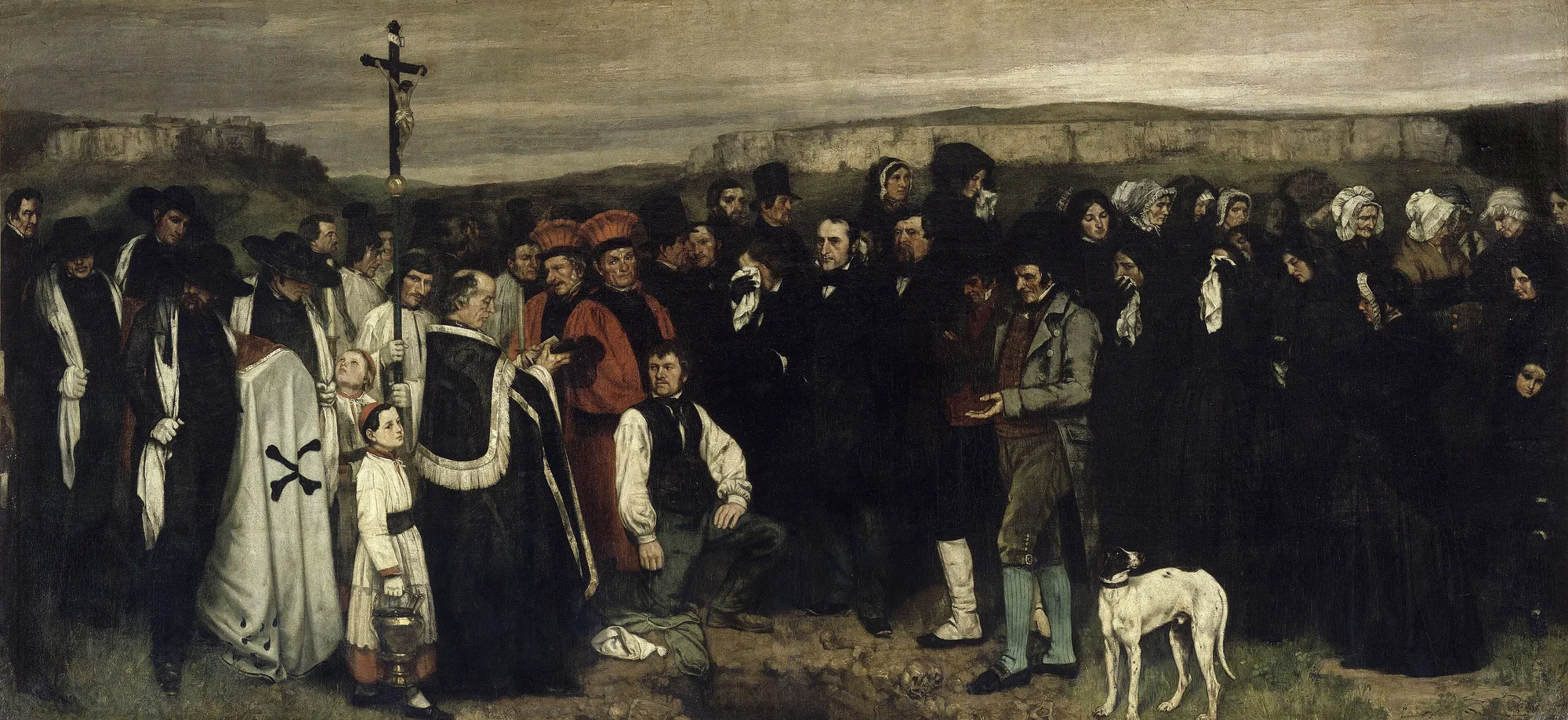
Storyフランスの小さな町オルナンの墓地で、お葬式が行われています。神父、十字架を持つ人、喪服の女性たち、そして手前には掘られたばかりの墓穴。幅6メートルをこえる画面に、ほぼ等身大の人々が横一列に並びます。描いたのは、オルナン出身のクールベ。30歳ごろの作品です。
A funeral is taking place in the cemetery of Ornans, a small town in France. There is a priest, a man holding a cross, women in black, and a freshly dug grave in front. On a canvas more than six meters wide, nearly life-size people stand in a long row. Courbet, who was from Ornans, painted it when he was about thirty.
モデルになったのは、町長や神父、墓掘り人など、実際のオルナンの人々でした。クールベは一人ずつアトリエに呼んで描いたと言われます。それまで、こんな大きな画面は神話や歴史の英雄のために使うものでした。名もない村人のふつうのお葬式を同じ大きさで描いたことが、大きな事件だったのです。
The models were real people of Ornans, such as the mayor, the priest and the gravedigger. Courbet is said to have painted them one by one. Until then, such large canvases were used for myths and historical heroes. Painting an ordinary village funeral at that size was shocking.
1850〜51年のサロンでは「醜い」「下品だ」と批判されて大きな論争になり、クールベの名はさらに広まりました。1855年のパリ万博で出品を断られると、自分で会場のそばに小屋を建てて個展を開きます。絵は1881年に画家の妹ジュリエットからルーヴル美術館に寄贈され、今はオルセー美術館の顔のひとつです。
At the Salon of 1850–51, critics called it ugly and vulgar. The debate made Courbet even better known. When the 1855 World's Fair in Paris refused it, he built his own pavilion nearby and held a solo show. In 1881, his sister Juliette gave the painting to the Louvre. Today it is one of the stars of the Musée d'Orsay.
この絵はとても大きいです。幅は6メートル以上もあります!小さな町の人々がお葬式に集まっています。みんな画家の町に本当にいた人たちです。白い犬を見つけられますか?
This painting is very big. It is more than six meters wide! People in a small town are at a funeral. They are real people from the painter's town. Can you find the white dog?
英語のレベルは上の「やさしい/ふつう」で切りかえられます。
えっ!?な裏ネタ
Secrets1855年のパリ万博で、この絵ともう1点の大作が断られると、クールベは会場のすぐそばに「写実主義館」という自分専用の展示小屋を建てました。画家の個展の先がけとも言われる、大胆な行動です。
When the 1855 World's Fair refused this painting and another big work, Courbet built his own 'Pavilion of Realism' right next to it. It is often called one of the first solo shows by an artist.
クールベは、この絵は本当は「ロマン主義の埋葬」だったと語ったと伝えられています。夢や空想の美しさを描く時代を終わらせ、現実を描く新しい時代を始めるという宣言だったのです。
Courbet is said to have called this painting 'the burial of Romanticism'. It was a declaration: the age of dreamy, imaginary art was over, and a new age of real life had begun.
画面の下の真ん中、墓穴のふちをよく見ると、ドクロと骨が転がっています。悲しいお葬式の中に、人はみな死ぬという事実がさりげなく置かれています。見のがしやすいので、本物の前ではぜひ探してみてください。
Look closely at the edge of the grave at the bottom center. There is a skull with some bones. In the middle of the sad funeral, it quietly reminds us that everyone will die. It is easy to miss, so look for it when you see the real painting.
白い犬のそばに立つ、古風な服の2人の老人は、1793年ごろのフランス革命の時代を生きた退役兵だと言われます。クールベの祖父の友人たちでした。村の歴史そのものが、この絵の中に立っているのです。
The two old men in old-fashioned clothes near the white dog are said to be veterans of the French Revolution of the 1790s. They were friends of Courbet's grandfather. The history of the village itself stands in this painting.
ここを見て!
Look Closer1十字架The crucifix
灰色の空に高く掲げられた十字架。行列の先頭です。
A crucifix held high against the grey sky. It leads the procession.
2墓掘り人The gravedigger
白いシャツで片ひざをつく墓掘り人。画面の真ん中で、静かに墓穴の前にいます。
The gravedigger in a white shirt kneels in the center, right by the grave.
3白い犬The white dog
お葬式なのに、のんびりよそ見をしている犬。実際の暮らしの一場面らしさを強めます。
At a funeral, this dog looks around calmly. It makes the scene feel like real life.
4喪服の女性たちWomen in black
白い頭巾と黒い服の女性たちが、ハンカチを顔に当てています。
Women in white caps and black clothes hold handkerchiefs to their faces.
英語で名画を語ろう
Talk about Art in EnglishThe people in this huge painting are almost life-size.
この大きな絵の人々は、ほぼ等身大です。
💡 実物と同じ大きさのこと。life-size statue(等身大の像)のように、名詞の前に置いて使います。
英語で説明すると… Describe it
これはお葬式を描いた、とても横長の絵です。たくさんの人が長い列になっています。ほとんどの人が黒い服を着ています。真ん中には墓穴があります。右には白い犬がいます。
This is a very wide painting of a funeral. There are many people in a long row. Most of them are wearing black. In the middle, there is an open grave. On the right, there is a white dog.
考えてみよう Think & Talk
- 人々はなぜこの絵に怒ったのだと思いますか?Why do you think people were angry about this painting?
- 絵の中で、いちばん悲しんでいるのはだれだと思いますか?Who do you think is the saddest person in the painting?
この作品の英単語
WordsThe whole town came to the funeral.
町じゅうの人がお葬式に来ました。
A grave is open at their feet.
彼らの足もとに墓穴が開いています。
The women mourn in black clothes.
女性たちは喪服を着て悲しんでいます。
Courbet painted ordinary people.
クールベはふつうの人々を描きました。
ミニクイズ
QuizQ. 1855年のパリ万博で出品を断られたクールベはどうした?What did Courbet do when the 1855 World's Fair refused his painting?
会場のそばに「写実主義館」を建て、自分の作品を展示しました。
He built the 'Pavilion of Realism' nearby and showed his own works.
ウソ?ホント? 絵のモデルは、実際のオルナンの町の人々だった。The models were real people from Ornans.
町長や神父、墓掘り人など、実在の人々が描かれています。
The mayor, the priest, the gravedigger and others were real people.
ウソ?ホント? この絵には有名な王様のお葬式が描かれている。This painting shows the funeral of a famous king.
描かれているのは、名もない村人のふつうのお葬式です。
It shows an ordinary funeral in a small town.
 画像の出典とライセンス / Image credit
- PDGustave Courbet - A Burial at Ornans - Google Art Project 2.jpg(Wikimedia Commons)
ライセンス:Public domain(パブリックドメイン)/作者・撮影者の表記:Gustave Courbet/提供元:Google Art Project: Home - pic Maximum resolution.
この作品は、作者の死後長い年月がたち著作権の保護期間が終わった「パブリックドメイン」の作品です。画像は平面の作品を忠実に写したもので、新しい著作権は生じません(Wikimedia Commons の PD-Art の考え方)。 所蔵:オルセー美術館(Musée d'Orsay)。画像は表示のために縮小・WebP 形式に変換しています。