

 ワークシート
 ぬりえ
 迷路
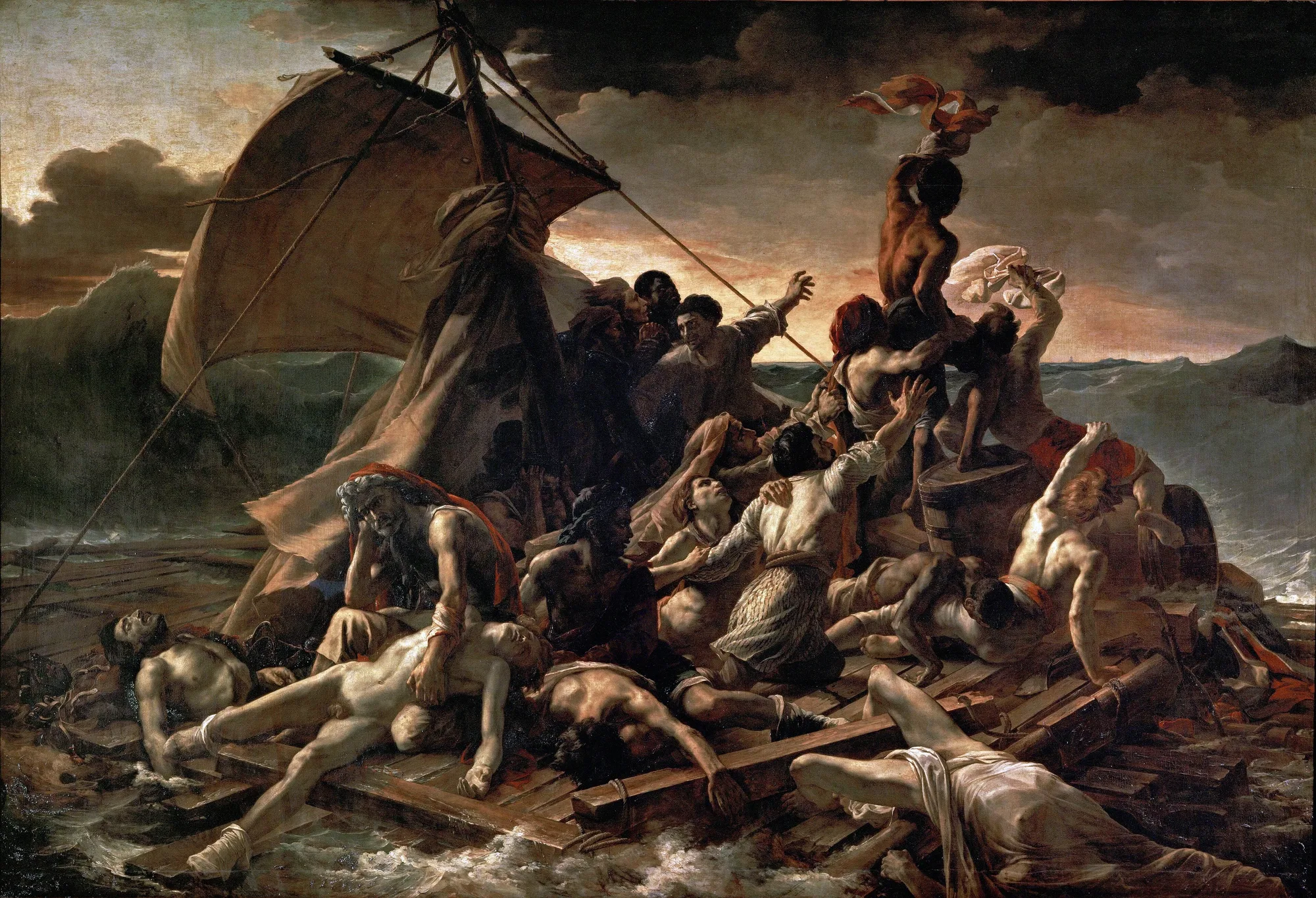
水平線の点は救助の船!27歳が描いた、実際の海難事故。That dot on the horizon is the rescue ship! A real disaster, painted by a 27-year-old.
この作品のお話
Story1816年7月、フランスの軍艦メデューズ号が、今のモーリタニア沖で座礁しました。救命ボートが足りず、約150人がいそいで作った筏に乗せられ、海に取り残されます。13日後、偶然通りかかった船アルギュス号に救われたとき、生きていたのはわずか15人でした。この絵は、遠くに船を見つけた瞬間を描いています。
In July 1816, the French navy ship Méduse ran aground off the coast of today's Mauritania. There were not enough lifeboats, so about 150 people were put on a quickly built raft and left at sea. Thirteen days later, the ship Argus found them by chance. Only 15 men were still alive. The painting shows the moment they see a ship far away.
この事故は、能力のない艦長を任命した政府への批判として大スキャンダルになりました。27歳のジェリコーは生存者に話を聞き、船大工と一緒に筏の模型を作り、髪をそって約8か月アトリエにこもって描き上げました。人々の体は、絶望から希望へと、左下から右上へ盛り上がるピラミッドのように並んでいます。
The disaster became a big scandal, because the government had chosen a captain with little experience. Géricault, aged 27, talked to survivors and built a model of the raft with a ship's carpenter. He shaved his head and shut himself in his studio for about eight months to paint it. The bodies rise like a pyramid from despair at the lower left to hope at the upper right.
1819年のサロンでは「難破の情景」という題で出され、評価は大きく分かれました。翌年ロンドンで展示されると、約4万人が見に来ました。ジェリコーは1824年、32歳の若さで亡くなり、絵はその後ルーヴルに買い取られました。フランス・ロマン主義の始まりを告げる作品として、ドラクロワやマネにも影響をあたえています。
At the 1819 Salon, it was shown as 'Scene of Shipwreck', and opinions were sharply divided. In London the next year, about 40,000 people came to see it. Géricault died in 1824, at only 32, and the Louvre then bought the painting. It marks the start of French Romanticism and influenced Delacroix and Manet.
1816年、フランスの大きな船がアフリカの近くで浅瀬に乗り上げました。たくさんの人がいかだに乗るしかありませんでした。彼らは13日間、海の上にいました。右側を見てください。男の人が、とても小さな船に向かって布をふっています!
In 1816, a big French ship got stuck on sand near Africa. Many people had to ride on a raft. They were at sea for 13 days. Look at the right side. A man waves a cloth at a very small ship!
英語のレベルは上の「やさしい/ふつう」で切りかえられます。
えっ!?な裏ネタ
Secrets手前の中央で、うつぶせに腕をのばしている人物のモデルは、のちに『民衆を導く自由の女神』を描くドラクロワでした。当時はまだ若い画学生で、ジェリコーの友人でした。二人はのちに、フランス・ロマン主義を代表する画家になります。
The model for the figure lying face down in the front center was Eugène Delacroix, who later painted Liberty Leading the People. He was then a young art student and Géricault's friend. Both became leading painters of French Romanticism.
ジェリコーは生存者の医師サヴィニーと技師コレアールに話を聞き、二人を絵のモデルにもしました。筏の模型は、生き残った船大工の協力で、板のすきままで正確に作られました。
Géricault interviewed two survivors, the surgeon Savigny and the engineer Corréard, and painted them from life. With a surviving carpenter, he built a model raft that even showed the gaps between the planks.
人々が必死に布をふる先、右の水平線上に、救助船アルギュス号がほんの小さく描かれています。巨大な画面の中でいちばん大切なものが、いちばん小さいのです。たて約5m、横約7mの画面で、ぜひ探してみてください。
Where the men are waving cloths, the rescue ship Argus appears as a tiny shape on the right horizon. In this huge painting, the most important thing is also the smallest. Try to find it on this canvas, about 5 by 7 metres.
ジェリコーは、黒っぽいつやを出すため「ビチューメン(瀝青)」という絵の具を使いました。これが時間とともに黒ずみ、しわも生じました。この変化は完全には元に戻せないため、画面の一部はくわしく見えなくなっています。
Géricault used a paint called bitumen to get rich dark tones. Over time, it turned black and wrinkled. These changes cannot be fully reversed, so some parts of the picture are now hard to see.
ここを見て!
Look Closer1布をふる男The man waving a cloth
樽の上に立ち、赤い布を高くふる男。ピラミッドの頂点で、希望を表しています。
A man stands on a barrel and waves a red cloth high. At the top of the pyramid, he stands for hope.
2救助船アルギュス号The rescue ship Argus
水平線の上のとても小さな影。群れの頂点にいる人々が、布をふって気づいてもらおうとしています。
A very small shape on the horizon. The men at the top of the group wave cloths to catch its attention.
3うなだれる老人The grieving old man
左側で、ひとりの老人が希望に背を向けて座りこんでいます。ピラミッドの底にある絶望です。
On the left, an old man sits with his back to the hope. He is the despair at the bottom of the pyramid.
4ドラクロワがモデルの人物The figure modelled by Delacroix
顔をふせ、腕をのばして横たわる人物。若きドラクロワがポーズをとりました。
This figure lies face down with an arm stretched out. The young Delacroix posed for it.
英語で名画を語ろう
Talk about Art in EnglishThe men on the right are waving cloths at a ship far away.
右の男たちは、遠くの船に向かって布をふっています。
💡 wave は「波」のほかに「手をふる」の意味も。wave at +相手で「〜に向かってふる」。
英語で説明すると… Describe it
これは荒れた海の場面です。大勢の男たちが木のいかだに乗っています。左には大きな帆があります。右では、男が樽の上に立って布をふっています。遠くの水平線には、とても小さな船があります。
This is a scene on a stormy sea. Many men are on a wooden raft. On the left, there is a big sail. On the right, a man is standing on a barrel and waving a cloth. Far away on the horizon, there is a tiny ship.
考えてみよう Think & Talk
- ジェリコーはなぜ救助船をこんなに小さく描いたのだと思いますか?Why do you think Géricault made the rescue ship so small?
- 画家は実際の事故や災害を描くべきでしょうか?人々はそこから何を学べるでしょう?Should artists paint real disasters? What can people learn from them?
この作品の英単語
WordsOver 150 people were put on a raft.
150人以上がいかだに乗せられました。
The painter talked to the survivors.
画家は生存者たちに話を聞きました。
A man waves a cloth at the ship.
男が船に向かって布をふっています。
Some men look tired and hopeless.
疲れはて、絶望している男たちもいます。
ミニクイズ
QuizQ. この絵の中で、のちの大画家ドラクロワは何をした?What did the future great painter Delacroix do for this picture?
手前でうつぶせになっている人物のモデルをつとめました。
He posed for the figure lying face down in the foreground.
ウソ?ホント? 筏の人々は、13日後に救助された。The people on the raft were rescued after 13 days.
13日後にアルギュス号に偶然発見され、15人が救われました。
After 13 days, the Argus found them by chance and saved 15 men.
ウソ?ホント? ジェリコーは事故の現場に居合わせ、その場でスケッチした。Géricault was at the scene of the disaster and sketched it there.
ジェリコーは現場にいません。生存者の話や模型をもとに描きました。
He was not there. He used survivors' stories and a model of the raft.
 画像の出典とライセンス / Image credit
- PDJEAN LOUIS THÉODORE GÉRICAULT - La Balsa de la Medusa (Museo del Louvre, 1818-19).jpg(Wikimedia Commons)
ライセンス:Public domain(パブリックドメイン)/作者・撮影者の表記:Théodore Géricault/提供元:Unknown sourceUnknown source
この作品は、作者の死後長い年月がたち著作権の保護期間が終わった「パブリックドメイン」の作品です。画像は平面の作品を忠実に写したもので、新しい著作権は生じません(Wikimedia Commons の PD-Art の考え方)。 所蔵:ルーヴル美術館(Musée du Louvre)。画像は表示のために縮小・WebP 形式に変換しています。
