

 PDF をダウンロード
Let's Look at Art!
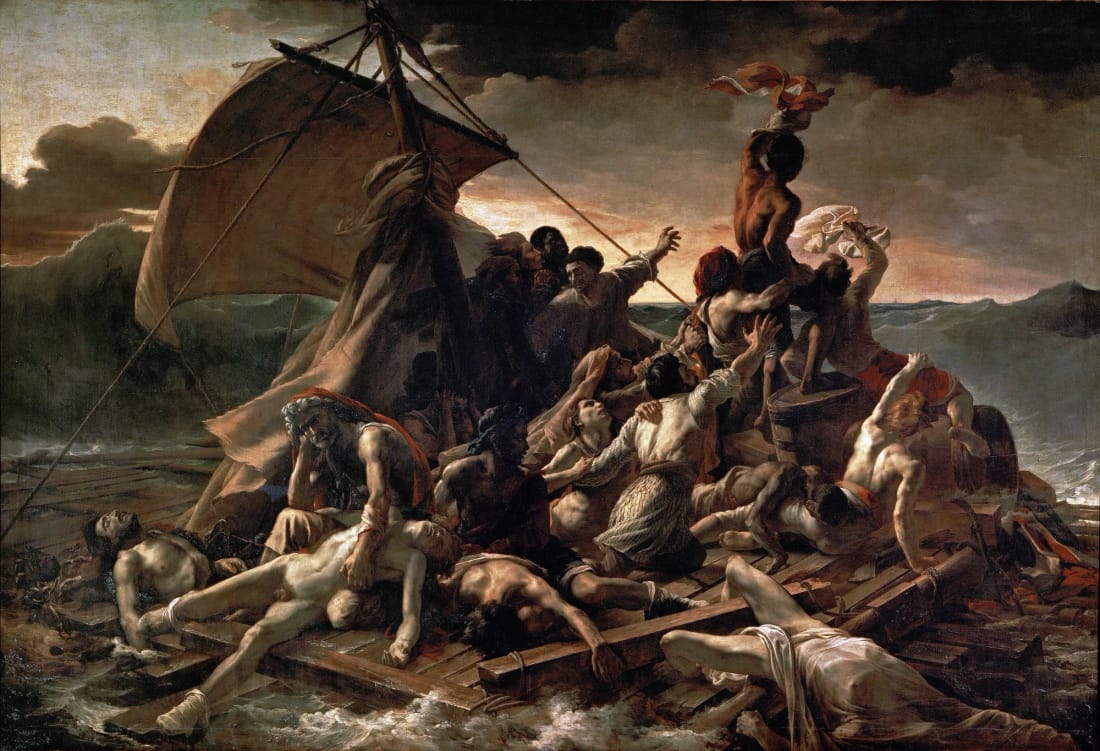
Title: The Raft of the Medusa
Artist: Théodore Géricault (1791–1824)
Year: 1818–1819
Medium: Oil on canvas
Museum: Musée du Louvre, Paris
1 Find it! 絵の中から見つけて、○でかこもう。
- ☐ The man waving a cloth
- ☐ The rescue ship Argus
- ☐ The grieving old man
- ☐ The figure modelled by Delacroix
2 First look 最初に見たときの感想を書こう。
When I first saw this painting, I felt ______________ because ______________________.
Three colors I can see: ①__________ ②__________ ③__________
3 Words — Match them. 英語と日本語を線で結ぼう。
- raft ●
- survivor ●
- wave ●
- hopeless ●
- ● いかだ
- ● 生存者
- ● (手や布を)ふる
- ● 望みのない・絶望的な
The Raft of the Medusa
4 Fill in the blanks. 下の箱から選んで、( )に入れよう。形を変えるものもあります。
- Over 150 people were put on a .
- The painter talked to the .
- A man a cloth at the ship.
- Some men look tired and .
5 Read and answer — True or False? 英文を読んで、正しければ T、ちがえば F。
In 1816, a big French ship got stuck on sand near Africa. Many people had to ride on a raft. They were at sea for 13 days. Look at the right side. A man waves a cloth at a very small ship!
In July 1816, the French navy ship Méduse ran aground off the coast of today's Mauritania. There were not enough lifeboats, so about 150 people were put on a quickly built raft and left at sea. Thirteen days later, the ship Argus found them by chance. Only 15 men were still alive. The painting shows the moment they see a ship far away.
- The people on the raft were rescued after 13 days. T / F
- Géricault was at the scene of the disaster and sketched it there. T / F
6 Quiz — Choose the best answer. 正しいものを選ぼう。
What did the future great painter Delacroix do for this picture?
- He made the frame
- He posed as a model
- He painted the sky
- He gave it its title
The Raft of the Medusa
7 Put the words in order. 語を正しく並べかえて、文を書こう。
- ship / at / far / on / away / waving / cloths / men / a / The / right / are / the .
- This / sea / on / scene / stormy / is / a / a .
8 Complete the description. 箱の語を(1)〜(4)に入れて、絵の説明を完成させよう。
This is a (1) on a stormy sea. Many men are on a (2) raft. On the left, there is a big sail. On the (3), a man is standing on a barrel and (4) a cloth. Far away on the horizon, there is a tiny ship.
9 Describe the painting in English. この絵を英語で説明しよう(3文以上)。
10 Think & Talk 考えて、ペアやグループで話し合おう。
Why do you think Géricault made the rescue ship so small?
Should artists paint real disasters? What can people learn from them?
11 My favorite part いちばん好きなところを英語で。
I like the ____________ because ____________________________.
Answers & Notes
1 Find it!
The man waving a cloth=布をふる男/The rescue ship Argus=救助船アルギュス号/The grieving old man=うなだれる老人/The figure modelled by Delacroix=ドラクロワがモデルの人物
2 First look
自由に書けたら正解。I felt calm / surprised / happy … などの形容詞を使おう。
3 Words
1–a(raft=いかだ) 2–b(survivor=生存者) 3–c(wave=(手や布を)ふる) 4–d(hopeless=望みのない・絶望的な)
4 Fill in the blanks
- raft Over 150 people were put on a raft.
150人以上がいかだに乗せられました。 - survivors The painter talked to the survivors.
画家は生存者たちに話を聞きました。 - waves A man waves a cloth at the ship.
男が船に向かって布をふっています。 - hopeless Some men look tired and hopeless.
疲れはて、絶望している男たちもいます。
5 Read — T / F
【本文の訳】1816年、フランスの大きな船がアフリカの近くで浅瀬に乗り上げました。たくさんの人がいかだに乗るしかありませんでした。彼らは13日間、海の上にいました。右側を見てください。男の人が、とても小さな船に向かって布をふっています!
【本文の訳】1816年7月、フランスの軍艦メデューズ号が、今のモーリタニア沖で座礁しました。救命ボートが足りず、約150人がいそいで作った筏に乗せられ、海に取り残されます。13日後、偶然通りかかった船アルギュス号に救われたとき、生きていたのはわずか15人でした。この絵は、遠くに船を見つけた瞬間を描いています。
- T 筏の人々は、13日後に救助された。
解説:13日後にアルギュス号に偶然発見され、15人が救われました。 - F ジェリコーは事故の現場に居合わせ、その場でスケッチした。
解説:ジェリコーは現場にいません。生存者の話や模型をもとに描きました。
6 Quiz
B 問:この絵の中で、のちの大画家ドラクロワは何をした?
選択肢:A 額縁を作った/B 人物のモデルになった/C 空を描いた/D 題名をつけた
解説:手前でうつぶせになっている人物のモデルをつとめました。
7 Put the words in order
- The men on the right are waving cloths at a ship far away.
右の男たちは、遠くの船に向かって布をふっています。 - This is a scene on a stormy sea.
これは荒れた海の場面です。
💡 are waving((手や布を)ふっている):wave は「波」のほかに「手をふる」の意味も。wave at +相手で「〜に向かってふる」。
8 Complete the description
(1) scene (2) wooden (3) right (4) waving
9 Describe(模範解答)
This is a scene on a stormy sea. Many men are on a wooden raft. On the left, there is a big sail. On the right, a man is standing on a barrel and waving a cloth. Far away on the horizon, there is a tiny ship.
これは荒れた海の場面です。大勢の男たちが木のいかだに乗っています。左には大きな帆があります。右では、男が樽の上に立って布をふっています。遠くの水平線には、とても小さな船があります。
10 Think & Talk(問いの訳)
- Why do you think Géricault made the rescue ship so small?
ジェリコーはなぜ救助船をこんなに小さく描いたのだと思いますか? - Should artists paint real disasters? What can people learn from them?
画家は実際の事故や災害を描くべきでしょうか?人々はそこから何を学べるでしょう?
正解のない問いです。理由をつけて話せたら◎。
Fun Fact(訳)
若き日のドラクロワがモデルに! 手前の中央で、うつぶせに腕をのばしている人物のモデルは、のちに『民衆を導く自由の女神』を描くドラクロワでした。当時はまだ若い画学生で、ジェリコーの友人でした。二人はのちに、フランス・ロマン主義を代表する画家になります。
