

 ワークシート
 ぬりえ
 迷路
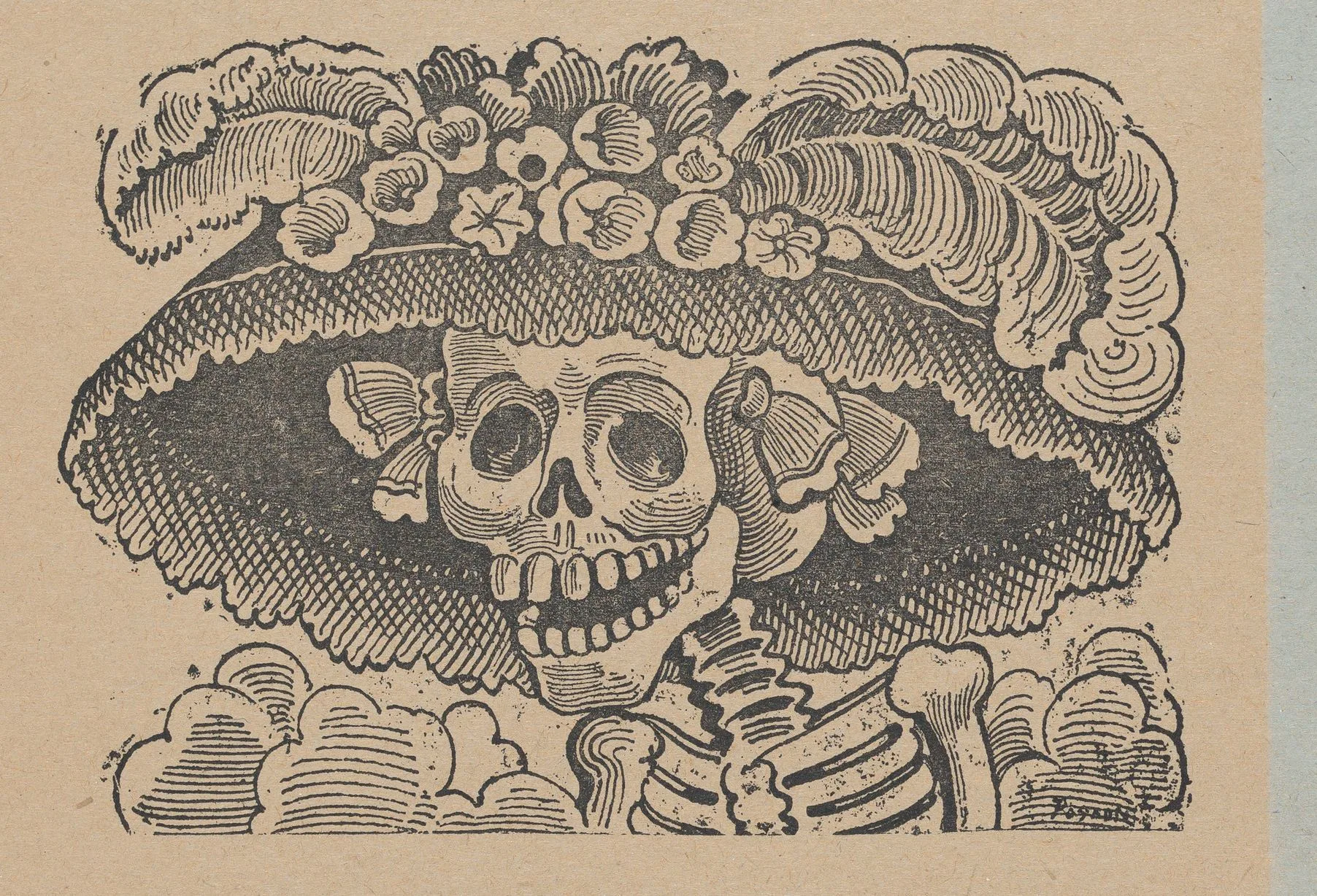
大きな帽子のガイコツ婦人!メキシコ「死者の日」の顔になった1枚の版画。A skeleton lady in a big hat! The print that became the face of Mexico's Day of the Dead.
この作品のお話
Storyメキシコの版画家ポサダが1910年ごろに作った、ガイコツの女性の版画です。花と大きな羽根でかざった、ヨーロッパ風の豪華な帽子をかぶり、歯を見せてにっこり笑っています。この画像は、ポサダの絵を出していた出版社の一族が1943年に刊行した版画集のページから、版画の部分を切り出したものです。
Mexican printmaker José Guadalupe Posada made this print of a skeleton lady around 1910. She wears a fancy European-style hat with flowers and big feathers, and she grins with all her teeth. This image is cut from a page of a 1943 portfolio. It was published by the family company that had printed Posada's work.
ポサダは、事件やうわさ話を伝える1枚刷りの安い新聞に、たくさんの絵を描きました。ガイコツ(カラベラ)は、お金持ちも貧しい人もみんな最後は同じ骨になる、という風刺のシンボルです。この女性は、メキシコ人なのにヨーロッパのまねをして着かざる人々を、笑いとばしていると考えられています。
Posada made many pictures for cheap one-page newspapers full of news and gossip. His skeletons, called calaveras, carry a funny but sharp message: rich or poor, we all end up as bones. This lady is thought to make fun of Mexicans who dressed up to copy European fashion.
ポサダは1913年に亡くなり、その名はしばらく忘れられました。のちにジャン・シャルロやディエゴ・リベラなどの芸術家がポサダの版画を高く評価し、リベラは壁画(1946〜47年)にこの女性を全身の姿で大きく描きました。今では「カトリーナ」は11月の「死者の日」に欠かせない、メキシコを代表するキャラクターです。
Posada died in 1913, and for a while people forgot his name. Later, artists such as Jean Charlot and Diego Rivera praised his prints as important Mexican popular art. Rivera painted this lady as a full-length figure in a mural (1946–47). Today, Catrina is a key character of the Day of the Dead in November and a symbol of Mexico.
この女性はガイコツです!花のついた大きな帽子をかぶっています。にっこり笑っています。ポサダが約100年前にメキシコで作りました。今では「死者の日」のスターです。
This lady is a skeleton! She wears a big hat with flowers. She is smiling. Posada made her about 100 years ago in Mexico. Today she is a star of the Day of the Dead.
英語のレベルは上の「やさしい/ふつう」で切りかえられます。
えっ!?な裏ネタ
Secrets確実にわかる最初の発表は1913年の1枚刷りで、題には「ガルバンセラ(ひよこ豆売り)」という言葉が使われていました。「カトリーナ(おしゃれな女性)」という名は、のちに本に載ったときにつけられたものです。
Her first known appearance was in a broadsheet in 1913. Its title used the word "garbanceras" (chickpea sellers). The name "Catrina," meaning a fancy lady, was added later, when the image appeared in a book.
ポサダの版画にあるのは顔と肩だけ。今よく見る、ドレスを着た全身のカトリーナは、ディエゴ・リベラが壁画「アラメダ公園の日曜の午後の夢」で描いた姿がもとになっています。
Posada's print shows only her head and shoulders. The full-body Catrina in a long dress that we see today comes from Diego Rivera's mural Dream of a Sunday Afternoon in the Alameda Central.
この画像がのっている1943年の版画集の題は『36の版画』。ところがメトロポリタン美術館によると、実際に入っている版画は30枚だけなのだそうです。出したのは、ポサダの版画を出版していたバネガス・アロヨ家の人でした。
This page comes from a 1943 portfolio called 36 Grabados (36 Prints). But according to the Met, it actually contains only 30 prints. It was published by a member of the Vanegas Arroyo family, who had printed Posada's work.
生涯に何千もの版画を作ったと言われるポサダですが、亡くなったときは貧しく、墓に名前も刻まれなかったと伝えられています。今では生まれ故郷アグアスカリエンテスに記念館があります。
Posada is said to have made thousands of prints. But he died poor, and it is said his grave had no name on it. Today, his hometown, Aguascalientes, has a museum in his honor.
ここを見て!
Look Closer1にっこりガイコツGrinning skull
大きな目の穴と、ずらりとならんだ歯。こわいより、なんだか楽しそうな笑顔です。
Big eye holes and a row of teeth. She looks more cheerful than scary.
2大きな羽根Big feathers
帽子からあふれる大きな羽根かざり。ヨーロッパの流行をまねた、ぜいたくな帽子です。
Huge feathers spill from her hat. It copies expensive European fashion.
3帽子の花Flowers on the hat
つばの上にずらりとならぶ花。骨だけなのに、おしゃれには手をぬきません。
A row of flowers sits on the brim. She is only bones, but she still loves fashion.
4ポサダのサインPosada's signature
右下に小さく「Posada」のサイン。版にきざまれた名前です。
At the bottom right is a small "Posada" signature, cut into the printing plate.
英語で名画を語ろう
Talk about Art in EnglishThis skeleton lady makes fun of people who show off.
このガイコツ婦人は、見せびらかす人々をからかっています。
💡 風刺画(satire)を説明するときの定番。laugh at(〜を笑う)もほぼ同じ意味。
英語で説明すると… Describe it
これは白黒の版画です。真ん中に、大きく笑うガイコツがいます。彼女はとても大きな帽子をかぶっています。帽子には花と大きな羽根があります。下には、骨だけの肩が見えます。
This is a black and white print. In the middle, there is a skull with a big smile. She is wearing a very big hat. On the hat, there are flowers and large feathers. At the bottom, we can see her bony shoulders.
考えてみよう Think & Talk
- このガイコツはなぜ悲しい顔ではなく、笑っているのだと思いますか?Why do you think the skeleton is smiling, not sad?
- あなたの国では、亡くなった家族をどのようにしのびますか?In your country, how do people remember family members who have died?
この作品の英単語
WordsThe lady is a skeleton in a fancy hat.
その婦人は、豪華な帽子をかぶったガイコツだ。
The skull grins with all its teeth.
ガイコツは歯を全部見せてにっと笑っている。
She wears a fancy hat with feathers.
彼女は羽根のついた豪華な帽子をかぶっている。
Posada made fun of people who copied European fashion.
ポサダはヨーロッパの流行をまねる人々をからかった。
ミニクイズ
QuizQ. カトリーナが主役になるメキシコのお祭りは?Which Mexican festival is Catrina famous for?
11月の「死者の日」には、カトリーナの仮装やかざりが街にあふれます。
On the Day of the Dead in November, Catrina costumes and decorations are everywhere.
ウソ?ホント? ポサダの元の版画には、カトリーナの全身が描かれている。Posada's original print shows Catrina's whole body.
顔と肩だけです。全身の姿はリベラの壁画から広まりました。
It shows only her head and shoulders. The full-body version came from Rivera's mural.
ウソ?ホント? ポサダの絵は、安い1枚刷りの新聞などにのっていた。Posada's pictures appeared in cheap one-page newspapers.
事件やうわさを伝える紙に、たくさんの絵を描きました。
He drew many pictures for papers full of news and gossip.
 画像の出典とライセンス / Image credit
- CC0Page 15- Catrina (calavera), from '36 Grabados' (Mexico, 1943) MET DP872837.jpg(Wikimedia Commons)
ライセンス:CC0(パブリックドメイン提供)/作者・撮影者の表記:Arsacio Vanegas/提供元:This file was donated to Wikimedia Commons as part of a project by the Metropolitan Museum of Art. See the Image and Data Resources Open Access Policy
この作品は、作者の死後長い年月がたち著作権の保護期間が終わった「パブリックドメイン」の作品です。画像は平面の作品を忠実に写したもので、新しい著作権は生じません(Wikimedia Commons の PD-Art の考え方)。 所蔵:メトロポリタン美術館(The Metropolitan Museum of Art)。画像は表示のために縮小・WebP 形式に変換しています(本のページから版画の部分を切り出しています)。
