

 ワークシート
 ぬりえ
 迷路
生涯に約6000点!記憶を生かして海を描いた画家の代表作。One of about 6,000 works, and his greatest painting of the sea!
この作品のお話
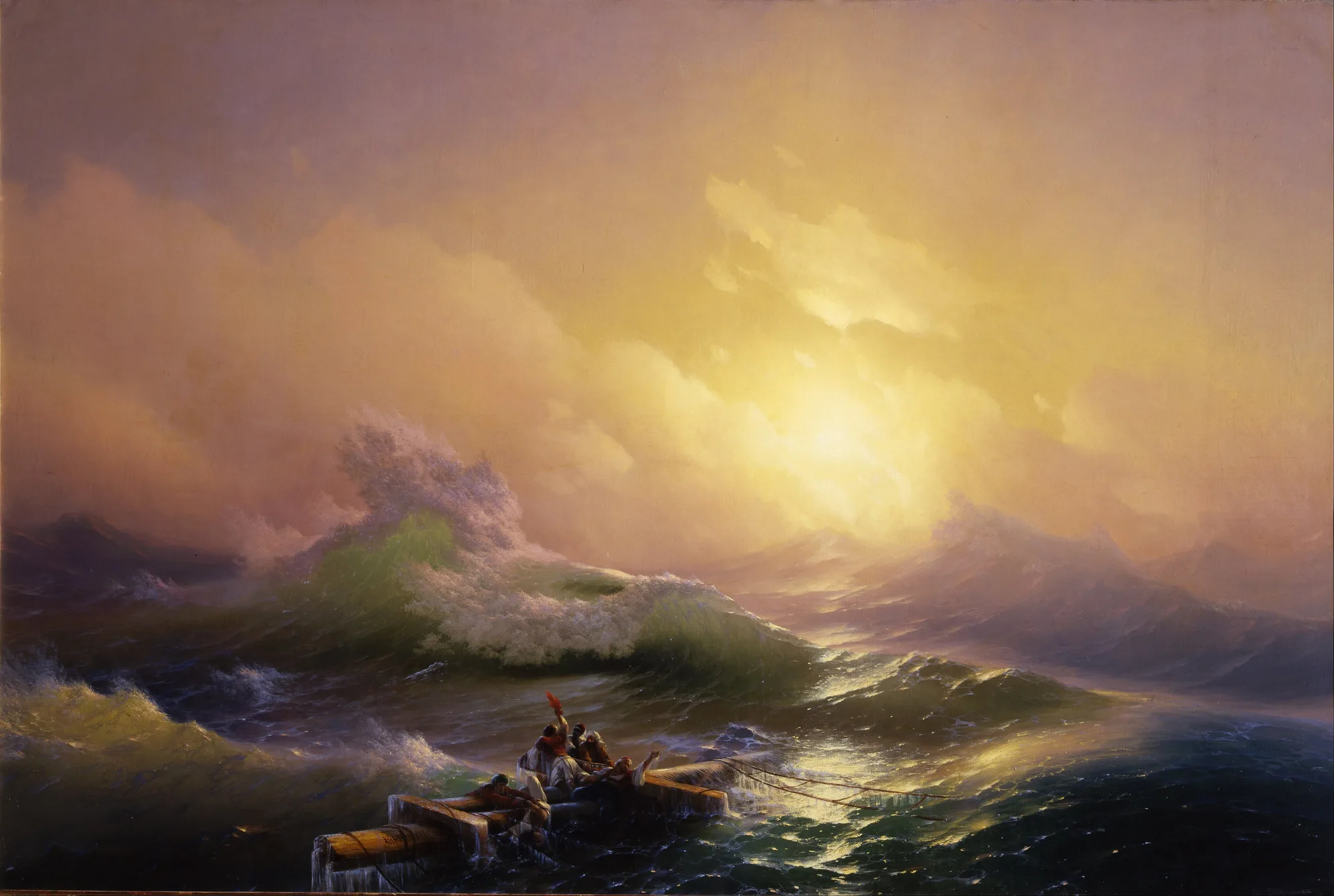
Story嵐が過ぎたあとの夜明けの海。こわれた船のマストにしがみつく人々に、巨大な波がせまっています。でも空は金色にかがやき、太陽の光が雲をつきぬけています。船乗りのあいだでは、大波は少しずつ大きくなり、9番目の波がいちばん大きいと言われていました。題名はそこから来ています。
It is dawn at sea after a storm. A huge wave rises over people holding on to the broken mast of their ship. But the sky shines gold, and sunlight breaks through the clouds. Sailors used to say that waves grow bigger and bigger, and that the ninth one is the biggest. The title comes from this saying.
作者のアイヴァゾフスキーは、クリミア半島の港町フェオドシヤで、アルメニア系の家に生まれました。生涯で約6000点もの作品を描いたといわれ、その多くが海の絵です。彼は海をよく観察して記憶にとどめ、完成作はおもにアトリエで描いたことで知られています。この絵は33歳のときの作品で、彼の代表作です。
Aivazovsky was born into an Armenian family in Feodosia, a port town in Crimea. He is said to have made about 6,000 works in his life, most of them of the sea. He studied the sea closely, kept it in his memory and usually finished his sea paintings in his studio. He painted this masterpiece at the age of 33.
絵は帝室エルミタージュのために買い上げられ(皇帝ニコライ1世が買ったとも伝えられます)、1897年にサンクトペテルブルクのロシア美術館へ移されました。あたたかい金色の光のおかげで、こわい海の絵なのに希望が感じられます。透けるような波の表現は、今でも「どうやって描いたの?」と見る人をおどろかせています。
The painting was bought for the Imperial Hermitage (some say by Tsar Nicholas I) and moved to the State Russian Museum in St Petersburg in 1897. Thanks to the warm golden light, this scary sea scene also feels hopeful. The see-through waves still make people ask, 'How did he paint that?'
海はとても荒れています。数人が折れたマストにつかまっています。大きな波が来ますが、太陽はかがやいています。この画家は約6000枚の絵を描きました。海を記憶をもとに描くことが多かったのです!
The sea is very wild. A few people hold on to a broken mast. A big wave is coming, but the sun is shining. The painter made about 6,000 pictures. He often painted the sea from memory!
英語のレベルは上の「やさしい/ふつう」で切りかえられます。
えっ!?な裏ネタ
Secretsアイヴァゾフスキーは、海の絵を海辺で写生せず、いつも記憶をもとにアトリエで描いたと伝えられます。その記憶力は「伝説的」と言われるほどでした。評論家ローザ・ニューマーチも「いつも記憶から、海から遠く離れて描いた」と書いています。
Aivazovsky is said to have never painted the sea outdoors. He always worked from memory in his studio. His memory was called 'legendary'. The writer Rosa Newmarch said he always painted "from memory, and far away from the seaboard."
約60年の画家人生で、およそ6000点を描いたといわれます。1年あたり100点、つまり3〜4日に1点のペースです。その多くが海の絵ですが、風景や肖像なども描きました。おどろくほど多作な画家だったのです。
In a career of almost 60 years, he is said to have made about 6,000 works. That is about 100 a year, or one every three or four days. Many show the sea, but he also painted landscapes and portraits. He was amazingly productive.
人々がしがみつく折れたマストは、十字のような形に見えます。これを、救いを表すキリスト教のしるしと読む解釈もあります。荒れくるう海の中にも、希望のしるしがかくされているのです。
The broken mast that the people are holding looks like a cross. Some people read it as a Christian symbol of rescue and hope. Even in the wild sea, a sign of hope is hidden.
晩年、アルメニア人への迫害に抗議して、アイヴァゾフスキーはオスマン帝国からもらった勲章を海に投げすてたと伝えられます。海の画家らしい抗議でした。作家チェーホフは彼を「将軍、司祭、画家、アルメニア人、素朴な老人、そしてオセロを一人に合わせたような人物」と表しました。
Late in life, to protest the killing of Armenians, Aivazovsky reportedly threw his Ottoman medals into the sea. It was a fitting protest for a painter of the sea. The writer Anton Chekhov described him as combining "a general, a bishop, an artist, an Armenian, a naive old man and an Othello."
ここを見て!
Look Closer1マストにしがみつく人々People on the mast
こわれた船のマストにつかまる人々。ひとりは赤い布をふり、助けを求めています。
People hold on to a broken mast. One waves a red cloth for help.
2第九の波The ninth wave
左から立ち上がる大波。光が当たって、ガラスのように緑色に透けています。
A huge wave rises on the left. The light shines through it, green like glass.
3夜明けの太陽The rising sun
雲をつきぬける金色の光。嵐の終わりと、助かる希望を感じさせます。
Golden light breaks through the clouds. It suggests the storm is ending and there is hope.
英語で名画を語ろう
Talk about Art in EnglishThe survivors are clinging to a broken mast.
生き残った人々は、折れたマストにしがみついています。
💡 cling to +物で「〜にしっかりつかまる」。hold on to より必死な感じが出ます。
英語で説明すると… Describe it
これは日の出の荒れた海です。手前では、数人が折れたマストにしがみついています。左では、大きな緑の波が立ち上がっています。中央では、太陽が雲を通して光っています。空は黄色とピンクです。
This is a stormy sea at sunrise. In the foreground, a few people are clinging to a broken mast. On the left, a huge green wave is rising. In the middle, the sun is shining through the clouds. The sky is yellow and pink.
考えてみよう Think & Talk
- これは希望の絵でしょうか、それともこわい絵でしょうか?それはなぜ?Is this a hopeful picture or a frightening picture? Why?
- 彼はどうして記憶だけで、こんなに上手に海を描けたのだと思いますか?How do you think he could paint the sea so well from memory?
この作品の英単語
WordsThe sailors hold on to a broken mast.
船乗りたちは折れたマストにつかまっています。
The ship was broken in the storm.
船は嵐でこわれました。
The sailors cling to the broken mast.
船乗りたちは折れたマストにしがみついています。
The waves look almost transparent.
波はほとんど透けているように見えます。
ミニクイズ
QuizQ. アイヴァゾフスキーは、海の絵をどうやって描いた?How did Aivazovsky paint his sea pictures?
海辺で写生せず、記憶をもとにアトリエで描いたと伝えられます。
He is said to have painted from memory in his studio, not by the sea.
ウソ?ホント? 船乗りのあいだでは、9番目の波がいちばん大きいと言われていた。Sailors said the ninth wave was the biggest.
題名はこの船乗りの言い伝えから来ています。
The title comes from this old sailors' saying.
ウソ?ホント? アイヴァゾフスキーは一生で100点ほどしか絵を描かなかった。Aivazovsky painted only about 100 pictures in his life.
約6000点も描いたといわれる、とても多作な画家です。
He is said to have made about 6,000 works.
 画像の出典とライセンス / Image credit
- PDHovhannes Aivazovsky - The Ninth Wave - Google Art Project.jpg(Wikimedia Commons)
ライセンス:Public domain(パブリックドメイン)/作者・撮影者の表記:Hovhannes Aivazovsky (1817 - 1900) – painter (Russian) Born in Rossiiskaya imperiya, Feodosia. Died in Rossiiskaya imperiya, Feodosia. Details on Google Art Pro/提供元:jgHuL-7yxgrOSw at Google Cultural Institute maximum zoom level
この作品は、作者の死後長い年月がたち著作権の保護期間が終わった「パブリックドメイン」の作品です。画像は平面の作品を忠実に写したもので、新しい著作権は生じません(Wikimedia Commons の PD-Art の考え方)。 所蔵:ロシア美術館(State Russian Museum)。画像は表示のために縮小・WebP 形式に変換しています。
