

 PDF をダウンロード
Let's Look at Art!
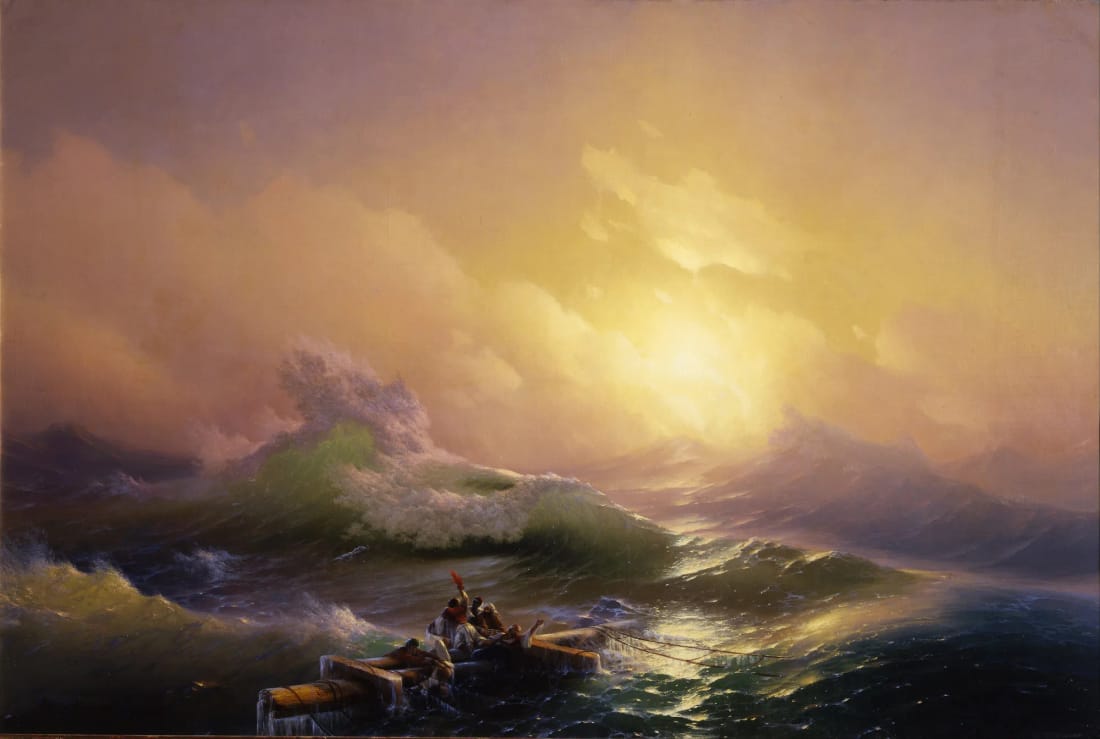
Title: The Ninth Wave
Artist: Ivan Aivazovsky (1817–1900)
Year: 1850
Medium: Oil on canvas
Museum: State Russian Museum, Saint Petersburg
1 Find it! 絵の中から見つけて、○でかこもう。
- ☐ People on the mast
- ☐ The ninth wave
- ☐ The rising sun
2 First look 最初に見たときの感想を書こう。
When I first saw this painting, I felt ______________ because ______________________.
Three colors I can see: ①__________ ②__________ ③__________
3 Words — Match them. 英語と日本語を線で結ぼう。
- mast ●
- storm ●
- cling ●
- transparent ●
- ● しがみつく
- ● 透明な・透けた
- ● マスト・帆柱
- ● 嵐
The Ninth Wave
4 Fill in the blanks. 下の箱から選んで、( )に入れよう。形を変えるものもあります。
- The sailors hold on to a broken .
- The ship was broken in the .
- The sailors to the broken mast.
- The waves look almost .
5 Read and answer — True or False? 英文を読んで、正しければ T、ちがえば F。
The sea is very wild. A few people hold on to a broken mast. A big wave is coming, but the sun is shining. The painter made about 6,000 pictures. He often painted the sea from memory!
It is dawn at sea after a storm. A huge wave rises over people holding on to the broken mast of their ship. But the sky shines gold, and sunlight breaks through the clouds. Sailors used to say that waves grow bigger and bigger, and that the ninth one is the biggest. The title comes from this saying.
- Sailors said the ninth wave was the biggest. T / F
- Aivazovsky painted only about 100 pictures in his life. T / F
6 Quiz — Choose the best answer. 正しいものを選ぼう。
How did Aivazovsky paint his sea pictures?
- On a ship
- Under the water
- On the beach
- From memory, in his studio
The Ninth Wave
7 Put the words in order. 語を正しく並べかえて、文を書こう。
- survivors / a / to / mast / clinging / are / The / broken .
- sunrise / at / sea / a / is / stormy / This .
8 Complete the description. 箱の語を(1)〜(4)に入れて、絵の説明を完成させよう。
This is a stormy sea at sunrise. In the foreground, a few people are clinging to a broken mast. On the left, a huge (1) wave is rising. In the (2), the sun is (3) through the clouds. The sky is (4) and pink.
9 Describe the painting in English. この絵を英語で説明しよう(3文以上)。
10 Think & Talk 考えて、ペアやグループで話し合おう。
Is this a hopeful picture or a frightening picture? Why?
How do you think he could paint the sea so well from memory?
11 My favorite part いちばん好きなところを英語で。
I like the ____________ because ____________________________.
Answers & Notes
1 Find it!
People on the mast=マストにしがみつく人々/The ninth wave=第九の波/The rising sun=夜明けの太陽
2 First look
自由に書けたら正解。I felt calm / surprised / happy … などの形容詞を使おう。
3 Words
1–c(mast=マスト・帆柱) 2–d(storm=嵐) 3–a(cling=しがみつく) 4–b(transparent=透明な・透けた)
4 Fill in the blanks
- mast The sailors hold on to a broken mast.
船乗りたちは折れたマストにつかまっています。 - storm The ship was broken in the storm.
船は嵐でこわれました。 - cling The sailors cling to the broken mast.
船乗りたちは折れたマストにしがみついています。 - transparent The waves look almost transparent.
波はほとんど透けているように見えます。
5 Read — T / F
【本文の訳】海はとても荒れています。数人が折れたマストにつかまっています。大きな波が来ますが、太陽はかがやいています。この画家は約6000枚の絵を描きました。海を記憶をもとに描くことが多かったのです!
【本文の訳】嵐が過ぎたあとの夜明けの海。こわれた船のマストにしがみつく人々に、巨大な波がせまっています。でも空は金色にかがやき、太陽の光が雲をつきぬけています。船乗りのあいだでは、大波は少しずつ大きくなり、9番目の波がいちばん大きいと言われていました。題名はそこから来ています。
- T 船乗りのあいだでは、9番目の波がいちばん大きいと言われていた。
解説:題名はこの船乗りの言い伝えから来ています。 - F アイヴァゾフスキーは一生で100点ほどしか絵を描かなかった。
解説:約6000点も描いたといわれる、とても多作な画家です。
6 Quiz
D 問:アイヴァゾフスキーは、海の絵をどうやって描いた?
選択肢:A 船の上で描いた/B 海に潜って描いた/C 海岸で写生した/D 記憶をもとにアトリエで描いた
解説:海辺で写生せず、記憶をもとにアトリエで描いたと伝えられます。
7 Put the words in order
- The survivors are clinging to a broken mast.
生き残った人々は、折れたマストにしがみついています。 - This is a stormy sea at sunrise.
これは日の出の荒れた海です。
💡 are clinging to(〜にしがみついている):cling to +物で「〜にしっかりつかまる」。hold on to より必死な感じが出ます。
8 Complete the description
(1) green (2) middle (3) shining (4) yellow
9 Describe(模範解答)
This is a stormy sea at sunrise. In the foreground, a few people are clinging to a broken mast. On the left, a huge green wave is rising. In the middle, the sun is shining through the clouds. The sky is yellow and pink.
これは日の出の荒れた海です。手前では、数人が折れたマストにしがみついています。左では、大きな緑の波が立ち上がっています。中央では、太陽が雲を通して光っています。空は黄色とピンクです。
10 Think & Talk(問いの訳)
- Is this a hopeful picture or a frightening picture? Why?
これは希望の絵でしょうか、それともこわい絵でしょうか?それはなぜ? - How do you think he could paint the sea so well from memory?
彼はどうして記憶だけで、こんなに上手に海を描けたのだと思いますか?
正解のない問いです。理由をつけて話せたら◎。
Fun Fact(訳)
海を見ずに、記憶だけで描いた アイヴァゾフスキーは、海の絵を海辺で写生せず、いつも記憶をもとにアトリエで描いたと伝えられます。その記憶力は「伝説的」と言われるほどでした。評論家ローザ・ニューマーチも「いつも記憶から、海から遠く離れて描いた」と書いています。
