 ワークシート
 ぬりえ
 迷路
四季が4人の女性に!花と曲線があふれる、アール・ヌーヴォーの名作。Spring, summer, fall and winter as four women! An Art Nouveau classic full of flowers and curves.
 美術館アンテナ:アルフォンス・ミュシャの作品に会える展覧会
この作品のお話
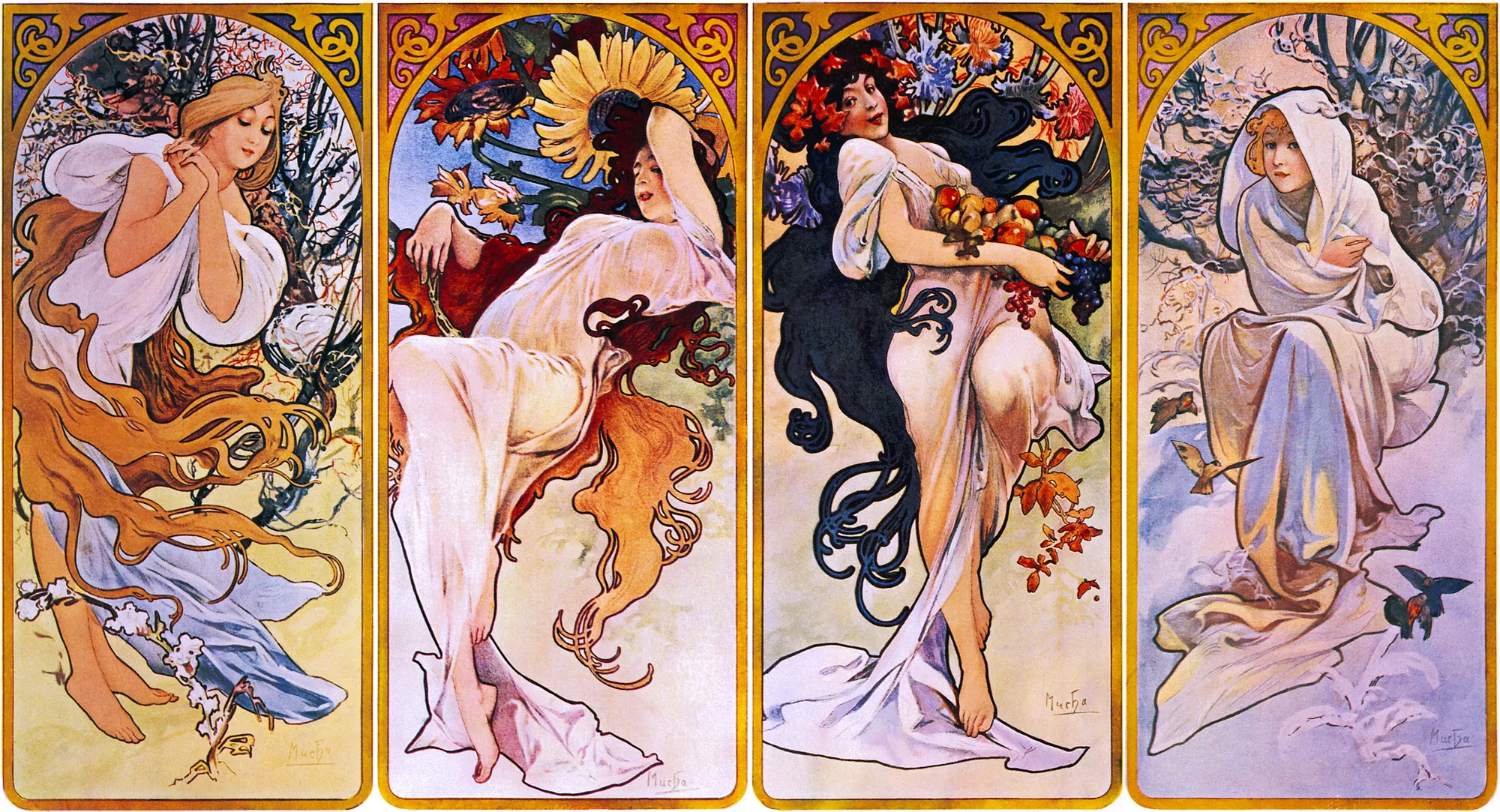
Storyチェコ出身の画家ミュシャが、パリの印刷会社シャンプノワのためにデザインした、四季を表す4枚組の版画です。左から春・夏・秋・冬。花の中の金髪の春、ひまわりにもたれる夏、果物をかかえた秋、白い布にくるまり小鳥たちといる冬が、上の丸いアーチの枠の中に描かれています。
Czech artist Alphonse Mucha designed this set of four prints for the Paris printer Champenois. From left to right, they show spring, summer, autumn and winter. A blond spring stands among blossoms. Summer leans by a sunflower. Autumn holds fruit. Winter wraps herself in a white cloak with small birds. Each one stands under a round arch.
ミュシャは1896年にも、部屋にかざる「装飾パネル」として「四季」を作り、大ヒットしました。そこでシャンプノワは、1897年と1900年にも新しい「四季」を注文します。この画像は1897年版で、この図柄はチョコレート会社「ショコラ・マッソン」の1897年のカレンダーにも使われました。こうした版画は大量に刷られ、ふつうの人も手ごろな値段で美しい絵を楽しめるようになりました。
Mucha first made The Seasons in 1896 as decorative panels for the home, and they were a big hit. So Champenois ordered new Seasons sets in 1897 and 1900. This image shows the 1897 set. These designs were also used on an 1897 calendar for the chocolate company Chocolat Masson. Prints like these were made in large numbers, so ordinary people could enjoy beautiful art at low prices.
流れる髪、花、やわらかな曲線のこのスタイルは「ミュシャ様式」とよばれ、アール・ヌーヴォー(新しい芸術)の代表になりました。日本でも明治時代から雑誌の表紙などに影響をあたえ、今のマンガやイラストにもつながっていると言われます。版画なので、世界各地に同じ図柄の刷りがあります。この画像は、アメリカの議会図書館が持つ1枚です。
This style of flowing hair, flowers and soft curves became known as the "Mucha style" and a symbol of Art Nouveau. In Japan, it influenced magazine covers from the Meiji era, and many say it still lives on in manga and illustration. Because these are prints, copies are in many places. This image comes from a copy in the Library of Congress in Washington, D.C.
ここに4人の女性がいます。春、夏、秋、冬です。人々はこの絵を部屋の壁にかざりました。ミュシャは大女優のポスターで有名になりました。彼は祖国の紙幣や切手もデザインしました!
Here are four women. They are spring, summer, autumn and winter. People put these pictures on their walls. Mucha became famous with a poster for a great actress. He also designed banknotes and stamps for his country!
英語のレベルは上の「やさしい/ふつう」で切りかえられます。
えっ!?な裏ネタ
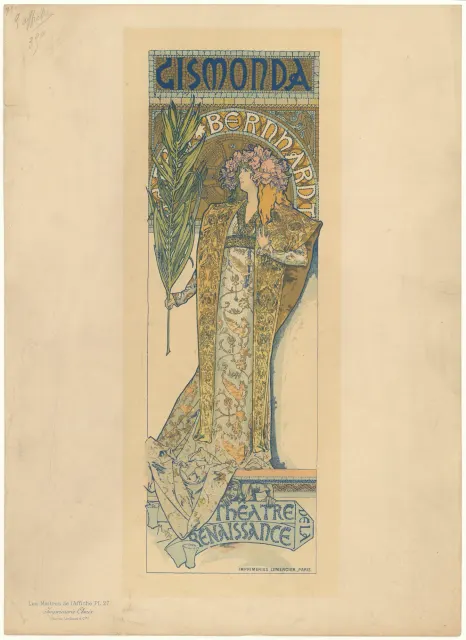
Secrets広く語られている話によると、1894年の年末、印刷所で働いていたミュシャは、休暇でほかの画家がいない中、大女優サラ・ベルナールの舞台ポスター「ジスモンダ」を急に任されました。これが大評判となり、彼女と6年の契約を結んで一躍有名になりました。
According to a well-known story, Mucha was working at a print shop at the end of 1894. Most artists were away for the holidays, so he suddenly got the job of making a poster for the great actress Sarah Bernhardt's play Gismonda. It was a huge success. She signed him to a six-year contract, and he became famous.
1918年に祖国チェコスロバキアが独立すると、ミュシャは新しい国の最初の切手や紙幣のデザインを引き受けました。パリの人気画家は、祖国のためにも筆をふるったのです。
When Czechoslovakia became independent in 1918, Mucha designed the new country's first stamps and banknotes. The star of Paris also worked hard for his homeland.
日本でおなじみの「ミュシャ」はフランス語風の読み方。チェコ語の本来の発音は「ムハ」に近く、英語では「ムーカ」のように読まれることが多いです。チェコでは国民的な画家で、プラハにはミュシャ美術館があります。
In Japan, people say "Myusha," a French-style reading. In Czech, his name sounds more like "Moo-ha." English speakers often say "MOO-kah." In the Czech Republic, he is a national hero, and Prague has a Mucha Museum.
ミュシャは晩年、スラヴ民族の歴史を描く巨大な連作「スラヴ叙事詩」20点を、1911年から1926年にかけて制作しました。大きいものは縦6m、横8mにもなります。1928年、全20点がプラハ市に正式に寄贈されました。
Late in life, Mucha painted The Slav Epic, 20 huge paintings about the history of the Slavic peoples, from 1911 to 1926. The largest are about 6 meters tall and 8 meters wide. In 1928, the whole series was officially given to the city of Prague.
ここを見て!
Look Closer1春Spring
花の咲く枝の中、風に金色の髪をなびかせる春。白い花が足もとにも咲いています。
Spring stands among blossoming branches. Her golden hair blows in the wind.
2夏のひまわりSummer's sunflower
大きなひまわりの前で、暑さにとろけるようにもたれかかる夏。
Summer leans back in front of a big sunflower, as if melting in the heat.
3秋の実りAutumn's harvest
りんごやぶどうなどの果物をかかえる秋。黒い長い髪がうねっています。
Autumn holds apples, grapes and other fruit. Her long black hair curls around her.
4冬と小鳥Winter and the birds
白い布にくるまる冬のまわりを、小鳥たちが飛んでいます。雪のつもった枝も見えます。
Small birds fly around Winter, who is wrapped in a white cloak. Snowy branches are behind her.
英語で名画を語ろう
Talk about Art in EnglishThe woman with the sunflower stands for summer.
ひまわりの女性は夏を表しています。
💡 擬人化(人で何かを表す)された絵の説明に便利。represent とほぼ同じ意味です。
英語で説明すると… Describe it
4枚の絵がならんでいます。どの絵にも長い髪の女性がいます。左では、春が白い花の中に立っています。夏にはひまわりがあり、秋は果物をかかえています。右では、冬が白いマントにくるまっています。
There are four pictures side by side. Each picture shows a woman with long hair. On the left, Spring is standing among white flowers. Summer has a sunflower, and Autumn is holding fruit. On the right, Winter is wrapped in a white cloak.
考えてみよう Think & Talk
- 4枚の中でどの季節がいちばん好きですか?それはなぜ?Which season do you like best in this set? Why?
- あなたの町の四季を描くなら、それぞれに何を入れますか?If you drew the four seasons of your town, what would you put in each one?
この作品の英単語
WordsEach woman stands for one season.
それぞれの女性が1つの季節を表している。
The sunflower stands for summer.
ひまわりは夏を表している。
People used these prints to decorate their rooms.
人々はこの版画で部屋をかざった。
Mucha loved long, flowing hair.
ミュシャは長く流れるような髪が大好きだった。
ミニクイズ
QuizQ. ミュシャを有名にしたポスターの主役は?Who starred in the play whose poster made Mucha famous?
1894年末、大女優サラ・ベルナールの舞台「ジスモンダ」のポスターで一躍有名になりました。
His poster for Sarah Bernhardt's play Gismonda made him famous.
ウソ?ホント? ミュシャの「四季」の図柄は、チョコレート会社のカレンダーにも使われた。Mucha's Seasons designs were also used on a chocolate company's calendar.
1897年の「四季」の図柄は、ショコラ・マッソンのカレンダーに使われました。
The 1897 Seasons designs were used on a calendar for Chocolat Masson.
ウソ?ホント? ミュシャの「四季」は、生涯でこの1セットだけである。Mucha made only this one set of The Seasons.
1896年、1897年、1900年など、いくつものセットがあります。
There are several sets, including 1896, 1897 and 1900.
 画像の出典とライセンス / Image credit
- PDFour Seasons by Alfons Mucha, circa 1897.jpg(Wikimedia Commons)
ライセンス:Public domain(パブリックドメイン)/作者・撮影者の表記:Alphonse Mucha/提供元:Original file from Library of Congress; this version from trialsanderrors on Flickr
この作品は、作者の死後長い年月がたち著作権の保護期間が終わった「パブリックドメイン」の作品です。画像は平面の作品を忠実に写したもので、新しい著作権は生じません(Wikimedia Commons の PD-Art の考え方)。 所蔵:米国議会図書館(版画・写真部)(Library of Congress, Prints and Photographs Division)。画像は表示のために縮小・WebP 形式に変換しています。