

 ワークシート
 ぬりえ
 迷路
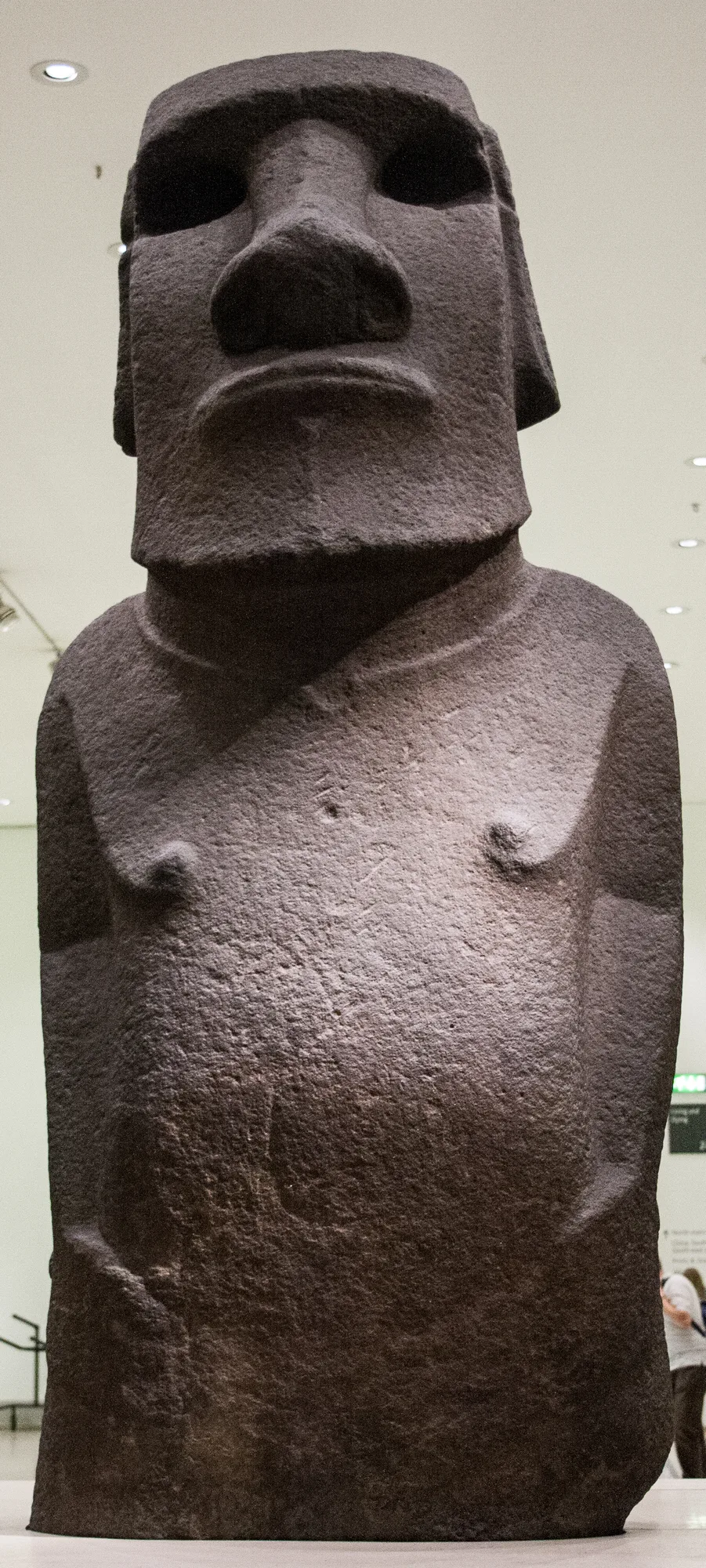
名前は「失われた友」「盗まれた友」の意味とも。海をこえたモアイ。Its name may mean 'lost or stolen friend'. A moai that crossed the ocean.
この作品のお話
Storyホア・ハカナナイアは、南太平洋のイースター島(ラパ・ヌイ)で作られたモアイ像です。高さは2.42メートル、重さは約4.2トン。ほとんどのモアイがやわらかい凝灰岩で作られているのに対し、この像はかたい溶岩の石で彫られているのが特ちょうです。作られたのは西暦1000〜1200年ごろと考えられています。
Hoa Hakananai'a is a moai, a stone statue from Easter Island (Rapa Nui) in the South Pacific. It is 2.42 meters tall and weighs about 4.2 tonnes. Most moai are carved from soft volcanic stone, but this one is made of hard lava rock. It was probably made around AD 1000–1200.
モアイは、島の人々の祖先をあらわし、村を守る存在と考えられています。この像は、儀式の場オロンゴにある石の家の中に、半分ほど埋まった状態で立っていました。1868年、イギリス海軍の軍艦トパーズ号の乗組員がこれを掘り出し、そりと、いかだで船まで運びました。
Moai are thought to show ancestors and protect the villages. This statue stood half buried inside a stone house at Orongo, a ceremonial place. In 1868, sailors from the British warship HMS Topaze dug it out. They moved it on a sledge and a raft to their ship.
像は1869年にイギリスに着き、ヴィクトリア女王の意向で大英博物館に贈られました。大きな頭、太い眉、きゅっと結んだ口は、見る人に強い印象をあたえます。今は博物館の人気者ですが、島の人々は返還を求めていて、文化財はだれのものかを考えさせる作品でもあります。
The statue reached England in 1869. Queen Victoria gave it to the British Museum. Its big head, heavy brows and tight lips make a strong impression. It is very popular, but the islanders want it back. It makes us ask: who should own cultural treasures?
これはイースター島のモアイです。とても大きくて、とても重いです。大きな鼻と悲しそうな口をしています。1868年にイギリスの船乗りが持っていきました。島の人々は返してほしいと思っています。
This is a moai from Easter Island. It is very big and very heavy. It has a big nose and a sad mouth. British sailors took it in 1868. The island people want it back.
英語のレベルは上の「やさしい/ふつう」で切りかえられます。
えっ!?な裏ネタ
Secrets島の人々はこの像を「ホア・ハカナナイア」と呼びました。大英博物館はこれを「失われた、または盗まれた友」と訳しています。「かくされた友」などの訳もあり、意味にはいくつかの説があります。
The islanders called it Hoa Hakananai'a. The British Museum translates this as 'lost or stolen friend'. Other translations, like 'hidden friend', have also been suggested.
背中には、あとから2人の「鳥人間」や儀式用の櫂(かい)が彫り足されています。これは「鳥人儀礼」と関係があります。毎年、競技者たちが海鳥のその年最初の卵を持ち帰る競争をし、勝った競技者が仕える首長が、一年間「鳥人」とされました。
Two 'birdmen' and ceremonial paddles were carved on its back later. They are linked to the birdman cult. Each year, competitors raced to bring back the first seabird egg. The chief who sent the winner became the 'birdman' for a year.
背中の彫刻は、もともと白地に赤でぬられていました。ところが1868年、いかだで船まで運ぶあいだに、絵の具はほとんど海水で洗い流されてしまったと考えられています。
The carvings on the back were painted red on a white background. But in 1868, most of the paint washed off when the statue was carried on a raft to the ship.
ラパ・ヌイの人々は、この像は持ち去られたものだとして返還を求めています。2018年には島の代表団が大英博物館を訪れ、像の前で返してほしいと訴えました。返還を求める声は今も続いていますが、返還は決まっていません。
The Rapa Nui people say the statue was taken from them and ask for its return. In 2018, island leaders visited the British Museum and asked for it in front of the statue. Calls for its return continue, but no return has been agreed.
ここを見て!
Look Closer1深い目と太い眉Deep eyes and heavy brows
目は深くくぼんでいます。ここにはサンゴなどで作った目がはめこまれていたと考えられています。
The eyes are deep holes. Eyes made of coral may once have been set here.
2大きな鼻と結んだ口Big nose and tight lips
大きな鼻と、への字に結んだ口。モアイらしい、きびしい表情です。
A big nose and tightly closed lips give the moai a serious look.
3胸と体Chest and body
胸がかすかにふくらみ、体の両わきには細い腕が彫られています。下半身はありません。
The chest is gently carved, and thin arms run down the sides. The statue has no legs.
英語で名画を語ろう
Talk about Art in EnglishThe statue was taken from Easter Island in 1868.
その像は1868年にイースター島から持ち去られました。
💡 作品が元の場所から移された歴史を語るときに。受け身 was taken で「持っていかれた」。
英語で説明すると… Describe it
これは背の高い石の像です。大きな頭に、深い目と長い鼻があります。口はきゅっと閉じています。体は長く、脚はありません。
This is a tall stone statue. It has a big head, deep eyes and a long nose. Its mouth is closed tightly. Its body is long and it has no legs.
考えてみよう Think & Talk
- このモアイはイースター島に返されるべきだと思いますか?それはなぜ?Should this moai go back to Easter Island? Why or why not?
- このモアイは何を考えていると思いますか?What do you think the moai is thinking about?
この作品の英単語
WordsMoai may show the ancestors of the islanders.
モアイは島の人々の祖先をあらわしているのかもしれません。
The islanders carved it from hard rock.
島の人々はそれをかたい岩から彫りました。
The islanders ask for the return of the statue.
島の人々は像の返還を求めています。
The moai has a serious face.
そのモアイはきびしい顔をしています。
ミニクイズ
QuizQ. このモアイがイギリスへ運ばれたのは何年?In which year was this moai taken from the island?
1868年、イギリスの軍艦トパーズ号が島から運び出しました。
In 1868, the British ship HMS Topaze took it from the island.
ウソ?ホント? このモアイの背中には、鳥人間が彫られている。Birdmen are carved on the back of this moai.
鳥人儀礼に関係するもようが、あとから彫り足されました。
These carvings, linked to the birdman cult, were added later.
ウソ?ホント? このモアイは、ほかのモアイと同じやわらかい石でできている。This moai is made of the same soft stone as most moai.
多くのモアイは凝灰岩ですが、この像はかたい溶岩の石です。
Most moai are soft volcanic tuff, but this one is hard lava rock.
 画像の出典とライセンス / Image credit
- PDHoa Hakananai'a - Moai in the British Museum.jpeg(Wikimedia Commons)
ライセンス:Public domain(パブリックドメイン)/作者・撮影者の表記:User:Szilas/提供元:Own work
この作品は、作者の死後長い年月がたち著作権の保護期間が終わっています。写真は撮影者がパブリックドメインとして公開したもの、または著作権の保護期間が終わった古い写真です。 所蔵:大英博物館(The British Museum)。画像は表示のために縮小・WebP 形式に変換しています。
