

 PDF をダウンロード
Let's Look at Art!
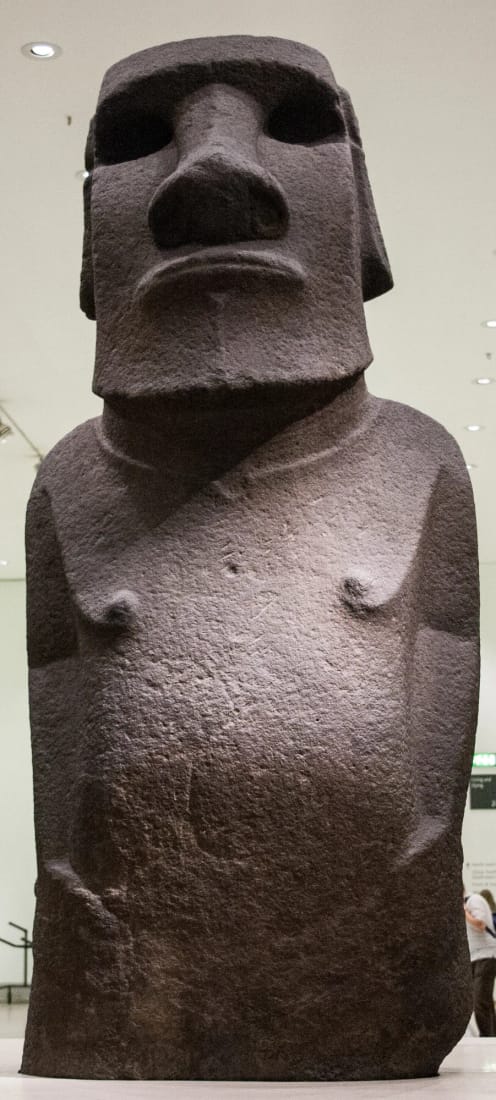
Title: Hoa Hakananai'a
Artist: Unknown (Rapa Nui people)
Year: c. AD 1000–1200
Medium: Volcanic rock (often called basalt)
Museum: The British Museum, London
1 Find it! 絵の中から見つけて、○でかこもう。
- ☐ Deep eyes and heavy brows
- ☐ Big nose and tight lips
- ☐ Chest and body
2 First look 最初に見たときの感想を書こう。
When I first saw this painting, I felt ______________ because ______________________.
Three colors I can see: ①__________ ②__________ ③__________
3 Words — Match them. 英語と日本語を線で結ぼう。
- ancestor ●
- carve ●
- return ●
- serious ●
- ● 祖先
- ● 彫る
- ● 返還・返すこと
- ● まじめな・きびしい
Hoa Hakananai'a
4 Fill in the blanks. 下の箱から選んで、( )に入れよう。形を変えるものもあります。
- Moai may show the of the islanders.
- The islanders it from hard rock.
- The islanders ask for the of the statue.
- The moai has a face.
5 Read and answer — True or False? 英文を読んで、正しければ T、ちがえば F。
This is a moai from Easter Island. It is very big and very heavy. It has a big nose and a sad mouth. British sailors took it in 1868. The island people want it back.
Hoa Hakananai'a is a moai, a stone statue from Easter Island (Rapa Nui) in the South Pacific. It is 2.42 meters tall and weighs about 4.2 tonnes. Most moai are carved from soft volcanic stone, but this one is made of hard lava rock. It was probably made around AD 1000–1200.
- Birdmen are carved on the back of this moai. T / F
- This moai is made of the same soft stone as most moai. T / F
6 Quiz — Choose the best answer. 正しいものを選ぼう。
In which year was this moai taken from the island?
- 1492
- 1868
- 1945
- 2018
Hoa Hakananai'a
7 Put the words in order. 語を正しく並べかえて、文を書こう。
- in / statue / The / taken / was / from / 1868 / Easter / Island .
- is / stone / a / tall / This / statue .
8 Complete the description. 箱の語を(1)〜(4)に入れて、絵の説明を完成させよう。
This is a tall (1) (2). It has a big head, deep eyes and a long nose. Its mouth is (3) (4). Its body is long and it has no legs.
9 Describe the painting in English. この絵を英語で説明しよう(3文以上)。
10 Think & Talk 考えて、ペアやグループで話し合おう。
Should this moai go back to Easter Island? Why or why not?
What do you think the moai is thinking about?
11 My favorite part いちばん好きなところを英語で。
I like the ____________ because ____________________________.
Answers & Notes
1 Find it!
Deep eyes and heavy brows=深い目と太い眉/Big nose and tight lips=大きな鼻と結んだ口/Chest and body=胸と体
2 First look
自由に書けたら正解。I felt calm / surprised / happy … などの形容詞を使おう。
3 Words
1–a(ancestor=祖先) 2–b(carve=彫る) 3–c(return=返還・返すこと) 4–d(serious=まじめな・きびしい)
4 Fill in the blanks
- ancestors Moai may show the ancestors of the islanders.
モアイは島の人々の祖先をあらわしているのかもしれません。 - carved The islanders carved it from hard rock.
島の人々はそれをかたい岩から彫りました。 - return The islanders ask for the return of the statue.
島の人々は像の返還を求めています。 - serious The moai has a serious face.
そのモアイはきびしい顔をしています。
5 Read — T / F
【本文の訳】これはイースター島のモアイです。とても大きくて、とても重いです。大きな鼻と悲しそうな口をしています。1868年にイギリスの船乗りが持っていきました。島の人々は返してほしいと思っています。
【本文の訳】ホア・ハカナナイアは、南太平洋のイースター島(ラパ・ヌイ)で作られたモアイ像です。高さは2.42メートル、重さは約4.2トン。ほとんどのモアイがやわらかい凝灰岩で作られているのに対し、この像はかたい溶岩の石で彫られているのが特ちょうです。作られたのは西暦1000〜1200年ごろと考えられています。
- T このモアイの背中には、鳥人間が彫られている。
解説:鳥人儀礼に関係するもようが、あとから彫り足されました。 - F このモアイは、ほかのモアイと同じやわらかい石でできている。
解説:多くのモアイは凝灰岩ですが、この像はかたい溶岩の石です。
6 Quiz
B 問:このモアイがイギリスへ運ばれたのは何年?
選択肢:A 1492年/B 1868年/C 1945年/D 2018年
解説:1868年、イギリスの軍艦トパーズ号が島から運び出しました。
7 Put the words in order
- The statue was taken from Easter Island in 1868.
その像は1868年にイースター島から持ち去られました。 - This is a tall stone statue.
これは背の高い石の像です。
💡 was taken from(〜から持ち去られた):作品が元の場所から移された歴史を語るときに。受け身 was taken で「持っていかれた」。
8 Complete the description
(1) stone (2) statue (3) closed (4) tightly
9 Describe(模範解答)
This is a tall stone statue. It has a big head, deep eyes and a long nose. Its mouth is closed tightly. Its body is long and it has no legs.
これは背の高い石の像です。大きな頭に、深い目と長い鼻があります。口はきゅっと閉じています。体は長く、脚はありません。
10 Think & Talk(問いの訳)
- Should this moai go back to Easter Island? Why or why not?
このモアイはイースター島に返されるべきだと思いますか?それはなぜ? - What do you think the moai is thinking about?
このモアイは何を考えていると思いますか?
正解のない問いです。理由をつけて話せたら◎。
Fun Fact(訳)
名前は「盗まれた(失われた)友」 島の人々はこの像を「ホア・ハカナナイア」と呼びました。大英博物館はこれを「失われた、または盗まれた友」と訳しています。「かくされた友」などの訳もあり、意味にはいくつかの説があります。
