 ワークシート
 ぬりえ
 迷路
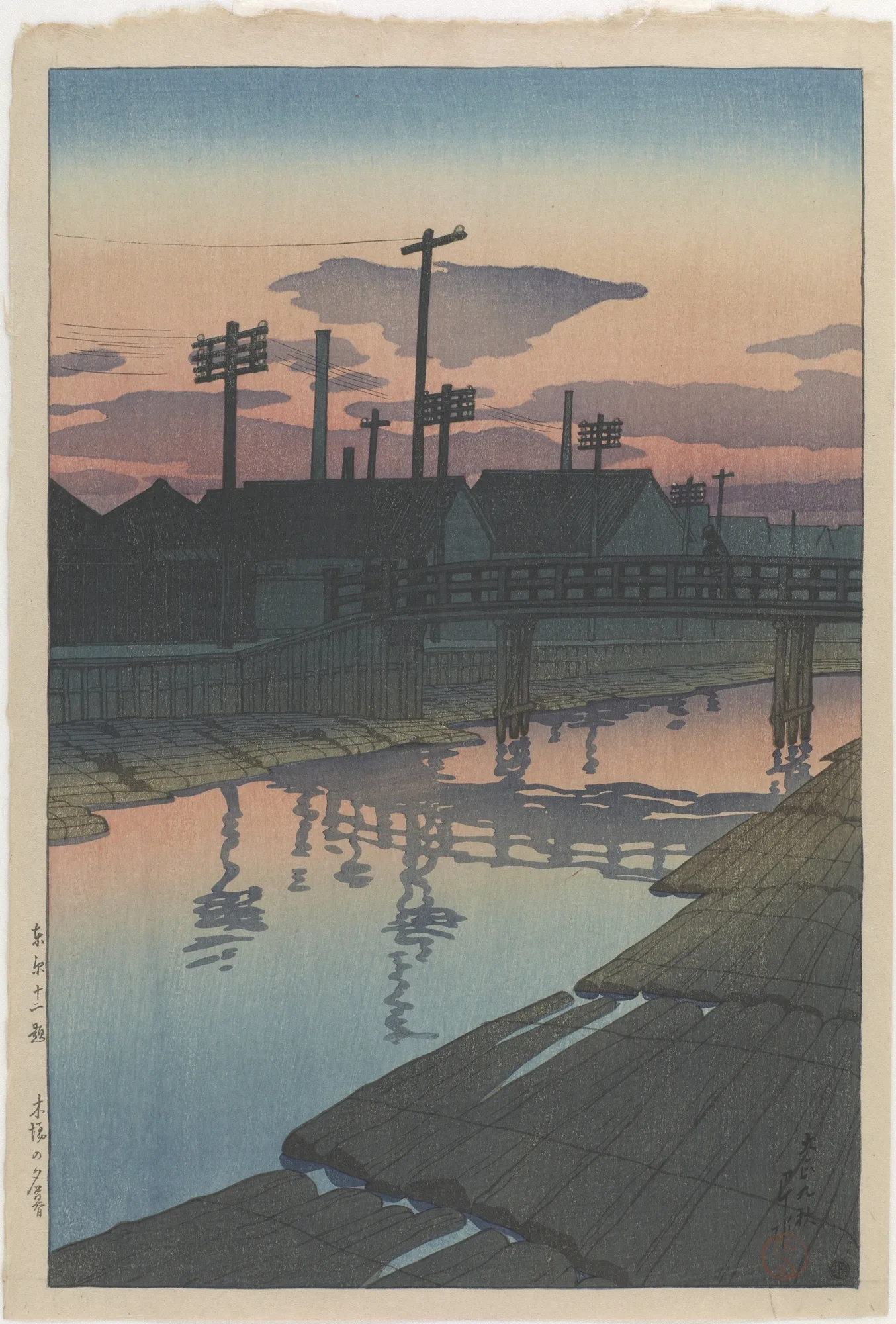
ピンクの夕空に電柱のシルエット。水に浮かぶ丸太の町・木場。Poles against a pink sky. Kiba, a town of floating logs.
この作品のお話
Story夕焼けのピンク色がのこる空に、電柱や煙突が黒いシルエットになって並んでいます。運河には橋がかかり、水面には電柱や橋の影がゆらゆらと映っています。手前には、水に浮かべた丸太がびっしり。「昭和の広重」とも呼ばれる版画家・川瀬巴水の連作「東京十二題」の一枚「木場の夕暮」で、1920年の作品です。
In a sky still pink from the sunset, telegraph poles and chimneys stand in black silhouettes. A bridge crosses the canal, and the reflections of the poles and bridge wobble on the water. In front, logs are packed tightly on the water. This is Evening at Kiba from Twelve Scenes of Tokyo by Kawase Hasui, a print artist sometimes called 'the Hiroshige of Shōwa.' It was made in 1920.
木場は、東京の深川にあった材木の町です。運河や池には、全国から運ばれてきた丸太が浮かべられ、材木屋がずらりと並んでいました。巴水は、版元の渡邊庄三郎とともに、浮世絵の技を受けつぐ「新版画」を作りました。空の色のなめらかな変化や水面のゆらぎは、何度も色を重ねて摺る、職人の手わざで表されています。
Kiba was a lumber town in Fukagawa, Tokyo. Logs brought from all over Japan floated in its canals and ponds, and lumber shops lined the streets. With his publisher Watanabe Shōzaburō, Hasui made shin-hanga, 'new prints' that carried on the skills of ukiyo-e. The smooth changes in the sky and the rippling water were made by craftsmen printing many layers of color.
「東京十二題」は、巴水がまだ版画を始めて間もないころの連作です。古い江戸の名残と、電柱や煙突のような新しい東京が、静かな夕暮れの中にとけあっています。その後、木場の材木屋は埋め立て地の新木場へ移り、跡地の一部は木場公園になりました。画像の摺りの所蔵先はわかっていませんが、同じ図柄の摺りはほかにもあります。
Twelve Scenes of Tokyo was made soon after Hasui started making prints. Traces of old Edo and new Tokyo, with its poles and chimneys, blend in the quiet evening. Later, the lumber shops of Kiba moved to Shin-Kiba, on reclaimed land, and part of the old area became Kiba Park. We do not know who owns the impression in this image, but other prints of the same design exist.
これは夕方の東京です。空はピンク色です。黒い電柱がたくさんあります。大きな丸太が水に浮かんでいます。昔、この町は木を売る町でした。
This is Tokyo in the evening. The sky is pink. There are many dark poles. Big logs float on the water. Long ago, this town sold wood.
英語のレベルは上の「やさしい/ふつう」で切りかえられます。
えっ!?な裏ネタ
Secrets木場では、丸太を水に浮かべてたくわえていました。水につけておくと木がかわきすぎてひび割れるのを防ぎ、虫もつきにくくなると言われます。重い丸太をいかだにして運ぶのにも、水は便利でした。
In Kiba, logs were stored floating in water. Keeping them in water is said to stop the wood from drying and cracking, and to keep insects away. Water also made it easy to move heavy logs as rafts.
木場の職人たちは、水に浮かぶ角材の上に乗り、足だけで木を回したり進めたりする技を身につけていました。その技から生まれた「木場の角乗(かくのり)」は、今も東京都の無形民俗文化財として受けつがれています。
Kiba's workers learned to stand on squared logs floating in water and turn or move them with their feet. This skill became 'Kiba no Kakunori,' a balancing performance that is still kept alive as an intangible folk cultural property of Tokyo.
町が広がり、木場の水辺の環境も変わったため、材木屋さんたちは東京湾の埋め立て地にできた「新木場」へ移りました。もとの貯木場の一部は、広い木場公園に生まれ変わっています。
As the city grew and the waterways changed, the lumber dealers moved to Shin-Kiba, 'New Kiba,' built on reclaimed land in Tokyo Bay. Part of the old log ponds became the large Kiba Park.
1923年の関東大震災で、渡邊庄三郎の版画店は焼けてしまいました。そのため、震災より前に摺られた巴水の初期の作品は、残っている数が少なく、とても貴重だとされています。
In the Great Kantō Earthquake of 1923, Watanabe Shōzaburō's print shop burned down. Because of this, Hasui's early prints made before the earthquake are rare and considered very valuable.
ここを見て!
Look Closer1運河の橋Bridge over the canal
運河にかかる木の橋。人影が一つ、夕暮れの中をわたっていきます。
A wooden bridge over the canal. One figure crosses in the evening light.
2電柱と煙突Poles and chimneys
夕焼け空にならぶ電柱と煙突のシルエット。大正時代の新しい東京の風景です。
Silhouettes of poles and chimneys in the sunset sky. They show the new Tokyo of the Taishō era.
3水に浮かぶ丸太Floating logs
手前にびっしりと浮かぶ丸太。木場が材木の町だったことがわかります。
Logs crowd the water in front, showing that Kiba was a lumber town.
4水面の影Reflections
電柱や橋が水面にゆらゆらと映っています。
The poles and bridge are reflected in the rippling water.
英語で名画を語ろう
Talk about Art in EnglishAfter sunset, the sky over Kiba turns pink.
日がしずんだあと、木場の空はピンク色に染まります。
💡 sunset は「日の入り」。before sunrise(日の出前に)と合わせて、時間帯の説明に使えます。
英語で説明すると… Describe it
これは運河の夕方のながめです。奥には、ピンクの空を背に黒い電柱や煙突があります。まん中には木の橋があります。手前では、たくさんの丸太が水に浮かんでいます。
This is an evening view of a canal. In the background, there are dark poles and chimneys against a pink sky. In the middle, there is a wooden bridge. In the foreground, many logs are floating on the water.
考えてみよう Think & Talk
- 巴水はなぜ、美しい夕焼けの中に電柱を描いたのだと思いますか?Why do you think Hasui put telegraph poles in a beautiful sunset?
- この絵から、どんな音が聞こえてきそうですか?What sounds can you imagine in this picture?
この作品の英単語
WordsMany logs float on the water.
たくさんの丸太が水に浮かんでいます。
A bridge crosses the canal.
橋が運河にかかっています。
Tall chimneys stand against the sky.
高い煙突が空を背に立っています。
The water is calm in the evening.
夕方の水面はおだやかです。
ミニクイズ
QuizQ. 木場はどんな町だった?What kind of town was Kiba?
運河に丸太を浮かべ、材木屋が並ぶ材木の町でした。
It was a lumber town, with logs floating in canals and many lumber shops.
ウソ?ホント? 木場の材木屋は、のちに新木場へ移った。Kiba's lumber dealers later moved to Shin-Kiba.
東京湾の埋め立て地にできた新木場へ移りました。
They moved to Shin-Kiba on reclaimed land in Tokyo Bay.
ウソ?ホント? この絵は、江戸時代の浮世絵師が描いた。This print was made by an Edo-period ukiyo-e artist.
大正時代の1920年に、新版画の作家・川瀬巴水が作りました。
It was made in 1920, in the Taishō era, by the shin-hanga artist Kawase Hasui.
 画像の出典とライセンス / Image credit
- PDTōkyō jūnidai, Kiba no yūgure by Kawase Hasui.jpg(Wikimedia Commons)
ライセンス:Public domain(パブリックドメイン)/作者・撮影者の表記:Hasui Kawase
この作品は、作者の死後長い年月がたち著作権の保護期間が終わった「パブリックドメイン」の作品です。画像は平面の作品を忠実に写したもので、新しい著作権は生じません(Wikimedia Commons の PD-Art の考え方)。 所蔵:所蔵先不明の摺り(同じ図柄の摺りはほかにもある)(Collection of this impression unknown (other impressions exist))。画像は表示のために縮小・WebP 形式に変換しています。