

 PDF をダウンロード
Let's Look at Art!
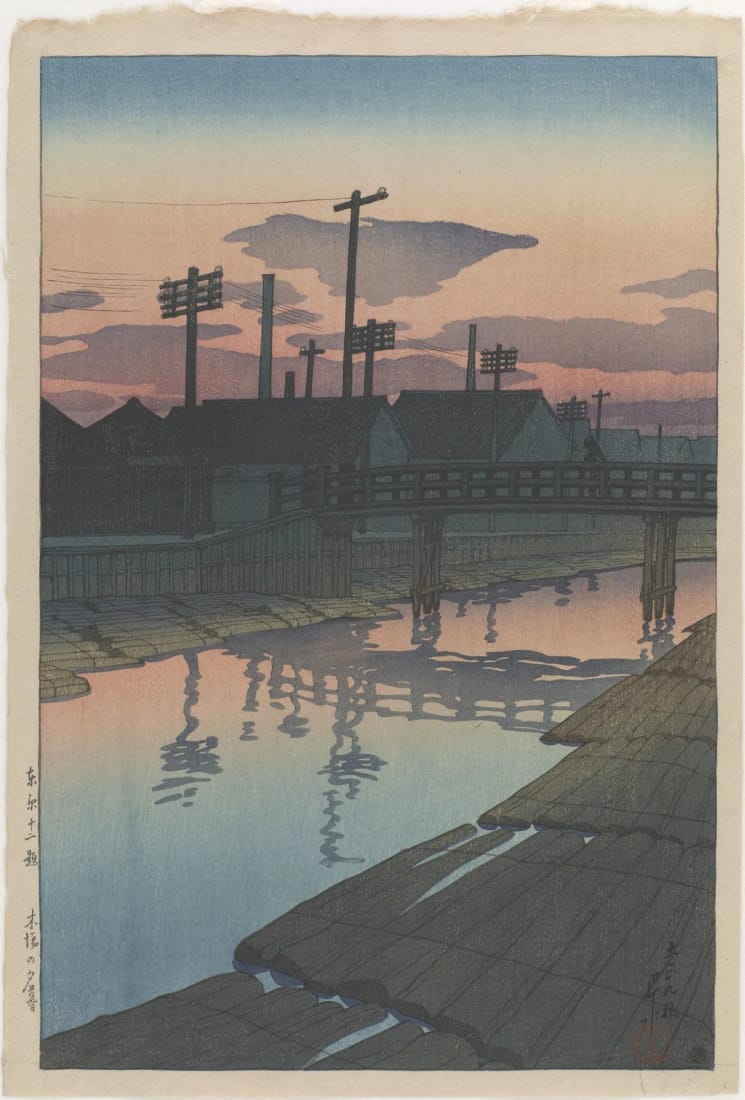
Title: Evening at Kiba (Twelve Scenes of Tokyo)
Artist: Kawase Hasui (1883–1957)
Year: 1920
Medium: Woodblock print (shin-hanga)
Museum: Collection of this impression unknown (other impressions exist)
1 Find it! 絵の中から見つけて、○でかこもう。
- ☐ Bridge over the canal
- ☐ Poles and chimneys
- ☐ Floating logs
- ☐ Reflections
2 First look 最初に見たときの感想を書こう。
When I first saw this painting, I felt ______________ because ______________________.
Three colors I can see: ①__________ ②__________ ③__________
3 Words — Match them. 英語と日本語を線で結ぼう。
- log ●
- canal ●
- chimney ●
- calm ●
- ● 運河
- ● 丸太
- ● 静かな、おだやかな
- ● 煙突
Evening at Kiba (Twelve Scenes of Tokyo)
4 Fill in the blanks. 下の箱から選んで、( )に入れよう。形を変えるものもあります。
- Many float on the water.
- A bridge crosses the .
- Tall stand against the sky.
- The water is in the evening.
5 Read and answer — True or False? 英文を読んで、正しければ T、ちがえば F。
This is Tokyo in the evening. The sky is pink. There are many dark poles. Big logs float on the water. Long ago, this town sold wood.
In a sky still pink from the sunset, telegraph poles and chimneys stand in black silhouettes. A bridge crosses the canal, and the reflections of the poles and bridge wobble on the water. In front, logs are packed tightly on the water. This is Evening at Kiba from Twelve Scenes of Tokyo by Kawase Hasui, a print artist sometimes called 'the Hiroshige of Shōwa.' It was made in 1920.
- Kiba's lumber dealers later moved to Shin-Kiba. T / F
- This print was made by an Edo-period ukiyo-e artist. T / F
6 Quiz — Choose the best answer. 正しいものを選ぼう。
What kind of town was Kiba?
- A fish market town
- A lumber town
- A hot spring town
- A castle town
Evening at Kiba (Twelve Scenes of Tokyo)
7 Put the words in order. 語を正しく並べかえて、文を書こう。
- sky / the / pink / over / Kiba / turns / After / sunset, .
- of / This / view / is / canal / a / an / evening .
8 Complete the description. 箱の語を(1)〜(4)に入れて、絵の説明を完成させよう。
This is an evening view of a canal. In the (1), there are dark poles and (2) against a pink sky. In the middle, there is a wooden (3). In the (4), many logs are floating on the water.
9 Describe the painting in English. この絵を英語で説明しよう(3文以上)。
10 Think & Talk 考えて、ペアやグループで話し合おう。
Why do you think Hasui put telegraph poles in a beautiful sunset?
What sounds can you imagine in this picture?
11 My favorite part いちばん好きなところを英語で。
I like the ____________ because ____________________________.
Answers & Notes
1 Find it!
Bridge over the canal=運河の橋/Poles and chimneys=電柱と煙突/Floating logs=水に浮かぶ丸太/Reflections=水面の影
2 First look
自由に書けたら正解。I felt calm / surprised / happy … などの形容詞を使おう。
3 Words
1–b(log=丸太) 2–a(canal=運河) 3–d(chimney=煙突) 4–c(calm=静かな、おだやかな)
4 Fill in the blanks
- logs Many logs float on the water.
たくさんの丸太が水に浮かんでいます。 - canal A bridge crosses the canal.
橋が運河にかかっています。 - chimneys Tall chimneys stand against the sky.
高い煙突が空を背に立っています。 - calm The water is calm in the evening.
夕方の水面はおだやかです。
5 Read — T / F
【本文の訳】これは夕方の東京です。空はピンク色です。黒い電柱がたくさんあります。大きな丸太が水に浮かんでいます。昔、この町は木を売る町でした。
【本文の訳】夕焼けのピンク色がのこる空に、電柱や煙突が黒いシルエットになって並んでいます。運河には橋がかかり、水面には電柱や橋の影がゆらゆらと映っています。手前には、水に浮かべた丸太がびっしり。「昭和の広重」とも呼ばれる版画家・川瀬巴水の連作「東京十二題」の一枚「木場の夕暮」で、1920年の作品です。
- T 木場の材木屋は、のちに新木場へ移った。
解説:東京湾の埋め立て地にできた新木場へ移りました。 - F この絵は、江戸時代の浮世絵師が描いた。
解説:大正時代の1920年に、新版画の作家・川瀬巴水が作りました。
6 Quiz
B 問:木場はどんな町だった?
選択肢:A 魚市場の町/B 材木の町/C 温泉の町/D お城の町
解説:運河に丸太を浮かべ、材木屋が並ぶ材木の町でした。
7 Put the words in order
- After sunset, the sky over Kiba turns pink.
日がしずんだあと、木場の空はピンク色に染まります。 - This is an evening view of a canal.
これは運河の夕方のながめです。
💡 after sunset(日がしずんだあとに):sunset は「日の入り」。before sunrise(日の出前に)と合わせて、時間帯の説明に使えます。
8 Complete the description
(1) background (2) chimneys (3) bridge (4) foreground
9 Describe(模範解答)
This is an evening view of a canal. In the background, there are dark poles and chimneys against a pink sky. In the middle, there is a wooden bridge. In the foreground, many logs are floating on the water.
これは運河の夕方のながめです。奥には、ピンクの空を背に黒い電柱や煙突があります。まん中には木の橋があります。手前では、たくさんの丸太が水に浮かんでいます。
10 Think & Talk(問いの訳)
- Why do you think Hasui put telegraph poles in a beautiful sunset?
巴水はなぜ、美しい夕焼けの中に電柱を描いたのだと思いますか? - What sounds can you imagine in this picture?
この絵から、どんな音が聞こえてきそうですか?
正解のない問いです。理由をつけて話せたら◎。
Fun Fact(訳)
丸太は、なぜ水に浮かべた? 木場では、丸太を水に浮かべてたくわえていました。水につけておくと木がかわきすぎてひび割れるのを防ぎ、虫もつきにくくなると言われます。重い丸太をいかだにして運ぶのにも、水は便利でした。
