 ワークシート
 ぬりえ
 迷路
雪の中の赤い門。国が「技を残すため」に作らせた、特別な一枚!A red gate in the snow. A special print made so the nation could save the craft!
この作品のお話
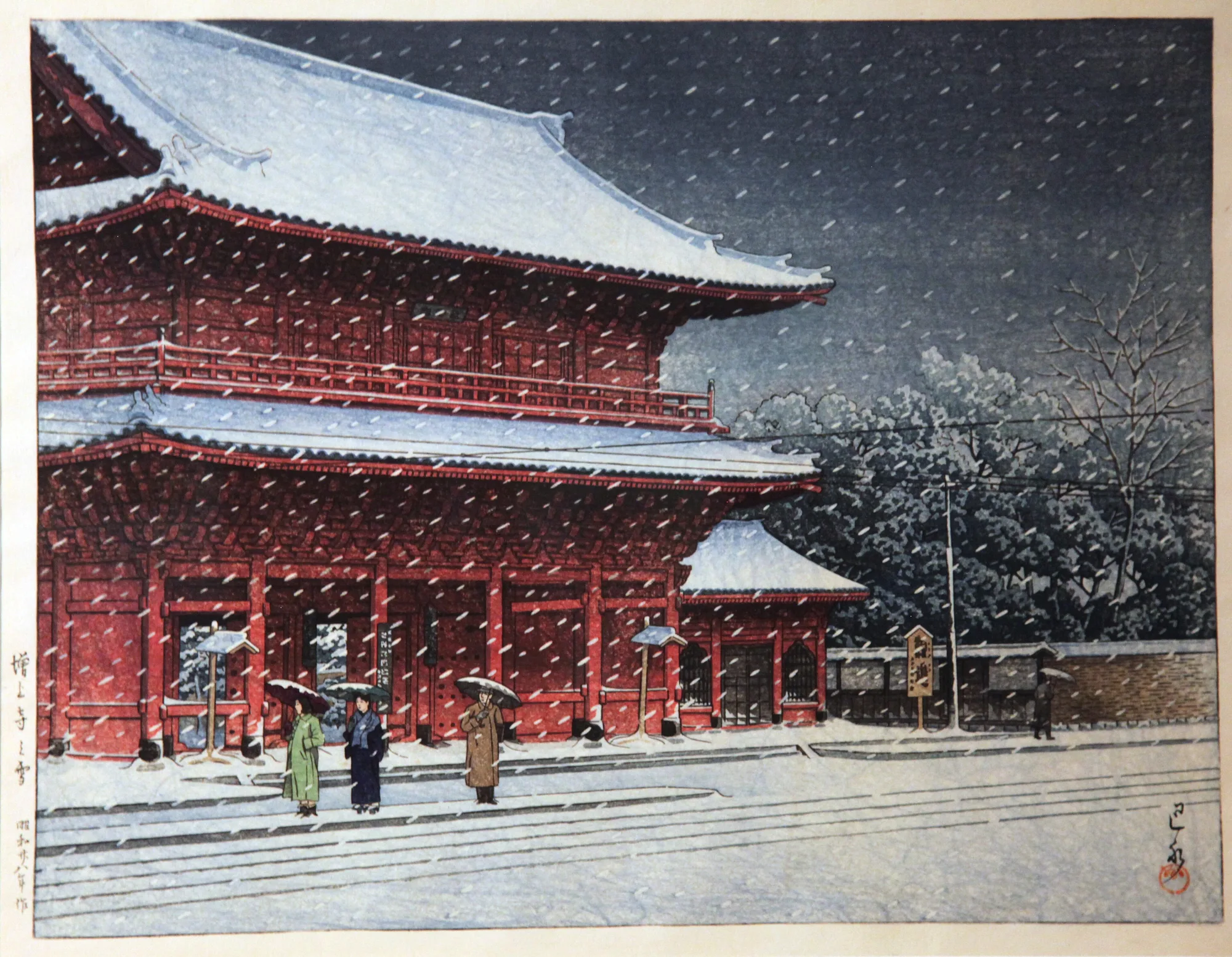
Story雪がしんしんと降るなか、朱色の大きな門が立っています。東京・芝にある増上寺の正門、三解脱門です。門の前では傘をさした3人が立ち止まり、右の塀ぞいには1人がとぼとぼ歩いていきます。作者は「昭和の広重」とも呼ばれる版画家・川瀬巴水。左はしに「増上寺之雪 昭和廿八年作」とあり、1953年の作品だとわかります。
Snow falls quietly on a huge red gate. It is the Sangedatsu-mon, the main gate of Zōjō-ji Temple in Shiba, Tokyo. In front of it, three people with umbrellas stand still. On the right, one person walks alone along a wall. The artist is Kawase Hasui, sometimes called 'the Hiroshige of the Shōwa era.' The words on the left edge tell us it was made in 1953.
巴水は、大正時代に始まった「新版画」を代表する作家です。浮世絵と同じように、絵師・彫師・摺師が分業し、版元の渡邊庄三郎がまとめ役でした。この作品は、国の文化財保護委員会が木版画の技術を後の時代に残すために行った事業で作られました。風景画を巴水が、美人画を伊東深水が担当しました。
Hasui was a leading artist of shin-hanga, or 'new prints,' which began in the Taishō era. As with ukiyo-e, a designer, a carver and a printer each did their own job. The publisher Watanabe Shōzaburō organized the team. This print was made for a government project to save the skills of woodblock printing. Hasui made a landscape, and Itō Shinsui made a picture of a beautiful woman.
このとき作られた原画や版木、色を1色ずつ重ねていく途中の段階を示す「順序摺り」などは国に納められ、今は東京国立博物館にあります。巴水はその4年後の1957年に亡くなりました。巴水の版画は海外でも人気が高く、アップルの創業者スティーブ・ジョブズも巴水をはじめとする新版画を集めていたことで知られています。
The original drawing, the woodblocks and the 'progressive proofs,' which show the print as each color is added, were given to the government. They are now at the Tokyo National Museum. Hasui died four years later, in 1957. His prints are very popular overseas. Steve Jobs, the co-founder of Apple, is known to have collected shin-hanga prints, including works by Hasui.
大きな赤い門に雪が降っています。東京の有名なお寺です。3人が傘をさして立っています。これは1953年の木版画です。アップルのスティーブ・ジョブズも、この画家の版画を集めていました!
Snow falls on a big red gate. It is a famous temple in Tokyo. Three people stand under umbrellas. This is a woodblock print from 1953. Steve Jobs of Apple collected prints by this artist!
英語のレベルは上の「やさしい/ふつう」で切りかえられます。
えっ!?な裏ネタ
Secrets1952年度、国の文化財保護委員会は、木版画の作り方を記録して残す事業を行いました。そのために作られたのがこの版画です。原画、版木、色を重ねる途中の「順序摺り」まで、一式が東京国立博物館に残っています。
In 1952, a national committee for cultural properties started a project to record how woodblock prints are made. This print was created for it. The drawing, the blocks and the progressive proofs are all kept at the Tokyo National Museum.
この事業で美人画を担当した伊東深水は、巴水にとって特別な人です。巴水は、深水の木版画「近江八景」を見て感動し、版画の世界に入ったといわれます。約35年後、ふたりは国の事業で肩を並べたのです。
Itō Shinsui, who made the other print for this project, was special to Hasui. It is said that Hasui decided to make prints after seeing Shinsui's woodblock series 'Eight Views of Ōmi.' About 35 years later, the two worked side by side on a national project.
アップルの創業者スティーブ・ジョブズは、来日のたびに日本の画廊を訪れ、巴水をはじめとする新版画を買い集めていたことで知られています。巴水のシンプルで静かな画面に、ジョブズは何を感じたのでしょうか。
Steve Jobs, the co-founder of Apple, is known to have visited galleries in Japan and collected shin-hanga prints, including works by Hasui. What did Jobs feel when he looked at Hasui's simple, quiet pictures?
巴水は1925年にも、連作「東京二十景」の「芝増上寺」で、雪の中の同じ門を描いています。こちらは巴水の作品の中でも特に人気の高い一枚です。28年後、巴水はもう一度、雪の増上寺を選んだのです。
In 1925, Hasui also showed the same gate in snow in 'Shiba Zōjō-ji' from his series 'Twenty Views of Tokyo.' It is one of his most popular prints. Twenty-eight years later, he chose snowy Zōjō-ji again.
ここを見て!
Look Closer1三解脱門Sangedatsu-mon Gate
1622年に建てられた増上寺の正門。戦争中の空襲でお寺の多くが焼けても残った、国の重要文化財です。
Zōjō-ji's main gate was built in 1622. Much of the temple burned in air raids during the war, but this gate survived. It is an Important Cultural Property.
2傘の3人Three people with umbrellas
緑のコート、着物、茶色のコートの3人。傘にはこんもり雪が積もっています。昭和の人々の服装にも注目。
One wears a green coat, one a kimono, and one a brown coat. Snow piles up on their umbrellas. Notice the clothes of the Shōwa era.
3ひとりで歩く人A person walking alone
右の塀ぞいを、小さな人影がひとりで歩いていきます。この1人で、雪の日のしずけさがぐっと強まります。
A small figure walks alone along the wall on the right. This one person makes the snowy day feel even quieter.
4題と年Title and date
左はしの余白に「増上寺之雪」「昭和廿八年作」と書かれています。昭和28年は1953年です。
In the left margin, it says 'Snow at Zōjō-ji' and 'Made in Shōwa 28,' which is 1953.
英語で名画を語ろう
Talk about Art in EnglishThree people are standing in the falling snow in front of the gate.
門の前で、3人が降りしきる雪の中に立っています。
💡 falling は「降っている」。in the falling rain(降る雨の中)とも言えます。
英語で説明すると… Describe it
これは雪の冬の景色です。左には、大きな赤いお寺の門があります。門の前では、3人が傘をさして立っています。右には、雪の積もった木々と、ひとりで歩く人がいます。
This is a snowy winter scene. On the left, there is a huge red temple gate. In front of the gate, three people are standing with umbrellas. On the right, there are snowy trees and a person walking alone.
考えてみよう Think & Talk
- 巴水はなぜ、この絵に雪の日を選んだと思いますか?Why do you think Hasui chose a snowy day for this picture?
- 国は木版画の技術を残そうとしました。あなたは、どんな技や伝統を未来に残したいですか?The government wanted to save the skills of woodblock printing. What skills or traditions do you want to save for the future?
この作品の英単語
WordsA huge red gate stands in the snow.
雪の中に大きな赤い門が立っています。
Snow is piling up on their umbrellas.
傘に雪が積もっています。
The project recorded how prints are made.
その事業は版画の作り方を記録しました。
The snowy temple looks very quiet.
雪のお寺はとても静かに見えます。
ミニクイズ
QuizQ. この版画が作られた目的は?Why was this print made?
国の文化財保護委員会が、木版画の技術を後世に残す事業のために作らせました。
A national committee had it made to save the skills of woodblock printing for the future.
ウソ?ホント? アップルのスティーブ・ジョブズは、巴水などの新版画を集めていた。Steve Jobs of Apple collected shin-hanga prints, such as Hasui's.
ホントです。日本の画廊で新版画を買い集めていたことで知られています。
True. He is known to have bought shin-hanga at galleries in Japan.
ウソ?ホント? この版画は、巴水がひとりで彫って摺った。Hasui carved and printed this by himself.
ウソです。新版画は、絵師・彫師・摺師が分業して作ります。巴水は絵を担当しました。
False. Shin-hanga were made by a team: a designer, a carver and a printer. Hasui made the design.
 画像の出典とライセンス / Image credit
- PDSnow over Zojoji Temple (Shiba, Tokyo)-IMG 9360.JPG(Wikimedia Commons)
ライセンス:Public domain(パブリックドメイン)/作者・撮影者の表記:Hasui Kawase/提供元:Own work
この作品は、作者の死後長い年月がたち著作権の保護期間が終わった「パブリックドメイン」の作品です。画像は平面の作品を忠実に写したもので、新しい著作権は生じません(Wikimedia Commons の PD-Art の考え方)。 所蔵:ギメ東洋美術館(木版画のため、同じ図柄の刷りはほかにもある)(Musée national des arts asiatiques–Guimet (other prints of the same design also exist))。画像は表示のために縮小・WebP 形式に変換しています。