

 ワークシート
 ぬりえ
 迷路
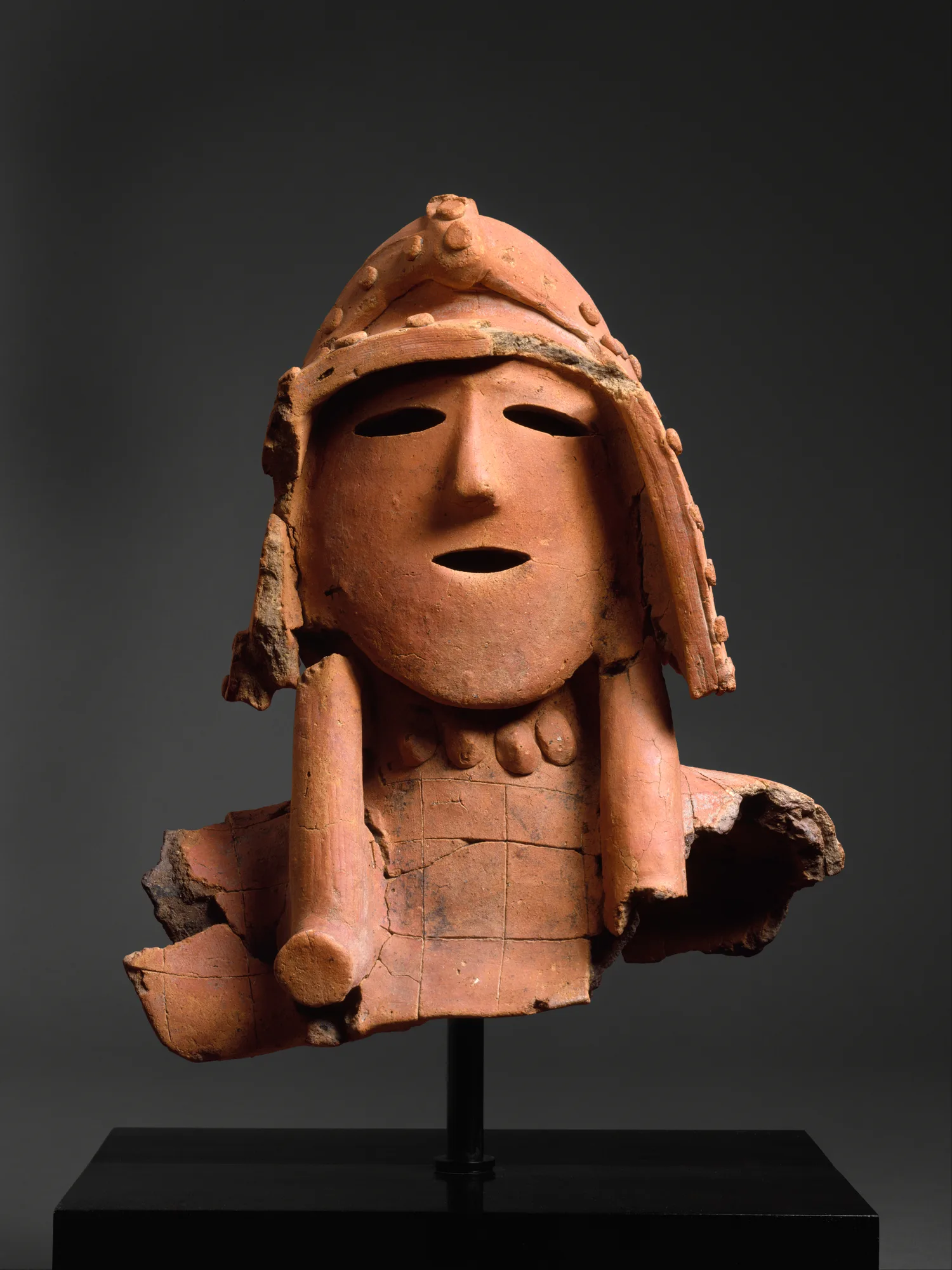
目も口もただの穴。なのに見つめてくる!1500年前のかぶとの戦士。His eyes and mouth are just holes, yet he stares right at you! A 1,500-year-old warrior.
この作品のお話
Storyこれは「埴輪(はにわ)」とよばれる、粘土を焼いて作った像です。6世紀、古墳時代の日本で作られた、かぶとをかぶった戦士の頭と肩の部分で、いまはニューヨークのメトロポリタン美術館にあります。目と口は、粘土をくりぬいただけの穴。それなのに、遠くをじっと見つめているように感じられます。
This is a haniwa, a figure made of fired clay. It was made in Japan in the 6th century, during the Kofun period. It shows the head and shoulders of a warrior in a helmet. Today it is in the Metropolitan Museum of Art in New York. His eyes and mouth are simply holes cut into the clay. Still, he seems to be staring far away.
古墳時代、力のある王や豪族は、「古墳」という大きなお墓に葬られました。埴輪はその古墳の上やまわりに、何列にもならべて立てられました。はじめは筒の形だけでしたが、やがて家・馬・動物・人などさまざまな形が作られます。中が空洞なのは、焼くときにひびが入りにくく、軽くするための工夫です。
In the Kofun period, powerful rulers were buried in huge tombs called kofun. Haniwa were set up in rows on top of and around these tombs. The first haniwa were simple tubes. Later, people made houses, horses, animals and humans. Haniwa are hollow inside. This helped them dry and fire without cracking, and kept them light.
戦士の埴輪は、とくに関東地方の古墳からたくさん見つかっています。群馬県で出土した全身の「埴輪 挂甲(けいこう)の武人」(東京国立博物館)は、1974年に埴輪として初めて国宝になりました。この頭部は1975年、日本美術のコレクションの一部としてメトロポリタン美術館に入りました。素朴で印象的な顔は、現代の見る人にも強く訴えかけます。
Many warrior haniwa have been found in tombs in the Kanto region of eastern Japan. A full-body warrior from Gunma, now in the Tokyo National Museum, became the first haniwa named a National Treasure in 1974. This head entered the Met in 1975 as part of a large collection of Japanese art. Its simple, striking face still makes a strong impression on viewers today.
これは埴輪です。日本の、粘土でできた戦士です。人びとが約1500年前に作りました。目と口は、ただの穴です。埴輪は大きな古墳の上やまわりに並べられました。
This is a haniwa. It is a clay warrior from Japan. People made it about 1,500 years ago. His eyes and mouth are just holes. Haniwa were placed on and around large burial mounds.
英語のレベルは上の「やさしい/ふつう」で切りかえられます。
えっ!?な裏ネタ
Secrets『日本書紀』には、野見宿禰(のみのすくね)が「人を一緒に葬るかわりに、土の人形を立てましょう」と提案したのが埴輪の始まり、という話があります。でも発掘でわかった最初の埴輪は筒の形。この話は伝説と考えられています。
An old book, the Nihon Shoki, says haniwa began when a man named Nomi no Sukune suggested clay figures instead of burying people with a ruler. But the earliest haniwa found by archaeologists are simple tubes. So the story is thought to be a legend.
かぶとの表面の丸いポツポツは、ただの飾りではありません。このころの本物の鉄のかぶとは、鉄の板を鋲でとめて作られていました。埴輪は、当時の武具を知る手がかりにもなるのです。
The round bumps on the helmet are not just decoration. Real iron helmets of this time were made of iron plates joined with rivets. So haniwa also help us learn what armor looked like back then.
「埴」は焼き物にする粘土のこと。「輪」は、筒の形の埴輪が古墳をぐるりと輪のように囲んで並べられたからだ、と言われます。人の形の埴輪も、もとは筒の上に作られています。
Hani means clay for pottery. Wa means a ring. It is said the name came from the way tube-shaped haniwa were lined up in rings around the tombs. Even human-shaped haniwa stand on a tube base.
国宝の「挂甲の武人」には、兄弟のようによく似た埴輪がほかに4体あり、同じ工房で作られた可能性も指摘されています。2024年の東京国立博物館の展覧会では、アメリカのシアトル美術館の1体を含む5体が、初めて一堂に集まりました。
Four other haniwa closely resemble the National Treasure warrior. Experts have suggested that they may have come from the same workshop. In 2024, all five were brought together for the first time at the Tokyo National Museum, including one from the Seattle Art Museum.
ここを見て!
Look Closer1穴だけの顔A face of holes
目と口は、粘土をくりぬいた穴だけ。光の当たり方で、表情がちがって見えます。
The eyes and mouth are just holes in the clay. As the light changes, his face seems to change too.
2鋲を打ったかぶとRiveted helmet
とがったかぶとに、丸い鋲の飾り。横には首を守る板もたれています。
A pointed helmet with round rivets. Plates hang down at the sides to protect the neck.
3肩にたれる筒Tubes by the shoulders
顔の両わきから肩へたれる筒は、昔の男性の髪形「みずら」を表していると考えられます。
These tubes beside his face probably show mizura, an old hairstyle for men with the hair tied in loops.
4首かざりNecklace
首には丸い玉をつないだ首かざり。当時の武人の装いを知る手がかりです。
He wears a necklace of round beads. It gives us a clue to how warriors dressed at the time.
英語で名画を語ろう
Talk about Art in EnglishThe warrior is wearing a pointed helmet and a bead necklace.
この戦士は、とがったかぶとと玉の首かざりを身につけています。
💡 絵や像の人の服装を言うときは is wearing。帽子・かぶと・首かざりにも使えます。
英語で説明すると… Describe it
これは粘土でできた戦士の像です。とがったかぶとをかぶっています。目と口は、かんたんな穴になっています。首には玉の首かざりがあり、肩のあたりに筒がたれています。
This is a clay figure of a warrior. He is wearing a pointed helmet. His eyes and mouth are simple holes. There is a bead necklace around his neck, and tubes hang down by his shoulders.
考えてみよう Think & Talk
- 目と口が穴だけなのは、なぜだと思いますか?Why do you think the eyes and mouth are just holes?
- もしあなたがお墓を守る像を作るなら、どんな姿にしますか?If you made a figure to guard a tomb, what would it look like?
この作品の英単語
WordsHaniwa were made of clay and fired.
埴輪は粘土で作って焼かれた。
Haniwa stood around the ruler's tomb.
埴輪は王の墓のまわりに立っていた。
The figure is hollow inside.
この像は中が空洞だ。
The helmet protects his head and neck.
かぶとが頭と首を守っている。
ミニクイズ
QuizQ. 埴輪はふつう、どこに置かれていた?Where were haniwa usually placed?
埴輪は古墳の上やまわりに、何列にも並べて立てられました。
Haniwa were set up in rows on and around kofun burial mounds.
ウソ?ホント? 埴輪は中が空洞になっている。Haniwa are hollow inside.
空洞にすると、焼くときにひびが入りにくく、軽くなります。
Being hollow helps them fire without cracking and makes them lighter.
ウソ?ホント? 最初に作られた埴輪は、人の形だった。The first haniwa were shaped like people.
最初は筒の形でした。人や動物の形は、あとから作られるようになりました。
The first ones were simple tubes. People and animals came later.
 画像の出典とライセンス / Image credit
- CC0埴輪武装男子像-Haniwa (Hollow Clay Sculpture) of a Warrior MET DT222.jpg(Wikimedia Commons)
ライセンス:CC0(パブリックドメイン提供)/提供元:This file was donated to Wikimedia Commons as part of a project by the Metropolitan Museum of Art. See the Image and Data Resources Open Access Policy
この作品は、作者の死後長い年月がたち著作権の保護期間が終わっています。写真は撮影者がパブリックドメインとして公開したもの、または著作権の保護期間が終わった古い写真です。 所蔵:メトロポリタン美術館(The Metropolitan Museum of Art)。画像は表示のために縮小・WebP 形式に変換しています。
