

 PDF をダウンロード
Let's Look at Art!
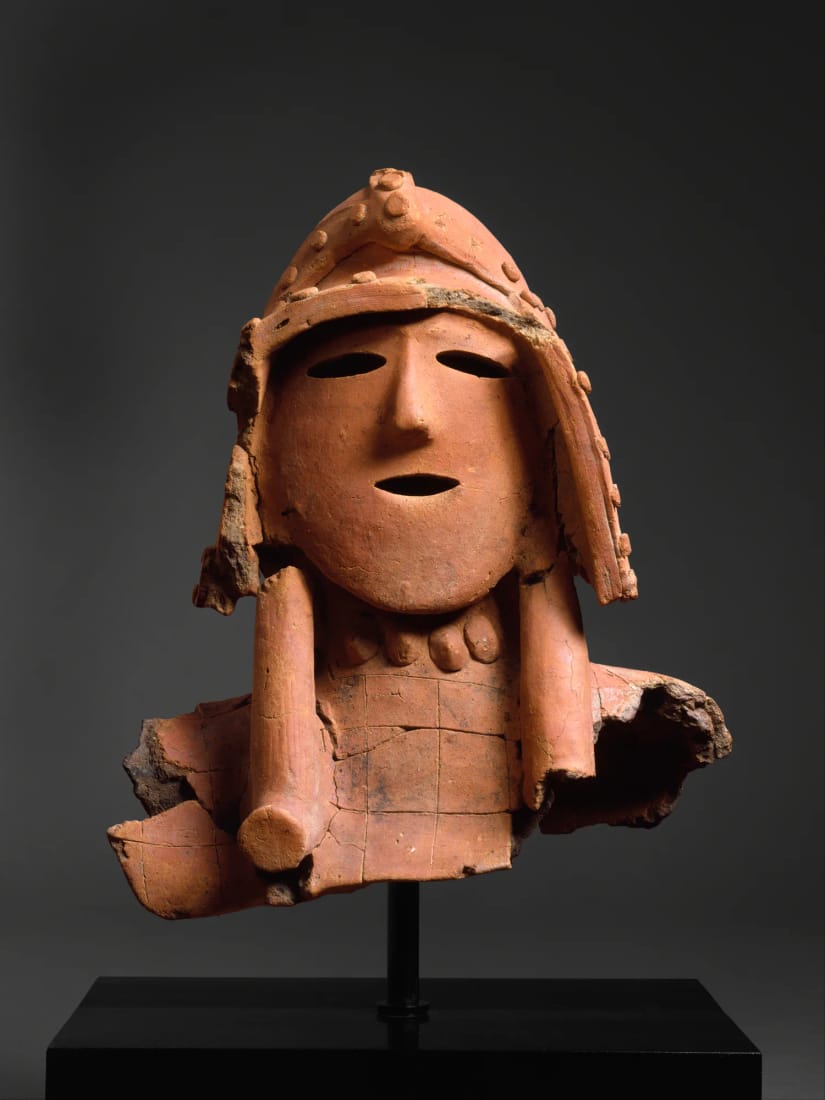
Title: Head of a Warrior Clay Tomb Sculpture (Haniwa)
Artist: Unknown
Year: 6th century
Medium: Earthenware with incised and applied decoration
Museum: The Metropolitan Museum of Art, New York
1 Find it! 絵の中から見つけて、○でかこもう。
- ☐ A face of holes
- ☐ Riveted helmet
- ☐ Tubes by the shoulders
- ☐ Necklace
2 First look 最初に見たときの感想を書こう。
When I first saw this painting, I felt ______________ because ______________________.
Three colors I can see: ①__________ ②__________ ③__________
3 Words — Match them. 英語と日本語を線で結ぼう。
- clay ●
- tomb ●
- hollow ●
- protect ●
- ● 中が空洞の
- ● 墓
- ● 守る
- ● 粘土
Head of a Warrior Clay Tomb Sculpture (Haniwa)
4 Fill in the blanks. 下の箱から選んで、( )に入れよう。形を変えるものもあります。
- Haniwa were made of and fired.
- Haniwa stood around the ruler's .
- The figure is inside.
- The helmet his head and neck.
5 Read and answer — True or False? 英文を読んで、正しければ T、ちがえば F。
This is a haniwa. It is a clay warrior from Japan. People made it about 1,500 years ago. His eyes and mouth are just holes. Haniwa were placed on and around large burial mounds.
This is a haniwa, a figure made of fired clay. It was made in Japan in the 6th century, during the Kofun period. It shows the head and shoulders of a warrior in a helmet. Today it is in the Metropolitan Museum of Art in New York. His eyes and mouth are simply holes cut into the clay. Still, he seems to be staring far away.
- Haniwa are hollow inside. T / F
- The first haniwa were shaped like people. T / F
6 Quiz — Choose the best answer. 正しいものを選ぼう。
Where were haniwa usually placed?
- Inside temple halls
- On and around burial mounds
- At the doors of houses
- At the front of ships
Head of a Warrior Clay Tomb Sculpture (Haniwa)
7 Put the words in order. 語を正しく並べかえて、文を書こう。
- The / and / a / pointed / wearing / is / necklace / bead / a / warrior / helmet .
- of / a / clay / warrior / is / a / figure / This .
8 Complete the description. 箱の語を(1)〜(4)に入れて、絵の説明を完成させよう。
This is a clay figure of a (1). He is wearing a (2) helmet. His eyes and mouth are (3) (4). There is a bead necklace around his neck, and tubes hang down by his shoulders.
9 Describe the painting in English. この絵を英語で説明しよう(3文以上)。
10 Think & Talk 考えて、ペアやグループで話し合おう。
Why do you think the eyes and mouth are just holes?
If you made a figure to guard a tomb, what would it look like?
11 My favorite part いちばん好きなところを英語で。
I like the ____________ because ____________________________.
Answers & Notes
1 Find it!
A face of holes=穴だけの顔/Riveted helmet=鋲を打ったかぶと/Tubes by the shoulders=肩にたれる筒/Necklace=首かざり
2 First look
自由に書けたら正解。I felt calm / surprised / happy … などの形容詞を使おう。
3 Words
1–d(clay=粘土) 2–b(tomb=墓) 3–a(hollow=中が空洞の) 4–c(protect=守る)
4 Fill in the blanks
- clay Haniwa were made of clay and fired.
埴輪は粘土で作って焼かれた。 - tomb Haniwa stood around the ruler's tomb.
埴輪は王の墓のまわりに立っていた。 - hollow The figure is hollow inside.
この像は中が空洞だ。 - protects The helmet protects his head and neck.
かぶとが頭と首を守っている。
5 Read — T / F
【本文の訳】これは埴輪です。日本の、粘土でできた戦士です。人びとが約1500年前に作りました。目と口は、ただの穴です。埴輪は大きな古墳の上やまわりに並べられました。
【本文の訳】これは「埴輪(はにわ)」とよばれる、粘土を焼いて作った像です。6世紀、古墳時代の日本で作られた、かぶとをかぶった戦士の頭と肩の部分で、いまはニューヨークのメトロポリタン美術館にあります。目と口は、粘土をくりぬいただけの穴。それなのに、遠くをじっと見つめているように感じられます。
- T 埴輪は中が空洞になっている。
解説:空洞にすると、焼くときにひびが入りにくく、軽くなります。 - F 最初に作られた埴輪は、人の形だった。
解説:最初は筒の形でした。人や動物の形は、あとから作られるようになりました。
6 Quiz
B 問:埴輪はふつう、どこに置かれていた?
選択肢:A お寺の本堂の中/B 古墳の上やまわり/C 家の玄関/D 船の先
解説:埴輪は古墳の上やまわりに、何列にも並べて立てられました。
7 Put the words in order
- The warrior is wearing a pointed helmet and a bead necklace.
この戦士は、とがったかぶとと玉の首かざりを身につけています。 - This is a clay figure of a warrior.
これは粘土でできた戦士の像です。
💡 is wearing(〜を身につけている):絵や像の人の服装を言うときは is wearing。帽子・かぶと・首かざりにも使えます。
8 Complete the description
(1) warrior (2) pointed (3) simple (4) holes
9 Describe(模範解答)
This is a clay figure of a warrior. He is wearing a pointed helmet. His eyes and mouth are simple holes. There is a bead necklace around his neck, and tubes hang down by his shoulders.
これは粘土でできた戦士の像です。とがったかぶとをかぶっています。目と口は、かんたんな穴になっています。首には玉の首かざりがあり、肩のあたりに筒がたれています。
10 Think & Talk(問いの訳)
- Why do you think the eyes and mouth are just holes?
目と口が穴だけなのは、なぜだと思いますか? - If you made a figure to guard a tomb, what would it look like?
もしあなたがお墓を守る像を作るなら、どんな姿にしますか?
正解のない問いです。理由をつけて話せたら◎。
Fun Fact(訳)
「人のかわりに埴輪」は伝説だった!? 『日本書紀』には、野見宿禰(のみのすくね)が「人を一緒に葬るかわりに、土の人形を立てましょう」と提案したのが埴輪の始まり、という話があります。でも発掘でわかった最初の埴輪は筒の形。この話は伝説と考えられています。
