

 ワークシート
 ぬりえ
 迷路
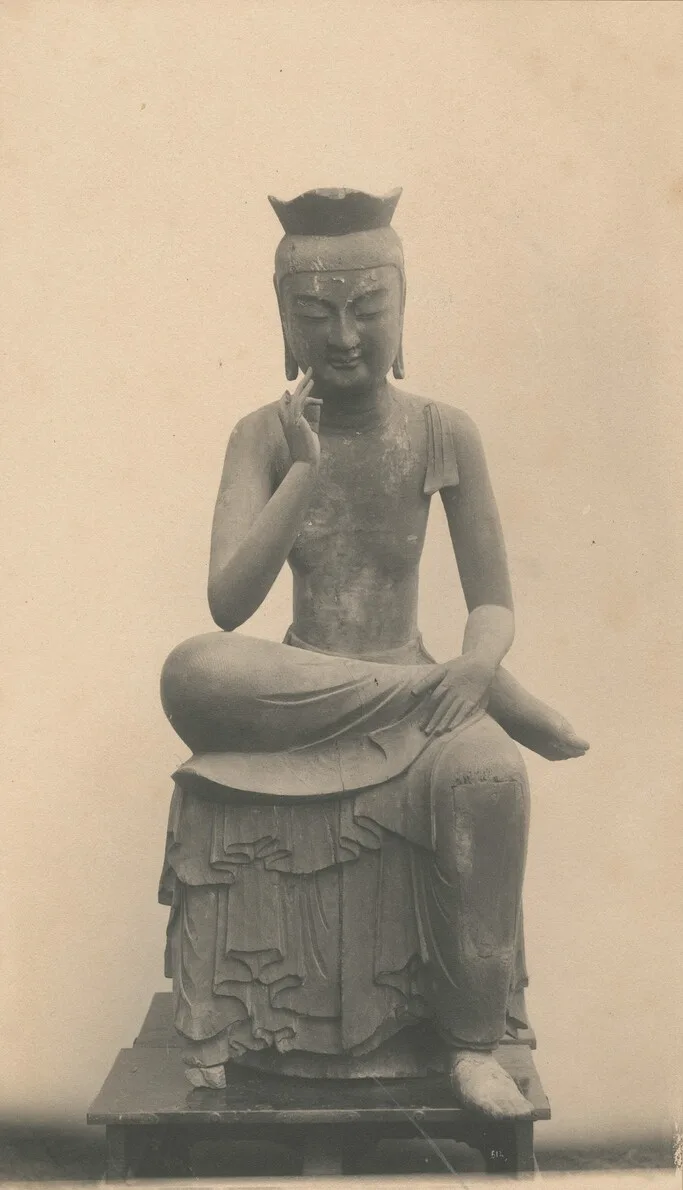
ほおに指をそえて、56億年先を考え中。いちばん美しい「考える仏さま」。A finger to his cheek, thinking 5.6 billion years ahead. The loveliest thinking Buddha.
この作品のお話
Story京都・太秦(うずまさ)の広隆寺にある弥勒菩薩像は、7世紀に作られた国宝の仏像です。片足をもう片方のひざにのせ、右手の指をそっとほおにそえる「半跏思惟(はんかしゆい)」のポーズ。人びとをどう救うか、静かに考えている姿です。この写真は1888〜89年に、写真家の小川一真が撮影したものです。
This Miroku Bosatsu at Kōryūji in Uzumasa, Kyoto, is a National Treasure from the 7th century. He sits with one leg resting on the other knee. The fingers of his right hand lightly touch his cheek. This is the pensive pose. He is quietly thinking about how to save people. This photo was taken in 1888–89 by the photographer Ogawa Kazumasa.
弥勒菩薩は、お釈迦さまが亡くなってから56億7千万年後にあらわれて人びとを救う、と信じられてきた仏さまです。この像はアカマツで作られています。当時の日本の木彫りの仏像にはクスノキが多く、朝鮮半島ではアカマツが使われました。韓国の国宝の金銅弥勒菩薩像とも姿がよく似ているため、朝鮮半島で作られたという説がありますが、作られた場所はまだ決まっていません。
Miroku is believed to appear 5.67 billion years after the Buddha's death to save people. This statue is made of red pine. Japanese wooden statues of that time were usually made of camphor wood, while red pine was used on the Korean Peninsula. It also looks very much like a gilt-bronze Miroku that is a National Treasure of Korea. So some scholars think it was made in Korea, but its origin is still debated.
『日本書紀』には、秦河勝(はたのかわかつ)が聖徳太子から仏像をさずかり、寺を建てたと書かれています。もとは全身に金箔がはられていましたが、その大部分が失われ、いまは木の色が見えています。1951年、新しい文化財の法律で最初に国宝に指定された彫刻のひとつで、「国宝第1号」と呼ばれることもあります。
The Nihon Shoki says that Hata no Kawakatsu received a Buddhist statue from Prince Shōtoku and built a temple for it. The statue was once covered in gold leaf. Most of it has worn away, and now we see the wood. In 1951, it was one of the first sculptures named a National Treasure under a new law. It is sometimes called 'National Treasure No. 1.'
これは仏像の古い写真です。仏さまは座って考えています。指がほおにふれています。木でできていて、約1300年前のものです。むかしは全身が金色でした!
This is an old photo of a Buddha statue. He sits and thinks. His fingers touch his cheek. He is made of wood, and he is about 1,300 years old. Long ago, he was all gold!
英語のレベルは上の「やさしい/ふつう」で切りかえられます。
えっ!?な裏ネタ
Secrets1960年、見学に来た大学生が像にふれ、右手の薬指が折れてしまう事件がありました。指は破片をつないで修復され、いまは目で見てもわからないほどです。現在、像は手の届かない位置に安置され、慎重に守られています。
In 1960, a university student touched the statue and broke the ring finger of its right hand. The pieces were joined back together, and today you can hardly see the break. The statue is now kept out of reach and carefully protected.
韓国の国立中央博物館にある金銅の弥勒菩薩半跏像は、ポーズも冠の形もこの像とよく似ています。日本と朝鮮半島の深いつながりを感じさせる、ふたごのような仏像です。どちらも7世紀ごろの作と考えられています。
A gilt-bronze pensive Miroku in the National Museum of Korea has a very similar pose and crown. The two statues seem almost like twins and show the close ties between Japan and the Korean Peninsula. Both are thought to date from around the 7th century.
ドイツの哲学者ヤスパースが、この像を「人間存在の最も清らかな姿」とほめた、と日本でよく紹介されます。ただし、もとの言葉がどこに書かれているかははっきりしない、とも言われています。
In Japan, people often say the German philosopher Karl Jaspers praised this statue as the purest form of human existence. But it is not clear where he actually wrote this.
この写真を撮った小川一真は、明治時代に日本の古い美術品の調査に同行し、たくさんの仏像を撮影した写真家です。いまとは少しちがう展示のようすがわかる、貴重な記録です。
Ogawa Kazumasa traveled with surveys of old Japanese art in the Meiji era and photographed many Buddhist statues. His photos are precious records of how the statues looked back then.
ここを見て!
Look Closer1おだやかな顔A calm face
目をふせ、口もとにかすかなほほえみ。「アルカイック・スマイル」とよばれる表情です。
His eyes look down, and there is a faint smile. It is called an archaic smile.
2ほおにそえた指Fingers at the cheek
右手の指先が、ほおにふれるかふれないか。考えごとのポーズです。
His right fingertips almost touch his cheek. It is a thinking pose.
3冠Crown
頭の上の冠から「宝冠弥勒」とも呼ばれます。
Because of this crown, the statue is also called the Crowned Miroku.
4組んだ足Crossed leg
右足を左ひざにのせ、左足は下へ。これが「半跏」の座り方です。
His right leg rests on his left knee, and the left foot hangs down. This is the half-lotus pose.
英語で名画を語ろう
Talk about Art in EnglishMiroku is lost in thought, with his fingers near his cheek.
弥勒菩薩は指をほおの近くにそえて、考えにふけっています。
💡 lost は「迷った」だけでなく「〜に夢中」。lost in a book(本に夢中)とも言えます。
英語で説明すると… Describe it
これは木の像の古い写真です。像は台の上に座っています。片足をもう片方のひざにのせています。右手はほおの近くにあり、冠をかぶっています。
This is an old photo of a wooden statue. The figure is sitting on a stand. He has crossed one leg over the other knee. His right hand is near his cheek, and he is wearing a crown.
考えてみよう Think & Talk
- この仏さまは、何を考えていると思いますか?What do you think he is thinking about?
- 像は金箔があるのとないのと、どちらが美しいと思いますか?Is a statue more beautiful with its gold or without it?
この作品の英単語
WordsHe sits in a pensive pose.
彼は考えこんだポーズで座っている。
His fingers lightly touch his cheek.
指がそっとほおにふれている。
Miroku will come to save people.
弥勒は人びとを救いにやって来る。
The statue was once covered in gold leaf.
この像はかつて金箔でおおわれていた。
ミニクイズ
QuizQ. この弥勒菩薩像は、何の木で作られている?What wood is this Miroku statue made of?
アカマツで作られています。朝鮮半島で作られたと考える手がかりのひとつです。
It is made of red pine. This is one clue that it may have been made in Korea.
ウソ?ホント? 弥勒菩薩は、遠い未来にあらわれると信じられている。Miroku is believed to appear in the far future.
お釈迦さまが亡くなって56億7千万年後にあらわれる、とされています。
He is said to come 5.67 billion years after the Buddha's death.
ウソ?ホント? この像は、作られたときから木の色のままだった。The statue has always been the color of plain wood.
もとは金箔がはられていましたが、長い年月ではがれました。
It was once covered in gold leaf, which wore off over time.
 画像の出典とライセンス / Image credit
- PDKoryuji Miroku Bosatsu.jpg(Wikimedia Commons)
ライセンス:Public domain(パブリックドメイン)/作者・撮影者の表記:Ogawa Kazumasa/提供元:Department of Image Collections, National Gallery of Art Library, Washington, DC • Catalog:
この作品は、作者の死後長い年月がたち著作権の保護期間が終わっています。写真は撮影者がパブリックドメインとして公開したもの、または著作権の保護期間が終わった古い写真です。 所蔵:広隆寺(新霊宝殿)(Kōryūji Temple (Shin Reihōden))。画像は表示のために縮小・WebP 形式に変換しています。
