

 ワークシート
 ぬりえ
 迷路
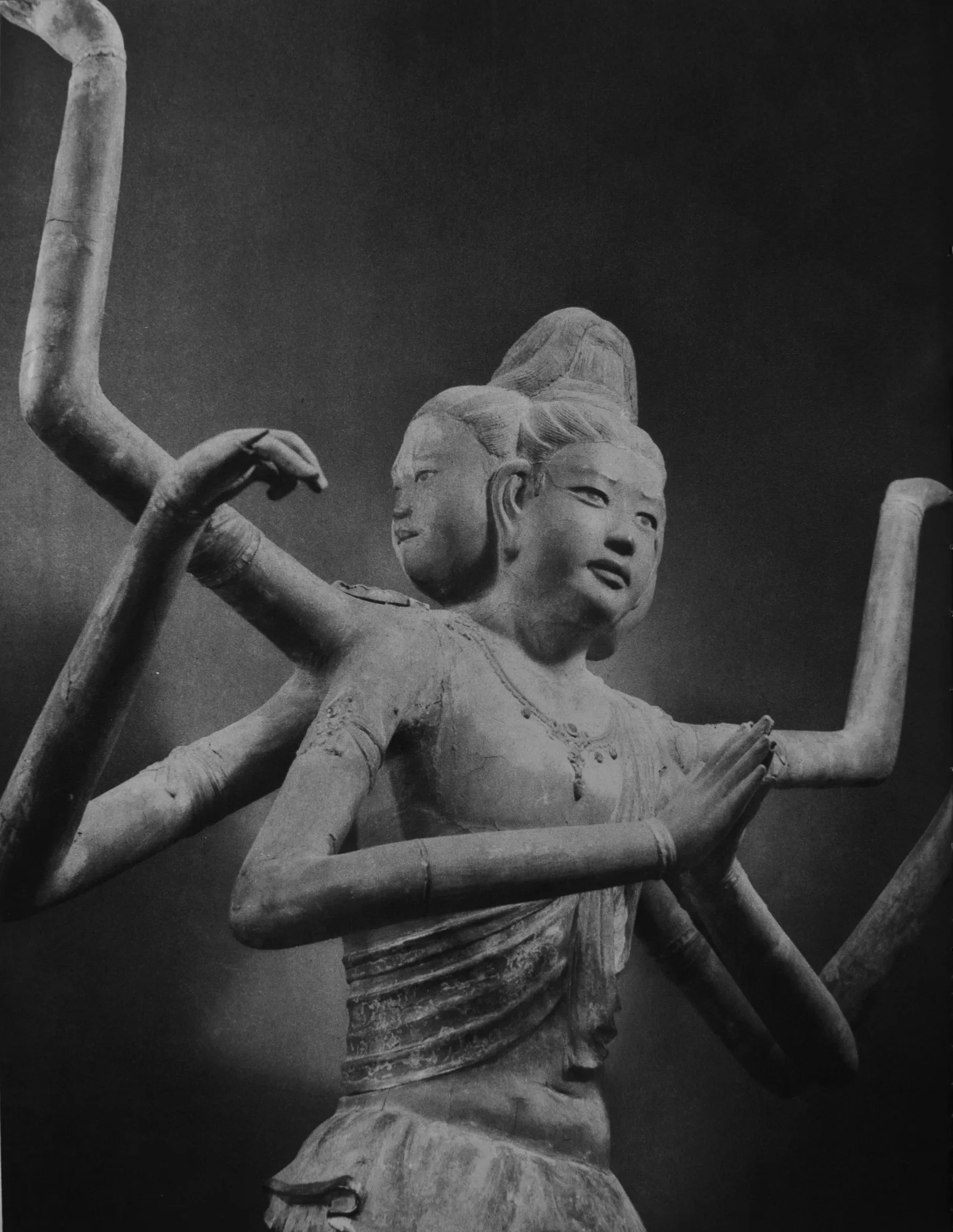
激しく戦う神なのに、泣きだしそうな少年の顔。三つの顔と六本の腕。A fierce fighting deity with the face of a boy about to cry. Three faces, six arms.
この作品のお話
Story奈良・興福寺の阿修羅像は、734年に作られた国宝の仏像です。仏法を守る8種類の神々「八部衆(はちぶしゅう)」のひとつで、三つの顔と六本の腕をもっています。細い体に、少年のような顔。眉を少しよせて、何かをじっとこらえているようです。この写真は1952年に出版された本のもので、白黒で写されています。
The Ashura at Kōfukuji in Nara is a National Treasure made in 734. He belongs to the Eight Legions (Hachibushū), eight kinds of beings that protect Buddhism. He has three faces and six arms. His body is thin, and his face looks like a boy's. His brows are slightly drawn together, as if he is holding back his feelings. This black-and-white photo comes from a book published in 1952.
阿修羅はもともとインドの神話で、帝釈天(たいしゃくてん)と戦い続けた激しい神でした。仏教では、仏の教えを守る神になります。像は光明皇后が、亡くなった母の供養のために建てた西金堂のために作られました。粘土の型に、漆をしみこませた布を何枚も重ね、あとで中の土をかき出す「脱活乾漆」という技法で作られています。
In Indian myth, Ashura was a fierce god who fought Indra again and again. In Buddhism, he became a guardian of the Buddha's teachings. Empress Kōmyō had this statue made for a hall she built in memory of her mother. It was made with hollow dry lacquer. Cloth soaked in lacquer was layered over a clay core, and then the clay was removed.
興福寺は何度も火事にあい、阿修羅のいた西金堂も失われましたが、像は生きのびました。いまは興福寺の国宝館で見ることができます。2009年の「国宝 阿修羅展」は東京と九州の2会場で約165万人が訪れ、大ブームになりました。日本でいちばん人気のある仏像のひとつです。
Kōfukuji burned many times, and the hall where Ashura stood was lost. But the statue survived. Today you can see it in the temple's National Treasure Museum. In 2009, an Ashura exhibition in Tokyo and Kyushu drew about 1.65 million visitors. He is one of the most popular Buddhist statues in Japan.
これは奈良にある阿修羅像です。顔が三つ、腕が六本あります。阿修羅は、神話で帝釈天と戦う激しい神でした。でも顔は、若い少年のように見えます。人びとは734年に彼を作り、彼は何度もの火事を生きのびました。
This is Ashura, a statue in Nara. He has three faces and six arms. In myth, he was a fierce deity who fought Indra. But his face looks like a young boy's. People made him in 734, and he survived many fires.
英語のレベルは上の「やさしい/ふつう」で切りかえられます。
えっ!?な裏ネタ
Secrets脱活乾漆の像は中が空洞で、木の像よりずっと軽く作れます。興福寺はたびたび火事にあいましたが、阿修羅は軽いので運び出されて助かったのだろう、と言われています。仏像の作り方が、運命を分けたのかもしれません。
Hollow dry-lacquer statues are much lighter than wooden ones. Kōfukuji had many fires. People say Ashura survived because he was light enough to carry out. The way it was made may have saved it.
2009年ごろのX線CT調査で、表面の下の層に、今よりもきびしい表情の顔が見つかったと発表されました。作る途中で、よりやさしい表情に直されたと考えられています。
Around 2009, X-ray CT scans showed a face with a sterner look under the surface. Experts think the face was changed to a gentler one while it was being made.
日本語の「修羅場」は、もともと阿修羅と帝釈天がはげしく戦った場所のこと。今では「大混乱の場面」という意味で使います。仏像から生まれた日常の言葉です。言葉の中にも、阿修羅は生きているのです。
The Japanese word shuraba first meant the place where Ashura fought Indra. Today it means a scene of chaos. It is an everyday word born from Buddhist stories. Ashura lives on in the language.
奈良時代の文書から、仏師・将軍万福(しょうぐんのまんぷく)らがこの像づくりに関わったと考えられています。1300年近く前の仏像で、作り手の手がかりが残るのはめずらしいことです。
Old Nara-period documents suggest that a sculptor named Shōgun no Manpuku worked on this statue. It is rare to have a clue about the maker of a statue almost 1,300 years old.
ここを見て!
Look Closer1正面の顔Front face
眉を少しよせた、少年のような顔。怒りでも笑いでもない、不思議な表情です。
A boyish face with slightly drawn brows. It is not angry or smiling. It is a mysterious look.
2横の顔Side face
左にも顔があります。三つの顔は、それぞれ少しずつちがう表情をしています。
There is another face on the side. Each of the three faces has a slightly different expression.
3合わせた手Hands together
いちばん前の二本の腕は、胸の前で手を合わせています。
The front pair of arms bring the hands together in front of the chest.
4空へのびる腕Arms reaching up
細く長い腕が、上へ高くのびます。もとは太陽や月を持っていたと考えられています。
Long, thin arms reach high. They may once have held the sun and the moon.
英語で名画を語ろう
Talk about Art in EnglishAshura stands with his hands together in front of his chest.
阿修羅は胸の前で手を合わせて立っています。
💡 with +名詞+形容詞・副詞で「〜を…にして」。with his eyes closed(目を閉じて)も同じ形。
英語で説明すると… Describe it
これは仏像の写真です。この像には三つの顔と六本の長い腕があります。二つの手が胸の前で合わされています。顔は若く、少し悲しそうに見えます。
This is a photo of a Buddhist statue. The figure has three faces and six long arms. Two hands are pressed together in front of the chest. The face looks young and a little sad.
考えてみよう Think & Talk
- 激しく戦う神なのに、なぜこんなにやさしく悲しげな顔なのだと思いますか?Why do you think such a fierce fighting deity has a gentle, sad face?
- もしあなたに顔が三つあったら、それぞれどんな気持ちの顔にしますか?If you had three faces, what feeling would each face show?
この作品の英単語
WordsAshura is a guardian of Buddhism.
阿修羅は仏教の守り神だ。
The statue is made of cloth and lacquer.
この像は布と漆でできている。
The statue survived many fires.
この像は何度もの火事を生きのびた。
He has a slender body like a boy.
彼は少年のようにほっそりした体をしている。
ミニクイズ
QuizQ. 阿修羅像は、どんな技法で作られている?How was the Ashura statue made?
漆をしみこませた布を重ねる「脱活乾漆」で作られ、中は空洞です。
It was made with hollow dry lacquer: layers of cloth soaked in lacquer.
ウソ?ホント? 阿修羅は、インドの神話で帝釈天と戦う神として語られた。In Indian myth, Ashura was said to fight Indra.
帝釈天と戦い続けた神で、仏教に取り入れられて守り神になりました。
He fought Indra again and again, and later became a guardian in Buddhism.
ウソ?ホント? 阿修羅像は、一本の大きな木からほり出された。The Ashura statue was carved from one big tree.
木ではなく、漆と布を重ねた脱活乾漆の像です。
It is not wood. It is made of cloth and lacquer.
 画像の出典とライセンス / Image credit
- PDKofukuji Ashura 4.jpg(Wikimedia Commons)
ライセンス:Public domain(パブリックドメイン)/作者・撮影者の表記:今泉篤男 et al./提供元:Nihon no Chokoku 4 - Tenpyō Jidai (Bijutsu Shuppansha 1952)
この作品は、作者の死後長い年月がたち著作権の保護期間が終わっています。写真は撮影者がパブリックドメインとして公開したもの、または著作権の保護期間が終わった古い写真です。 所蔵:興福寺(国宝館)(Kōfukuji Temple (National Treasure Museum))。画像は表示のために縮小・WebP 形式に変換しています。
