

 ワークシート
 ぬりえ
 迷路
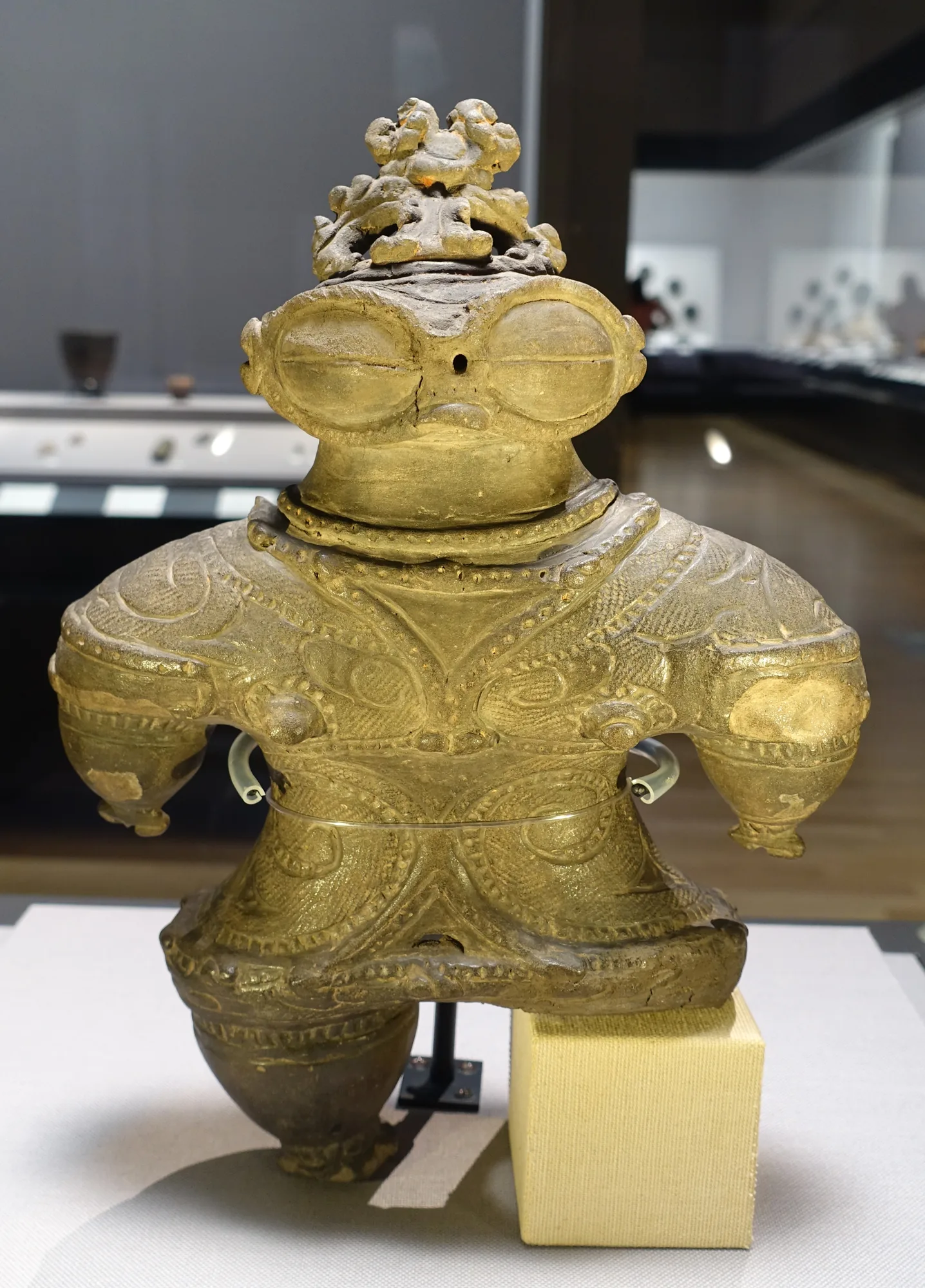
ゴーグルみたいな大きな目!約3000年前の縄文の土偶。Eyes like snow goggles! A Jōmon clay figure from about 3,000 years ago.
この作品のお話
Story「土偶(どぐう)」は、縄文時代の人びとが粘土で形を作って焼いた人形です。この土偶は、スキーのゴーグルのような大きな目から「遮光器土偶」とよばれる形の代表で、縄文時代の終わりごろ(紀元前1000〜400年ごろ)に作られました。1887年(明治20年)に青森県つがる市木造の亀ヶ岡遺跡で見つかり、いまは東京国立博物館にあります。高さ34.2センチで、国の重要文化財です。
A dogū is a clay figure that Jōmon people shaped and fired. This one is the best-known example of the 'goggle-eyed' style, named for its huge eyes that look like ski goggles. It was made near the end of the Jōmon period, around 1000–400 BCE. It was found in 1887 at the Kamegaoka site in Kizukuri, Tsugaru City, Aomori. Today it is in the Tokyo National Museum. It is 34.2 cm tall and an Important Cultural Property of Japan.
縄文時代の人びとは、狩りや漁、木の実の採集をしながら、1万年以上も暮らしていました。縄を転がしてつけた模様の土器が「縄文」の名のもとです。この土偶の体にも、うずまきや曲線の模様と、こまかな模様がびっしり。土偶の多くは女性の姿で、子どもが生まれることや元気に暮らすことを祈ったのでは、と考えられていますが、本当の使い道はまだナゾです。
Jōmon people lived by hunting, fishing and gathering nuts for more than 10,000 years. The name Jōmon means 'cord pattern,' from the rope marks pressed into their pottery. This figure's body is also covered with swirls, curves and fine patterns. Many dogū show women. People may have used them to pray for babies or good health, but their real purpose is still a mystery.
この土偶は左足が欠けていて、写真では右側に置かれた台が体を支えています。土偶は、こわれた状態で見つかることがとても多いのです。不思議な顔は人気者で、出土地に近いJR五能線の木造駅は、駅舎の正面が巨大な遮光器土偶の形をしています。キャラクターやお菓子にもなっています。
This dogū is missing its left leg. In the photo, a block on the right holds up the body instead. Dogū are very often found broken. Its strange face is very popular. At Kizukuri Station on the JR Gonō Line, near where it was found, the front of the station building is shaped like a giant goggle-eyed dogū. The figure has also become characters and even sweets.
これは土偶です。日本の粘土の人形です。目がとても大きくて、スキーのゴーグルのようです。約3000年前に人びとが作りました。見て!左足が欠けています。
This is a dogū. It is a clay figure from Japan. Its eyes are very big, like ski goggles. People made it about 3,000 years ago. Look! Its left leg is missing.
英語のレベルは上の「やさしい/ふつう」で切りかえられます。
えっ!?な裏ネタ
Secrets「遮光器」とは、まぶしい雪から目を守るイヌイットのめがねのこと。明治時代、人類学者の坪井正五郎が、土偶の目がそれに似ていると考えたのが名前のもとです。実は「閉じた目」を表しているという説もあります。
Shakōki means snow goggles, like those Inuit people used against bright snow. In the Meiji era, the scholar Tsuboi Shōgorō thought the eyes looked like them. Some experts think the eyes may actually be closed.
日本で国宝になっている土偶は5体だけ。長野の「縄文のビーナス」「仮面の女神」、山形の「縄文の女神」、青森の「合掌土偶」、北海道の「中空土偶」です。有名な遮光器土偶は重要文化財で、国宝ではありません。
Only five dogū are National Treasures of Japan. They come from Nagano, Yamagata, Aomori and Hokkaido. The famous goggle-eyed dogū is an Important Cultural Property, not a National Treasure.
土偶はばらばらにこわれた形で見つかることがとても多く、手足や頭が別々の場所から出ることもあります。病気やけがの身代わりに、わざとこわしたという説がありますが、決め手はありません。
Dogū are very often found broken. Sometimes arms or heads are found in different places. One idea is that people broke them on purpose to take away illness, but no one knows for sure.
ゴーグルのような目と、ふくらんだ服のような体から、「宇宙服を着た宇宙人を表している」という説が雑誌やテレビで話題になったことがあります。しかし考古学的な根拠はありません。土偶は何らかの儀礼に使われたと考えられていますが、正確な用途はわかっていません。
Because of its goggle-like eyes and puffy, suit-like body, some magazines and TV shows have said it shows a space alien in a spacesuit. But there is no archaeological evidence for this. Dogū were probably used in rituals, but their exact purpose remains unknown.
ここを見て!
Look Closer1ゴーグルのような目Goggle eyes
横に一本線の入った、大きなふくらんだ目。この形が「遮光器」の名前のもとです。
Big, puffy eyes with one line across. This shape gave the style its name.
2冠のような頭Crown-like head
頭の上には、冠か髪かざりのような飾り。小さなうずまきがいくつも重なっています。
On top is something like a crown or hair ornament, made of many small curls.
3うずまき模様Swirling patterns
体には、うずまきや曲線の模様と、こまかな模様の帯。服や入れ墨を表しているのかもしれません。
The body has swirls, curves and bands of fine patterns. They may show clothes or tattoos.
4欠けた左足The missing left leg
像の左足(写真では右側)は欠けていて、四角い台が体を支えています。
Its left leg (on the right in the photo) is missing. A square block holds up the body.
英語で名画を語ろう
Talk about Art in EnglishThe eyes of this figure look like snow goggles.
この像の目は、雪よけのゴーグルのように見えます。
💡 look like +名詞で「〜に見える」。形容詞なら look strange のように like はなし。
英語で説明すると… Describe it
これは博物館にある粘土の像です。とても大きな目をしていて、頭に冠のような飾りがあります。体じゅうにうずまき模様があります。腕は短く、左足が欠けています。
This is a clay figure in a museum. It has very big eyes and a crown-like ornament on its head. There are swirling patterns all over its body. It has short arms, and its left leg is missing.
考えてみよう Think & Talk
- 人びとは土偶を何に使ったと思いますか?What do you think people used dogū for?
- 目がこんなに大きく作られたのはなぜだと思いますか?Why do you think the eyes were made so big?
この作品の英単語
WordsThis clay figurine is 34.2 cm tall.
この粘土の人形は高さ34.2センチだ。
Its eyes look like snow goggles.
その目は雪よけのゴーグルのように見える。
Its left leg is missing.
その左足は欠けている。
It was found in Aomori in 1887.
それは1887年に青森で見つかった。
ミニクイズ
QuizQ. 「遮光器土偶」の名前は、何に似ていることから?What is the goggle-eyed dogū named after?
まぶしい雪から目を守る、イヌイットのめがね(遮光器)に似ていると考えられたからです。
Its eyes were thought to look like Inuit snow goggles.
ウソ?ホント? 土偶は、こわれた状態で見つかることが多い。Dogū are often found broken.
手足や頭が欠けたものがとても多く、わざとこわしたという説もあります。
Many are missing arms, legs or heads. Some think they were broken on purpose.
ウソ?ホント? 有名な遮光器土偶は、国宝第1号の土偶である。The famous goggle-eyed dogū was the first dogū named a National Treasure.
亀ヶ岡の遮光器土偶は重要文化財。国宝の土偶は別の5体です。
The Kamegaoka dogū is an Important Cultural Property. The five National Treasure dogū are different ones.
 画像の出典とライセンス / Image credit
- PDDogu with goggle-shaped eyes, excavated at Kamegaoka, Kizukuri, Tsugaru-shi, Aomori, Jomon period, 1,000-400 BC, ceramic - Tokyo National Museum - Ueno Park, Tokyo, Japan - DSC09105.jpg(Wikimedia Commons)
ライセンス:Public domain(パブリックドメイン)/作者・撮影者の表記:Daderot
この作品は、作者の死後長い年月がたち著作権の保護期間が終わっています。写真は撮影者がパブリックドメインとして公開したもの、または著作権の保護期間が終わった古い写真です。 所蔵:東京国立博物館(Tokyo National Museum)。画像は表示のために縮小・WebP 形式に変換しています。
