

 PDF をダウンロード
Let's Look at Art!
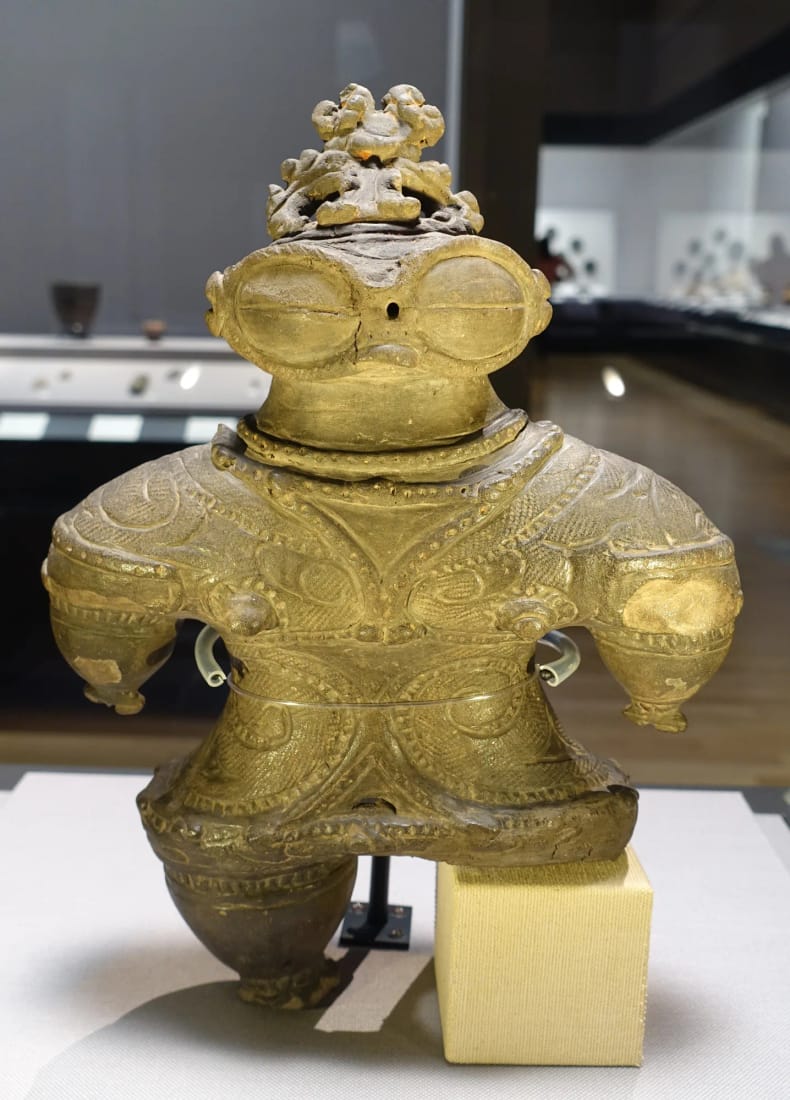
Title: Dogū (Clay Figurine) with Goggle-like Eyes
Artist: Unknown
Year: c. 1000–400 BCE
Medium: Earthenware (fired clay)
Museum: Tokyo National Museum, Tokyo
1 Find it! 絵の中から見つけて、○でかこもう。
- ☐ Goggle eyes
- ☐ Crown-like head
- ☐ Swirling patterns
- ☐ The missing left leg
2 First look 最初に見たときの感想を書こう。
When I first saw this painting, I felt ______________ because ______________________.
Three colors I can see: ①__________ ②__________ ③__________
3 Words — Match them. 英語と日本語を線で結ぼう。
- figurine ●
- goggles ●
- missing ●
- find ●
- ● ゴーグル
- ● 欠けている・なくなっている
- ● 見つける(過去形・過去分詞 found)
- ● 小さな像・人形
Dogū (Clay Figurine) with Goggle-like Eyes
4 Fill in the blanks. 下の箱から選んで、( )に入れよう。形を変えるものもあります。
- This clay is 34.2 cm tall.
- Its eyes look like snow .
- Its left leg is .
5 Read and answer — True or False? 英文を読んで、正しければ T、ちがえば F。
This is a dogū. It is a clay figure from Japan. Its eyes are very big, like ski goggles. People made it about 3,000 years ago. Look! Its left leg is missing.
A dogū is a clay figure that Jōmon people shaped and fired. This one is the best-known example of the 'goggle-eyed' style, named for its huge eyes that look like ski goggles. It was made near the end of the Jōmon period, around 1000–400 BCE. It was found in 1887 at the Kamegaoka site in Kizukuri, Tsugaru City, Aomori. Today it is in the Tokyo National Museum. It is 34.2 cm tall and an Important Cultural Property of Japan.
- Dogū are often found broken. T / F
- The famous goggle-eyed dogū was the first dogū named a National Treasure. T / F
6 Quiz — Choose the best answer. 正しいものを選ぼう。
What is the goggle-eyed dogū named after?
- A cat's eyes
- A telescope
- Snow goggles
- Seashells
Dogū (Clay Figurine) with Goggle-like Eyes
7 Put the words in order. 語を正しく並べかえて、文を書こう。
- The / figure / goggles / look / snow / like / this / eyes / of .
- This / a / museum / is / in / figure / a / clay .
8 Complete the description. 箱の語を(1)〜(4)に入れて、絵の説明を完成させよう。
This is a clay figure in a museum. It has very big eyes and a crown-like (1) on its head. There are (2) (3) all over its body. It has (4) arms, and its left leg is missing.
9 Describe the painting in English. この絵を英語で説明しよう(3文以上)。
10 Think & Talk 考えて、ペアやグループで話し合おう。
What do you think people used dogū for?
Why do you think the eyes were made so big?
11 My favorite part いちばん好きなところを英語で。
I like the ____________ because ____________________________.
Answers & Notes
1 Find it!
Goggle eyes=ゴーグルのような目/Crown-like head=冠のような頭/Swirling patterns=うずまき模様/The missing left leg=欠けた左足
2 First look
自由に書けたら正解。I felt calm / surprised / happy … などの形容詞を使おう。
3 Words
1–d(figurine=小さな像・人形) 2–a(goggles=ゴーグル) 3–b(missing=欠けている・なくなっている) 4–c(find=見つける(過去形・過去分詞 found))
4 Fill in the blanks
- figurine This clay figurine is 34.2 cm tall.
この粘土の人形は高さ34.2センチだ。 - goggles Its eyes look like snow goggles.
その目は雪よけのゴーグルのように見える。 - missing Its left leg is missing.
その左足は欠けている。
5 Read — T / F
【本文の訳】これは土偶です。日本の粘土の人形です。目がとても大きくて、スキーのゴーグルのようです。約3000年前に人びとが作りました。見て!左足が欠けています。
【本文の訳】「土偶(どぐう)」は、縄文時代の人びとが粘土で形を作って焼いた人形です。この土偶は、スキーのゴーグルのような大きな目から「遮光器土偶」とよばれる形の代表で、縄文時代の終わりごろ(紀元前1000〜400年ごろ)に作られました。1887年(明治20年)に青森県つがる市木造の亀ヶ岡遺跡で見つかり、いまは東京国立博物館にあります。高さ34.2センチで、国の重要文化財です。
- T 土偶は、こわれた状態で見つかることが多い。
解説:手足や頭が欠けたものがとても多く、わざとこわしたという説もあります。 - F 有名な遮光器土偶は、国宝第1号の土偶である。
解説:亀ヶ岡の遮光器土偶は重要文化財。国宝の土偶は別の5体です。
6 Quiz
C 問:「遮光器土偶」の名前は、何に似ていることから?
選択肢:A ねこの目/B 望遠鏡/C 雪よけのめがね/D 貝がら
解説:まぶしい雪から目を守る、イヌイットのめがね(遮光器)に似ていると考えられたからです。
7 Put the words in order
- The eyes of this figure look like snow goggles.
この像の目は、雪よけのゴーグルのように見えます。 - This is a clay figure in a museum.
これは博物館にある粘土の像です。
💡 look like(〜のように見える):look like +名詞で「〜に見える」。形容詞なら look strange のように like はなし。
8 Complete the description
(1) ornament (2) swirling (3) patterns (4) short
9 Describe(模範解答)
This is a clay figure in a museum. It has very big eyes and a crown-like ornament on its head. There are swirling patterns all over its body. It has short arms, and its left leg is missing.
これは博物館にある粘土の像です。とても大きな目をしていて、頭に冠のような飾りがあります。体じゅうにうずまき模様があります。腕は短く、左足が欠けています。
10 Think & Talk(問いの訳)
- What do you think people used dogū for?
人びとは土偶を何に使ったと思いますか? - Why do you think the eyes were made so big?
目がこんなに大きく作られたのはなぜだと思いますか?
正解のない問いです。理由をつけて話せたら◎。
Fun Fact(訳)
名前のもとはイヌイットの雪めがね 「遮光器」とは、まぶしい雪から目を守るイヌイットのめがねのこと。明治時代、人類学者の坪井正五郎が、土偶の目がそれに似ていると考えたのが名前のもとです。実は「閉じた目」を表しているという説もあります。
