

 ワークシート
 ぬりえ
 迷路
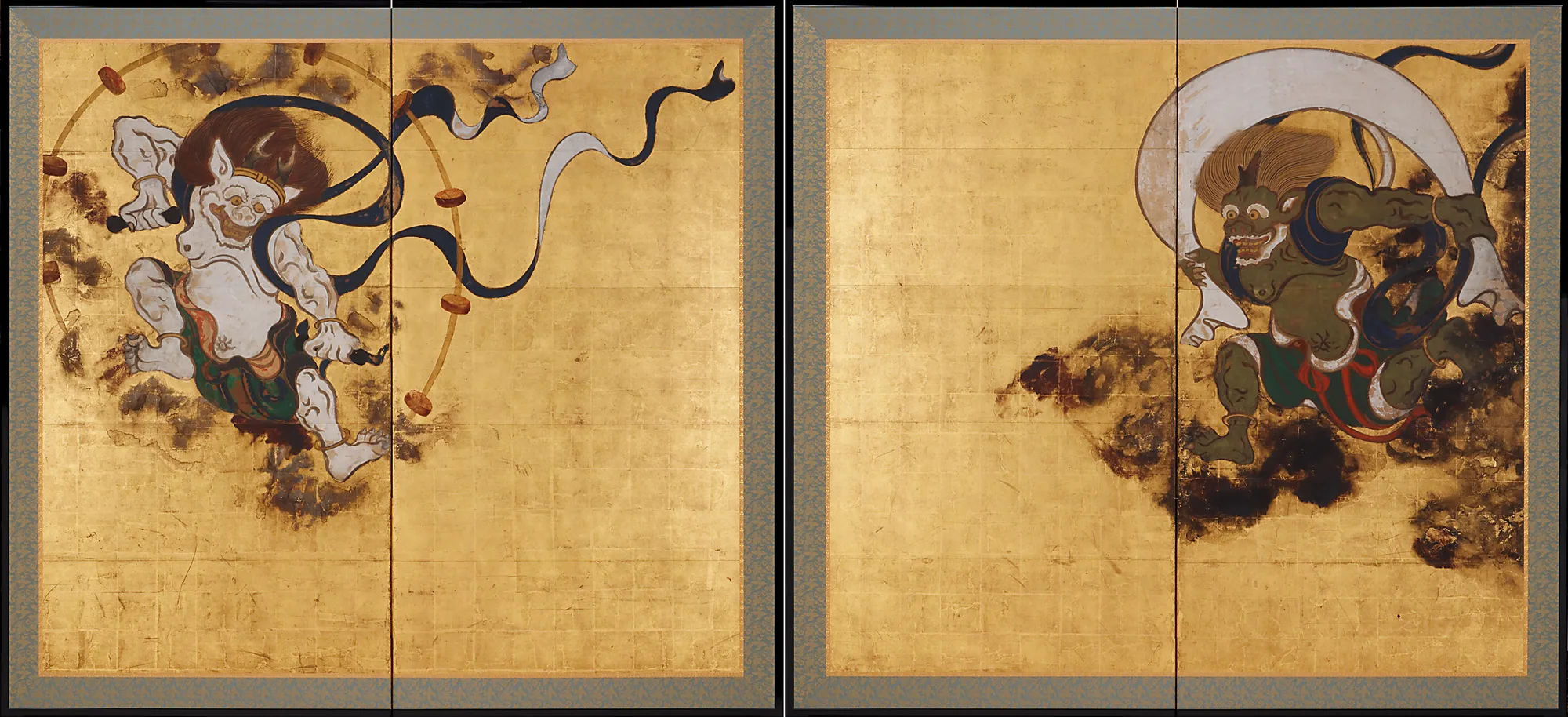
真ん中はからっぽ!なのに嵐の音が聞こえる、日本一有名な神さまコンビ。The middle is empty, yet you can hear the storm! Japan's most famous pair of gods.
この作品のお話
Story俵屋宗達の「風神雷神図屏風」は、金色の画面の右はしに風神、左はしに雷神を描いた国宝の屏風です。緑の体の風神は、風の入った袋をかかえてかけ出し、白い体の雷神は、輪につないだ太鼓を背に黒雲に乗っています。まん中は大きくあいた金色の空間。2人の神のあいだに、嵐が吹きあれる広い空を感じさせます。
Wind God and Thunder God by Tawaraya Sōtatsu is a National Treasure. On a gold background, the Wind God is at the right edge and the Thunder God at the left. The green Wind God rushes forward holding a bag full of wind. The white Thunder God rides a dark cloud with a ring of drums. The center is a wide, empty space of gold. It makes us feel a huge stormy sky between the two gods.
宗達は江戸時代のはじめに京都で活躍した絵師で、「俵屋」という絵屋(絵や扇を作る店)をひきいていたと考えられています。書の名人・本阿弥光悦と組んだ作品でも知られ、のちの「琳派」の祖とされます。雲には、ぬれた絵の具に別の色をたらしてにじませる「たらし込み」の技法が使われています。
Sōtatsu worked in Kyoto in the early Edo period. He probably ran a workshop called Tawaraya that made paintings and fans. He is also famous for working with the great calligrapher Hon'ami Kōetsu, and he is seen as the founder of the Rinpa school. In the clouds, he used tarashikomi, dropping one color into another while the paint was still wet.
この屏風は京都の建仁寺に伝わり、いまは京都国立博物館にあずけられています。約100年後、尾形光琳がこの絵をそっくりに写し、さらに約100年後、酒井抱一が光琳の絵を写しました。3人の名画家による「風神雷神」は、琳派が時代をこえてつながっていることを示す、何よりの証拠です。
The screens belong to Kenninji Temple in Kyoto and are now kept at the Kyoto National Museum. About 100 years later, Ogata Kōrin made a close copy. About 100 years after that, Sakai Hōitsu copied Kōrin's version. These three Wind and Thunder Gods show how the Rinpa style was passed down over the centuries.
これは2人の神さまです。緑のほうは風神です。風の入った袋を持っています。白いほうは雷神です。たくさんの太鼓を持っています。のちに2人の有名な画家が、この絵を写しました!
These are two gods. The green one is the Wind God. He has a bag of wind. The white one is the Thunder God. He has many drums. Two other great artists later copied this picture!
英語のレベルは上の「やさしい/ふつう」で切りかえられます。
えっ!?な裏ネタ
Secrets光琳は宗達の絵をそっくりに写し(東京国立博物館)、抱一は光琳の絵を写しました(出光美術館)。抱一は宗達の原画を知らずに、光琳の作品を手本にしたと考えられています。
Kōrin copied Sōtatsu's screens, and Hōitsu copied Kōrin's. Hōitsu probably did not know Sōtatsu's original and used Kōrin's version as his model.
抱一は、光琳の風神雷神図屏風のうら面に「夏秋草図屏風」を描きました。雷神のうらには夕立にうたれる夏草、風神のうらには風になびく秋草。いまは保存のため、表とうらは別々にされています。
Hōitsu painted Summer and Autumn Grasses on the back of Kōrin's screens. Behind the Thunder God, summer grasses bend in the rain. Behind the Wind God, autumn grasses blow in the wind. Today the two sides are kept apart for safety.
これほど有名なのに、宗達の生まれた年も亡くなった年もわかっていません。この屏風にも署名や印はありませんが、宗達の作品であることはまちがいないとされています。宗達は、作品だけで名を残した画家なのです。
Sōtatsu is very famous, yet no one knows the year he was born or died. These screens have no signature or seal, but experts agree they are by Sōtatsu. Sōtatsu is known to us almost only through his works.
雷神の太鼓の輪や風神の布は、画面のはしで切れています。わざと全部を描かないことで、神さまが画面の外の広い空からやって来たように感じさせるのです。見えない部分を、見る人の想像にまかせているのです。
The Thunder God's drums and the Wind God's cloth are cut off at the edges. By not showing everything, Sōtatsu makes the gods seem to come from a huge sky beyond the screen. He leaves the hidden parts to our imagination.
ここを見て!
Look Closer1雷神Thunder God
白い体の雷神。手にばちを持ち、背中の太鼓を打って雷を鳴らします。
The white Thunder God holds drumsticks and beats the drums on his back to make thunder.
2太鼓の輪Ring of drums
小さな太鼓を輪につないでいます。左の輪は画面のはしで切れています。
Small drums are linked in a ring. The ring is cut off at the left edge.
3風神Wind God
緑の体の風神。白い風袋を両手でかかえ、風を吹き出します。
The green Wind God holds a white wind bag with both hands and lets the wind out.
4たらし込みの雲Tarashikomi clouds
黒雲には、にじみを生かした「たらし込み」が使われています。
The dark clouds use tarashikomi, letting wet colors blur into each other.
英語で名画を語ろう
Talk about Art in EnglishThe two gods are painted on a pair of folding screens.
2人の神は、一双の屏風にえがかれています。
💡 屏風は folding screen。左右2つでひと組(一双)なら a pair of folding screens。
英語で説明すると… Describe it
これは金色の屏風一双です。左には、太鼓の輪を持った白い神さまがいます。右には、大きな白い袋を持った緑の神さまがいます。屏風のまん中には何もありません。
This is a pair of gold folding screens. On the left, there is a white god with a ring of drums. On the right, there is a green god with a big white bag. The middle of the screens is empty.
考えてみよう Think & Talk
- 宗達は、なぜまん中を何もないままにしたのだと思いますか?Why do you think Sōtatsu left the middle empty?
- 名画を写すことは、よい学び方だと思いますか?それはなぜ?Is copying a great painting a good way to learn? Why?
この作品の英単語
WordsThe Thunder God beats his drums to make thunder.
雷神は太鼓を打って雷を鳴らす。
The Wind God carries a bag full of wind.
風神は風でいっぱいの袋を運ぶ。
Kōrin copied Sōtatsu's screens.
光琳は宗達の屏風を模写した。
The center of the screen is empty.
屏風のまん中には何もない。
ミニクイズ
QuizQ. 風神がかかえているものは?What does the Wind God hold?
風神は風袋をかかえています。太鼓を持っているのは雷神です。
The Wind God holds a wind bag. The Thunder God has the drums.
ウソ?ホント? 尾形光琳は、宗達の風神雷神図を写した。Ogata Kōrin copied Sōtatsu's Wind God and Thunder God.
約100年後に光琳が写し、さらに抱一が光琳の絵を写しました。
Kōrin copied it about 100 years later, and Hōitsu later copied Kōrin's.
ウソ?ホント? 宗達の生まれた年は、記録ではっきりわかっている。Records clearly show the year Sōtatsu was born.
生まれた年も亡くなった年もわかっていない、ナゾの多い画家です。
His birth and death years are both unknown.
 画像の出典とライセンス / Image credit
- PDWind God and Thunder God Screens by Tawaraya Sotatsu hi-res.png(Wikimedia Commons)
ライセンス:Public domain(パブリックドメイン)/作者・撮影者の表記:俵屋宗達 (Tawaraya Sotatsu) (1570-1643)/提供元:[1]
この作品は、作者の死後長い年月がたち著作権の保護期間が終わった「パブリックドメイン」の作品です。画像は平面の作品を忠実に写したもので、新しい著作権は生じません(Wikimedia Commons の PD-Art の考え方)。 所蔵:建仁寺(京都国立博物館に寄託)(Kenninji Temple (on deposit at the Kyoto National Museum))。画像は表示のために縮小・WebP 形式に変換しています。
