 ワークシート
 ぬりえ
 迷路
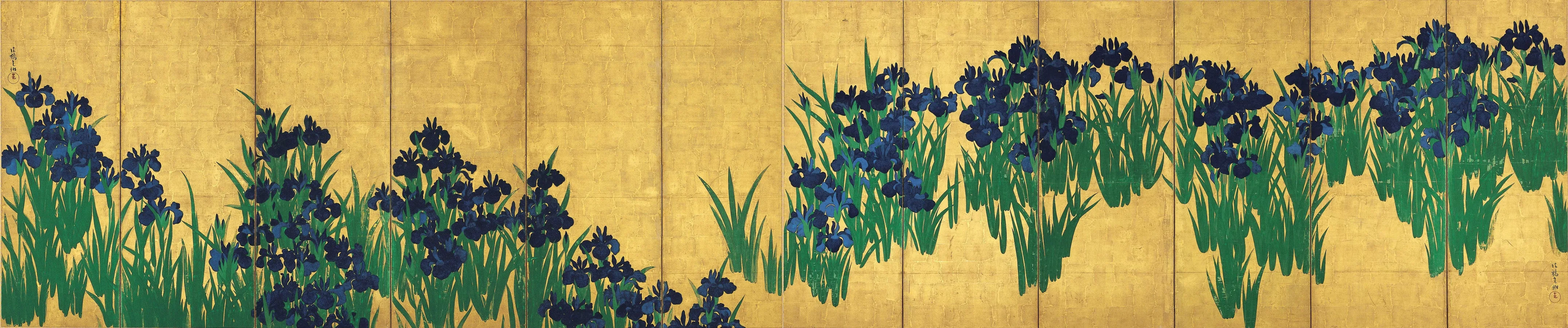
花と葉の色は、ほぼ2色だけ!金の上で花がリズムをきざむ光琳の傑作。Flowers and leaves in almost just two colors! Irises dance in rhythm on gold in Kōrin's masterpiece.
 美術館アンテナ:尾形光琳の作品に会える展覧会
この作品のお話
Story尾形光琳の「燕子花図屏風」は、金色の地に、青むらさきのカキツバタの群れだけを描いた国宝の屏風です。この画像は、左隻(左側の屏風)と右隻(右側の屏風)を左右にならべたもの。花の群れは、上がったり下がったりしながら、音楽のようなリズムで続いていきます。使われている色は、花の群青と葉の緑青、ほぼこの2色だけです。
Irises by Ogata Kōrin is a National Treasure. On a gold background, it shows nothing but groups of blue-purple irises. This image places the left screen and the right screen side by side. The groups of flowers rise and fall in a rhythm, like music. Kōrin used almost only two colors: blue for the flowers and green for the leaves.
この絵のもとになったのは、平安時代の『伊勢物語』の「八橋」の場面です。旅の途中の男が、川辺に咲くカキツバタを見て、都に残した妻を思う歌をよみます。でも光琳は、人物も橋も描かず、花だけで物語を感じさせました。光琳は京都の大きな呉服屋「雁金屋(かりがねや)」の息子で、着物の模様のような感覚が生きています。
The idea comes from the 'Yatsuhashi' scene in The Tales of Ise, a Heian-period story. A traveler sees irises by a river and writes a poem about the wife he left in the capital. But Kōrin painted no people and no bridge. He told the story with flowers alone. Kōrin was the son of Kariganeya, a big kimono shop in Kyoto. His sense of kimono design shows in this work.
光琳は40代で「法橋(ほっきょう)」という位をもらい、この屏風にも「法橋光琳」と署名しています。いまは東京・青山の根津美術館にあり、毎年カキツバタの咲く春のころに公開されるのが恒例です。光琳は、橋も描いた「八橋図屏風」(メトロポリタン美術館)も描いています。
In his forties, Kōrin received the honorary title hokkyō. He signed these screens 'Hokkyō Kōrin.' Today they are at the Nezu Museum in Aoyama, Tokyo. They are usually shown each spring, when irises bloom. Kōrin also painted Irises at Yatsuhashi, with the bridge, now at the Metropolitan Museum of Art.
これは青い花がえがかれた大きな金色の屏風です。花はカキツバタです。画家は花に青、葉に緑の絵の具をおもに使いました。花は音楽のように上がったり下がったりしています。絵の中に人はいません。
These are big gold screens with blue flowers. The flowers are irises. The artist used mostly blue for the flowers and green for the leaves. The flowers go up and down like music. There are no people in the picture.
英語のレベルは上の「やさしい/ふつう」で切りかえられます。
えっ!?な裏ネタ
Secrets伊勢物語の歌「から衣 きつつなれにし つましあれば はるばるきぬる たびをしぞ思ふ」は、各句の頭をつなぐと「かきつはた」。花の名前をかくした、言葉あそびの歌なのです。
In The Tales of Ise, the poem's five lines begin with ka, ki, tsu, ha and ta. Together they spell ka-ki-tsu-ha-ta, the old spelling of kakitsubata, the Japanese name of the flower. The flower's name is hidden in the poem!
よく見ると、ほとんど同じ形の花の群れが、何か所かにくり返し出てきます。着物の型紙のような道具を使ったのでは、という説もあります。呉服屋育ちの光琳らしい工夫です。
Look closely, and almost the same groups of flowers appear in several places. Some think Kōrin used something like a kimono stencil. It fits an artist who grew up in a kimono shop.
光琳は大きな呉服屋の次男に生まれ、親の遺産でぜいたくに暮らしました。お金に困ったこともあり、本格的に絵を仕事にしたのは40歳ごろからと言われます。ぜいたくな暮らしで身につけた美の感覚が、作品に生きています。
Kōrin was the second son of a rich kimono merchant and lived in luxury on his inheritance. It is said he ran short of money and became a full-time painter only around the age of 40. The taste he gained from that luxury lives in his art.
根津美術館の庭園にはカキツバタが植えられていて、春に屏風が公開されるころ、本物の花も見ごろをむかえます。絵と本物を同じ日に見くらべられるのです。季節と美術が出会う、根津美術館ならではの楽しみです。
The Nezu Museum garden has real irises. When the screens are shown in spring, the garden flowers are often in bloom too. You can compare the painting and the real flowers on the same day. It is a special joy where seasons and art meet.
ここを見て!
Look Closer1下へしずむ花Flowers dipping down
左隻では、花の群れが右下へと低くなっていきます。
On the left screen, the flowers dip lower toward the bottom right.
2葉だけの群れLeaves only
花のない葉だけの群れ。ひと休みの「間(ま)」のようです。
A group of leaves with no flowers, like a pause in music.
3高くのぼる花Flowers rising high
右隻では、花が画面の上の方までのびあがります。
On the right screen, the flowers rise high up the screen.
4「法橋光琳」の署名'Hokkyō Kōrin' signature
右はしの署名と印。光琳がもらった位「法橋」がそえられています。
The signature and seal at the far right. It includes his title, hokkyō.
英語で名画を語ろう
Talk about Art in EnglishSimilar groups of irises appear over and over, like a pattern.
似たカキツバタの群れが、模様のように何度も何度も出てきます。
💡 again and again と同じ。くり返しのリズムを説明するときにぴったりの表現。
英語で説明すると… Describe it
これは金色の屏風一双です。緑の葉をつけた青むらさきのカキツバタがたくさんあります。左では、花が下がっていきます。右では、高くのぼっていきます。
This is a pair of gold folding screens. There are many blue-purple irises with green leaves. On the left, the flowers go down. On the right, they rise up high.
考えてみよう Think & Talk
- 人がいないのに物語を感じられますか?どうやって?Can you feel the story without seeing any people? How?
- この絵が音楽だったら、どんな音がするでしょう?If this painting were music, what would it sound like?
この作品の英単語
WordsBlue irises bloom by the water.
青いカキツバタが水辺に咲く。
The flowers make a rhythm across the screens.
花が屏風を横切ってリズムを生み出す。
Kōrin repeated similar shapes.
光琳は似た形をくり返した。
The design is simple but beautiful.
そのデザインはシンプルだが美しい。
ミニクイズ
QuizQ. この屏風のもとになった物語は?Which story inspired these screens?
『伊勢物語』の「八橋」の場面がもとになっています。
It is based on the Yatsuhashi scene in The Tales of Ise.
ウソ?ホント? 燕子花図屏風には、人も橋も描かれていない。There are no people and no bridge in Irises.
物語の場面なのに、花だけで表しているのが大胆なところです。
It is based on a story, but Kōrin boldly shows only the flowers.
ウソ?ホント? 光琳は、10色以上の絵の具を使ってこの花を描いた。Kōrin used more than ten colors for these flowers.
花の群青と葉の緑青、ほぼ2色だけで描かれています。
He used almost only two: blue and green.
 画像の出典とライセンス / Image credit
- PDKORIN-Irises-L.jpg(Wikimedia Commons)
ライセンス:Public domain(パブリックドメイン)/作者・撮影者の表記:Ogata Korin, died 1716/提供元:Nezu Gallery - PDKORIN-Irises-R.jpg(Wikimedia Commons)
ライセンス:Public domain(パブリックドメイン)/作者・撮影者の表記:Ogata Korin, died 1716/提供元:Nezu Gallery
この作品は、作者の死後長い年月がたち著作権の保護期間が終わった「パブリックドメイン」の作品です。画像は平面の作品を忠実に写したもので、新しい著作権は生じません(Wikimedia Commons の PD-Art の考え方)。 所蔵:根津美術館(Nezu Museum)。画像は表示のために縮小・WebP 形式に変換しています(複数の画像を横につなげています)。