

 PDF をダウンロード
Let's Look at Art!
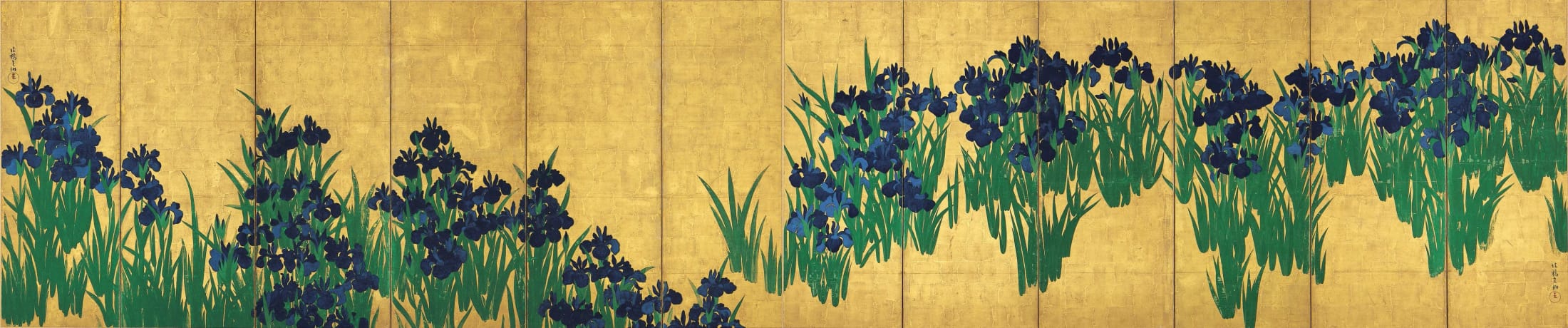
Title: Irises
Artist: Ogata Kōrin (1658–1716)
Year: 18th century
Medium: Pair of six-panel folding screens; color on gold leaf over paper
Museum: Nezu Museum, Tokyo
1 Find it! 絵の中から見つけて、○でかこもう。
- ☐ Flowers dipping down
- ☐ Leaves only
- ☐ Flowers rising high
- ☐ 'Hokkyō Kōrin' signature
2 First look 最初に見たときの感想を書こう。
When I first saw this painting, I felt ______________ because ______________________.
Three colors I can see: ①__________ ②__________ ③__________
3 Words — Match them. 英語と日本語を線で結ぼう。
- iris ●
- rhythm ●
- repeat ●
- simple ●
- ● くり返す
- ● シンプルな
- ● アヤメ科の花(カキツバタなど)
- ● リズム
Irises
4 Fill in the blanks. 下の箱から選んで、( )に入れよう。形を変えるものもあります。
- Blue bloom by the water.
- The flowers make a across the screens.
- Kōrin similar shapes.
- The design is but beautiful.
5 Read and answer — True or False? 英文を読んで、正しければ T、ちがえば F。
These are big gold screens with blue flowers. The flowers are irises. The artist used mostly blue for the flowers and green for the leaves. The flowers go up and down like music. There are no people in the picture.
Irises by Ogata Kōrin is a National Treasure. On a gold background, it shows nothing but groups of blue-purple irises. This image places the left screen and the right screen side by side. The groups of flowers rise and fall in a rhythm, like music. Kōrin used almost only two colors: blue for the flowers and green for the leaves.
- There are no people and no bridge in Irises. T / F
- Kōrin used more than ten colors for these flowers. T / F
6 Quiz — Choose the best answer. 正しいものを選ぼう。
Which story inspired these screens?
- The Tales of Ise
- Momotarō
- The Tale of the Heike
- The Tale of the Bamboo Cutter
Irises
7 Put the words in order. 語を正しく並べかえて、文を書こう。
- irises / appear / Similar / groups / of / a / over / over, / and / pattern / like .
- pair / folding / screens / gold / of / is / This / a .
8 Complete the description. 箱の語を(1)〜(4)に入れて、絵の説明を完成させよう。
This is a pair of gold folding (1). There are many blue-purple (2) with green (3). On the left, the (4) go down. On the right, they rise up high.
9 Describe the painting in English. この絵を英語で説明しよう(3文以上)。
10 Think & Talk 考えて、ペアやグループで話し合おう。
Can you feel the story without seeing any people? How?
If this painting were music, what would it sound like?
11 My favorite part いちばん好きなところを英語で。
I like the ____________ because ____________________________.
Answers & Notes
1 Find it!
Flowers dipping down=下へしずむ花/Leaves only=葉だけの群れ/Flowers rising high=高くのぼる花/'Hokkyō Kōrin' signature=「法橋光琳」の署名
2 First look
自由に書けたら正解。I felt calm / surprised / happy … などの形容詞を使おう。
3 Words
1–c(iris=アヤメ科の花(カキツバタなど)) 2–d(rhythm=リズム) 3–a(repeat=くり返す) 4–b(simple=シンプルな)
4 Fill in the blanks
- irises Blue irises bloom by the water.
青いカキツバタが水辺に咲く。 - rhythm The flowers make a rhythm across the screens.
花が屏風を横切ってリズムを生み出す。 - repeated Kōrin repeated similar shapes.
光琳は似た形をくり返した。 - simple The design is simple but beautiful.
そのデザインはシンプルだが美しい。
5 Read — T / F
【本文の訳】これは青い花がえがかれた大きな金色の屏風です。花はカキツバタです。画家は花に青、葉に緑の絵の具をおもに使いました。花は音楽のように上がったり下がったりしています。絵の中に人はいません。
【本文の訳】尾形光琳の「燕子花図屏風」は、金色の地に、青むらさきのカキツバタの群れだけを描いた国宝の屏風です。この画像は、左隻(左側の屏風)と右隻(右側の屏風)を左右にならべたもの。花の群れは、上がったり下がったりしながら、音楽のようなリズムで続いていきます。使われている色は、花の群青と葉の緑青、ほぼこの2色だけです。
- T 燕子花図屏風には、人も橋も描かれていない。
解説:物語の場面なのに、花だけで表しているのが大胆なところです。 - F 光琳は、10色以上の絵の具を使ってこの花を描いた。
解説:花の群青と葉の緑青、ほぼ2色だけで描かれています。
6 Quiz
A 問:この屏風のもとになった物語は?
選択肢:A 伊勢物語/B 桃太郎/C 平家物語/D 竹取物語
解説:『伊勢物語』の「八橋」の場面がもとになっています。
7 Put the words in order
- Similar groups of irises appear over and over, like a pattern.
似たカキツバタの群れが、模様のように何度も何度も出てきます。 - This is a pair of gold folding screens.
これは金色の屏風一双です。
💡 over and over(何度も何度も):again and again と同じ。くり返しのリズムを説明するときにぴったりの表現。
8 Complete the description
(1) screens (2) irises (3) leaves (4) flowers
9 Describe(模範解答)
This is a pair of gold folding screens. There are many blue-purple irises with green leaves. On the left, the flowers go down. On the right, they rise up high.
これは金色の屏風一双です。緑の葉をつけた青むらさきのカキツバタがたくさんあります。左では、花が下がっていきます。右では、高くのぼっていきます。
10 Think & Talk(問いの訳)
- Can you feel the story without seeing any people? How?
人がいないのに物語を感じられますか?どうやって? - If this painting were music, what would it sound like?
この絵が音楽だったら、どんな音がするでしょう?
正解のない問いです。理由をつけて話せたら◎。
Fun Fact(訳)
「かきつばた」でつくる歌 伊勢物語の歌「から衣 きつつなれにし つましあれば はるばるきぬる たびをしぞ思ふ」は、各句の頭をつなぐと「かきつはた」。花の名前をかくした、言葉あそびの歌なのです。
