


 この展示室のワークシート
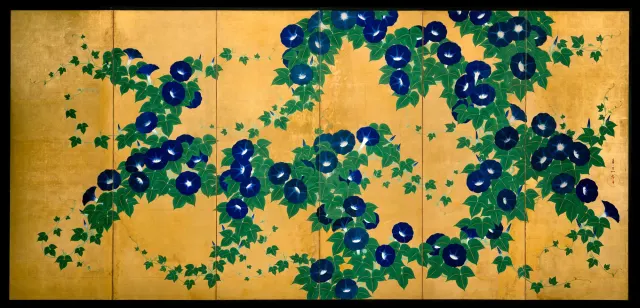
琳派は、師匠から弟子へ直接教わる流派ではありません。17世紀のはじめの京都で、俵屋宗達と、書や陶芸の天才・本阿弥光悦が、金や銀を使った大胆なデザインの美を生み出しました。それからおよそ100年後、尾形光琳が宗達の作品にあこがれて、その様式を受けつぎました。さらに約100年後、江戸の酒井抱一が光琳にあこがれ、その芸術をよみがえらせたのです。
Rinpa is not a school where teachers trained students directly. In early 17th-century Kyoto, Tawaraya Sōtatsu and Hon'ami Kōetsu, a genius of calligraphy and pottery, created bold designs using gold and silver. About 100 years later, Ogata Kōrin admired Sōtatsu's work and took up his style. Around 100 years after that, Sakai Hōitsu in Edo admired Kōrin and brought his art back to life.
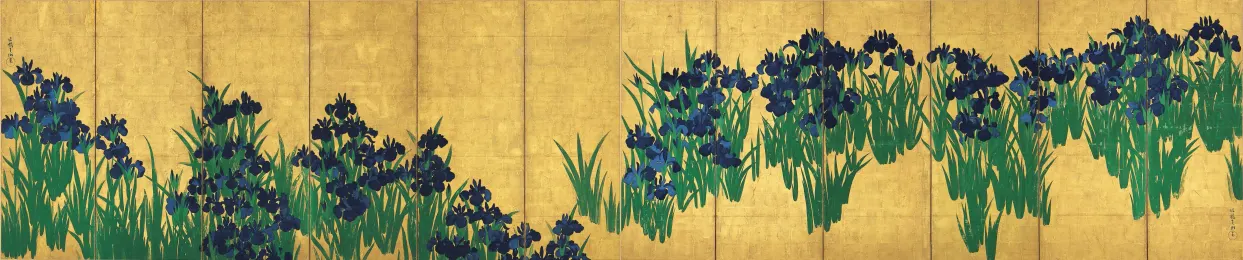
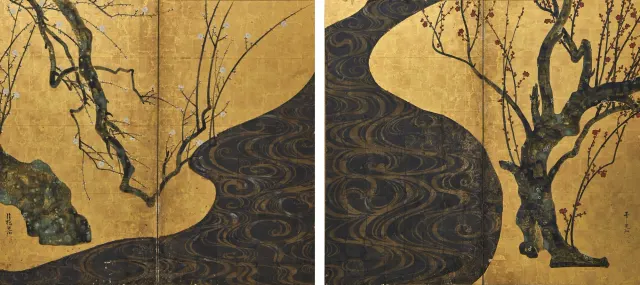
琳派の特徴は、着物や工芸にも通じるデザイン感覚です。金地の上に、形を思いきって単純にした草花や波を、リズムよく並べます。光琳の『燕子花図屏風』では、同じ形の花のかたまりがくり返され、型紙を使ったともいわれます。絵の具が乾く前に別の色をたらしてにじませる「たらしこみ」も、琳派らしい技法です。
Rinpa has a strong sense of design, shared with kimono and crafts. On gold backgrounds, boldly simplified flowers and waves are arranged in a lively rhythm. In Kōrin's Irises screens, the same clusters of flowers repeat, and some think he used stencils. Another typical technique is tarashikomi, dropping a second color onto wet paint so the two bleed together.
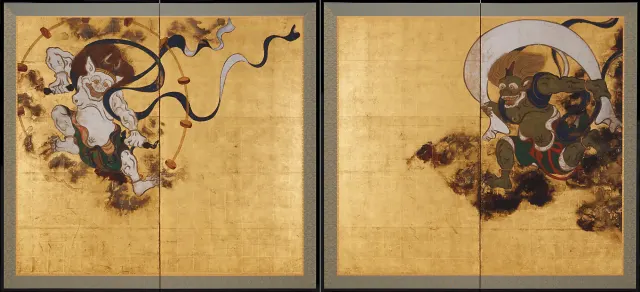
宗達の『風神雷神図屏風』は、金地の左右のはしに風の神と雷の神を置いた大胆な構図です。光琳はこの絵をていねいに写し、抱一はさらに光琳の写しを写しました。100年ごとに受けつがれた3つの『風神雷神図』は、琳派のつながりを示す宝物です。「琳派」の名前は、光琳の「琳」から来ています。
Sōtatsu's Wind God and Thunder God places the two gods at the far left and right edges of a gold background, a daring design. Kōrin carefully copied it, and Hōitsu later copied Kōrin's version. These three versions, made about a century apart, are treasures that show the Rinpa connection. The name Rinpa comes from the 'rin' in Kōrin.
