

 PDF をダウンロード
Rinpa
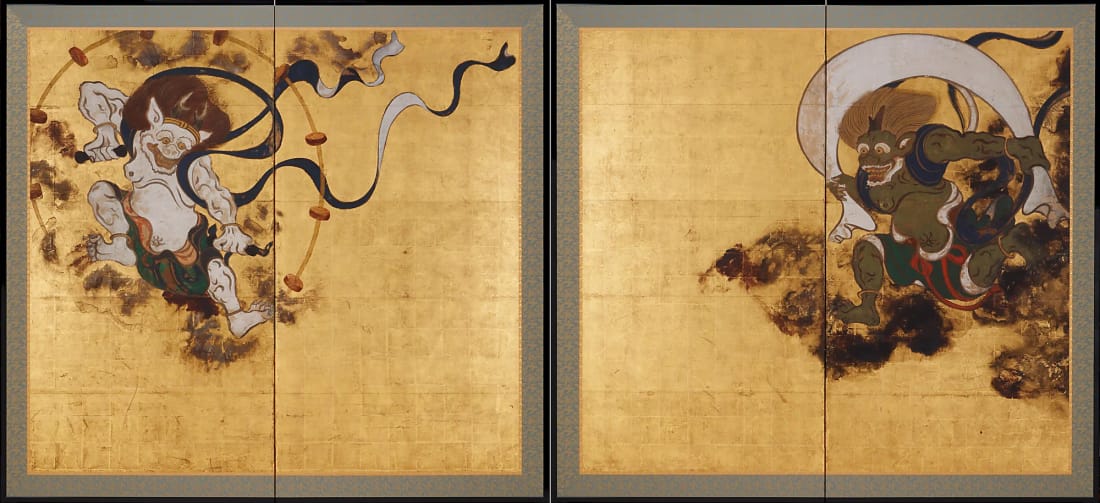
Tawaraya Sōtatsu, Early 17th century
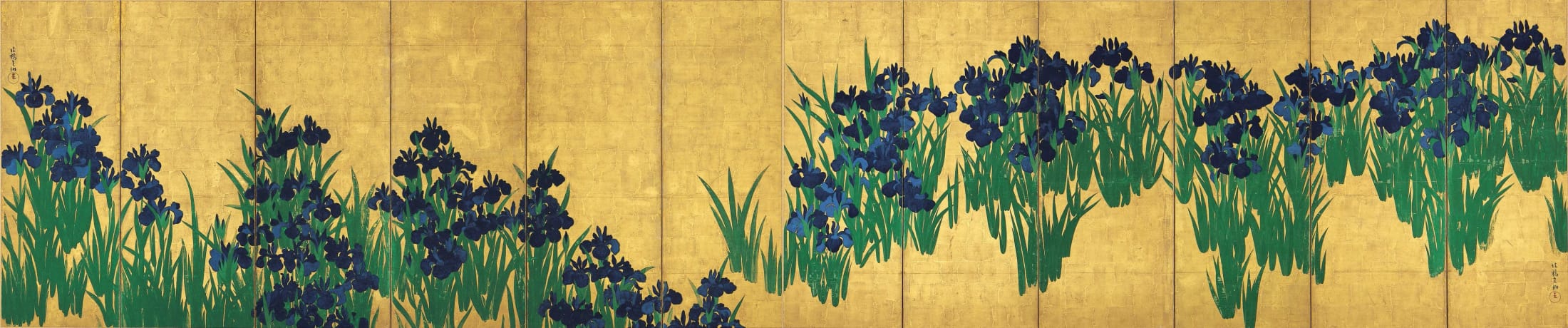
Ogata Kōrin, 18th century
1 How to spot it 2つの絵で見つけたら ✓ をつけよう。
| A | B | |
|---|---|---|
| Flowers or waves arranged like a design on a gold or silver background. | ☐ | ☐ |
| Simple shapes that look like kimono patterns or posters. | ☐ | ☐ |
| Repeated shapes create a rhythm, almost like music. | ☐ | ☐ |
| Soft patches where colors have bled together, called tarashikomi. | ☐ | ☐ |
| Bold empty space, with subjects pushed to the edges. | ☐ | ☐ |
2 Read 英文を読もう。
Rinpa is not a school where teachers trained students directly. In early 17th-century Kyoto, Tawaraya Sōtatsu and Hon'ami Kōetsu, a genius of calligraphy and pottery, created bold designs using gold and silver. About 100 years later, Ogata Kōrin admired Sōtatsu's work and took up his style. Around 100 years after that, Sakai Hōitsu in Edo admired Kōrin and brought his art back to life.
Write one thing you learned:
Rinpa
3 Art words — Match them. 英語と日本語を線で結ぼう。
- tarashikomi ●
- gold ground ●
- motif ●
- homage ●
- ● モチーフ
- ● 金地
- ● たらしこみ
- ● オマージュ
4 Quiz
About how far apart in time did Sōtatsu, Kōrin and Hōitsu work?
- At the same time
- About 10 years apart
- About 500 years apart
- About 100 years apart
5 Quiz
What is the technique of dropping color onto wet paint called?
- Tarashikomi
- Pointillism
- Sfumato
- Fukinuki yatai
6 Which do you like better, A or B? Why? AとB、どちらが好き?理由も英語で。
I like ____ better because ________________________________.
Answers & Notes
1 How to spot it(訳)
- Flowers or waves arranged like a design on a gold or silver background.
金や銀の背景に、草花や波がデザインのように並ぶ。 - Simple shapes that look like kimono patterns or posters.
形がシンプルで、着物の柄やポスターのように見える。 - Repeated shapes create a rhythm, almost like music.
同じ形のくり返しが、音楽のようなリズムを生んでいる。 - Soft patches where colors have bled together, called tarashikomi.
色がにじんでまざり合った「たらしこみ」のあとがある。 - Bold empty space, with subjects pushed to the edges.
大胆な余白と、画面のはしに寄せたモチーフの配置。
A:風神雷神図屏風 B:燕子花図屏風
2 Read(訳)
琳派は、師匠から弟子へ直接教わる流派ではありません。17世紀のはじめの京都で、俵屋宗達と、書や陶芸の天才・本阿弥光悦が、金や銀を使った大胆なデザインの美を生み出しました。それからおよそ100年後、尾形光琳が宗達の作品にあこがれて、その様式を受けつぎました。さらに約100年後、江戸の酒井抱一が光琳にあこがれ、その芸術をよみがえらせたのです。
3 Art words
1–c(tarashikomi=たらしこみ:ぬれた絵の具の上に別の色をたらし、にじみを生かす技法。宗達が得意とした。)
2–b(gold ground=金地:背景全体に金箔をはった画面。光を受けて、時間とともに表情が変わる。)
3–a(motif=モチーフ:絵の中でくり返し使われる題材や形。琳派では燕子花・波・梅など。)
4–d(homage=オマージュ:尊敬する作品をもとにした新しい作品。琳派の画家は先輩の絵を写して学んだ。)
4 Quiz
D 問:宗達・光琳・抱一は、どのくらいの間をあけて活躍した?
選択肢:A 同じ時代/B 約10年ごと/C 約500年ごと/D 約100年ごと
解説:直接教わったのではなく、およそ100年ごとに、先輩の作品へのあこがれで受けつがれました。
5 Quiz
A 問:絵の具が乾く前に別の色をたらしてにじませる技法は?
選択肢:A たらしこみ/B 点描/C スフマート/D 吹抜屋台
解説:色が自然ににじんでまざり、木の幹や葉にやわらかな味わいが生まれます。
Fun Fact(訳)
『風神雷神図』の裏に、答えの絵があった 光琳の『風神雷神図屏風』の裏には、もともと抱一の『夏秋草図屏風』が描かれていました。雷神の裏には夕立にうたれる夏草、風神の裏には風になびく秋草。表の神々に答えるような組み合わせです(今は保存のため別々に仕立てられています)。
