

 ワークシート
 ぬりえ
 迷路
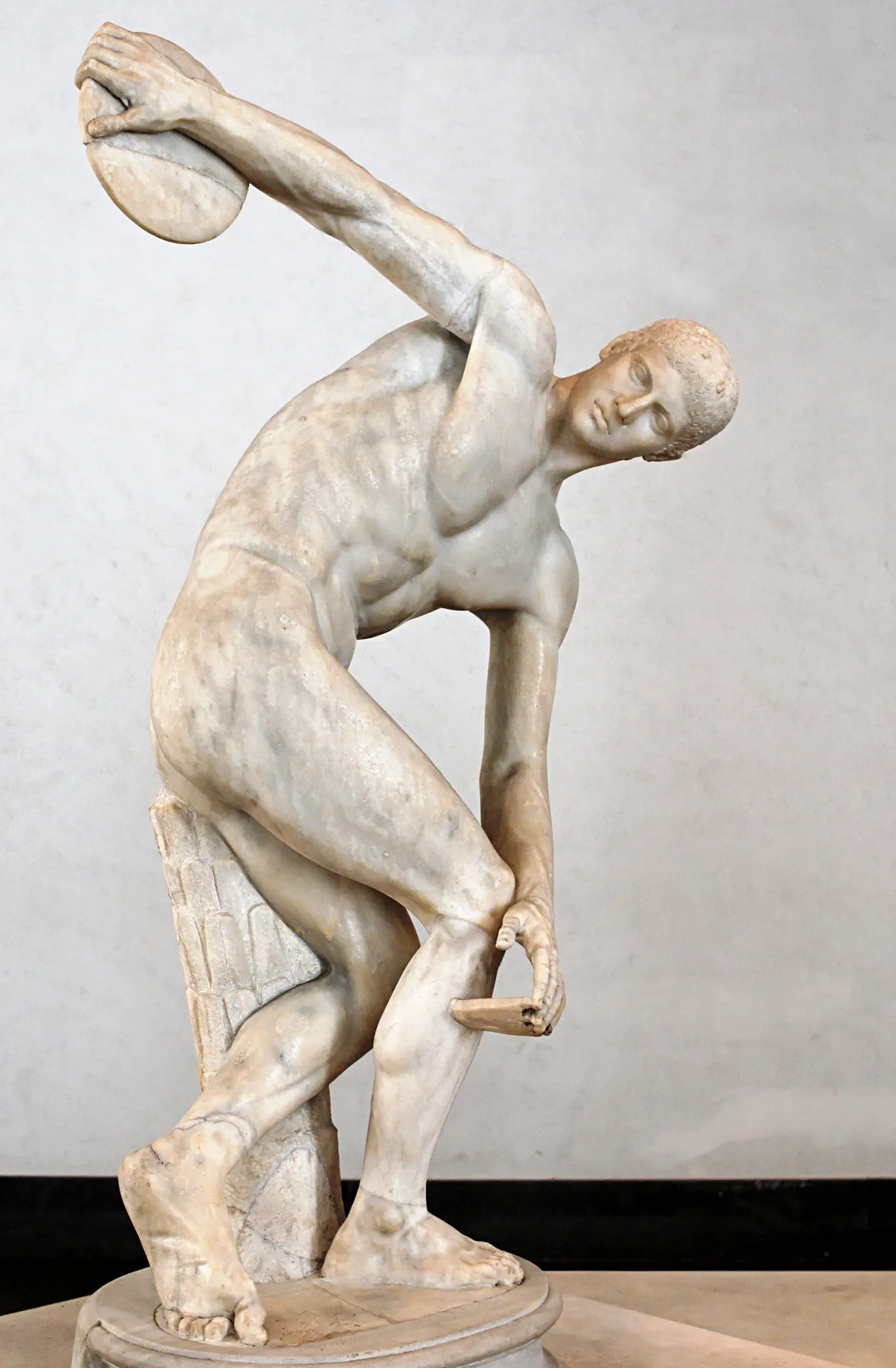
投げる直前、一瞬のストップモーション!ヒトラーも欲しがった古代のアスリート。A freeze-frame just before the throw! An ancient athlete that even Hitler wanted.
この作品のお話
Storyランチェロッティの円盤投げは、紀元140年ごろに作られた、作者不明のローマ時代の大理石像です。古代ギリシャの彫刻家ミュロンが紀元前460〜450年ごろにブロンズで作った像を写したもので、原作は失われました。この像は1781年にローマのエスクイリーノの丘で見つかり、今はローマ国立博物館にあります。
The Lancellotti Discobolus is a Roman marble statue made around AD 140 by an unknown sculptor. It copies a bronze statue made by the Greek sculptor Myron around 460–450 BC. The original is lost, but several Roman copies survive. This one was found on the Esquiline Hill in Rome in 1781. Today it is in the National Roman Museum.
選手は円盤をうしろに大きくふりかぶり、体をひねって、次の瞬間に投げようとしています。動きのいちばん緊張した一瞬を切り取ったことで、止まった像なのに「動き」を感じさせます。体のバランスや筋肉の表現は、古代ギリシャ彫刻の理想の美をよく示しています。
The athlete swings the discus far back and twists his body. In the next moment, he will throw. Myron chose the most exciting moment of the movement. So the statue does not move, but we feel motion. His balance and muscles show the Greek ideal of beauty.
円盤投げは古代オリンピックの種目の一つでした。この像は「スポーツと美」のシンボルとして、ポスターや切手、トロフィーなどに今も数多く使われています。円盤投げの英語 discus は、皿を意味する dish や机の desk とも語源がつながっています。
The discus throw was an event in the ancient Olympic Games. This statue is still used on posters, stamps and trophies as a symbol of sport and beauty. The English word 'discus' is related to 'dish' and 'desk'.
この男の人は運動選手です。円盤を投げようとしています。ギリシャの芸術家が最初の像をブロンズで作りました。その像はなくなりました。これは大理石の複製です。
This man is an athlete. He is going to throw a discus. A Greek artist made the first statue in bronze. That statue is lost. This one is a copy in marble.
英語のレベルは上の「やさしい/ふつう」で切りかえられます。
えっ!?な裏ネタ
Secrets1938年、この像はヒトラーに買い取られ、ドイツのミュンヘンへ運ばれました。理想の肉体の象徴として気に入っていたと言われます。第二次世界大戦が終わったあとの1948年、イタリアへ戻されました。
In 1938, Hitler bought this statue and it was taken to Munich in Germany. He liked it as a symbol of the 'perfect body'. In 1948, after World War II, it was sent back to Italy.
円盤投げの複製はいくつもあります。大英博物館の像は、別の首が下向きにつけられています。この像は頭が元の体についたまま見つかったので、円盤の方をふり返る本来の姿がわかる、とても大事な一体です。
There are several copies of the Discobolus. The one in the British Museum has a head attached looking down. This one was found with its own head, turned back toward the discus. So it shows the original pose.
原作は、中が空洞になったブロンズ(青銅)の像でした。大理石で同じポーズにすると、突き出した部分が重さで折れやすいので、この複製では脚のうしろに木の切り株を足して支えています。ほかの大理石の古代彫刻でもよく見られる工夫です。
The original was a hollow bronze statue. In heavy marble, parts of this pose could break under their own weight. So this copy has a tree stump behind the leg to hold it up.
1948年のロンドン・オリンピックの公式ポスターには、ビッグ・ベンを背にした円盤投げの像が描かれました。古代オリンピックの精神をあらわすシンボルとして選ばれたのです。
The official poster for the 1948 London Olympics showed the Discobolus in front of Big Ben. It was chosen as a symbol of the spirit of the ancient Olympics.
ここを見て!
Look Closer1円盤Discus
円盤を高くふりかぶった、投げる直前の瞬間です。
He holds the discus high. It is the moment just before the throw.
2ふり返る顔Head turned back
顔は円盤の方へ向いています。この像は元の頭が残っているので、本来の向きがわかります。
His face turns toward the discus. This copy kept its own head, so we know the right direction.
3木の切り株Tree stump
大理石の重さを支えるための切り株。ブロンズの原作にはなかったものです。
This stump holds up the heavy marble. The bronze original did not need it.
英語で名画を語ろう
Talk about Art in EnglishThe athlete is about to throw the discus.
選手はいまにも円盤を投げようとしています。
💡 「〜する直前」を表す。動きの一瞬を切り取った作品の説明にぴったり。
英語で説明すると… Describe it
これは若い運動選手の像です。前にかがみ、体をひねっています。うしろに円盤を高く持っています。脚のうしろには木の切り株があります。
This is a statue of a young athlete. He is bending forward and twisting his body. He is holding a discus high behind him. There is a tree stump behind his leg.
考えてみよう Think & Talk
- ミュロンはなぜ、投げたあとではなくこの瞬間を選んだのだと思いますか?Why do you think Myron chose this moment, not the moment after the throw?
- 今のスポーツの像を作るとしたら、どの瞬間を選びますか?If you made a statue of a modern sport, which moment would you choose?
この作品の英単語
WordsThe athlete is about to throw the discus.
その選手は円盤を投げようとしています。
He will throw the discus in a second.
彼はすぐに円盤を投げるでしょう。
This statue is a Roman copy.
この像はローマ時代の複製です。
His body is twisted but balanced.
彼の体はねじれていますが、バランスがとれています。
ミニクイズ
QuizQ. ミュロンの原作は何で作られていた?What was Myron's original statue made of?
原作はブロンズで、失われました。残っているのは大理石の複製です。
The original was bronze and is lost. Marble copies survive.
ウソ?ホント? この像は1938年にドイツへ運ばれたことがある。This statue was once taken to Germany in 1938.
ヒトラーが買い取り、1948年にイタリアへ戻りました。
Hitler bought it, and it returned to Italy in 1948.
ウソ?ホント? ミュロンは、円盤を投げ終わったあとの姿をつくった。Myron showed the athlete after he threw the discus.
投げる直前の、いちばん力のこもった瞬間です。
It shows the moment just before the throw.
 画像の出典とライセンス / Image credit
- PDDiscobolus Lancelotti Massimo.jpg(Wikimedia Commons)
ライセンス:Public domain(パブリックドメイン)/作者・撮影者の表記:Marie-Lan Nguyen/提供元:Own work
この作品は、作者の死後長い年月がたち著作権の保護期間が終わっています。写真は撮影者がパブリックドメインとして公開したもの、または著作権の保護期間が終わった古い写真です。 所蔵:ローマ国立博物館(マッシモ宮)(National Roman Museum (Palazzo Massimo alle Terme))。画像は表示のために縮小・WebP 形式に変換しています。
