

 PDF をダウンロード
Let's Look at Art!
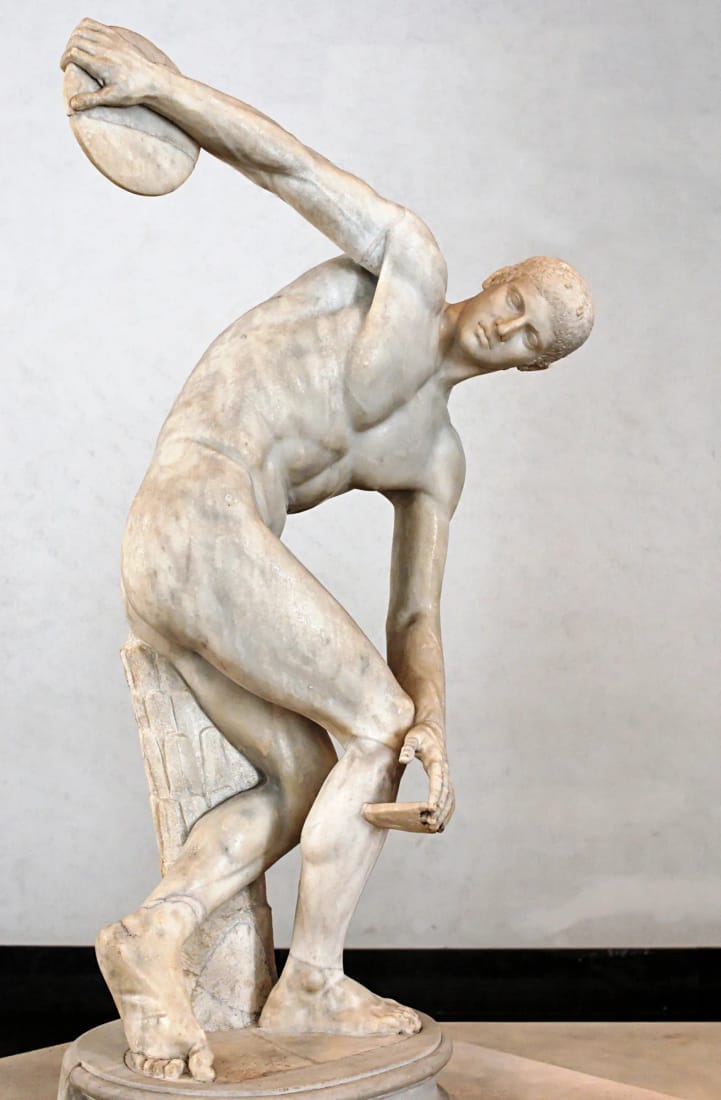
Title: Discobolus (Lancellotti Discobolus)
Artist: Unknown Roman sculptor (after Myron)
Year: c. AD 140 (after a bronze original of c. 460–450 BC)
Medium: Marble (Roman copy of a bronze original)
Museum: National Roman Museum (Palazzo Massimo alle Terme), Rome
1 Find it! 絵の中から見つけて、○でかこもう。
- ☐ Discus
- ☐ Head turned back
- ☐ Tree stump
2 First look 最初に見たときの感想を書こう。
When I first saw this painting, I felt ______________ because ______________________.
Three colors I can see: ①__________ ②__________ ③__________
3 Words — Match them. 英語と日本語を線で結ぼう。
- athlete ●
- throw ●
- copy ●
- balanced ●
- ● 投げる
- ● バランスのとれた
- ● 運動選手
- ● 複製・コピー
Discobolus (Lancellotti Discobolus)
4 Fill in the blanks. 下の箱から選んで、( )に入れよう。形を変えるものもあります。
- The is about to throw the discus.
- He will the discus in a second.
- This statue is a Roman .
- His body is twisted but .
5 Read and answer — True or False? 英文を読んで、正しければ T、ちがえば F。
This man is an athlete. He is going to throw a discus. A Greek artist made the first statue in bronze. That statue is lost. This one is a copy in marble.
The Lancellotti Discobolus is a Roman marble statue made around AD 140 by an unknown sculptor. It copies a bronze statue made by the Greek sculptor Myron around 460–450 BC. The original is lost, but several Roman copies survive. This one was found on the Esquiline Hill in Rome in 1781. Today it is in the National Roman Museum.
- This statue was once taken to Germany in 1938. T / F
- Myron showed the athlete after he threw the discus. T / F
6 Quiz — Choose the best answer. 正しいものを選ぼう。
What was Myron's original statue made of?
- Bronze
- Wood
- Gold
- Clay
Discobolus (Lancellotti Discobolus)
7 Put the words in order. 語を正しく並べかえて、文を書こう。
- to / about / the / The / is / discus / throw / athlete .
- This / statue / of / is / young / a / a / athlete .
8 Complete the description. 箱の語を(1)〜(4)に入れて、絵の説明を完成させよう。
This is a statue of a young athlete. He is (1) forward and (2) his body. He is holding a discus high (3) him. There is a tree (4) behind his leg.
9 Describe the painting in English. この絵を英語で説明しよう(3文以上)。
10 Think & Talk 考えて、ペアやグループで話し合おう。
Why do you think Myron chose this moment, not the moment after the throw?
If you made a statue of a modern sport, which moment would you choose?
11 My favorite part いちばん好きなところを英語で。
I like the ____________ because ____________________________.
Answers & Notes
1 Find it!
Discus=円盤/Head turned back=ふり返る顔/Tree stump=木の切り株
2 First look
自由に書けたら正解。I felt calm / surprised / happy … などの形容詞を使おう。
3 Words
1–c(athlete=運動選手) 2–a(throw=投げる) 3–d(copy=複製・コピー) 4–b(balanced=バランスのとれた)
4 Fill in the blanks
- athlete The athlete is about to throw the discus.
その選手は円盤を投げようとしています。 - throw He will throw the discus in a second.
彼はすぐに円盤を投げるでしょう。 - copy This statue is a Roman copy.
この像はローマ時代の複製です。 - balanced His body is twisted but balanced.
彼の体はねじれていますが、バランスがとれています。
5 Read — T / F
【本文の訳】この男の人は運動選手です。円盤を投げようとしています。ギリシャの芸術家が最初の像をブロンズで作りました。その像はなくなりました。これは大理石の複製です。
【本文の訳】ランチェロッティの円盤投げは、紀元140年ごろに作られた、作者不明のローマ時代の大理石像です。古代ギリシャの彫刻家ミュロンが紀元前460〜450年ごろにブロンズで作った像を写したもので、原作は失われました。この像は1781年にローマのエスクイリーノの丘で見つかり、今はローマ国立博物館にあります。
- T この像は1938年にドイツへ運ばれたことがある。
解説:ヒトラーが買い取り、1948年にイタリアへ戻りました。 - F ミュロンは、円盤を投げ終わったあとの姿をつくった。
解説:投げる直前の、いちばん力のこもった瞬間です。
6 Quiz
A 問:ミュロンの原作は何で作られていた?
選択肢:A ブロンズ(青銅)/B 木/C 金/D 粘土
解説:原作はブロンズで、失われました。残っているのは大理石の複製です。
7 Put the words in order
- The athlete is about to throw the discus.
選手はいまにも円盤を投げようとしています。 - This is a statue of a young athlete.
これは若い運動選手の像です。
💡 is about to(いまにも〜しようとしている):「〜する直前」を表す。動きの一瞬を切り取った作品の説明にぴったり。
8 Complete the description
(1) bending (2) twisting (3) behind (4) stump
9 Describe(模範解答)
This is a statue of a young athlete. He is bending forward and twisting his body. He is holding a discus high behind him. There is a tree stump behind his leg.
これは若い運動選手の像です。前にかがみ、体をひねっています。うしろに円盤を高く持っています。脚のうしろには木の切り株があります。
10 Think & Talk(問いの訳)
- Why do you think Myron chose this moment, not the moment after the throw?
ミュロンはなぜ、投げたあとではなくこの瞬間を選んだのだと思いますか? - If you made a statue of a modern sport, which moment would you choose?
今のスポーツの像を作るとしたら、どの瞬間を選びますか?
正解のない問いです。理由をつけて話せたら◎。
Fun Fact(訳)
ヒトラーが買い、戦後に戻ってきた 1938年、この像はヒトラーに買い取られ、ドイツのミュンヘンへ運ばれました。理想の肉体の象徴として気に入っていたと言われます。第二次世界大戦が終わったあとの1948年、イタリアへ戻されました。
