

 ワークシート
 ぬりえ
 迷路
約1900年前の女性が、今もこちらを見つめる!ミイラにのせた肖像画。A woman from about 1,900 years ago is still looking at us! A portrait made for a mummy.
この作品のお話
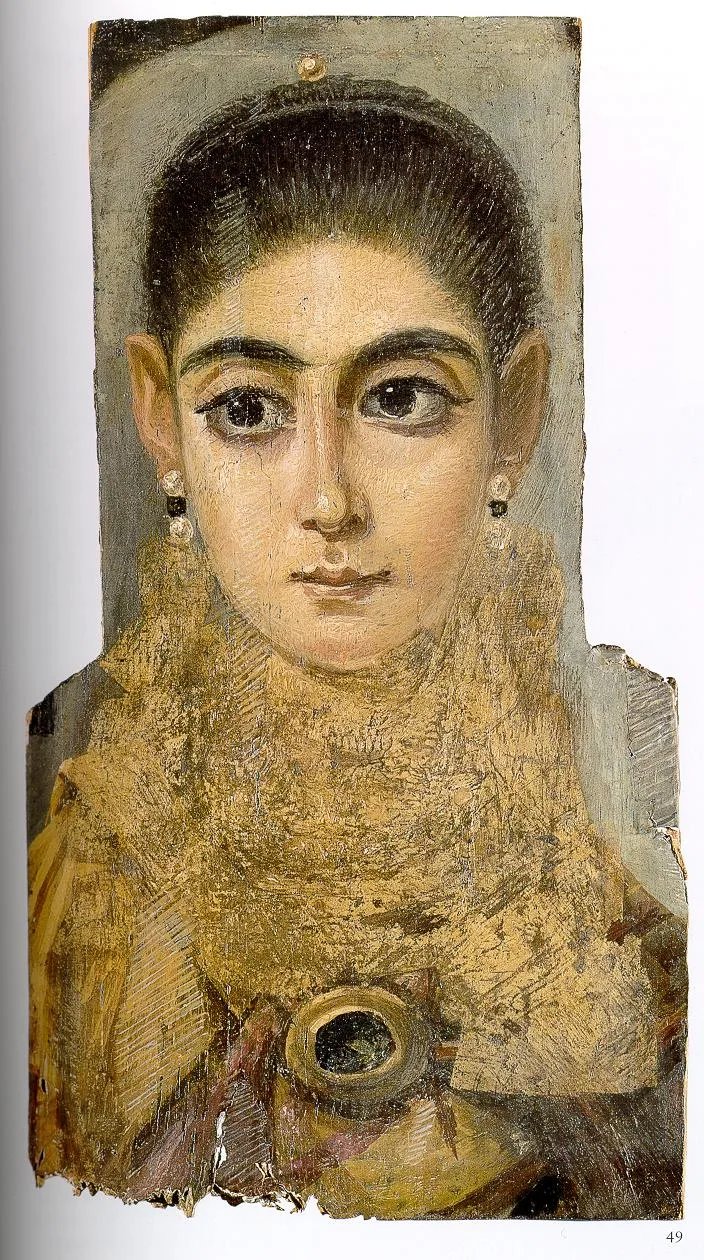
Story大きな黒い目でこちらを見つめる若い女性。これはおよそ1900年前、ローマ帝国が治めていたエジプトで、うすい木の板に描かれた肖像画です。亡くなった人をミイラにしたとき、包帯で包んだ顔の上にこの絵をはめこみました。エジプトのアンティノオポリスという町で見つかり、今はパリのルーヴル美術館にあります。
A young woman looks at us with large dark eyes. This portrait was painted on a thin wooden board about 1,900 years ago, in Egypt under the Roman Empire. When a person died and was made into a mummy, a picture like this was set over the face in the linen wrappings. It was found in the Egyptian city of Antinoopolis and is now in the Louvre in Paris.
当時のエジプトには、エジプト人のほかにギリシャやローマから来た人々もくらしていました。人々はミイラを作るエジプトの古い習わしを守りながら、ギリシャ・ローマ風の写実的な(見たままの)肖像画を組み合わせたのです。絵の具は、熱でとかした蜜蝋(ミツバチのロウ)に色の粉をまぜたもので、そのおかげで色が今もあざやかです。
At that time, Greeks and Romans lived in Egypt together with Egyptians. People kept the old Egyptian custom of making mummies, but they added a realistic portrait in the Greek and Roman style. The paint was made by mixing colored powder with melted beeswax. That is why the colors still look fresh today.
こうしたミイラ肖像は今、世界に約1000点が知られています。19世紀にエジプトのファイユーム地方でたくさん見つかったので、まとめて「ファイユーム肖像」とよばれます。古代ギリシャ・ローマの板の絵はほとんどが失われましたが、エジプトのかわいた砂のおかげで、これらは奇跡的に残りました。
Today about 1,000 mummy portraits like this are known. Many were found in the Fayum region of Egypt in the 19th century, so they are often called 'Fayum portraits'. Almost all ancient Greek and Roman paintings on wood have been lost. These survived because of the dry sand of Egypt.
これは若い女性の絵です。約1900年前のエジプトで作られました。ミイラの顔の上にのせたのです。絵の具にはロウが入っています。大きな目は、今も私たちを見ています。
This is a picture of a young woman. People in Egypt made it about 1,900 years ago. They put it on a mummy's face. The paint has wax in it. Her big eyes still look at us today.
英語のレベルは上の「やさしい/ふつう」で切りかえられます。
えっ!?な裏ネタ
Secretsこの絵が見つかったのは、ファイユームではなくアンティノオポリスという町です。この町は、ナイル川でおぼれた若い友アンティノウスをしのんで、ローマ皇帝ハドリアヌスが130年ごろに建てた町でした。
This portrait was found not in Fayum but in the city of Antinoopolis. Emperor Hadrian founded this city around AD 130 in memory of his young friend Antinous, who drowned in the Nile.
この描き方は「エンカウスティック」とよばれ、ギリシャ語で「焼きつける」という意味です。とかしたロウに色をまぜて描き、ロウは冷えると固まります。固まった蜜蝋は湿気に強く、色を長く守りました。
This technique is called 'encaustic', from a Greek word meaning 'burned in'. The painter mixed colors into melted wax. As the wax cooled, it hardened and helped protect the colors from damp.
古代ギリシャには、アペレスのような伝説の名画家がいたと記録に残っています。でも彼らの板の絵は1枚も残っていません。ミイラ肖像は、古代の板の絵がどんなものだったかを教えてくれる、数少ない手がかりなのです。
Ancient writers tell us about legendary Greek painters such as Apelles. But not one of their paintings on wood survives. Mummy portraits are among the few clues that show us what ancient panel painting looked like.
ミイラ肖像には名前や年が書かれていないことがほとんどです。そこで研究者は、髪型やアクセサリーを、年代のわかるローマの彫刻や硬貨にえがかれた流行とくらべて、いつごろの絵かを推理します。
Most mummy portraits have no names or dates. So researchers compare the hairstyles and jewelry with Roman fashions seen on dated sculptures and coins. This helps them guess when each portrait was made.
ここを見て!
Look Closer1大きな目Large eyes
黒目の中の小さな白い点は、光の映りこみ。これだけで目がうるんで見え、生きているような表情になります。
The tiny white spots in the eyes are reflections of light. They make the eyes look moist and alive.
2真珠のようなイヤリングPearl-like earrings
白い玉と黒っぽい玉が下がったイヤリング。当時のおしゃれがよくわかります。
The earrings have white and dark beads. They show us the fashion of the time.
3まとめた黒髪Neat dark hair
額から後ろへなでつけてまとめた黒髪。こうした髪型が、絵の年代を知る手がかりになります。
Her dark hair is swept back from her forehead. Hairstyles like this help experts date the portrait.
英語で名画を語ろう
Talk about Art in EnglishThis portrait was buried with a young woman about 1,900 years ago.
この肖像画は、約1900年前に若い女性と一緒に埋葬されました。
💡 bury(埋める・埋葬する)の受け身。古代の副葬品を説明するときの定番表現です。
英語で説明すると… Describe it
これは若い女性の肖像画です。大きな黒い目でまっすぐ前を見ています。黒い髪を後ろにまとめ、イヤリングをつけています。顔の下では、首や服の広い部分が金箔でおおわれています。
This is a portrait of a young woman. She is looking straight ahead with large, dark eyes. Her dark hair is pulled back, and she is wearing earrings. Below her face, gold leaf covers much of her neck and clothes.
考えてみよう Think & Talk
- 人々はなぜ、ミイラに本物そっくりの顔の絵をつけたのだと思いますか?Why do you think people put a realistic face on a mummy?
- もし自分の肖像画が2000年残るとしたら、どんな顔で描いてほしいですか?If your portrait had to last for 2,000 years, how would you like to look in it?
この作品の英単語
WordsThis portrait was placed over the face of a mummy.
この肖像画はミイラの顔の上に置かれました。
The paint was made with melted wax.
絵の具はとかしたロウで作られました。
Her face looks very realistic.
彼女の顔はとても本物そっくりに見えます。
These portraits survived in the dry sand.
これらの肖像画はかわいた砂の中で残りました。
ミニクイズ
QuizQ. この肖像画は、もともと何に使われた?What was this portrait first used for?
ミイラを包む包帯の、顔の部分にはめこまれていました。
It was set into the linen wrappings over the mummy's face.
ウソ?ホント? この絵の絵の具には、ミツバチのロウがまぜてある。The paint in this picture contains beeswax.
とかした蜜蝋に色をまぜる「エンカウスティック」という描き方です。
It uses encaustic, a technique of mixing colors into melted beeswax.
ウソ?ホント? この絵は、ファイユームという町の博物館で今も見られる。You can still see this portrait in a museum in the town of Fayum.
見つかったのはアンティノオポリスで、今はパリのルーヴル美術館にあります。
It was found in Antinoopolis, and it is now in the Louvre in Paris.
 画像の出典とライセンス / Image credit
- PDFayum-34.jpg(Wikimedia Commons)
ライセンス:Public domain(パブリックドメイン)/作者・撮影者の表記:Unknown authorUnknown author
この作品は、作者の死後長い年月がたち著作権の保護期間が終わった「パブリックドメイン」の作品です。画像は平面の作品を忠実に写したもので、新しい著作権は生じません(Wikimedia Commons の PD-Art の考え方)。 所蔵:ルーヴル美術館(Musée du Louvre)。画像は表示のために縮小・WebP 形式に変換しています。
