

 ワークシート
 ぬりえ
 迷路
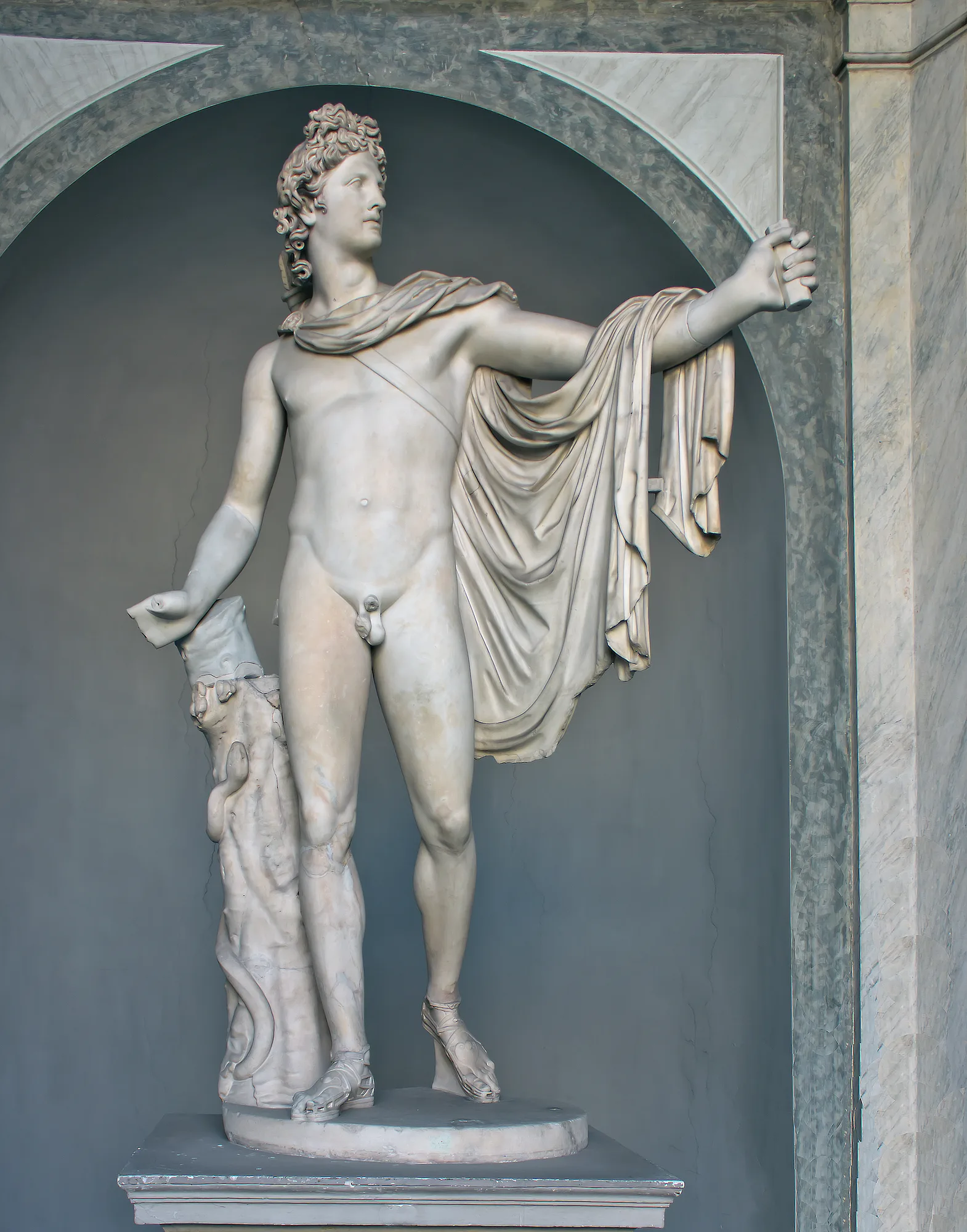
「古代美術の最高の理想」とたたえられた神!ナポレオン時代にはパリへ。Praised as the highest ideal of ancient art, and even taken to Paris in Napoleon's time!
この作品のお話
Storyマントを腕にかけ、遠くを見つめながら片手を前へのばす若い神。ギリシャ神話の光と音楽、弓矢の神アポロンです。高さは2メートルをこえます。今の像は2世紀ごろの古代ローマで大理石で作られた模刻(コピー)で、元はギリシャの彫刻家レオカレスの青銅像だったと考えられています。
A young god with a cloak over his arm looks into the distance and stretches out one hand. He is Apollo, the Greek god of light, music and archery. The statue is more than two meters tall. It is a Roman marble copy from around the 2nd century AD. The original was probably a bronze statue by the Greek sculptor Leochares.
この像は15世紀の終わりごろイタリアで見つかり、枢機卿ジュリアーノ・デッラ・ローヴェレが手に入れました。のちに教皇ユリウス2世となる人物です。彼はこの像をヴァチカン宮殿の「ベルヴェデーレの中庭」に置き、そこから今の名前がつきました。左手にはもともと弓を持ち、矢を放った直後の姿だと考えられています。
The statue was found in Italy in the late 15th century and was owned by Cardinal Giuliano della Rovere, who later became Pope Julius II. He placed it in the Belvedere Courtyard of the Vatican, which gave the statue its name. His left hand probably once held a bow, and he seems to have just shot an arrow.
18世紀、ドイツの美術史家ヴィンケルマンは、この像を古代美術の最高の理想だとほめたたえました。1797年の条約でフランスへ引きわたされ、1798年からパリで展示されましたが、ナポレオンの失脚後、1816年にヴァチカンへもどりました。何世紀ものあいだ、画家や彫刻家が手本にした、「美しい人体」の代名詞のような像です。
In the 18th century, the German art historian Winckelmann praised it as the highest ideal of ancient art. Under a treaty of 1797, it was handed over to France and shown in Paris from 1798. It returned to the Vatican in 1816, after Napoleon's fall. For centuries, painters and sculptors studied it as a model of the beautiful human body.
これはギリシャの神アポロンの像です。高さは2メートル以上あります。腕を前にのばしています。矢を放ったところなのです。ナポレオンはこの像をパリへ持っていったことがあります。
This is a statue of Apollo, a Greek god. He is over two meters tall. He holds out his arm. He just shot an arrow. Napoleon once took this statue to Paris.
英語のレベルは上の「やさしい/ふつう」で切りかえられます。
えっ!?な裏ネタ
Secretsこの像を手に入れたデッラ・ローヴェレ枢機卿は、のちの教皇ユリウス2世。ミケランジェロにシスティーナ礼拝堂の天井画を、ラファエロに部屋の壁画を描かせた、ルネサンスの大パトロンです。
Cardinal della Rovere, who owned this statue, later became Pope Julius II. He was the great Renaissance patron who had Michelangelo paint the Sistine Chapel ceiling and Raphael paint rooms in the Vatican.
イタリアに攻めこんだナポレオンは、1797年のトレンティーノ条約で、この像をフランスへ引きわたさせました。像は1798年からパリで大人気の展示品になりましたが、ナポレオンが失脚すると返還され、1816年にヴァチカンへもどりました。
After Napoleon invaded Italy, the Treaty of Tolentino in 1797 forced the Vatican to give this statue to France. From 1798, it was a hugely popular exhibit in Paris. After Napoleon's fall, it was returned to the Vatican in 1816.
ヴァチカンに来たとき、像は左手と右手の指が欠けていました。1532〜1533年に彫刻家モントルソーリが左腕をおぎない、右の前腕も取りかえました。近年の修復では、その左手が、古代ローマの石膏の断片「バイアの手」から型をとったものに取りかえられました。
When the statue came to the Vatican, its left hand and the fingers of its right hand were missing. In 1532–1533, the sculptor Montorsoli completed the left arm and replaced the right forearm. In the recent restoration, his left hand was replaced with a cast of the 'hand of Baia', an ancient Roman plaster fragment.
18世紀には「古代美術の最高傑作」とたたえられましたが、19世紀にパルテノン神殿の本物のギリシャ彫刻などが知られるようになると、評価はしだいに下がりました。名作の人気も、時代とともに変わるのです。
In the 18th century, it was praised as the greatest ancient artwork. But in the 19th century, after people saw original Greek sculptures such as those from the Parthenon, its fame slowly faded. Even the fame of masterpieces changes over time.
ここを見て!
Look Closer1遠くを見る顔Face looking far away
巻き毛を結った頭を横に向け、矢の飛んだ先を見つめているようです。
He turns his curly head to the side, as if watching where his arrow went.
2のばした左手Outstretched left hand
前へまっすぐのばした手。ここに弓を持っていたと考えられています。
His hand reaches straight out. It probably once held a bow.
3腕にかけたマントCloak over the arm
肩からかけて腕にたらしたマント。深いひだが、大理石とは思えないほど軽やかです。
The cloak hangs from his shoulder and arm. Its deep folds look light, not like heavy marble.
4蛇の巻きつく木の幹Tree trunk with a snake
像をささえる木の幹に、蛇が巻きついています。重い大理石の像をささえる、大事な柱の役目もしています。
A snake winds around the tree trunk. The trunk also helps hold up the heavy marble statue.
英語で名画を語ろう
Talk about Art in EnglishApollo puts his weight on his right leg.
アポロンは右足に体重をかけています。
💡 片足に重心をのせた立ち方は彫刻の見どころ。像のポーズを説明するときに便利です。
英語で説明すると… Describe it
これは若い神の大理石の像です。壁のアーチ形のくぼみの中に立っています。左腕を前にのばし、そこからマントがたれています。左側には、蛇が巻きついた木の幹があります。
This is a marble statue of a young god. He is standing in an arched space in a wall. He is holding out his left arm, and a cloak hangs from it. On the left, there is a tree trunk with a snake around it.
考えてみよう Think & Talk
- アポロンは何を見ていると思いますか?What do you think Apollo is looking at?
- 有名な作品の評価が時代によって変わるのは、なぜだと思いますか?Why do you think people's opinions of famous artworks change over time?
この作品の英単語
WordsThis statue is over two meters tall.
この像は高さ2メートル以上あります。
A cloak hangs over his arm.
マントが彼の腕にかかっています。
Many writers praised this statue.
多くの作家がこの像をほめたたえました。
People saw it as the ideal body.
人々はそれを理想的な体だと考えました。
ミニクイズ
QuizQ. この像の名前の「ベルヴェデーレ」とは何のこと?What does 'Belvedere' in its name refer to?
ヴァチカン宮殿の「ベルヴェデーレの中庭」に置かれたことから名づけられました。
It was named after the Belvedere Courtyard in the Vatican, where it was placed.
ウソ?ホント? この像は、古代ギリシャの彫刻家が作った本物そのものである。This statue is the original made by an ancient Greek sculptor.
ギリシャの青銅像をもとに、古代ローマで大理石で作られたコピーと考えられています。
It is thought to be a Roman marble copy of a Greek bronze statue.
ウソ?ホント? この像は、ナポレオンによってパリへ運ばれたことがある。Napoleon once had this statue taken to Paris.
1797年の条約でフランスへの引きわたしが決まり、1798年からパリで展示されました。1816年にヴァチカンへもどりました。
A treaty in 1797 handed it over to France. It was shown in Paris from 1798 and returned to the Vatican in 1816.
 画像の出典とライセンス / Image credit
- CC0Belvedere Apollo Frontal.jpg(Wikimedia Commons)
ライセンス:CC0(パブリックドメイン提供)/作者・撮影者の表記:Demetrios Karatassos
この作品は、作者の死後長い年月がたち著作権の保護期間が終わっています。写真は撮影者がパブリックドメインとして公開したもの、または著作権の保護期間が終わった古い写真です。 所蔵:ヴァチカン美術館(ピオ・クレメンティーノ美術館)(Vatican Museums (Museo Pio-Clementino))。画像は表示のために縮小・WebP 形式に変換しています。
