

 ワークシート
 ぬりえ
 迷路
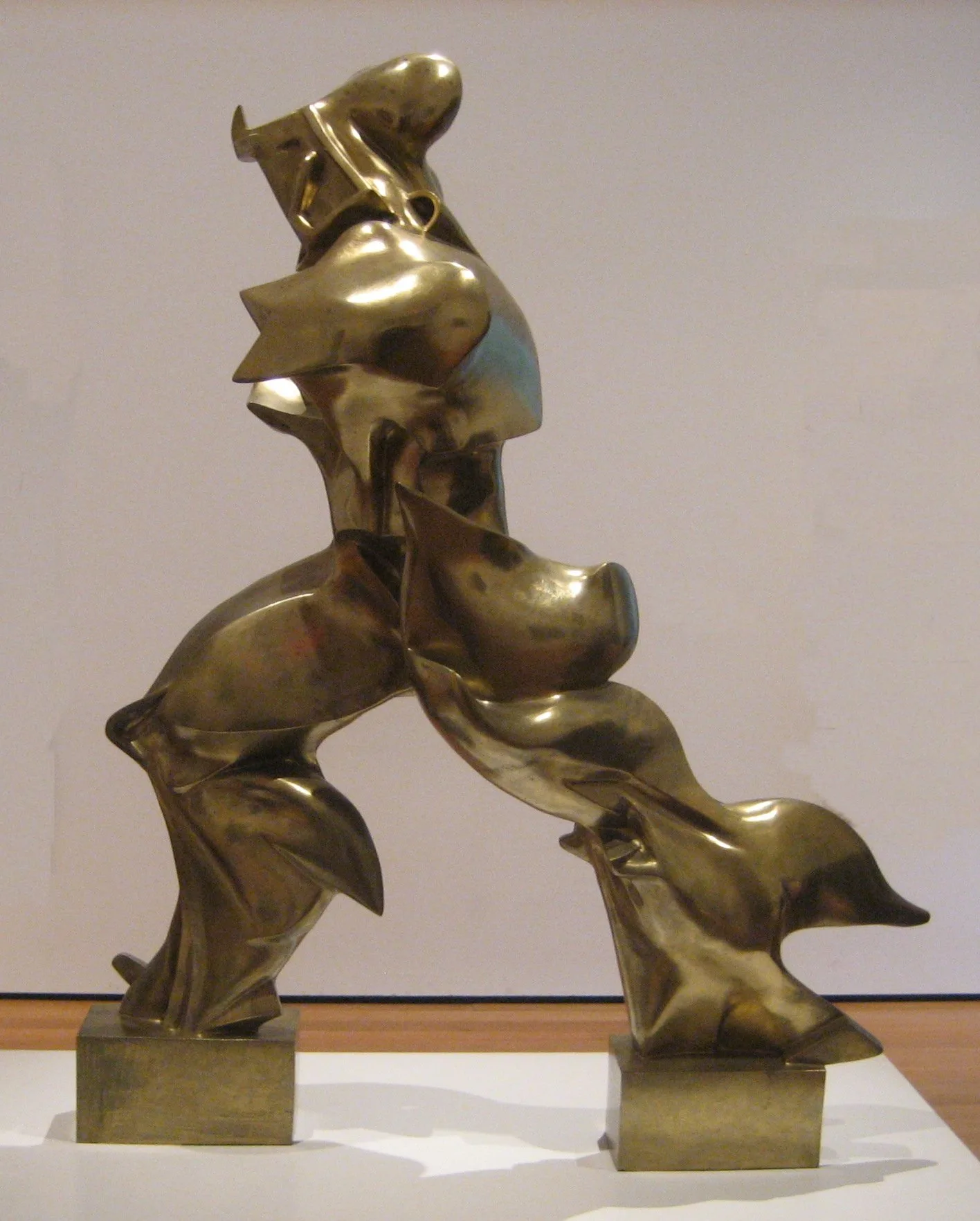
風を切って歩く金属の人。イタリアの20セント硬貨にもいる!A metal man striding through the wind. He's on Italy's 20-cent coin!
この作品のお話
Story顔も腕もない人の形が、ぐっと足をふみ出して前へ進んでいます。体のふちは炎や風のようにうねり、まるで空気を切りさいているようです。作ったのはイタリアの芸術家ウンベルト・ボッチョーニ。1913年に石膏で作った像を、彼の死後、1931年または1934年にブロンズで鋳造したもので、この写真はニューヨーク近代美術館の1体です。
A figure with no arms and no clear face takes a big step forward. The edges of its body ripple like flames or wind, as if it is cutting through the air. The Italian artist Umberto Boccioni made it in plaster in 1913. This bronze was cast in 1931 or 1934, after his death. It is at MoMA in New York.
ボッチョーニは「未来派」という芸術運動の中心人物でした。未来派は、自動車や飛行機、工場の機械など、スピードと力に満ちた新しい時代をたたえました。この像は、止まった体ではなく「動いている体が空間に残す形」を表そうとしたもので、ギリシャ彫刻のようなきれいな形とはまったくちがう美しさをねらっています。
Boccioni was a leader of Futurism. The Futurists loved speed, cars, airplanes and machines. With this sculpture, he tried to show not a still body, but the shape a moving body leaves in space. It is a very different kind of beauty from Greek statues.
ボッチョーニは第一次世界大戦で兵士となり、1916年、訓練中に馬から落ちて33歳で亡くなりました。もとの石膏像はブラジルのサンパウロ大学現代美術館にあります。この像は未来派の代表作となり、2002年からはイタリアの20セント硬貨にもきざまれています。
Boccioni joined the army in the First World War. In 1916, he fell from a horse during training and died at 33. The original plaster is in a museum at the University of São Paulo in Brazil. This sculpture became the symbol of Futurism. Since 2002, it has appeared on Italy's 20-cent euro coin.
この金属の人は速く歩いています。体は風や炎のように見えます。作者は速さと機械が大好きでした。イタリアでは、この像を硬貨の上で見られます!
This metal man walks fast. His body looks like wind and fire. The artist loved speed and machines. You can see this statue on a coin in Italy!
英語のレベルは上の「やさしい/ふつう」で切りかえられます。
えっ!?な裏ネタ
Secretsボッチョーニが作ったのは石膏の像だけでした。生きているうちにブロンズで鋳造されることはなく、MoMAのこの像も、彼の死後、1931年または1934年に鋳造されたものです。作者が見たことのない姿が、今いちばん有名になっているのです。
Boccioni only made the plaster version. It was never cast in bronze in his life. This MoMA bronze was also cast after his death, in 1931 or 1934. The most famous version is one he never saw.
ユーロ硬貨は国ごとに裏のデザインがちがいます。イタリアの20セント硬貨には、この像がえがかれています。イタリアへ行けば、ふつうのお釣りの中に未来派の名作が入っているかもしれません。
Each euro country has its own coin designs. Italy's 20-cent coin shows this sculpture. If you visit Italy, you might find this masterpiece in your change!
1909年の「未来派宣言」には、「うなりを上げるレーシングカーは、サモトラケのニケ(古代ギリシャの勝利の女神像)より美しい」という有名な一文があります。前へふみ出し、衣のようになびくこの像は、そのニケへの「未来からの返事」とも言われます。
The 1909 Futurist Manifesto said that a roaring racing car is more beautiful than the Nike of Samothrace, an ancient Greek statue of victory. Some say this striding figure is Futurism's answer to that statue.
機械とスピードをたたえたボッチョーニでしたが、命をうばったのは自動車でも飛行機でもなく、昔ながらの馬でした。1916年、騎兵の訓練中に落馬し、翌日亡くなりました。
Boccioni loved machines and speed. But it was not a car or a plane that ended his life. In 1916, he fell from a horse during cavalry training and died the next day.
ここを見て!
Look Closer1頭The head
ヘルメットのような頭。顔ははっきりせず、前へ進む勢いだけが形になっています。
The head looks like a helmet. There is no clear face, only the push forward.
2風を受ける胸Chest in the wind
胸や腰からは、ふくらんだ形がつき出しています。風を受けてなびく服や筋肉のようにも見えます。
Rounded shapes stick out from the chest and hips. They look like muscles or clothes blowing in the wind.
3炎のような前足Flame-like front leg
前へのびる足は、炎か、ひるがえる布のよう。ここに「動きのあと」が表されています。
The forward leg looks like a flame or a flying cloth. It suggests a trail of movement.
42つの台Two blocks
足はそれぞれ別の四角い台の上に。台がはなれていることで、大またの一歩がより大きく見えます。
Each foot stands on its own block. The gap between them makes the step look even bigger.
英語で名画を語ろう
Talk about Art in EnglishThe sculpture shows a body in motion.
この彫刻は動いている体を表しています。
💡 in motion は「動きの中にある」。写真や彫刻の説明でよく使います。
英語で説明すると… Describe it
これは歩く人物のブロンズ像です。大きく一歩ふみ出しています。体には炎のような波打つ形があります。それぞれの足は別々の台の上に立っています。
This is a bronze sculpture of a walking figure. It is taking a big step forward. Its body has wavy shapes like flames. Each foot stands on a separate block.
考えてみよう Think & Talk
- 動かない彫刻が、どうやって「速さ」を表せるのでしょう?How can a sculpture that does not move show speed?
- この人物はこんなに急いで、どこへ向かっていると思いますか?Where do you think this figure is going in such a hurry?
この作品の英単語
WordsThe figure strides forward.
その人物は大またで前へ進みます。
The Futurists loved speed and machines.
未来派は速さと機械を愛しました。
This bronze was cast after Boccioni's death.
このブロンズ像はボッチョーニの死後に鋳造されました。
The sculpture is on an Italian coin.
この彫刻はイタリアの硬貨にのっています。
ミニクイズ
QuizQ. この像がえがかれているのは、どの国の硬貨?Which country's coin shows this sculpture?
イタリアの20セント・ユーロ硬貨にきざまれています。
It is on Italy's 20-cent euro coin.
ウソ?ホント? ボッチョーニは、生きているあいだにこのブロンズ像を見た。Boccioni saw this bronze version during his life.
ブロンズは死後の1931年か1934年に作られました。彼が作ったのは石膏像です。
The bronze was cast in 1931 or 1934, after his death. He made only the plaster.
ウソ?ホント? 未来派は、スピードや機械をたたえた芸術運動だ。Futurism celebrated speed and machines.
自動車や飛行機など、新しい時代の力を表現しました。
They loved cars, airplanes and the energy of the modern age.
 画像の出典とライセンス / Image credit
- PD'Unique Forms of Continuity in Space', 1913 bronze by Umberto Boccioni.jpg(Wikimedia Commons)
ライセンス:Public domain(パブリックドメイン)/作者・撮影者の表記:Wmpearl/提供元:Own work
この作品は、作者の死後長い年月がたち著作権の保護期間が終わっています。写真は撮影者がパブリックドメインとして公開したもの、または著作権の保護期間が終わった古い写真です。 所蔵:ニューヨーク近代美術館(MoMA)(The Museum of Modern Art (MoMA))。画像は表示のために縮小・WebP 形式に変換しています。
