

 PDF をダウンロード
Let's Look at Art!
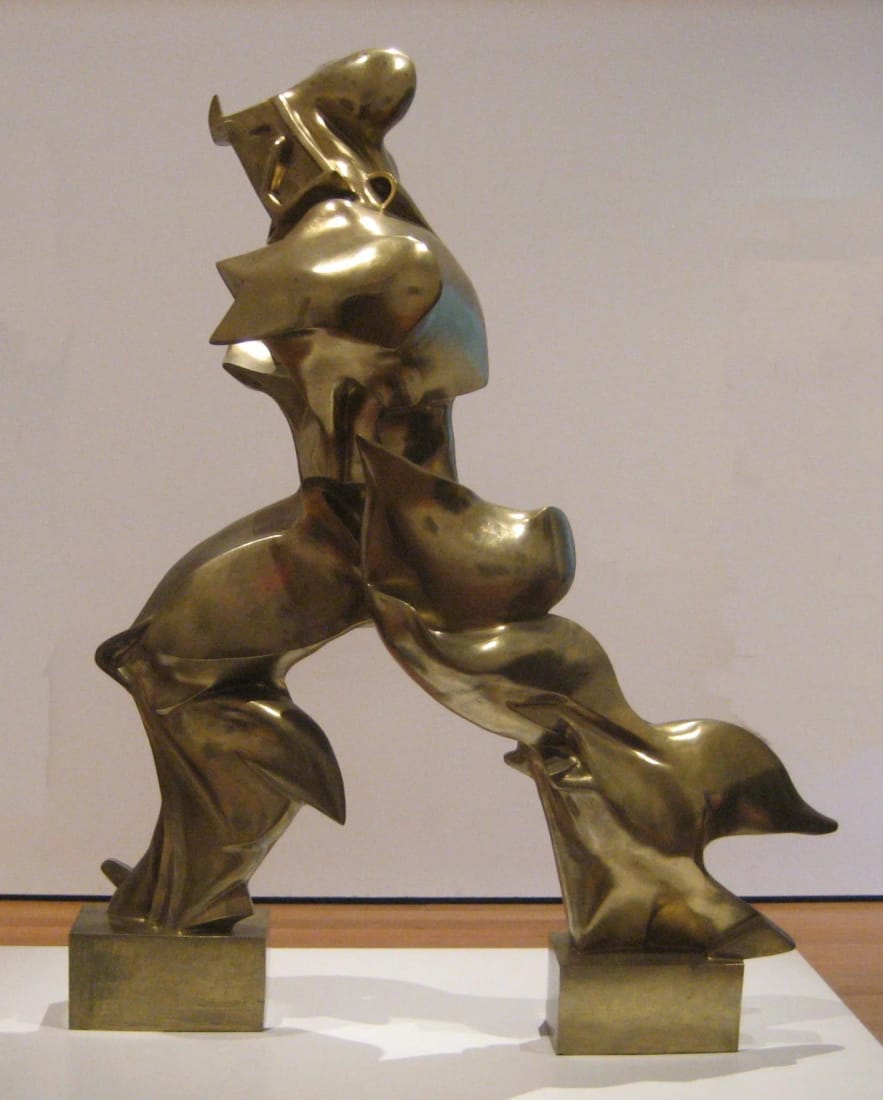
Title: Unique Forms of Continuity in Space
Artist: Umberto Boccioni (1882–1916)
Year: 1913 (cast 1931 or 1934)
Medium: Bronze (cast 1931 or 1934)
Museum: The Museum of Modern Art (MoMA), New York
1 Find it! 絵の中から見つけて、○でかこもう。
- ☐ The head
- ☐ Chest in the wind
- ☐ Flame-like front leg
- ☐ Two blocks
2 First look 最初に見たときの感想を書こう。
When I first saw this painting, I felt ______________ because ______________________.
Three colors I can see: ①__________ ②__________ ③__________
3 Words — Match them. 英語と日本語を線で結ぼう。
- stride ●
- speed ●
- cast ●
- coin ●
- ● 硬貨
- ● 大またで歩く
- ● 鋳造する
- ● 速さ
Unique Forms of Continuity in Space
4 Fill in the blanks. 下の箱から選んで、( )に入れよう。形を変えるものもあります。
- The figure forward.
- The Futurists loved and machines.
- This bronze was after Boccioni's death.
- The sculpture is on an Italian .
5 Read and answer — True or False? 英文を読んで、正しければ T、ちがえば F。
This metal man walks fast. His body looks like wind and fire. The artist loved speed and machines. You can see this statue on a coin in Italy!
A figure with no arms and no clear face takes a big step forward. The edges of its body ripple like flames or wind, as if it is cutting through the air. The Italian artist Umberto Boccioni made it in plaster in 1913. This bronze was cast in 1931 or 1934, after his death. It is at MoMA in New York.
- Boccioni saw this bronze version during his life. T / F
- Futurism celebrated speed and machines. T / F
6 Quiz — Choose the best answer. 正しいものを選ぼう。
Which country's coin shows this sculpture?
- France
- Italy
- Brazil
- The United States
Unique Forms of Continuity in Space
7 Put the words in order. 語を正しく並べかえて、文を書こう。
- motion / sculpture / in / a / body / shows / The .
- This / sculpture / bronze / figure / a / of / walking / is / a .
8 Complete the description. 箱の語を(1)〜(4)に入れて、絵の説明を完成させよう。
This is a bronze (1) of a walking figure. It is (2) a big step (3). Its body has wavy shapes like flames. Each foot stands on a separate (4).
9 Describe the painting in English. この絵を英語で説明しよう(3文以上)。
10 Think & Talk 考えて、ペアやグループで話し合おう。
How can a sculpture that does not move show speed?
Where do you think this figure is going in such a hurry?
11 My favorite part いちばん好きなところを英語で。
I like the ____________ because ____________________________.
Answers & Notes
1 Find it!
The head=頭/Chest in the wind=風を受ける胸/Flame-like front leg=炎のような前足/Two blocks=2つの台
2 First look
自由に書けたら正解。I felt calm / surprised / happy … などの形容詞を使おう。
3 Words
1–b(stride=大またで歩く) 2–d(speed=速さ) 3–c(cast=鋳造する) 4–a(coin=硬貨)
4 Fill in the blanks
- strides The figure strides forward.
その人物は大またで前へ進みます。 - speed The Futurists loved speed and machines.
未来派は速さと機械を愛しました。 - cast This bronze was cast after Boccioni's death.
このブロンズ像はボッチョーニの死後に鋳造されました。 - coin The sculpture is on an Italian coin.
この彫刻はイタリアの硬貨にのっています。
5 Read — T / F
【本文の訳】この金属の人は速く歩いています。体は風や炎のように見えます。作者は速さと機械が大好きでした。イタリアでは、この像を硬貨の上で見られます!
【本文の訳】顔も腕もない人の形が、ぐっと足をふみ出して前へ進んでいます。体のふちは炎や風のようにうねり、まるで空気を切りさいているようです。作ったのはイタリアの芸術家ウンベルト・ボッチョーニ。1913年に石膏で作った像を、彼の死後、1931年または1934年にブロンズで鋳造したもので、この写真はニューヨーク近代美術館の1体です。
- F ボッチョーニは、生きているあいだにこのブロンズ像を見た。
解説:ブロンズは死後の1931年か1934年に作られました。彼が作ったのは石膏像です。 - T 未来派は、スピードや機械をたたえた芸術運動だ。
解説:自動車や飛行機など、新しい時代の力を表現しました。
6 Quiz
B 問:この像がえがかれているのは、どの国の硬貨?
選択肢:A フランス/B イタリア/C ブラジル/D アメリカ
解説:イタリアの20セント・ユーロ硬貨にきざまれています。
7 Put the words in order
- The sculpture shows a body in motion.
この彫刻は動いている体を表しています。 - This is a bronze sculpture of a walking figure.
これは歩く人物のブロンズ像です。
💡 in motion(動いている):in motion は「動きの中にある」。写真や彫刻の説明でよく使います。
8 Complete the description
(1) sculpture (2) taking (3) forward (4) block
9 Describe(模範解答)
This is a bronze sculpture of a walking figure. It is taking a big step forward. Its body has wavy shapes like flames. Each foot stands on a separate block.
これは歩く人物のブロンズ像です。大きく一歩ふみ出しています。体には炎のような波打つ形があります。それぞれの足は別々の台の上に立っています。
10 Think & Talk(問いの訳)
- How can a sculpture that does not move show speed?
動かない彫刻が、どうやって「速さ」を表せるのでしょう? - Where do you think this figure is going in such a hurry?
この人物はこんなに急いで、どこへ向かっていると思いますか?
正解のない問いです。理由をつけて話せたら◎。
Fun Fact(訳)
ブロンズ像は作者の死後に誕生 ボッチョーニが作ったのは石膏の像だけでした。生きているうちにブロンズで鋳造されることはなく、MoMAのこの像も、彼の死後、1931年または1934年に鋳造されたものです。作者が見たことのない姿が、今いちばん有名になっているのです。
