

 ワークシート
 ぬりえ
 迷路
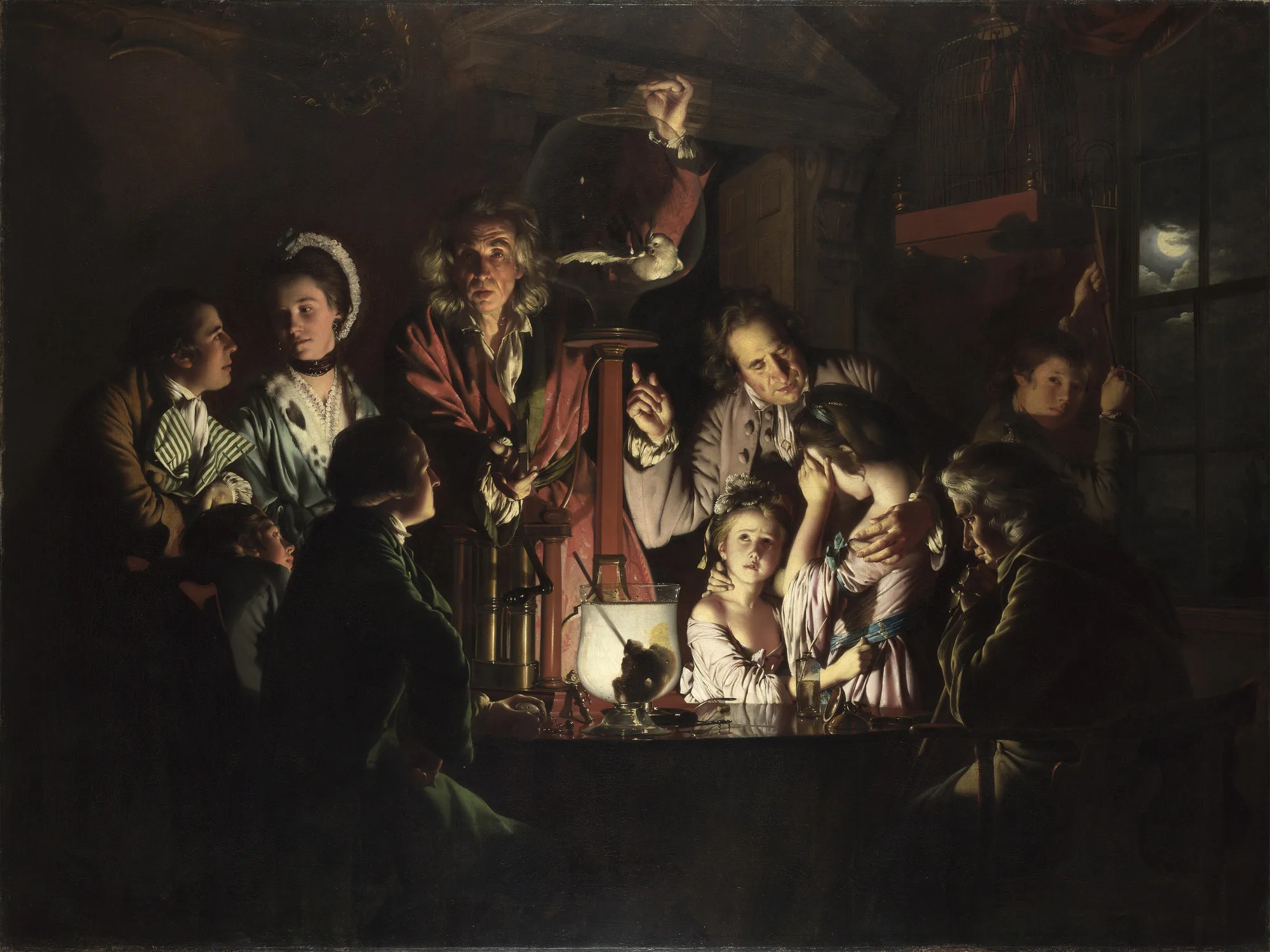
鳥は助かるの!?ろうそくの光に浮かぶ、科学ショーの決定的瞬間。Will the bird survive? The big moment of a science show, by candlelight.
この作品のお話
Story夜の部屋で、科学者が、集まった人々の前で実験を見せています。ガラスの容器に白いオウムを入れ、ポンプで中の空気をぬいていくのです。空気がなくなると、鳥は息ができずに弱っていきます。科学者はこちらを見つめたまま、手を容器の上の栓にかけています。空気を戻して鳥を助けるのか、それとも…。机の上の明かりが、人々の顔を照らしています。
In a room at night, a scientist shows an experiment to a group of people. He has put a white cockatoo in a glass vessel and is pumping out the air. Without air, the bird cannot breathe and grows weak. The scientist looks out at us, with his hand on the valve at the top. Will he let the air back in and save the bird? A light on the table shines on the people's faces.
18世紀のイギリスでは、科学の実験を見せて回る「科学ショー」が人気でした。ライト・オブ・ダービーは、明かりと深いかげの強いコントラストで、この科学の場面を宗教画のような迫力で描きました。顔をおおって見ないようにする女の子、なぐさめる父親、時計で時間を計る男性、実験に夢中の少年、見つめあう恋人たち。一人ひとりの反応がちがうのも見どころです。
In 18th-century Britain, science shows were popular. Lecturers traveled around to show experiments. Wright of Derby painted this science scene with the drama of a religious painting, using bright light and deep shadows. A girl covers her face because she cannot bear to watch, a father comforts her, a man times the experiment with his watch, a boy watches with interest, and a young couple only look at each other. Everyone reacts differently.
この絵は注文ではなく、ライトが自分の意思で描いたものです。1863年に寄贈され、ロンドンのナショナル・ギャラリーに入りました。科学の進歩をたたえる絵なのか、命をもてあそぶことへの警告なのか。今も見る人によって答えが分かれる、産業革命の時代を代表する一枚です。
Wright painted it on his own, not for a customer. It was given to the National Gallery in London in 1863. Does it celebrate the progress of science, or does it warn us about playing with life? People still disagree. It is one of the most famous pictures from the age of the Industrial Revolution.
夜です。科学者が白い鳥をガラスの中に入れます。ポンプで中の空気をぬいていきます。鳥は息ができません!女の子が顔をおおいました。科学者は鳥を助けるでしょうか?
It is night. A scientist puts a white bird in a glass. He takes the air out with a pump. The bird cannot breathe! A girl covers her face. Will he save the bird?
英語のレベルは上の「やさしい/ふつう」で切りかえられます。
えっ!?な裏ネタ
Secrets窓の外の満月は、当時の科学者や発明家の集まり「ルナ・ソサエティ(月の会)」を表しているとも言われます。会員たちは、帰り道が月明かりで照らされるよう、満月に近い夜に集まったからです。ライトは会員ではありませんでしたが、エラズマス・ダーウィンら会員と親しい友人でした。
The full moon in the window may refer to the Lunar Society, a group of scientists and inventors. They met on nights near the full moon so that moonlight would help them travel home. Wright was not a member, but he was a close friend of members such as Erasmus Darwin.
実際の実験では、地味な小鳥がよく使われました。ライトも下絵では小さな小鳥を描いていましたが、完成作では、当時イギリスではめずらしかった白いオウムに変えています。めずらしい鳥と、暗やみに映える白い羽で、ドラマがいっそう強まりました。
In real experiments, small plain birds were often used. In an earlier oil sketch, Wright painted a small songbird too. But in the final painting, he chose a white cockatoo, which was rare in Britain then. The rare bird and its bright white feathers made the scene even more dramatic.
机の上の、液体の入った大きなガラス容器には、人間の頭の骨が入っているとされます。そのうしろには、部屋を照らすろうそくがかくされています。頭の骨とろうそくは、どちらも命のはかなさを表す昔ながらの「ヴァニタス」のしるしです。
The big glass bowl of liquid on the table is thought to contain a human skull. A candle that lights the room is hidden behind it. The skull and the candle are traditional "vanitas" signs about the shortness of life.
時計を手に時間を計る男性は、進化論で有名なチャールズ・ダーウィンの祖父エラズマス・ダーウィンや、ルナ・ソサエティの会員だった医師ウィリアム・スモールではないかと言われてきました。でもライトは人物の名前を残しておらず、確かなことはわかりません。
The man timing the experiment with a watch has been thought to be Erasmus Darwin, the grandfather of Charles Darwin, or Dr William Small, a Lunar Society member. But Wright never named the people, so no one knows for sure.
ここを見て!
Look Closer1白いオウムWhite cockatoo
ガラスの中で羽をばたつかせる白いオウム。空気がぬかれて苦しんでいます。
A white cockatoo flaps its wings inside the glass. It is struggling as the air is pumped out.
2科学者The scientist
長い白髪の科学者。こちらを見つめ、「どうする?」と問いかけているようです。
The scientist with long white hair looks at us. He seems to ask, "What should I do?"
3動揺する女の子たちThe upset girls
心配そうに見上げる妹と、見ないように顔をおおう姉。父親がやさしくなぐさめています。
One girl looks up with worry, and the other covers her face because she cannot bear to watch. Their father gently comforts them.
4満月Full moon
窓の外の雲間からのぞく満月。科学者たちの「月の会」を表すとも言われます。
A full moon peeks through the clouds outside the window. It may stand for the Lunar Society.
英語で名画を語ろう
Talk about Art in EnglishEveryone holds their breath as they watch the bird.
みんな息をのんで鳥を見つめています。
💡 緊張やどきどきで「息を止める」。I held my breath.(息をのんだ)の形でよく使います。
英語で説明すると… Describe it
これは夜の暗い部屋です。まん中では、科学者がガラスの中の白い鳥を使って実験をしています。机の上の明かりが、みんなの顔を照らしています。右側では、二人の女の子が動揺していて、父親がなぐさめています。
This is a dark room at night. In the middle, a scientist is doing an experiment with a white bird in a glass. A light on the table shines on everyone's faces. On the right, two girls look upset, and their father is comforting them.
考えてみよう Think & Talk
- もしあなたが科学者だったら、鳥を助けますか?それはなぜですか?If you were the scientist, would you save the bird? Why?
- 科学はいつでもよいものでしょうか?自分の考えを話しあってみましょう。Is science always good? Talk about your ideas.
この作品の英単語
WordsThe family watches a science experiment.
家族が科学の実験を見ています。
The bird cannot breathe without air.
鳥は空気がないと呼吸できません。
The little girl looks worried.
小さな女の子は心配そうな顔をしています。
Their faces glow in the candlelight.
彼らの顔が、ろうそくの明かりに照らされています。
ミニクイズ
QuizQ. 右上の窓の外に描かれているのは?What can you see outside the window at the upper right?
雲間から満月がのぞいています。科学者の集まり「ルナ・ソサエティ」と結びつける説もあります。
A full moon peeks through the clouds. Some link it to the Lunar Society of scientists.
ウソ?ホント? ガラスの中の鳥は、白いオウムである。The bird in the glass is a white cockatoo.
当時のイギリスではめずらしい鳥でした。下絵では小さな小鳥でした。
It was a rare bird in Britain then. In an earlier sketch, it was a small songbird.
ウソ?ホント? この絵は、国王の注文で描かれた。The king ordered this painting.
注文ではなく、ライトが自分の意思で描いた作品です。
No one ordered it. Wright painted it on his own.
 画像の出典とライセンス / Image credit
- PDAn Experiment on a Bird in an Air Pump by Joseph Wright of Derby, 1768.jpg(Wikimedia Commons)
ライセンス:Public domain(パブリックドメイン)/作者・撮影者の表記:Joseph Wright of Derby/提供元:National Gallery, London
この作品は、作者の死後長い年月がたち著作権の保護期間が終わった「パブリックドメイン」の作品です。画像は平面の作品を忠実に写したもので、新しい著作権は生じません(Wikimedia Commons の PD-Art の考え方)。 所蔵:ナショナル・ギャラリー(ロンドン)(The National Gallery, London)。画像は表示のために縮小・WebP 形式に変換しています。
