yokohama
the fishing village that became Japan's door to the West
横浜(よこはま)
In one line
The shortest answer that works
Yokohama is Japan's second-largest city by population, created almost from nothing when Japan opened its ports in 1859.
横浜とは、人口で東京に次ぐ都市で、1859年の開港でほとんど何もないところから作られた町です。
In 30 seconds
The standard explanation
When Japan was forced to open to foreign trade, the shogunate chose a small fishing village south of Tokyo as the port, partly because it was easy to keep separate from the capital. Foreign merchants settled there, and much of what Japan thinks of as Western is said to have arrived through it: beer, bread, ice cream, newspapers, gas lamps, the railway. Today it holds Japan's largest Chinatown and a redeveloped waterfront.
開国を迫られたとき、幕府は江戸の南にあった小さな漁村を港に選びました。都から切り離しておきやすい、という事情もありました。外国の商人が住みつき、日本が西洋のものと考えるものの多くがここから入ったとされます。ビール、パン、アイスクリーム、新聞、ガス灯、鉄道。いまは日本最大の中華街と、作り直された臨海部があります。
As a short speech
A full paragraph you can read aloud
Yokohama is a useful place to explain because it is barely older than the modern country. Until 1859 it was a fishing village of a few hundred people. When Japan was compelled to open ports to foreign trade, the shogunate picked this spot rather than a major city, partly because the foreigners could be kept at a distance from Edo.
A foreign settlement grew there, and a remarkable amount of what Japanese people now consider ordinary came ashore through it: beer brewing, bakeries, ice cream, tennis, the first daily newspaper in Japan, gas street lighting and the country's first railway line, which ran from here to Tokyo in 1872.
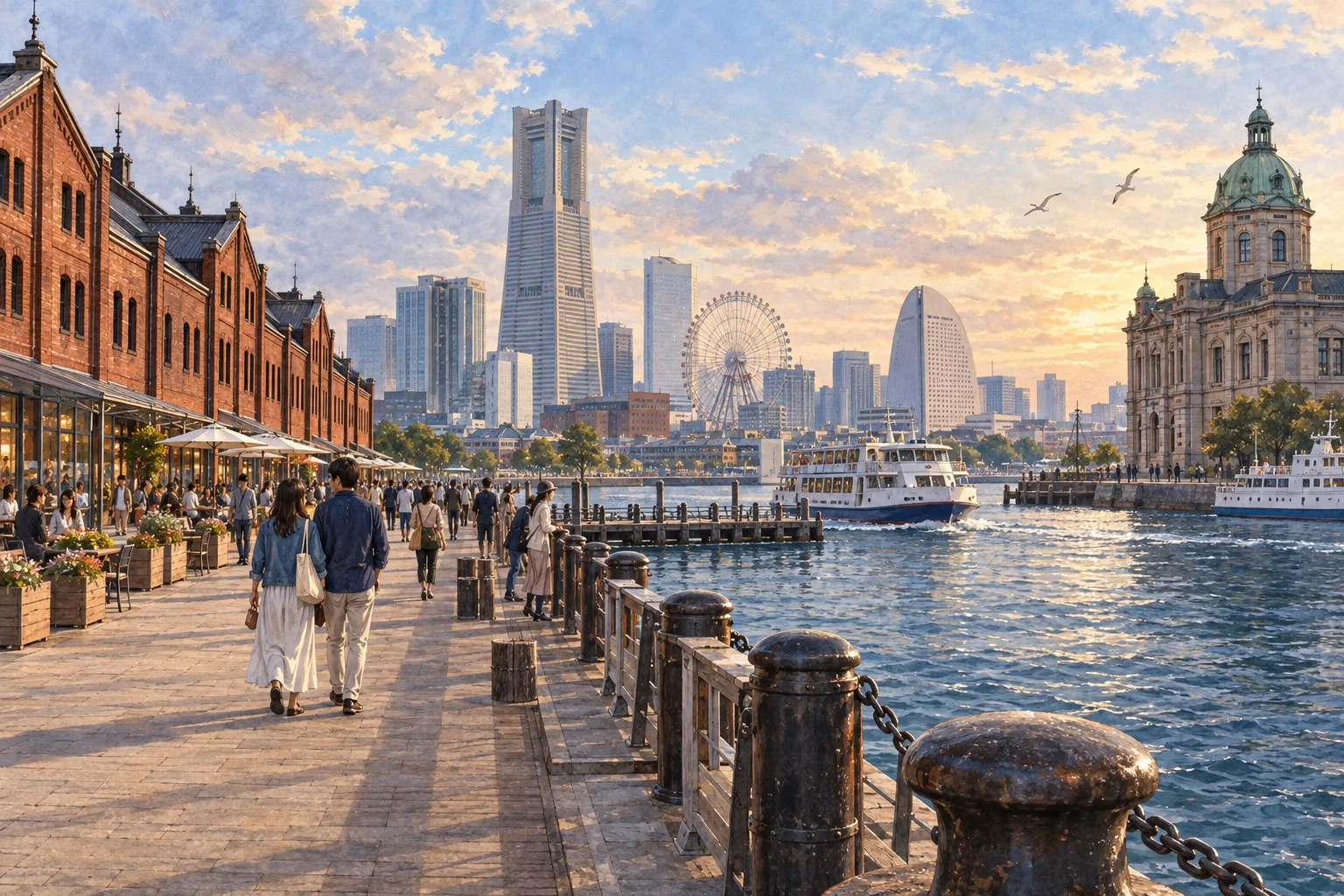
The Chinese merchants who came with the trade built what is now the largest Chinatown in Japan, and it is still a working neighborhood rather than a museum. The old brick warehouses on the water have been turned into shops, and the whole waterfront was rebuilt in the 1980s and 90s. Yokohama is now Japan's most populous city after Tokyo, though most visitors treat it as part of Tokyo.
横浜は説明に向いた町です。近代の日本より、ほんの少し古いだけだからです。1859年まで、ここは数百人が住む漁村でした。開港を迫られたとき、幕府は大きな都市ではなくこの場所を選びます。外国人を江戸から離しておける、という事情もありました。
そこに外国人居留地ができ、いま日本人がふつうだと思っているものの相当量が、ここから上がってきました。ビールの醸造、パン屋、アイスクリーム、テニス、日本初の日刊紙、ガス灯、そして1872年にここから東京へ走った日本初の鉄道。貿易とともに来た中国の商人たちは、いま日本最大となった中華街を作りました。
観光のための町ではなく、いまも人が働き暮らす街区です。海沿いの古い赤煉瓦の倉庫は店になり、臨海部は1980年代から90年代にかけて作り直されました。横浜はいま人口で東京に次ぐ都市ですが、多くの旅行者は東京の一部として扱っています。
Questions people actually ask
And how to answer them.
How far is it from Tokyo?
About half an hour by train from central Tokyo. Many people live in Yokohama and commute into Tokyo, which is why it feels like a suburb despite being a major city.
都心から電車で三十分ほどです。横浜に住んで東京へ通う人が多く、大都市でありながら郊外のように感じられるのはそのためです。
Is the Chinatown worth it?
Yes, and it is the largest in Japan with several hundred restaurants. It is touristy in places, but it is also where the local Chinese community actually eats.
あります。日本最大で、数百の店が並びます。観光地らしい場所もありますが、地元の華僑の人たちが実際に食べに来る街でもあります。
What is there besides the port?
The brick warehouse district, a Japanese garden built by a silk merchant, the ramen museum, and the old foreign residences on the hill above the harbor.
赤煉瓦倉庫、生糸商人が作った日本庭園、ラーメン博物館、そして港を見下ろす丘に残る外国人の住宅です。
A common misunderstanding
MYTHYokohama is just a district of Tokyo.
FACTIt is a separate city in Kanagawa prefecture, the most populous in Japan after Tokyo, with its own history as the treaty port.
Phrases you can use
- Until 1859 it was a fishing village.1859年までは漁村でした。
- Japan's first railway ran from here to Tokyo.日本初の鉄道は、ここから東京へ走りました。
- A lot of Western things entered Japan through this port.西洋のものの多くが、この港から入りました。
- It has the largest Chinatown in Japan.日本最大の中華街があります。
- It's about half an hour from central Tokyo.都心から三十分ほどです。
Words you need
- opening of the ports開港
- foreign settlement居留地
- brick warehouse赤煉瓦倉庫
- waterfront臨海部
- Chinatown中華街
Watch
From YouTubeBackground (Japanese)
横浜港は1859年(安政6年)に開港した。1872年(明治5年)に新橋と横浜を結ぶ日本初の鉄道が開業している。横浜中華街には数百の店が集まり、日本最大の中華街とされる。横浜市の人口はおよそ370万人で、市としては日本最多である(東京23区全体はこれより多い)。関東大震災(1923年)と横浜大空襲(1945年)で市街の大半が失われ、いまの街並みはその後に作られたものが多い。