Seikan tonneru
the undersea tunnel joining Honshu and Hokkaido
青函トンネル(せいかんとんねる)
In one line
The shortest answer that works
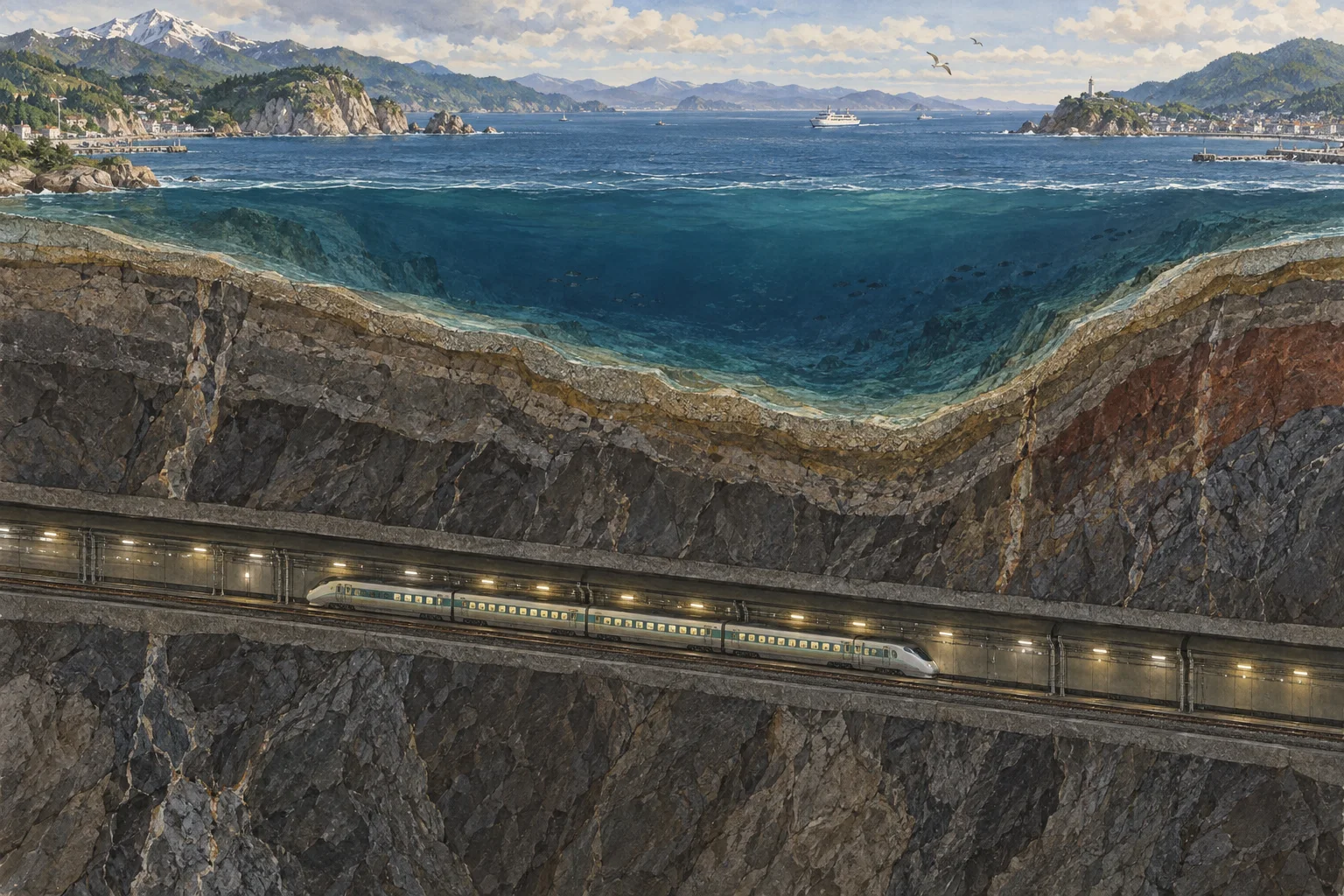
Seikan tonneru, or the Seikan Tunnel, is a 53.85-kilometer rail tunnel under the strait between Honshu and Hokkaido.
青函トンネルとは、本州と北海道のあいだの海峡の下を通る、全長53.85キロの鉄道トンネルです。
In 30 seconds
The standard explanation
The Seikan Tunnel runs under the Tsugaru Strait between Aomori and Hokkaido. It is 53.85 kilometers long, of which about 23 are under the sea, and it opened in 1988 after more than twenty years of construction and thirty-four deaths. Since 2016 it has carried the Hokkaido Shinkansen as well as freight, which is why trains slow down inside it.
青函トンネルは、青森と北海道のあいだの津軽海峡の下を通ります。全長53.85キロ、そのうち海の下がおよそ23キロ。1988年に、二十年を超える工事と三十四人の犠牲を経て開通しました。2016年からは貨物列車に加えて北海道新幹線も走っており、そのため列車はトンネル内で速度を落とします。
As a short speech
A full paragraph you can read aloud
The Seikan Tunnel connects Honshu to Hokkaido under the Tsugaru Strait, and the reason it was built says something about Japan. Before it, the crossing was by ferry, and in 1954 a typhoon sank five ferries including one that went down with over a thousand people aboard. The disaster made a fixed link a national question, surveying began, and full construction ran from 1971 until the tunnel opened in 1988.
It is 53.85 kilometers long with about 23 kilometers under the seabed, and for decades it was the longest rail tunnel in the world, a title now held by a Swiss tunnel, though the Seikan is still the longest tunnel that runs partly under the sea. The work was brutal: the rock under the strait is fractured and wet, there were major inundations, and thirty-four workers died.
Since 2016 the Hokkaido Shinkansen has run through it, sharing the track with freight trains, which is why shinkansen trains slow down inside. On the Aomori side, a museum runs a cable car down to part of the old works tunnel, so visitors can see where the digging was done.
青函トンネルは、津軽海峡の下で本州と北海道をつないでいます。なぜ掘られたかに、日本の事情が表れています。それまで海峡は連絡船で渡るものでした。1954年、台風で五隻の連絡船が沈み、うち一隻は千人を超える人とともに沈みました。この惨事が、固定した連絡路を国の問題にします。
調査が始まり、本格的な工事は1971年から、開通は1988年。全長53.85キロ、海底の下がおよそ23キロで、長く世界最長の鉄道トンネルでしたが、いまその座はスイスのトンネルにあります。ただし、海底を通るトンネルとしては、今も全長が最長です。工事は過酷でした。
海峡の下の岩は割れて水を含み、大きな出水が何度も起こり、三十四人が亡くなっています。2016年からは北海道新幹線が走り、貨物列車と線路を分け合っています。新幹線がトンネル内で速度を落とすのはこのためです。青森側の青函トンネル記念館からはケーブルカーで地下へ下り、作業坑の一部を見学できます。
Questions people actually ask
And how to answer them.
Can you see the sea from inside?
No. It is a rock tunnel bored beneath the seabed, not a glass tube. Inside there is nothing to see but tunnel wall and the marker showing the deepest point.
見えません。海底の下の岩を掘り抜いたトンネルで、管のようなものではありません。中で見えるのは壁と、最深部を示す表示だけです。
Is it still the longest tunnel in the world?
Not overall — the Gotthard Base Tunnel in Switzerland, opened in 2016, is longer. The Seikan is still the longest tunnel with an undersea section, though the Channel Tunnel between Britain and France has a longer stretch actually under the sea.
全長では違います。2016年に開通したスイスのゴッタルドベーストンネルのほうが長い。ただ、海底を通るトンネルとしては今も全長が最長です。海の下の区間だけなら、英仏海峡トンネルのほうが長くなります。
Why do shinkansen slow down in it?
Freight trains share the same track. Passing a freight train at full shinkansen speed in a confined tunnel raises safety concerns, so speed is restricted, with limited exceptions.
同じ線路を貨物列車が走るからです。狭いトンネルの中で全速力ですれ違うことには安全上の懸念があり、速度が制限されています。例外的に上げる運用もあります。
A common misunderstanding
MYTHThe tunnel is a tube lying on the sea floor.
FACTIt was bored through rock about a hundred meters beneath the seabed, using conventional tunneling, not sunk as a tube.
Phrases you can use
- It's 54 kilometers long, and 23 of them are under the sea.全長五十四キロ、そのうち二十三キロが海の下です。
- It opened in 1988, after more than twenty years of work.二十年を超える工事を経て1988年に開通しました。
- Thirty-four workers died building it.工事で三十四人が亡くなりました。
- The shinkansen shares the track with freight.新幹線は貨物列車と線路を分け合っています。
- You can't see the sea — it's rock all the way.海は見えません。ずっと岩の中です。
Words you need
- strait海峡
- undersea section海底部
- ferry連絡船
- freight train貨物列車
- boring, excavation掘削
Watch
From YouTubeBackground (Japanese)
青函トンネルは全長53.85キロメートル、うち海底部が約23.3キロメートルで、1988年(昭和63年)3月13日に開業した。着工は1971年、調査斜坑の掘削は1964年に始まっている。工事中の殉職者は34人とされる。建設の契機の一つは、1954年(昭和29年)の洞爺丸事故で、台風により青函連絡船5隻が沈没し、1,000人を超える死者・行方不明者が出た。2016年に北海道新幹線が開業し、在来の貨物列車と線路を共用している。