suiei no jugyo
swimming as a compulsory school subject
水泳の授業(すいえいのじゅぎょう)
In one line
The shortest answer that works
Suiei no jugyo, or school swimming lessons, are part of the curriculum, and most primary schools have their own pool.
水泳の授業は、教科の一部として行われるもので、小学校の多くには学校のプールがあるのが特徴です。
In 30 seconds
The standard explanation
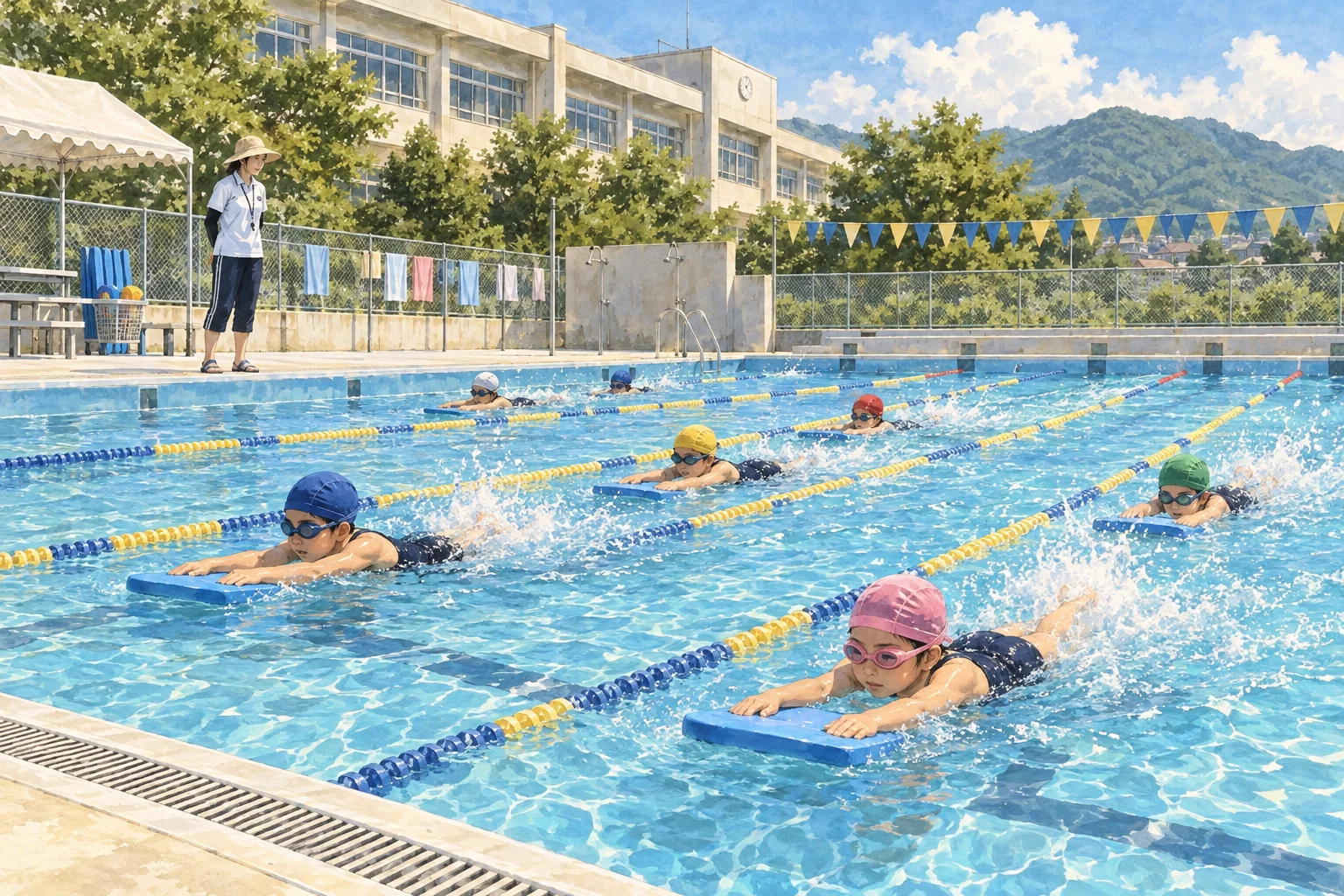
Swimming is part of physical education, taught in June and July when the water is warm enough. Most primary schools have their own outdoor pool, pupils wear a designated school swimsuit and cap, and a card signed by a parent each morning records whether the child may swim that day. Distance tests are held at the end.
水泳は体育の一部で、水がじゅうぶん温む六月と七月に行われます。小学校の多くは屋外にプールを持ち、児童は指定の水着と帽子を着け、その日泳いでよいかを親が毎朝書く連絡のカードを持っていきます。終わりには距離を測る記録会があります。
As a short speech
A full paragraph you can read aloud
Swimming lessons at school are something visitors often find surprising, because in many countries learning to swim is a private matter. In Japan it has been part of school. Most primary schools have their own outdoor pool, usually uncovered and unheated, which is why lessons are squeezed into June and July.
Pupils wear a school-designated swimsuit and a colored cap, and each morning a parent fills in a card with the child's temperature and a signature saying whether they may swim, which the teacher checks at the poolside. Lessons build from putting your face in the water to floating, to crawl and breaststroke, and finish with a timed distance test. The background is practical.
Japan is an island country with rivers and a long coast, and after a 1955 ferry disaster in which many children on a school trip drowned, teaching children to swim was treated as a matter of safety rather than sport. What is changing now is the pools themselves: maintaining them is expensive, aging pools are being closed, and a growing number of schools bus pupils to a municipal or commercial pool instead.
学校の水泳の授業は、訪れた方が驚くものの一つです。多くの国では、泳ぎを覚えるのは家庭のことだからです。日本ではそれが学校の役目でした。小学校の多くは屋外にプールを持っています。たいていは屋根も加温もなく、だから授業は六月と七月に詰め込まれます。
児童は学校の指定の水着と色の付いた帽子を着け、毎朝、親が体温と、泳いでよいかどうかを書いたカードを持たせます。先生はそれをプールサイドで確かめます。授業は、顔を水につけるところから浮くこと、クロールと平泳ぎへと進み、最後に距離を測る記録会で締めくくられます。背景は実際的なものです。
日本は川があり海岸線の長い島国で、1955年に修学旅行中の子どもが多く犠牲になった連絡船の事故のあと、子どもに泳ぎを教えることは、競技ではなく安全の問題として扱われるようになりました。いま変わりつつあるのはプールそのものです。維持には費用がかかり、古くなったプールは閉じられ、市営や民間のプールへ児童を送る学校が増えています。
Questions people actually ask
And how to answer them.
What is the card the children carry?
A daily health card. A parent records the child's temperature and signs to say whether they may swim that day, and without the signature the child sits out. It is checked before every lesson.
健康観察のカードです。親が体温を書き、その日泳いでよいかどうかに印を付けて署名します。署名が無ければ見学になります。授業のたびに確認されます。
Can a child opt out?
Yes, for health reasons or, increasingly, for reasons of religion or personal comfort. Schools have become more flexible about swimwear, and several now allow long-sleeved or full-cover suits.
できます。体調のほか、近年は信仰や本人の気持ちを理由に見学することも受け入れられています。水着についても学校の対応は柔らかくなり、長袖や体を覆う型を認めるところも出ています。
Why are the pools being closed?
Cost. An outdoor pool used two months a year needs year-round maintenance, water, and staff, and many were built decades ago and are now due for replacement. Using shared facilities is often cheaper.
費用です。年に二か月しか使わない屋外のプールでも、維持と水と人手が一年じゅうかかります。何十年も前に造られたものが多く、建て替えの時期を迎えています。共用の施設を使うほうが安く済むことが多いのです。
A common misunderstanding
MYTHEvery Japanese person can swim because it is taught at school.
FACTIt is taught, and results vary as with any subject. The lessons are concentrated in a few weeks each summer, and plenty of adults describe themselves as poor swimmers.
Phrases you can use
- Swimming lessons start in June.水泳の授業は六月から始まります。
- Please sign the card each morning.毎朝カードに署名をお願いします。
- He will sit out today.今日は見学します。
- There is a distance test at the end of term.学期の終わりに記録会があります。
- The school pool is outdoors.学校のプールは屋外にあります。
Words you need
- a swimming poolプール
- a swimming cap水泳帽
- to float浮く
- to sit out a lesson見学する
- water safety水の安全
Watch
From YouTubeBackground (Japanese)
水泳は学習指導要領で体育の内容に位置づけられ、小学校では水に慣れる運動から始まります。プールの水は屋外で温められるため、気温と水温の合計が一定に届かない日は中止になります。中止の判断は朝のうちに行われ、放送で伝えられます。水泳帽は学年ごとに色を分け、監視しやすくしている学校が多いです。学校のプールの老朽化と維持費の負担から、市民プールや民間の施設を使う形に切り替える自治体が増えています。指導を専門の指導員に委ねる例も出ています。