oyakodon
chicken and egg on rice, and the name nobody expects
親子丼(おやこどん)
In one line
The shortest answer that works
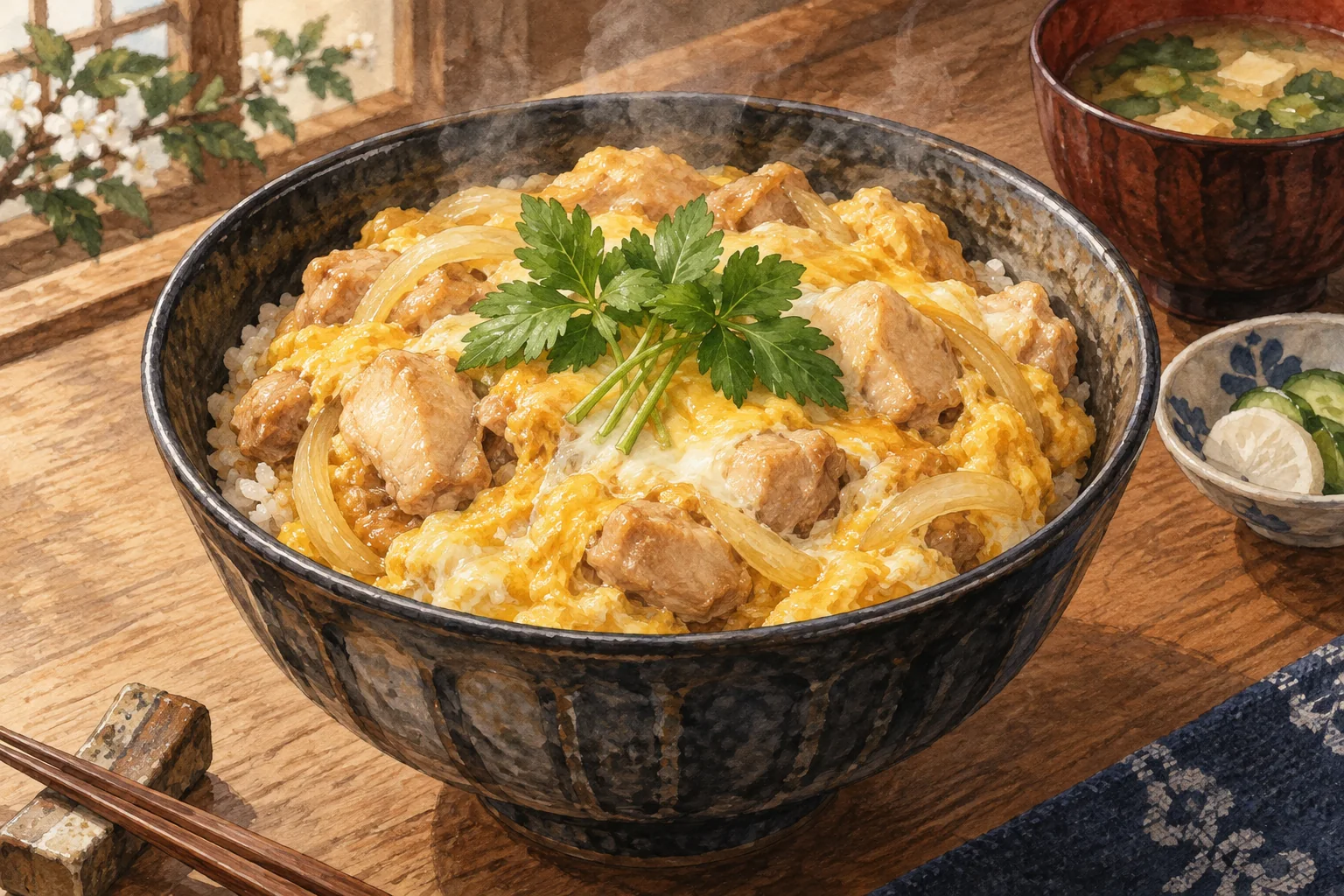
Oyakodon, whose name means parent and child, is chicken and egg simmered in broth and served over rice.
親子丼とは、名前が「親子」を意味する、鶏肉と卵を出汁で煮てご飯にのせた丼です。
In 30 seconds
The standard explanation
Chicken is simmered in a shallow pan with dashi, soy sauce, mirin and onion, then beaten egg is poured over and cooked only until it is barely set, and the whole thing slides onto a bowl of rice. It is cheap, fast and found everywhere from station stands to specialist restaurants. The name means parent and child, which refers to the chicken and the egg, and it lands differently in English than in Japanese.
浅い鍋で鶏肉を出汁、醤油、みりん、玉ねぎと煮て、溶いた卵を回しかけ、固まりきらないうちに火を止めて、ご飯にのせます。安く、早く、駅の立ち食いから専門店まで、どこにでもあります。名前は「親子」、つまり鶏と卵のこと。この語感は、日本語と英語ではずいぶん違って響きます。
As a short speech
A full paragraph you can read aloud
Oyakodon is one of the easiest Japanese dishes to explain and one of the hardest names to translate without a reaction. It is chicken simmered in a shallow pan with dashi, soy sauce, mirin and sliced onion, with beaten egg poured over at the end and taken off the heat while the egg is still soft, then tipped onto a bowl of rice.
The egg is meant to be barely set — a proper one still moves. It is everyday food: a few hundred yen at a chain, and a serious dish at a specialist shop using good chicken. The name is where the conversation goes. Oyako means parent and child, and it refers to the fact that the chicken and the egg are in the same bowl.
Japanese people find this an ordinary piece of naming; English speakers usually laugh or wince. It is worth mentioning that there is also a version with salmon and salmon roe, which uses exactly the same logic and gets exactly the same reaction.
親子丼は、日本料理のなかでも説明しやすく、そして名前の訳しにくさでは指折りのものです。浅い鍋で鶏肉を出汁、醤油、みりん、薄く切った玉ねぎと煮て、最後に溶き卵を回しかけ、卵が柔らかいうちに火から下ろして、ご飯にのせます。
卵は固めきらないのが身上で、きちんと作られたものはまだ揺れています。日常の食べ物です。チェーン店なら数百円、専門店なら良い鶏を使った立派な一品になります。話が向かうのは名前のほうです。親子とは、鶏と卵が同じ丼に入っていることを指します。
日本人にとっては何でもない名付けですが、英語を話す人はたいてい笑うか、顔をしかめます。ついでに言えば、鮭といくらで作る親子丼もあります。理屈はまったく同じで、返ってくる反応もまったく同じです。
Questions people actually ask
And how to answer them.
Why is it called parent and child?
Because the chicken and the egg are both in the bowl. Japanese finds the naming straightforward; it is the English translation that makes it sound strange.
鶏と卵が同じ丼に入っているからです。日本語としてはごくふつうの名付けで、奇妙に響くのは英語に訳したときです。
Is the egg fully cooked?
Deliberately not. It should be just set and still soft. If you would rather have it firm, you can ask for the egg to be cooked through.
わざと通しきりません。固まりかけの柔らかい状態が本来です。しっかり火を通してほしければ、そう頼めます。
How is it different from katsudon?
The same broth and egg, but with a breaded fried pork cutlet instead of simmered chicken. Katsudon is heavier and is the one students eat before an exam.
出汁と卵は同じで、煮た鶏のかわりに揚げた豚カツが入ります。カツ丼のほうが重く、試験の前に食べるのはこちらです。
A common misunderstanding
MYTHThe name refers to a family recipe passed down.
FACTIt refers to the ingredients: the chicken and its egg in the same bowl. The salmon-and-roe version follows the same logic.
Phrases you can use
- Chicken and egg simmered together over rice.鶏と卵を一緒に煮てご飯にのせたものです。
- The name means parent and child — yes, really.名前は親子という意味です。本当にそうです。
- The egg is meant to stay soft.卵は柔らかいままにします。
- There's a salmon and roe version too.鮭といくらのものもあります。
- Katsudon is the same, but with a pork cutlet.カツ丼は同じ作りで、豚カツが入ります。
Words you need
- rice bowl dish丼もの
- simmering sauce割り下
- sliced onion玉ねぎ
- barely set半熟
- specialist restaurant専門店
Watch
From YouTubeBackground (Japanese)
親子丼は、明治期に東京の鶏料理店で考案されたとする説がよく語られるが、確定していない。鮭といくらを使ったものは「鮭の親子丼」、鴨と卵のものは「鴨の親子丼」と呼ばれる。鶏肉のかわりに豚肉や牛肉と卵を合わせたものは、親子ではないことから「他人丼」と呼ばれ、使う肉は地域や店によって違う。