namu amida butsu to namu myoho renge kyo
the two most common chanted phrases in Japanese Buddhism, and why they differ by school
南無阿弥陀仏と南無妙法蓮華経(なむあみだぶつとなむみょうほうれんげきょう)
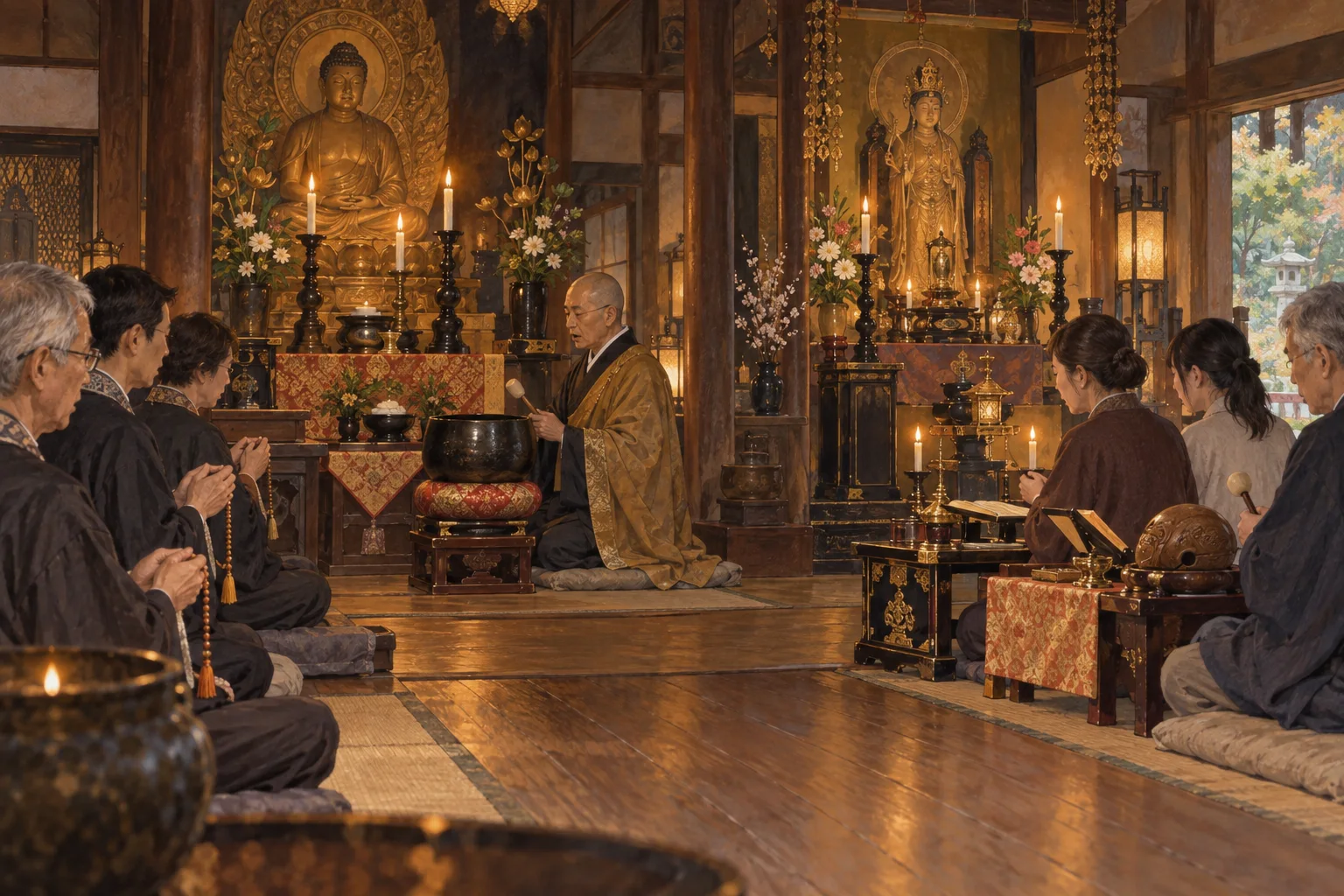
In one line
The shortest answer that works
Namu amida butsu to namu myoho renge kyo are the two chants most heard at temples, from different Buddhist schools.
南無阿弥陀仏と南無妙法蓮華経とは、寺でよく耳にする二つの唱え言葉で、それぞれ違う宗派のものです。
In 30 seconds
The standard explanation
Namu amida butsu, the nembutsu, is chanted by Pure Land schools and means entrusting oneself to Amida Buddha; it grew out of teaching in the twelfth century that this alone was enough for salvation. Namu myoho renge kyo, the daimoku, is chanted by Nichiren schools, declared central by the monk Nichiren in 1253, and expresses devotion to the Lotus Sutra rather than to a specific Buddha. Hearing one or the other tells you, roughly, which tradition a temple or a chanting group belongs to.
南無阿弥陀仏(念仏)は浄土系の宗派が唱える言葉で、阿弥陀仏にすべてを委ねるという意味です。12世紀、これだけで救われるという教えから広まったとされます。南無妙法蓮華経(題目)は日蓮系の宗派が唱える言葉で、1253年に僧の日蓮が中心に据えたとされ、特定の仏ではなく法華経そのものへの帰依を表します。どちらを耳にするかで、その寺や唱えている集団がおおよそどの系統かが分かります。
As a short speech
A full paragraph you can read aloud
Visitors to Japan often hear two different chanted phrases at different temples and assume one must be a mistake, but they simply belong to different Buddhist schools with different core teachings. Namu amida butsu, the nembutsu, is chanted by Pure Land schools such as Jodo Shu and Jodo Shinshu, and means entrusting oneself completely to Amida Buddha; the monk Honen taught from around 1175 that reciting this phrase sincerely was enough for anyone, regardless of wealth, learning or monastic training, to be reborn in the Pure Land.
Namu myoho renge kyo, the daimoku, is chanted by Nichiren Buddhist schools, declared the central practice by the monk Nichiren in 1253; rather than calling on a particular Buddha, it expresses devotion to the Lotus Sutra itself, which Nichiren held to be the complete and final teaching. The two chants sound different too, the nembutsu often soft and repetitive, the daimoku usually brisk and rhythmic, and at some Nichiren temples accompanied by a hand drum. Neither is more correct; they mark two of the largest branches Japanese Buddhism split into during the same turbulent centuries.
日本を訪れる人は、違う寺で違う唱え言葉を耳にすると、どちらかが間違いなのではと思いがちですが、実際にはそれぞれ違う宗派の、違う核心の教えに基づいています。南無阿弥陀仏、通称「念仏」は、浄土宗や浄土真宗といった浄土系の宗派が唱えるもので、阿弥陀仏にすべてを委ねるという意味です。
1175年ごろから僧の法然が説いたとされる教えでは、財産や学問や出家しての修行に関わりなく、誰であってもこの言葉を心から唱えさえすれば極楽浄土に生まれ変われるとされました。南無妙法蓮華経、通称「題目」は日蓮系の宗派が唱えるもので、1253年に僧の日蓮が中心の実践として掲げたとされます。特定の仏に呼びかけるのではなく、日蓮が完全で究極の教えとみなした法華経そのものへの帰依を表します。
二つの唱え言葉は響きも異なり、念仏はやわらかく繰り返されることが多いのに対し、題目はたいてい歯切れのよい調子で唱えられ、日蓮系の寺によっては団扇太鼓を打ちながら唱えます。どちらが正しいというものではなく、同じ激動の数世紀のあいだに日本の仏教が分かれていった、二つの大きな流れを示しているだけです。
Questions people actually ask
And how to answer them.
So is Buddhism in Japan really this divided?
Yes, there are several major schools with real doctrinal differences, not just regional variations of one tradition. Pure Land and Nichiren are two of the largest, alongside Zen schools, Shingon and older Tendai lineages, each with its own temples, texts and practices.
はい、地域による違いというより、実際に教義の異なる複数の主要な宗派があります。浄土系と日蓮系はその中でも大きな二つで、ほかに禅系の宗派、真言宗、古くからの天台宗の流れもそれぞれ独自の寺院と経典と実践を持っています。
Can I just chant either one if I visit a temple?
Nobody will stop you, but it makes more sense to notice which school a given temple belongs to first, since chanting the daimoku at a Pure Land temple, or the reverse, would puzzle the priests there. Watching and following what other visitors do is the simplest approach.
止められることはありませんが、まずその寺がどちらの宗派かを確かめるほうが理にかなっています。浄土系の寺で題目を唱えたり、その逆をしたりすると、そこの僧侶を戸惑わせてしまいます。まわりの参拝者に合わせるのがいちばん簡単です。
Which one is more common in Japan today?
Pure Land schools together have the largest number of temples and adherents nationwide, but Nichiren Buddhism, partly through large lay organizations, has a very visible and active following, so both remain common enough that most people will encounter each at some point.
全国的には浄土系の宗派が寺院数・信者数ともに最も多いとされますが、日蓮系の仏教も、大きな在家の団体を通じて非常に目立つ活発な信者層を持っています。どちらもよく見かける規模なので、多くの人が生涯のどこかで両方に出会うことになります。
Phrases you can use
- That's the nembutsu, chanted by Pure Land schools.それは念仏で、浄土系の宗派が唱えるものです。
- The daimoku is sometimes chanted with a drum.題目は太鼓を打ちながら唱えることもあります。
- Different temples follow different schools of Buddhism.寺によって属する宗派が違います。
- Neither chant is more correct than the other.どちらの唱え言葉が正しいというものではありません。
- It's about which Buddha or text you entrust yourself to.どの仏や経典に身を委ねるかの違いです。
Words you need
- nembutsu (Amida chant)念仏
- daimoku (Lotus Sutra chant)題目
- Pure Land Buddhism浄土系
- Nichiren Buddhism日蓮系
- lay organization在家の団体
Watch
From YouTubeBackground (Japanese)
法然が専修念仏を説き始めたのは承安5年(1175年)とされ、弟子とされる親鸞が浄土真宗を開いたのはその後のこととされる。日蓮が房総の清澄寺で初めて南無妙法蓮華経を唱えたのは1253年とされ、これが日蓮宗の立教開宗の年とされる。念仏と題目はいずれも「南無」(帰依します、の意)で始まるが、その先に置くのが仏の名か経典の名かで系統が分かれる。創価学会や立正佼成会など、日蓮系の教えを在家中心に広めた団体は戦後大きく信徒数を伸ばした。