michi no eki
roadside stations that sell local produce and let drivers rest
道の駅(みちのえき)
In one line
The shortest answer that works
A michi no eki is a roadside station on an ordinary road, with parking, toilets and local produce.
道の駅とは、一般道沿いにある休憩施設で、駐車場・トイレ・地元の産物があります。
In 30 seconds
The standard explanation
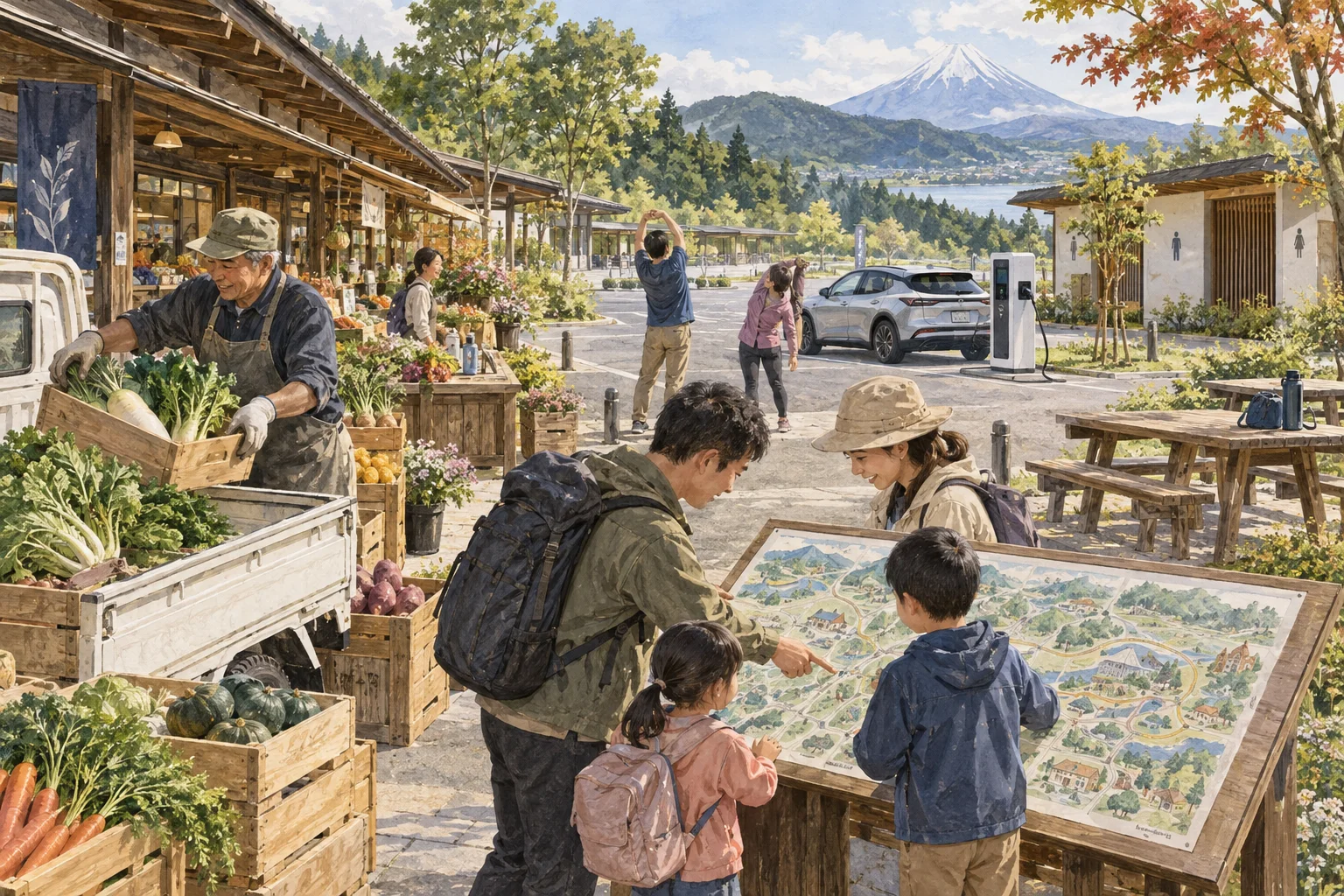
Michi no eki are roadside stations registered by the transport ministry, on ordinary roads rather than expressways. Parking and toilets are free and open all night. Most have a farm shop where local growers sell their own vegetables and fruit with their names on the labels, and a restaurant serving something the area is known for. There are over twelve hundred of them.
道の駅は国土交通省が登録する休憩施設で、高速道路ではなく一般道にあります。駐車場とトイレは無料で、夜通し使えます。多くには直売所があって、地元の生産者が自分の名前を貼った野菜や果物を売り、その土地のものを出す食堂があります。全国に1200か所以上あります。
As a short speech
A full paragraph you can read aloud
If you drive in the Japanese countryside you will keep passing signs for michi no eki, roadside stations. The system started in 1993, and there are now over twelve hundred registered with the transport ministry. Three things are always there: free parking and toilets open twenty-four hours, information about the area, and something that connects the place to its region.
In practice that last part means a farm shop. Local growers bring in their own vegetables that morning, price them themselves, and put their name on the label, so the produce is fresher and cheaper than a supermarket.
Many also have a restaurant, a bakery, sometimes a hot spring. For a traveler they are the easiest way to find out what a district actually grows and eats, which a highway service area will never tell you.
日本の田舎を車で走ると、「道の駅」の標識を次々に見かけます。制度が始まったのは1993年で、いまは国土交通省に登録されたものが1200を超えます。必ずあるものが三つ。
24時間使える無料の駐車場とトイレ、その地域の情報、そして土地と結びついた何か。最後の一つは、実際には直売所を指します。地元の生産者がその朝の野菜を持ち込み、自分で値を付け、名前を貼って出すので、スーパーより新しくて安い。
食堂やパン屋、温泉のある所もあります。旅行者にとっては、その地域が実際に何を作り、何を食べているのかを知るいちばん簡単な方法です。高速道路のサービスエリアでは、それは分かりません。
Questions people actually ask
And how to answer them.
How is it different from a highway service area?
A service area is inside the tolled expressway and you usually cannot leave the road from it. A michi no eki is on an ordinary road, so anyone can drive in, and it is run with the local town rather than the highway company.
サービスエリアは有料の高速道路の中にあり、ふつうはそこから一般道へ出られません。道の駅は一般道にあるので誰でも入れますし、運営も高速道路の会社ではなく地元の自治体が関わっています。
Can I sleep in my car there?
Resting is allowed and many drivers do it, but camping is not: no tents, no cooking outside, no staying for days. Several stations post their own rules, and a few now charge for overnight parking.
休憩は認められていて実際に多くの人がしていますが、キャンプは別です。テント、外での調理、何日も居続けることは認められません。独自の決まりを掲示する駅もあり、宿泊の駐車を有料にした所もあります。
Is it worth stopping if I'm not driving?
Some are reachable by local bus, and a few are next to a station. If you can get to one, the farm shop is the attraction: unfamiliar vegetables, regional pickles, and fruit far cheaper than in Tokyo.
路線バスで行ける所もあり、駅のすぐ横にある所もあります。たどり着けるなら、見どころは直売所です。見慣れない野菜、その土地の漬物、東京よりずっと安い果物。
Phrases you can use
- A michi no eki is on an ordinary road, not an expressway.道の駅は高速道路ではなく一般道にあります。
- The toilets and parking are free, day and night.トイレと駐車場は昼夜とも無料です。
- The farmers put their own names on the vegetables.野菜には生産者が自分の名前を貼っています。
- The fruit is often cheaper than at the supermarket.果物はスーパーより安いことが多いです。
- Resting overnight is tolerated; camping isn't.車中の休憩は黙認されていますが、キャンプはいけません。
Words you need
- roadside station道の駅
- farm shop, direct sales直売所
- local produce地元の産物
- service areaサービスエリア
- to sleep in one's car車中泊する
Watch
From YouTubeBackground (Japanese)
道の駅は平成5年(1993年)4月に第1回の登録が行われ、103か所から始まった。所管は国土交通省(当時は建設省)で、登録には「休憩機能」「情報発信機能」「地域の連携機能」の三つを備えることが求められる。全国の登録数は1200か所を超えている。近年は災害時の防災拠点として位置づけられる駅も増え、非常用電源や備蓄倉庫を備えたところがある。直売所は生産者が自分で値付けし、売れ残りを引き取る仕組みが多い。