gunkanjima
the abandoned coal island off Nagasaki
軍艦島(ぐんかんじま)
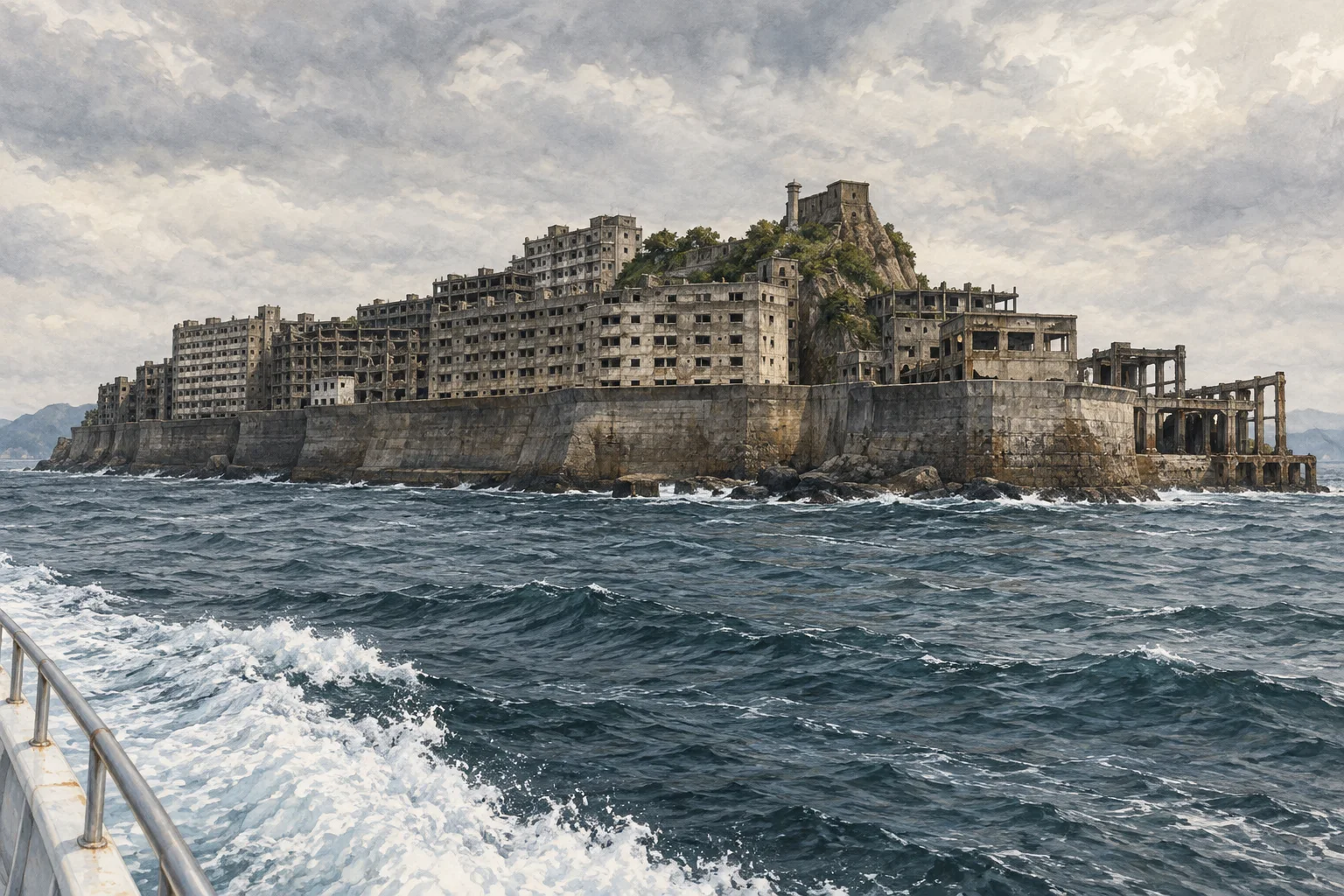
In one line
The shortest answer that works
Gunkanjima, or Battleship Island, is a small island off Nagasaki packed with coal miners' apartment blocks and abandoned in 1974.
軍艦島とは、炭鉱で働く人のための集合住宅で埋まり、1974年に無人になった長崎沖の小さな島です。
In 30 seconds
The standard explanation
Hashima, nicknamed Gunkanjima because its silhouette resembles a battleship, is a 480-meter island where undersea coal was mined from the late 1800s. At its peak in 1960 more than 5,000 people lived there on sixteen acres, in some of Japan's earliest large concrete apartment blocks. The mine closed in 1974 and everyone left within months. Boat tours land on a fixed walkway; the rest is collapsing.
端島は、船影が軍艦に似ていることから軍艦島と呼ばれます。長さ480メートルの島で、十九世紀後半から海底の石炭が掘られました。最盛期の1960年には、約6.5ヘクタールに5,000人以上が暮らし、日本で最初期の大規模な鉄筋集合住宅が建ちました。1974年に閉山し、数か月で全員が去ります。いまは船で渡り、決められた通路からだけ見学できます。ほかは崩れ続けています。
As a short speech
A full paragraph you can read aloud
Gunkanjima, or battleship island, lies about nineteen kilometers off Nagasaki Port, and the nickname comes from its silhouette. Undersea coal was mined here from the late nineteenth century, and because the island is tiny, the company built upward: one of Japan's earliest reinforced-concrete apartment blocks went up here in 1916.
At its peak in 1960, more than 5,000 people lived on an island you can walk around in twenty minutes. When Japan shifted from coal to oil, the mine closed in 1974 and everyone left within months. In 2015 it became part of a World Heritage listing, and how its history is presented is debated.
Workers from the Korean Peninsula and China, including people mobilized in wartime, worked in the mine. South Korea says their harsh conditions are not explained enough, while the Japanese government says it has kept its commitments.
軍艦島は長崎港から十九キロほど沖にある島で、あだ名はその姿から来ています。十九世紀の後半から海底の石炭が掘られ、島が小さいため、会社は上へ建てました。日本で最初期の鉄筋コンクリート集合住宅が、1916年にここに建っています。
最盛期の1960年には、二十分で一周できる島に5,000人以上が暮らしていました。日本の燃料が石炭から石油へ移ると、1974年に閉山し、数か月で全員が去りました。2015年に世界遺産の一部となりましたが、その歴史の示し方には議論があります。
戦時に動員された人を含め、朝鮮半島や中国から来た労働者がこの炭鉱で働いていました。韓国側は厳しい労働の実態の説明が足りないと主張し、日本政府は約束を守ってきたと説明しています。
Questions people actually ask
And how to answer them.
Can you walk around the island?
No. Tours land at one point and you stay on a short fixed walkway. The buildings are unsafe and collapsing, and landing is canceled in rough seas.
できません。上陸できるのは一か所で、決められた短い通路から出られません。建物は危険で崩れており、波が高い日は上陸が中止になります。
Why did everyone leave so fast?
The island existed only for the mine. When it closed there was no other work, no farmland and nothing to stay for, so the company relocated the residents.
島は炭鉱のためだけにありました。閉山すれば仕事も畑もなく、残る理由がありません。会社が住民の移転を進めました。
Why is the World Heritage listing controversial?
Workers from the Korean Peninsula and China, including people mobilized in wartime, worked at the site. South Korea says their treatment is not explained enough, while the Japanese government says it has met its commitments, and UNESCO has asked for continued efforts.
戦時に動員された人を含め、朝鮮半島や中国から来た労働者がここで働いていました。韓国側はその扱いの説明が足りないと主張し、日本政府は約束を果たしてきたと説明しており、ユネスコは引き続きの取り組みを求めています。
A common misunderstanding
MYTHThe island was abandoned after a disaster.
FACTNothing happened to it. Japan's energy policy moved from coal to oil, the mine simply closed in 1974, and the residents were relocated.
Phrases you can use
- It's called battleship island because of its shape.形から軍艦島と呼ばれています。
- Over 5,000 people lived on a tiny island.小さな島に5,000人以上が住んでいました。
- The coal mine closed in 1974 and everyone left.1974年に閉山し、全員が去りました。
- You can only walk on a short fixed path.決められた短い通路しか歩けません。
- How its wartime labor history is explained is still debated.戦時の労働の歴史をどう説明するかは、いまも議論があります。
Words you need
- coal mine炭鉱
- reinforced concrete鉄筋コンクリート
- abandoned廃墟
- population density人口密度
- World Heritage世界遺産
Watch
From YouTubeBackground (Japanese)
端島は長崎市に属し、南北約480メートル、東西約160メートル。1916年に建てられた30号棟は、日本最初期の鉄筋コンクリート造高層集合住宅として知られる。人口は1960年に5,267人を数えた。1974年1月15日に閉山し、同年4月に無人となった。2015年に「明治日本の産業革命遺産」の構成資産として世界遺産に登録された際、日本政府は、1940年代に一部の施設で、意思に反して連れて来られ厳しい環境の下で働かされた朝鮮半島出身者などがいたことを理解できる措置をとると表明した。2020年に東京に産業遺産情報センターが開かれたが、韓国側は説明が不十分だと主張し、2021年には世界遺産委員会が説明の改善を求める決議を採択した。日本政府は約束を履行してきたと説明している。