amazake
the sweet rice drink, with and without alcohol
甘酒(あまざけ)
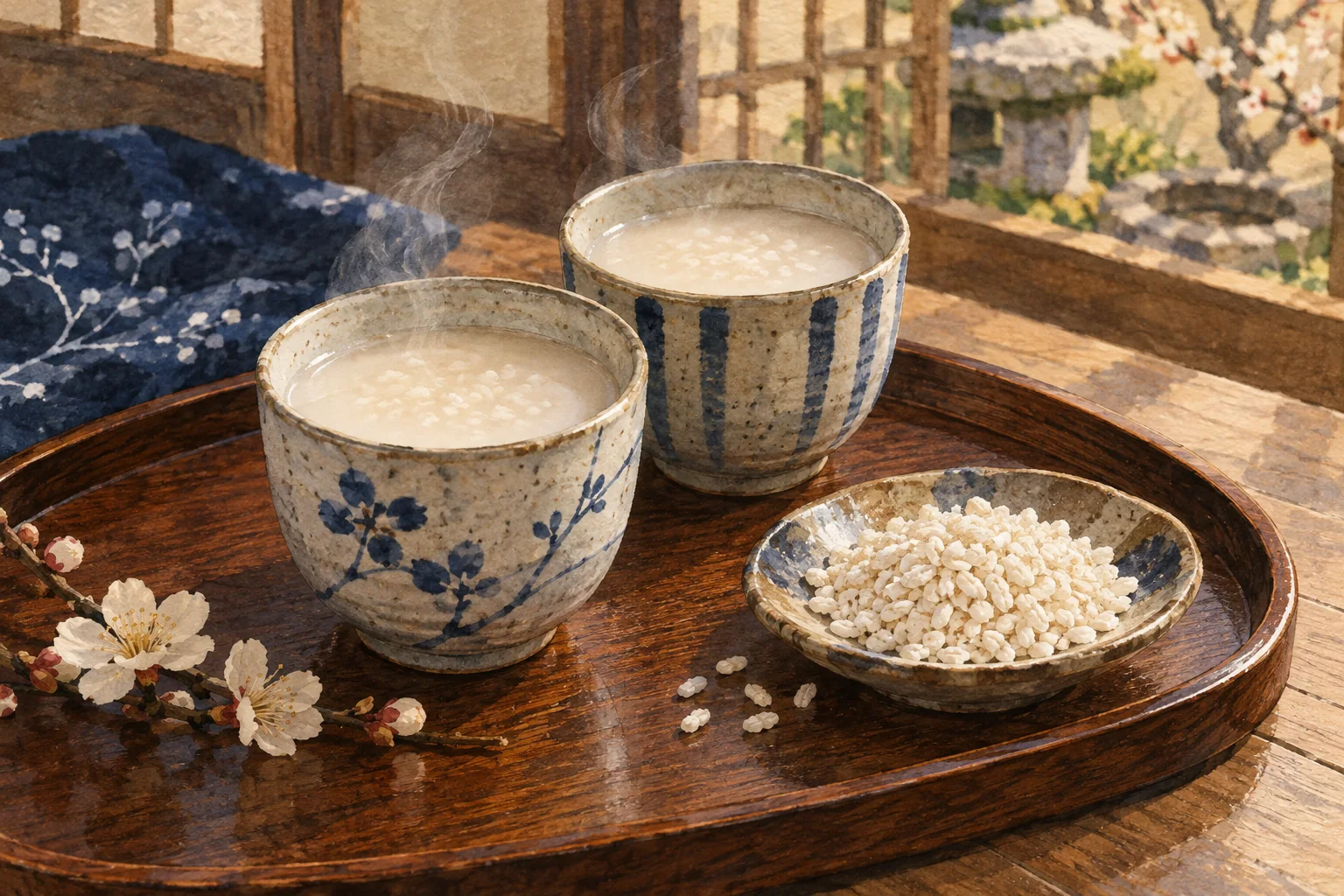
In one line
The shortest answer that works
Amazake is a sweet rice drink made from koji mold, with no alcohol, or from sake lees, with a little.
甘酒とは、麹から作る酒精のないものと、酒粕から作る少し酒精を含むものがある、甘い米の飲み物です。
In 30 seconds
The standard explanation
There are two drinks called amazake. The koji version is made by holding rice and koji mold at around 60°C so enzymes convert the starch into sugar; it is naturally sweet and contains no alcohol. The sake-lees version is made from the solids left after brewing sake, needs added sugar, and contains a small amount of alcohol. Shrines serve it hot at New Year, but historically it was a summer drink.
甘酒と呼ばれる飲み物は二つあります。麹のものは、米と米麹を六十度ほどに保ち、酵素がでんぷんを糖に変えるのを待って作ります。自然に甘く、酒精は含みません。酒粕のものは、酒を造ったあとに残る粕から作り、砂糖を加え、わずかに酒精を含みます。正月に神社で温かいものが配られますが、もともとは夏の飲み物でした。
As a short speech
A full paragraph you can read aloud
Amazake causes confusion twice over, so it is worth getting right. The name contains the word for sake, but the common version is not alcoholic at all. It is made by mixing cooked rice with koji, the mold used to make sake and miso, and holding the mixture at around sixty degrees Celsius for several hours.
At that temperature the enzymes break the rice starch down into sugar, so the drink becomes sweet without anything being added and without fermentation into alcohol. The other version is made from sake lees, the pressed solids left after brewing; that one needs sugar added and does contain a little alcohol, so it is not for children or drivers.
The second surprise is the season. Shrines hand out hot amazake at New Year, so everyone assumes it is a winter drink, but in haiku it is a summer word: it was drunk in the hot months as a cheap source of energy, and street vendors sold it in Edo summers. You will hear it called a drinkable IV drip, which is marketing rather than medicine.
甘酒は二重に誤解されるので、正しく押さえておく値打ちがあります。名前に「酒」とありますが、よく飲まれているほうは酒ではありません。炊いた米に麹を混ぜ、六十度ほどで数時間おいて作ります。麹は酒や味噌を造るのに使う菌です。
この温度では、酵素が米のでんぷんを糖に分解するので、何も加えずに甘くなり、酒精になるまで発酵はしません。もう一方は酒粕から作ります。酒を搾ったあとに残る固まりで、こちらは砂糖を加える必要があり、少量の酒精を含みます。子どもや運転する人には向きません。もう一つの意外な点は季節です。
正月に神社が温かい甘酒を配るので、冬の飲み物だと思われていますが、俳句では夏の季語です。暑いさなかに飲む、安い力の元でした。江戸の夏には売り歩く人がいました。「飲む点滴」と呼ばれるのを聞くかもしれませんが、これは宣伝の言い方で、医学の話ではありません。
Questions people actually ask
And how to answer them.
Does it have alcohol in it?
The koji version has essentially none. The sake-lees version has a small amount, usually under one percent. Shops label which one it is, so check if it matters.
麹のものはほぼ含みません。酒粕のものは少量、たいてい一パーセント未満です。どちらかは表示されているので、気になるなら確かめてください。
Why is it sweet if there's no sugar?
Enzymes from the koji mold break the rice starch into glucose. It is the same process that makes a mouthful of plain rice turn sweet if you chew it long enough.
麹の酵素が、米のでんぷんをブドウ糖に分解するからです。ご飯を長く噛んでいると甘くなるのと、同じ仕組みです。
Where can I try it?
Shrines at New Year, supermarkets and convenience stores year-round in cartons, and shops around old temple districts that make it fresh.
正月の神社、一年中ならスーパーやコンビニの紙パック、門前の古い店では作りたてが飲めます。
A common misunderstanding
MYTHAmazake is a weak alcoholic drink for winter.
FACTThe koji version contains no alcohol at all, and in haiku amazake is a summer word — it was drunk in the hot months.
Phrases you can use
- The koji version has no alcohol in it.麹のものに酒精は入っていません。
- The sweetness comes from the rice itself.甘さは米そのものから出ます。
- The one made from sake lees does have a little.酒粕のものには少し入っています。
- Shrines hand it out hot at New Year.正月には神社で温かいものが配られます。
- It was originally a summer drink.もとは夏の飲み物でした。
Words you need
- koji mold麹
- sake lees酒粕
- enzyme酵素
- non-alcoholicノンアルコール
- season word季語
Watch
From YouTubeBackground (Japanese)
甘酒は俳句では夏の季語で、江戸時代には夏に甘酒を売り歩く甘酒売りがいた。麹甘酒は米のでんぷんを麹の酵素が糖化したもので、アルコールは生じない。酒粕甘酒には1パーセント未満のアルコールが残るため、運転前や子どもには向かないとされる。「飲む点滴」という言い方は近年の宣伝から広まったもので、医学的な呼称ではない。