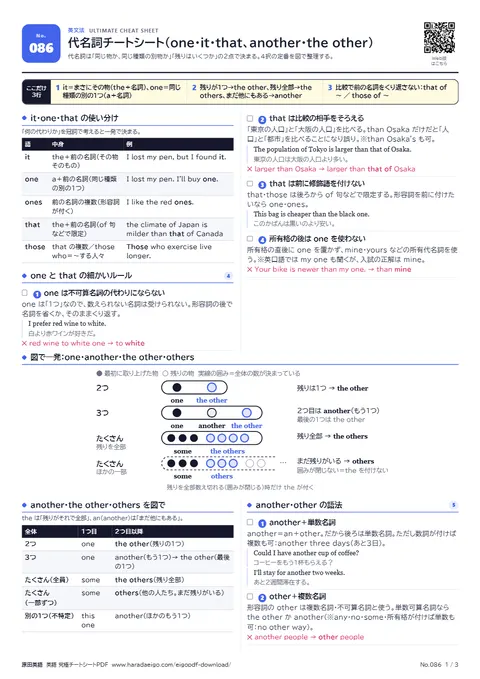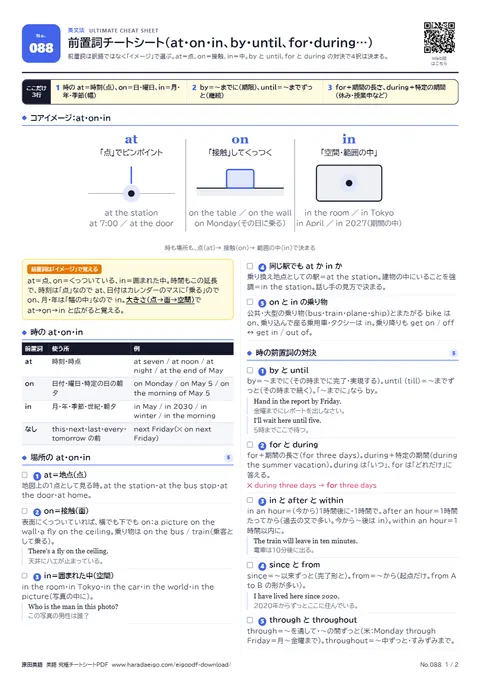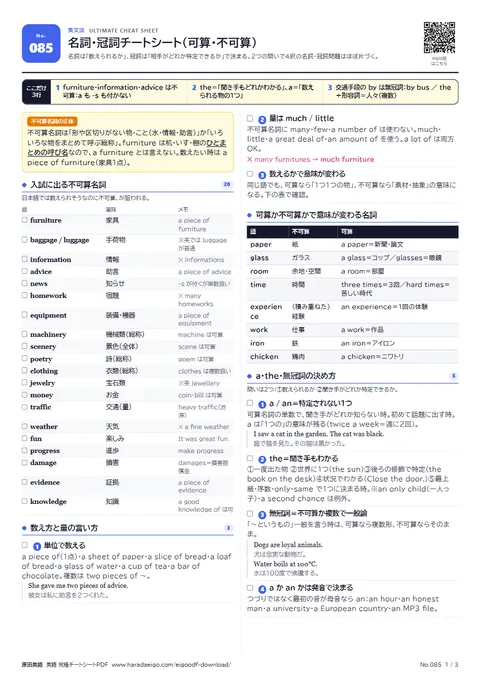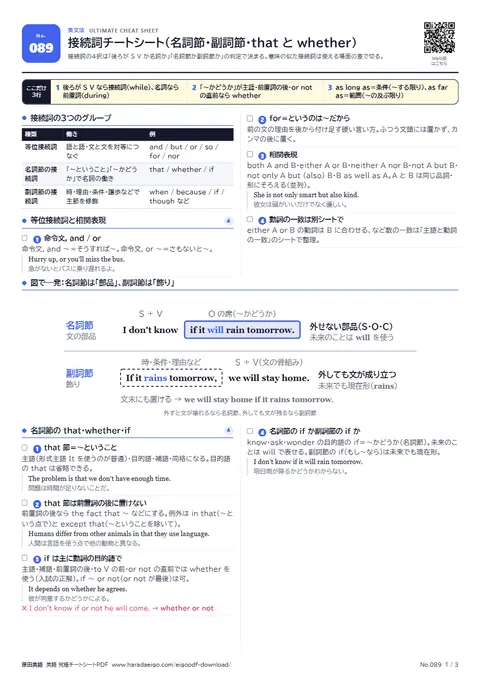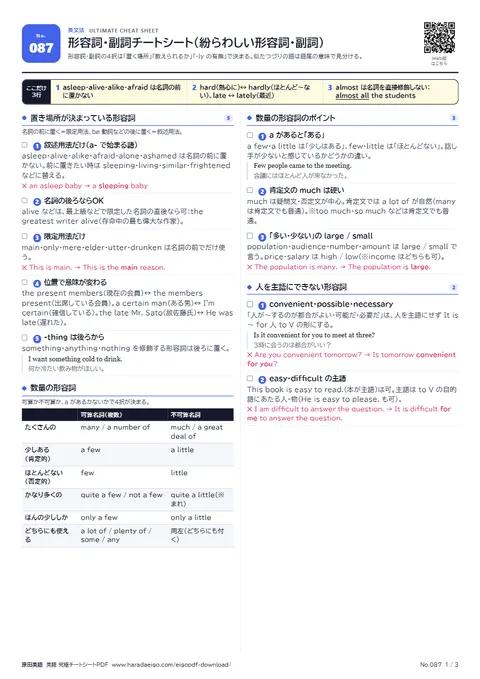
まずはこの3つ
- asleep・alive・alike・afraid は名詞の前に置かない
- hard(熱心に)↔ hardly(ほとんど〜ない)、late ↔ lately(最近)
- almost は名詞を直接修飾しない:almost all the students
置き場所が決まっている形容詞5
名詞の前に置く=限定用法、be 動詞などの後に置く=叙述用法。
- 1叙述用法だけ(a- で始まる語)asleep・alive・alike・afraid・alone・ashamed は名詞の前に置かない。前に置きたい時は sleeping・living・similar・frightened などに替える。✕an asleep baby → a sleeping baby
- 2名詞の後ろならOKalive などは、最上級などで限定した名詞の直後なら可:the greatest writer alive(存命中の最も偉大な作家)。
- 3限定用法だけmain・only・mere・elder・utter・drunken は名詞の前でだけ使う。✕This is main. → This is the main reason.
- 4位置で意味が変わるthe present members(現在の会員)↔ the members present(出席している会員)。a certain man(ある男)↔ I'm certain(確信している)。the late Mr. Sato(故佐藤氏)↔ He was late(遅れた)。
- 5-thing は後ろからsomething・anything・nothing を修飾する形容詞は後ろに置く。I want something cold to drink.何か冷たい飲み物がほしい。
数量の形容詞
可算か不可算か、a があるかないかで4択が決まる。
| 可算名詞(複数) | 不可算名詞 | |
|---|---|---|
| たくさんの | many / a number of | much / a great deal of |
| 少しある(肯定的) | a few | a little |
| ほとんどない(否定的) | few | little |
| かなり多くの | quite a few / not a few | quite a little(※まれ) |
| ほんの少ししか | only a few | only a little |
| どちらにも使える | a lot of / plenty of / some / any | 同左(どちらにも付く) |
数量の形容詞のポイント3
- 1a があると「ある」a few・a little は「少しはある」、few・little は「ほとんどない」。話し手が少ないと感じているかどうかの違い。Few people came to the meeting.会議にはほとんど人が来なかった。
- 2肯定文の much は硬いmuch は疑問文・否定文が中心。肯定文では a lot of が自然(many は肯定文でも普通)。※too much・so much などは肯定文でも普通。
- 3「多い・少ない」の large / smallpopulation・audience・number・amount は large / small で言う。price・salary は high / low(※income はどちらも可)。✕The population is many. → The population is large.
人を主語にできない形容詞2
- 1convenient・possible・necessary「人が〜するのが都合がよい・可能だ・必要だ」は、人を主語にせず It is 〜 for 人 to V の形にする。Is it convenient for you to meet at three?3時に会うのは都合がいい?✕Are you convenient tomorrow? → Is tomorrow convenient for you?
- 2easy・difficult の主語This book is easy to read.(本が主語)は可。主語は to V の目的語にあたる人・物(He is easy to please. も可)。✕I am difficult to answer the question. → It is difficult for me to answer the question.
紛らわしい形容詞の見分け方
語尾の意味で見分ける:-ive(性質がある)、-ble(〜できる・〜に値する)、-al(〜に関する)。
| 語 | 意味 | 語 | 意味 |
|---|---|---|---|
| sensible | 分別のある | sensitive | 敏感な |
| considerate | 思いやりのある | considerable | かなりの |
| economic | 経済の | economical | 節約になる |
| industrial | 産業の | industrious | 勤勉な |
| imaginary | 想像上の | imaginative | 想像力豊かな |
| respectable | 立派な | respectful | 敬意を表す |
| successful | 成功した | successive | 連続した |
| literary | 文学の | literate | 読み書きできる |
| historic | 歴史上重要な | historical | 歴史に関する |
-ly で意味が変わる副詞
-ly なしの形も副詞として使える語。-ly が付くと別の意味になる。
| -ly なし | 意味 | -ly あり | 意味 |
|---|---|---|---|
| hard | 熱心に・激しく | hardly | ほとんど〜ない |
| late | 遅く | lately | 最近(完了形と) |
| near | 近くに | nearly | ほぼ・もう少しで |
| high | 高く(物理的) | highly | 非常に・高く(評価) |
| most | 最も | mostly | たいていは・主に |
| short | 急に(stop short)・不足して(fall short) | shortly | まもなく |
| close | 近くに | closely | 綿密に・密接に |
| free | 無料で | freely | 自由に |
副詞の使い分け8
- 1ago と beforeago=今から〜前(過去形と)。before=過去のある時から〜前(過去完了と使うことが多い)。単独の before=以前に(現在完了でも可)。He said he had met her three days before.彼はその3日前に彼女に会ったと言った。
- 2already・yet・stillalready=もう(肯定文。疑問文なら「もう?」と驚き)。yet=もう(疑問文)・まだ(否定文)。still=まだ(続いている)。still は否定の前に置く:He still hasn't come。Have you finished yet?もう終わった?
- 3almost は名詞に付かないalmost は副詞なので名詞を直接修飾できない。almost all+名詞、most+名詞、most of the+名詞。✕Almost students → Almost all students / Most students
- 4very と muchvery は原級を、much は比較級を強める(very better は不可)。※surprised・tired など形容詞化した -ed は very で強める。This is much better.こっちのほうがずっといい。
- 5so と such の語順such+a+形容詞+名詞/so+形容詞+a+名詞。too・as・how も so と同じ語順。It was such a hot day.とても暑い日だった。It was so hot a day that we stayed in.とても暑い日だったので家にいた。
- 6enough の位置形容詞・副詞の後ろ(old enough)、名詞の前(enough money)。✕He is enough old to drive. → old enough
- 7too と either肯定文の「〜も」は too、否定文の「〜も(ない)」は either。“I don't like coffee.” “I don't, either.”「コーヒーは苦手」「私も」
- 8頻度の副詞の位置always・usually・often・sometimes・never は be 動詞・助動詞の後、一般動詞の前が基本。※sometimes は文頭・文末も可。She is always busy, but she never complains.彼女はいつも忙しいが文句を言わない。
上位層だけが知っている小ネタ5
- 1-ly でも形容詞friendly・lovely・lonely・lively・costly・elderly は形容詞。副詞の働きをさせたい時は in a friendly way などにする。✕She smiled at me friendly. → She smiled at me in a friendly way.
- 2home・abroad は副詞home・abroad・overseas・downtown・upstairs は副詞なので、go・come の後に to を付けない。✕go to abroad → go abroad
- 3later / latter、latest / lastlater=(時間が)後で、latter=(順序が)後者の。latest=最新の、last=最後の・この前の。Have you read his latest novel?彼の最新の小説を読んだ?
- 4farther / furtherfarther=(距離が)もっと遠く。further=(程度が)さらに:further information。※further は距離にも使える。
- 5elder と olderelder は名詞の前でだけ使い、than は続かない(my elder sister)。比較の文では older。※米では my older sister が普通。✕He is elder than me. → He is older than me.
ここでハマる!形容詞・副詞のひっかけ6
- ✕She worked hardly to pass the exam.○She worked hard to pass the exam.hardly は「ほとんど〜ない」
- ✕He came home lately last night.○He came home late last night.lately は「最近」。遅くは late
- ✕The price of this car is expensive.○The price of this car is high.price は high / low。expensive は物が主語
- ✕Almost Japanese people eat rice.○Most Japanese people eat rice.almost は名詞を修飾できない
- ✕It was a so beautiful day.○It was such a beautiful day.such+a+形容詞+名詞
- ✕He has little friends.○He has few friends.friends は可算→few
確認テスト
- 1The baby is fast in the bed.正解は asleep。fast asleep=ぐっすり眠って
- 2There is milk left. Let's buy some.正解は little。不可算で「ほとんどない」
- 3Quite students were absent because of the flu.正解は a few。quite a few=かなり多くの
- 4She is a very person. She always thinks of others.正解は considerate。思いやりのある
- 5I have been very busy .正解は lately。lately=最近(完了形と)
- 6We missed the last train. We got on just in time.正解は nearly。nearly=もう少しで
- 7of the students have smartphones.正解は Most。most of the+名詞
- 8He is a writer. Many people respect him.正解は respectable。尊敬に値する=立派な
- 9I'd like to study after graduation.正解は abroad。abroad は副詞→前置詞不要
- 10For information, please visit our website.正解は further。程度の「さらなる」→further
- 11整序:彼はとても親切な人だ。He is (kind / a / so / man).
形容詞・副詞を一覧にまとめ、A4 3枚で印刷できる無料PDFにしました。Web版は赤シート・覚えたチェック・カード・4択テストつき。