Environmental protection often fails not because people disagree about the facts, but because of when its costs and benefits arrive. The costs of acting, such as higher prices or changes in lifestyle, appear immediately. The benefits, such as a stable climate or healthy forests, appear slowly and are shared by everyone, including people who did nothing. This mismatch between present sacrifice and future reward lies at the heart of the difficulty.
Psychologists suggest that human beings are naturally inclined to give more weight to what is near than to what is far. A benefit promised decades from now feels abstract, whereas a bill that must be paid this month feels concrete. Politicians, who face elections every few years, are subject to the same pull. As a result, a policy whose rewards belong to the next generation rarely wins enthusiastic support. Voters, too, often ask what a policy will do for them soon.
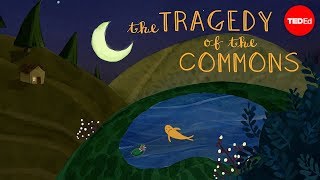
A further complication is that no single actor can secure the benefit alone. If one country reduces its pollution while others do not, it bears the expense yet enjoys only a fraction of the improvement. Each party is therefore tempted to wait for the others to act first, and the collective result is delay. Economists describe this pattern as a problem of shared resources, in which what is rational for each individual is harmful for all.
Some argue that we should simply wait for better technology, which will eventually make clean choices cheap. This view is not entirely mistaken, since innovation has often reduced costs in unexpected ways. Solar power and efficient batteries, for instance, have become far cheaper than many people once expected. Others add that poorer societies cannot be expected to sacrifice growth for the sake of a distant risk, and this concern deserves serious respect.
Nevertheless, waiting is itself a decision, and it is one whose consequences accumulate. Damage that has already been done to ecosystems may be difficult or impossible to reverse, so postponing action can raise the eventual cost far above what early action would have required. Moreover, the concern for fairness is not an argument for inaction; it is an argument for designing policies, such as shared financing and technology transfer, that spread the burden more justly.
The lesson, then, is that we must build institutions that make the future visible in the present. Binding agreements, long-term planning bodies, and honest accounting of hidden costs can all narrow the gap between now and later. Good intentions are not enough; the structure of our decisions must be changed so that caring for the distant future becomes the ordinary, rational thing to do.