 8分
 朗読 Mark F. Smith
 原文そのまま
 PDFで印刷(A4 13まい)
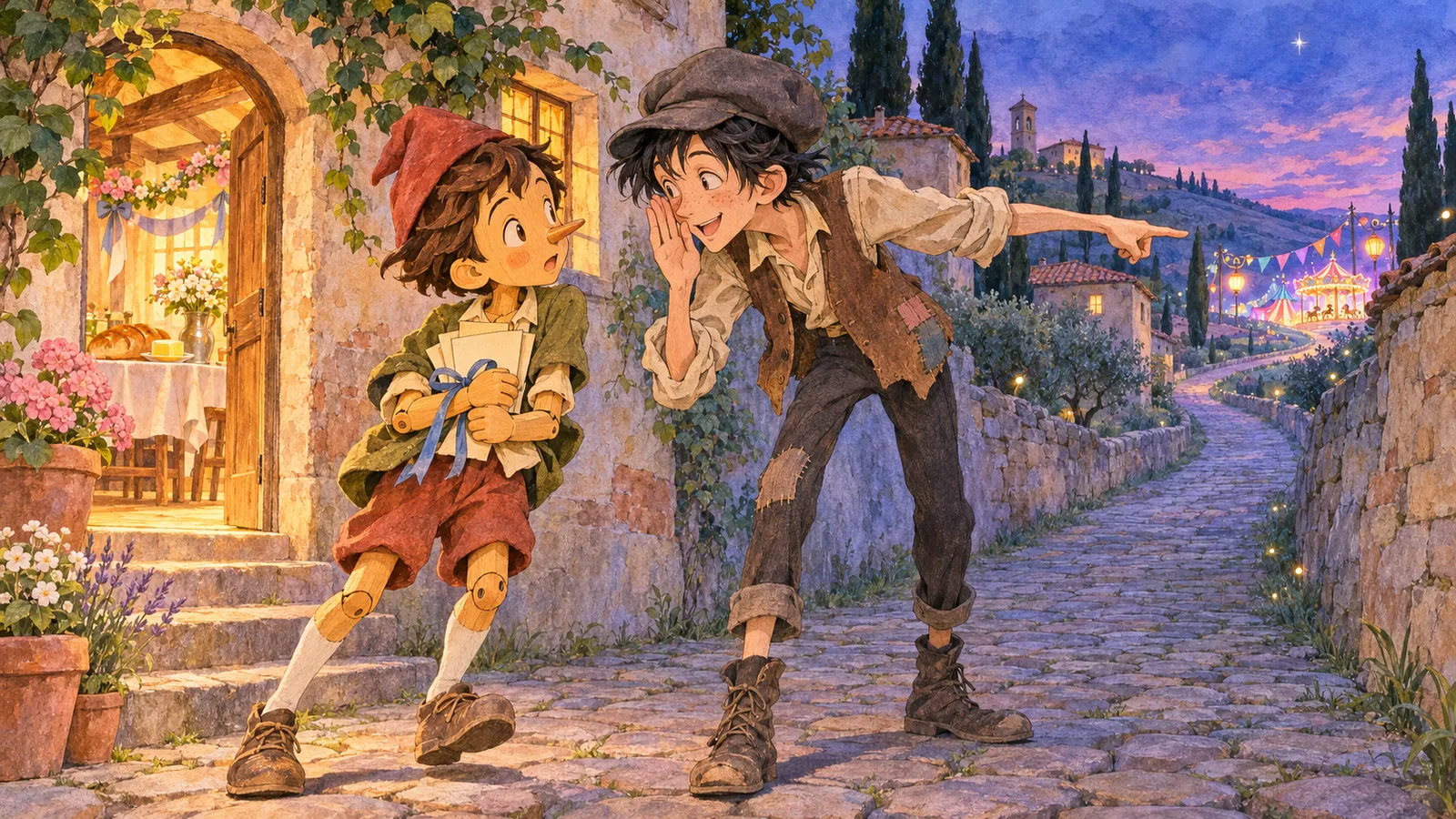
Pinocchio, instead of becoming a boy, runs away to the Land of Toys with his friend, Lamp-Wick.ピノッキオは人間の子になるかわりに、友だちのランプウィックといっしょに、おもちゃの国へにげだしてしまいます。
Coming at last out of the surprise into which the Fairy’s words had thrown him, Pinocchio asked for permission to give out the invitations.ようせいさまのことばにびっくりしていたピノッキオは、やっと落ち着くと、友だちをさそいに行ってもいいかとたずねました。
“Indeed, you may invite your friends to tomorrow’s party.「ええ、あしたのパーティーにお友だちをよんでいいですよ。 Only remember to return home before dark.ただ、暗くなる前に帰ってくるのをわすれないでね。 Do you understand?”わかりましたか?」
“I’ll be back in one hour without fail,” answered the Marionette.「1時間でかならずもどってきます」とあやつり人形は答えました。
“Take care, Pinocchio!「気をつけなさい、ピノッキオ! Boys give promises very easily, but they as easily forget them.”男の子はかんたんに約束をするけれど、同じくらいかんたんにわすれてしまうものですよ。」
“But I am not like those others.「でも、ぼくはほかの子たちとはちがいます。 When I give my word I keep it.”約束したら、ちゃんと守ります。」
“We shall see.「どうかしらね。 In case you do disobey, you will be the one to suffer, not anyone else.”もし言いつけを守らなかったら、つらい目にあうのはあなた自身で、ほかのだれでもありませんよ。」
“Why?”「どうして?」
“Because boys who do not listen to their elders always come to grief.”「年上の人の言うことを聞かない子は、いつかかならずひどい目にあうからです。」
“I certainly have,” said Pinocchio, “but from now on, I obey.”「ぼく、たしかにひどい目にあいました」とピノッキオは言いました。「でも、これからは言うことを聞きます。」
“We shall see if you are telling the truth.”「ほんとうかどうか、見ていますよ。」
Without adding another word, the Marionette bade the good Fairy good-by, and singing and dancing, he left the house.それ以上何も言わずに、あやつり人形はやさしいようせいさまにさよならを言い、歌っておどりながら家を出ていきました。
In a little more than an hour, all his friends were invited.1時間ちょっとで、友だちみんなをさそい終えました。 Some accepted quickly and gladly.すぐに喜んで「行くよ」と言う子もいました。 Others had to be coaxed, but when they heard that the toast was to be buttered on both sides, they all ended by accepting the invitation with the words, “We’ll come to please you.”なかなか「うん」と言わない子もいましたが、パンの両面にバターをぬったトーストが出ると聞くと、みんな最後には「きみのために行ってあげるよ」と言って、さそいを受けました。
Now it must be known that, among all his friends, Pinocchio had one whom he loved most of all.ところで、ピノッキオには友だちの中でいちばん大好きな子がひとりいました。 The boy’s real name was Romeo, but everyone called him Lamp-Wick, for he was long and thin and had a woebegone look about him.その子の本当の名前はロメオでしたが、ひょろりと長くやせていて、いつもしょんぼりした顔つきだったので、みんなから「ランプウィック(ランプのしん)」とよばれていました。
Lamp-Wick was the laziest boy in the school and the biggest mischief-maker, but Pinocchio loved him dearly.ランプウィックは学校でいちばんのなまけ者で、いちばんのいたずらっ子でしたが、ピノッキオはその子が大好きでした。
That day, he went straight to his friend’s house to invite him to the party, but Lamp-Wick was not at home.その日、ピノッキオはパーティーにさそおうと、まっすぐランプウィックの家へ行きましたが、ランプウィックは家にいませんでした。 He went a second time, and again a third, but still without success.2度行っても3度行っても、やっぱり会えませんでした。
Where could he be?いったいどこにいるのでしょう? Pinocchio searched here and there and everywhere, and finally discovered him hiding near a farmer’s wagon.ピノッキオはあちこちさがしまわり、とうとう農家の荷車のそばにかくれているランプウィックを見つけました。
“What are you doing there?” asked Pinocchio, running up to him.「そこで何してるの?」とピノッキオはかけよってたずねました。
“I am waiting for midnight to strike to go—”「真夜中のかねが鳴るのを待ってるんだ。それから行くのさ――」
“Where?”「どこへ?」
“Far, far away!”「遠い、遠いところへ!」
“And I have gone to your house three times to look for you!”「ぼく、きみをさがしに3回も家まで行ったんだよ!」
“What did you want from me?”「ぼくに何の用だい?」
“Haven’t you heard the news?「ニュースを聞いてないの? Don’t you know what good luck is mine?”ぼくにどんないいことがあるか、知らないの?」
“What is it?”「何だい?」
“Tomorrow I end my days as a Marionette and become a boy, like you and all my other friends.”「あした、ぼくはあやつり人形をおしまいにして、きみやほかの友だちみたいな人間の子になるんだ。」
“May it bring you luck!”「よかったね!」
“Shall I see you at my party tomorrow?”「あしたのパーティーに来てくれる?」
“But I’m telling you that I go tonight.”「だから、ぼくは今夜行くって言ってるだろう。」
“At what time?”「何時に?」
“At midnight.”「真夜中さ。」
“And where are you going?”「どこへ行くの?」
“To a real country—the best in the world—a wonderful place!”「本当にある国さ――世界一の国――すばらしいところだよ!」
“What is it called?”「何ていう国?」
“It is called the Land of Toys.「おもちゃの国っていうんだ。 Why don’t you come, too?”きみもいっしょに来ないか?」
“I?「ぼく? Oh, no!”ううん、だめだよ!」
“You are making a big mistake, Pinocchio.「大まちがいだよ、ピノッキオ。 Believe me, if you don’t come, you’ll be sorry.ほんとうだって、来なかったらきっとくやしい思いをするよ。 Where can you find a place that will agree better with you and me?ぼくやきみにこんなにぴったりの場所が、ほかのどこにある? No schools, no teachers, no books!学校もない、先生もいない、本もない! In that blessed place there is no such thing as study.そのすてきな国には、勉強なんてものがないんだ。 Here, it is only on Saturdays that we have no school.ここじゃ、学校が休みなのは土曜日だけだろう。 In the Land of Toys, every day, except Sunday, is a Saturday.おもちゃの国では、日曜日のほかは毎日が土曜日なんだ。 Vacation begins on the first of January and ends on the last day of December.休みは1月1日に始まって、12月の最後の日に終わるのさ。 That is the place for me!ぼくにぴったりの場所だよ! All countries should be like it!どの国もああなればいいのに! How happy we should all be!”そうしたら、みんなどんなに幸せだろう!」
“But how does one spend the day in the Land of Toys?”「でも、おもちゃの国では、1日をどうやってすごすの?」
“Days are spent in play and enjoyment from morn till night.「朝から晩まで、遊んで楽しんですごすのさ。 At night one goes to bed, and next morning, the good times begin all over again.夜になったらねて、次の朝になると、また楽しい時間が始まるんだ。 What do you think of it?”どう思う?」
“H’m—!” said Pinocchio, nodding his wooden head, as if to say, “It’s the kind of life which would agree with me perfectly.”「うーん……!」とピノッキオは木の頭をうなずかせました。まるで「ぼくにぴったりの暮らしだなあ」と言っているようでした。
“Do you want to go with me, then?「じゃあ、いっしょに行くかい? Yes or no?行くの、行かないの? You must make up your mind.”決めなくちゃだめだよ。」
“No, no, and again no!「行かない、行かない、ぜったい行かない! I have promised my kind Fairy to become a good boy, and I want to keep my word.ぼくはやさしいようせいさまに、いい子になるって約束したんだ。約束は守りたいんだよ。 Just see: The sun is setting and I must leave you and run.ほら、お日さまがしずんでいく。もうきみと別れて、走って帰らなくちゃ。 Good-by and good luck to you!”さよなら、元気でね!」
“Where are you going in such a hurry?”「そんなにあわてて、どこへ行くんだい?」
“Home.「家だよ。 My good Fairy wants me to return home before night.”ようせいさまが、夜になる前に帰ってきなさいって言うんだ。」
“Wait two minutes more.”「あと2分だけ待てよ。」
“It’s too late!”「もうおそいよ!」
“Only two minutes.”「たった2分さ。」
“And if the Fairy scolds me?”「もし、ようせいさまにしかられたら?」
“Let her scold.「しからせておけよ。 After she gets tired, she will stop,” said Lamp-Wick.しかりつかれたら、やめるさ」とランプウィックは言いました。
“Are you going alone or with others?”「ひとりで行くの? それとも、ほかの子といっしょ?」
“Alone?「ひとりだって? There will be more than a hundred of us!”100人以上いるんだぜ!」
“Will you walk?”「歩いていくの?」
“At midnight the wagon passes here that is to take us within the boundaries of that marvelous country.”「真夜中に、あのすばらしい国の中までぼくたちを運んでくれる荷車が、ここを通るんだ。」
“How I wish midnight would strike!”「早く真夜中にならないかなあ!」
“Why?”「どうして?」
“To see you all set out together.”「きみたちがいっしょに出発するのを見たいから。」
“Stay here a while longer and you will see us!”「もう少しここにいれば見られるよ!」
“No, no.「ううん、だめ。 I want to return home.”家に帰りたいんだ。」
“Wait two more minutes.”「あと2分待てよ。」
“I have waited too long as it is.「もう待ちすぎたくらいだよ。 The Fairy will be worried.”ようせいさまが心配するもの。」
“Poor Fairy!「かわいそうなようせいさま! Is she afraid the bats will eat you up?”コウモリにきみが食べられちゃうとでも思ってるのかい?」
“Listen, Lamp-Wick,” said the Marionette, “are you really sure that there are no schools in the Land of Toys?”「ねえ、ランプウィック」とあやつり人形は言いました。「おもちゃの国には、ほんとうに学校がないの?」 “Not even the shadow of one.”「かげも形もないよ。」
“Not even one teacher?”「先生もひとりもいないの?」
“Not one.”「ひとりもいない。」
“And one does not have to study?”「勉強しなくてもいいの?」
“Never, never, never!”「ぜったい、ぜったい、ぜったいしなくていい!」
“What a great land!” said Pinocchio, feeling his mouth water.「なんてすごい国だろう!」とピノッキオは、よだれが出そうになりながら言いました。 “What a beautiful land!「なんてすばらしい国だろう! I have never been there, but I can well imagine it.”行ったことはないけど、よく思いうかべられるよ。」
“Why don’t you come, too?”「きみも来ればいいじゃないか。」
“It is useless for you to tempt me!「さそってもむだだよ! I told you I promised my good Fairy to behave myself, and I am going to keep my word.”ようせいさまにいい子にするって約束したって言ったでしょ。約束は守るんだ。」
“Good-by, then, and remember me to the grammar schools, to the high schools, and even to the colleges if you meet them on the way.”「じゃあ、さよなら。とちゅうで小学校や中学校や、大学にでも会ったら、よろしく言っといてくれよ。」
“Good-by, Lamp-Wick.「さよなら、ランプウィック。 Have a pleasant trip, enjoy yourself, and remember your friends once in a while.”いい旅をね。楽しんで、ときどきは友だちのことを思い出してね。」
With these words, the Marionette started on his way home.そう言うと、あやつり人形は家に向かって歩きだしました。 Turning once more to his friend, he asked him:けれど、もう一度友だちのほうをふり向いて、たずねました。
“But are you sure that, in that country, each week is composed of six Saturdays and one Sunday?”「でも、その国ではほんとうに、1週間が土曜日6日と日曜日1日でできてるの?」
“Very sure!”「ほんとうさ!」
“And that vacation begins on the first of January and ends on the thirty-first of December?”「休みは1月1日に始まって、12月31日に終わるの?」
“Very, very sure!”「ほんとうに、ほんとうさ!」
“What a great country!” repeated Pinocchio, puzzled as to what to do.「なんてすごい国だろう!」とピノッキオはくり返しましたが、どうしたらいいのかわからなくなっていました。
Then, in sudden determination, he said hurriedly:それから、急に心を決めて、早口で言いました。
“Good-by for the last time, and good luck.”「これでほんとうにさよなら。元気でね。」
“Good-by.”「さよなら。」
“How soon will you go?”「あとどのくらいで行くの?」
“Within two hours.”「2時間以内さ。」
“What a pity!「ざんねんだなあ! If it were only one hour, I might wait for you.”たった1時間なら、待っていてもいいんだけど。」
“And the Fairy?”「ようせいさまは?」
“By this time I’m late, and one hour more or less makes very little difference.”「どうせもうおそくなっちゃったし、1時間くらいおそくなっても、たいしてかわらないよ。」
“Poor Pinocchio!「かわいそうなピノッキオ! And if the Fairy scolds you?”ようせいさまにしかられたら?」
“Oh, I’ll let her scold.「ああ、しからせておくさ。 After she gets tired, she will stop.”しかりつかれたら、やめるよ。」
In the meantime, the night became darker and darker.そうしているうちに、夜はどんどん暗くなっていきました。 All at once in the distance a small light flickered.とつぜん、遠くで小さな明かりがちらちらと光りました。 A queer sound could be heard, soft as a little bell, and faint and muffled like the buzz of a far-away mosquito.小さなすずのようにやさしく、遠くを飛ぶカの羽音のようにかすかでくぐもった、ふしぎな音が聞こえてきました。
“There it is!” cried Lamp-Wick, jumping to his feet.「来たぞ!」とランプウィックはさけんで、とび上がりました。
“What?” whispered Pinocchio.「何が?」とピノッキオはささやきました。
“The wagon which is coming to get me.「ぼくをむかえに来る荷車さ。 For the last time, are you coming or not?”これが最後だよ。来るのか、来ないのか?」
“But is it really true that in that country boys never have to study?”「でも、その国ではほんとうに、男の子はぜったい勉強しなくていいの?」
“Never, never, never!”「ぜったい、ぜったい、ぜったいしなくていい!」
“What a wonderful, beautiful, marvelous country!「なんてすてきで、きれいで、すばらしい国なんだろう! Oh—h—h!!”ああ――あ――あ!!」