
 3分
 朗読 Linette Geisel
 原文そのまま

 PDFで印刷(A4 6まい)
When an Indian boy was eleven years old, he was sent into a forest far away from his home.アメリカ先住みん(インディアン)の男の子は、十一さいになると、家から遠くはなれた森へ送られました。
He had to stay there all alone and fast for seven days and nights.そこで、たったひとりで、七日七夜のあいだ食べ物をたって、すごさなければなりませんでした。
The Indians thought that at this time a spirit came into the youth which helped him to become a great chief and warrior.そのとき、わか者の中にせいれいが入ってきて、えらい首長や、いくさでかつやくする人になる手助けをしてくれると、人々は考えていたのです。
The spirit also told the boy what his name should be in the tribe.せいれいはまた、部族の中でのその子の名前も教えてくれました。
Once there was a fierce Indian war chief who had only one son.むかし、とてもあらあらしい、いくさの首長がいました。首長には、むすこがひとりしかいませんでした。
The little boy was not strong, but his father loved him more than anything else on earth.その男の子は体が強くありませんでしたが、お父さんはこの世の何よりもその子をかわいがっていました。
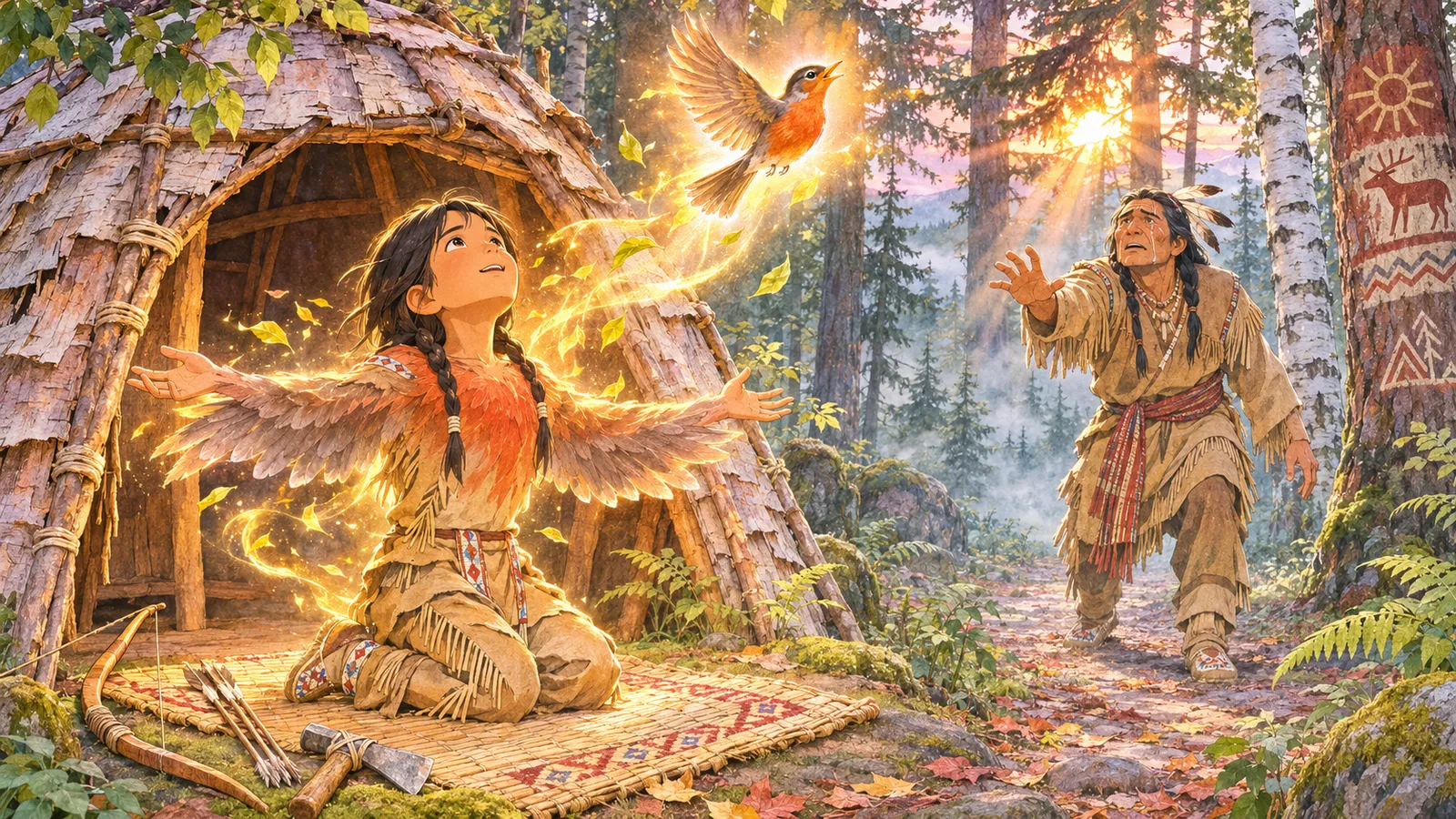
When this boy was eleven years old, the chief went out into the forest and built a small lodge for him to stay in.この子が十一さいになると、首長は森へ出かけて、むすこがすごすための小さな小屋をたてました。
In it he placed a mat of reeds which his good squaw had woven with great care.その中には、やさしいおくさんが心をこめてあんだ、アシのしきものをしきました。
By the side of the mat he laid a bow, some arrows and his own great tomahawk.しきもののそばには、弓と何本かの矢と、自分の大きなおのをおきました。
Next he painted pictures upon the trees along the path leading from the wigwam to the lodge.それから、テント小屋から森の小屋へつづく道ぞいの木に、絵をかきました。
He did this that the little boy might easily find his way home.男の子が帰り道をかんたんに見つけられるように、そうしたのです。
When everything was ready he sadly sent his son away into the forest.じゅんびがすっかりできると、首長は悲しい気持ちで、むすこを森へ送り出しました。
He missed him so much that he went every morning to look at him.首長はむすこに会いたくてたまらず、毎朝ようすを見に行きました。
Each day he asked him if the spirit had not come to him.毎日、首長は「せいれいはまだ来ないのか」とたずねました。
Each day the little boy shook his head without opening his eyes.毎日、男の子は目をとじたまま、首を横にふりました。
On the fifth day his son said to him, “Father, take me home or I shall die.五日目に、むすこは言いました。「お父さん、家につれて帰ってください。でないと、ぼくは死んでしまいます。 No spirit will come to me.”ぼくのところには、どんなせいれいも来ません。」
The old chiefs pride was greater than his pity and he said, “No, my son, you must not be a coward.年とった首長は、かわいそうに思う気持ちよりも、ほこりのほうが大きかったので、こう言いました。「いや、むすこよ、おくびょう者になってはいけない。 You shall be as wise as a fox and as strong as a bear.おまえはキツネのようにかしこく、クマのように強くなるのだ。
“Better that you should die than that boy and squaw should cry ‘Shame’ upon your father’s son.「男の子や女の人たちに、首長のむすこはなさけないと言われるくらいなら、死んだほうがましだ。
“Be patient, I will come in two days and bring you food.”「がまんしなさい。二日たったら、食べ物を持って来てやろう。」
The sixth day came and the little boy lay upon the mat white and still.六日目が来ました。男の子は青白い顔で、しきものの上にじっと横になっていました。
On the seventh, when the chief came with the sun’s first rays, his son was not in the lodge nor about it.七日目、首長が朝日のさいしょの光とともにやって来ると、むすこは小屋の中にも、そのまわりにもいませんでした。
Above the door sat a bird with brown coat and red breast, which until this time had been unknown to man.戸の上には、茶色の上着に赤いむねの鳥がとまっていました。それまで人間が見たことのない鳥でした。
Sadly the chief listened to the bird and understood its message.首長は悲しい気持ちで鳥の歌を聞き、その言葉がわかりました。
“Mourn me not, great chief,” it sang.「えらい首長さま、わたしのことを悲しまないでください」と鳥は歌いました。 “I was once your son.「わたしは、もとはあなたのむすこでした。
“I am happy now and free.「今、わたしはしあわせで、自由です。
“I am the friend of man and shall always live near him and be his companion.「わたしは人間の友だちです。いつも人間の近くにすんで、なかまになりましょう。
“I shall bring the tidings of spring.「わたしは春の知らせを運びましょう。
“When the maple buds shoot and the wild flowers come, every child in the land shall know my voice.「カエデのめがのび、野の花がさくころには、国じゅうのどの子どもも、わたしの声を知るようになるでしょう。
“I shall teach how much better it is to sing than to slay.「歌うことが、命をうばうことよりどんなによいかを、教えましょう。