 4分
 朗読 mleigh
 原文そのまま

 PDFで印刷(A4 6まい)
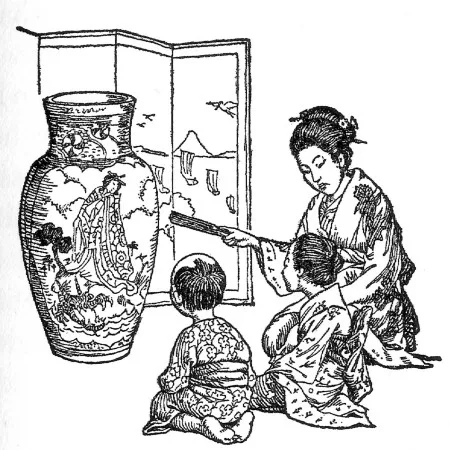
On some of the beautiful vases that are made in Japan there is a picture of a goddess changing a dragon into an island.日本で作られる美しいつぼの中には、女神が竜を島にかえている絵がえがかれているものがあります。 When the children of Japan say, "Mother, tell us a story about the picture," this is what the mother says:—日本の子どもたちが「お母さん、この絵のお話をして」と言うと、お母さんはこんなお話をします。
"Long, long ago there was a goddess of the sea who loved the people of Japan.「ずっとずっとむかし、日本の人々を愛する海の女神がいました。 She often came out of the water at sunset, and while all the bright colors were in the sky, she would sit on a high rock that overlooked the water and tell stories to the children.女神は、夕日がしずむころによく海から出てきて、空がきれいな色にそまっているあいだ、海を見わたす高い岩にすわって、子どもたちにお話をしてくれました。 Such wonderful stories as they were!それはそれはすばらしいお話でした! She used to tell them all about the strange fishes that swim in and out among the rocks and the mosses, and about the fair maidens that live deep down in the sea far under the waves.岩やこけのあいだをおよぎまわるふしぎな魚たちのことや、波のずっと下、海の深いところにすむ美しいむすめたちのことを、何でも話してくれたのです。 The children would ask, 'Are there no children in the sea?子どもたちはたずねました。『海には子どもはいないの? Why do they never come out to play with us?'どうしてぼくたちと遊びに出てこないの?』 The goddess would answer, 'Some time they will come, if you only keep on wishing for them.女神は答えました。『ねがいつづけていれば、いつかきっと来ますよ。 What children really wish for they will surely have some day.'子どもたちが心からねがうことは、いつかきっとかなうのです。』
"Then the goddess would sing to the children, and her voice was so sweet that the evening star would stand still in the sky to listen to her song.それから女神は子どもたちに歌を歌ってくれました。その声があまりにきれいなので、宵の明星も空で止まって、その歌に耳をすませたほどでした。 'Please show us how the water rises and falls,' the children would beg, and she would hold up a magic stone that she had and say, 'Water, rise!'『水が満ちたり引いたりするところを見せて』と子どもたちがせがむと、女神は持っている魔法の石をかかげて、『水よ、満ちよ!』と言いました。 Then the waves would come in faster and faster all about the rock.すると波が、岩のまわりにどんどん早くおしよせてきました。 When she laid down the stone and said, 'Water, fall!' the waves would be still, and the water would roll back quickly to the deep sea.女神が石をおろして『水よ、引け!』と言うと、波はしずまり、水はすばやく深い海へもどっていきました。 She was goddess of the storm as well as of the sea, and sometimes the children would say, 'Dear goddess, please make us a storm.'女神は海の女神であると同時に、あらしの女神でもあったので、ときどき子どもたちは『やさしい女神さま、あらしをおこして』とたのみました。 She never said no to what they asked, and so the rain would fall, the lightning flare, and the thunder roll.女神は子どもたちのたのみをことわったことがなかったので、雨がふり、いなずまが光り、かみなりがとどろきました。 The rain would fall all about them, but the goddess did not let it come near them.雨はまわりじゅうにふりましたが、女神は子どもたちのそばにはふらせませんでした。 They were never afraid of the lightning, for it was far above their heads, and they knew that the goddess would not let it come down.子どもたちは、いなずまをこわいと思ったことはありませんでした。いなずまは頭のずっと上にあって、女神がおろさないとわかっていたからです。
"Those were happy times, but there is something more to tell that is not pleasant.そのころは幸せな時代でした。でも、楽しくないお話も、もう少しあるのです。 One of the goddess's sea-animals was a dragon, that often used to play in the water near the shore.女神の海の動物の中に竜がいて、よく岸の近くの水の中で遊んでいました。 The children never thought of being afraid of any of the sea-animals, but one day the cruel dragon seized a little child in his mouth, and in a moment he had eaten it.子どもたちは、海の動物をこわいなんて思ったことはありませんでした。ところがある日、ひどい竜が、小さな子どもを口にくわえて、あっというまにのみこんでしまったのです。 There was sadness over the land of Japan.日本の国じゅうがかなしみにつつまれました。 There were tears and sorrowful wailing.みんな泣いて、かなしみの声をあげました。 'O goddess,' the people cried, 'come to us!『女神さま、来てください!』と人々はさけびました。 Punish the wicked dragon!'『悪い竜をこらしめてください!』