 4分
 朗読 Alan Mapstone
 原文そのまま

 PDFで印刷(A4 4まい)
There was once a man named Runoia, and when he walked along the pathways of the forest, the children would say shyly to one another, "Look, there is the man who always hears music."むかし、ルノイアという男の人がいました。ルノイアが森の小道を歩いていると、子どもたちははずかしそうにささやきあいました。「見て、いつも音楽が聞こえている人だよ。」
It was really true that wherever he went he could hear sweet music.本当に、ルノイアはどこへ行っても、きれいな音楽が聞こえたのです。 There are some kinds of music that every one can hear, but Runoia heard sweet sounds where others heard nothing.音楽には、だれにでも聞こえるものもありますが、ルノイアには、ほかの人には何も聞こえないところで、やさしい音が聞こえました。 When the lilies sang their evening song to the stars, he could hear it, and when the mother tree whispered "Good-night" to the little green leaves, he heard the music of her whisper, though other men heard not a sound.ユリが星たちに夕方の歌を歌うと、ルノイアにはそれが聞こえました。お母さんの木が小さな緑の葉っぱたちに「おやすみ」とささやくと、ほかの人には何の音も聞こえないのに、ルノイアにはそのささやきの音楽が聞こえたのです。
He was sorry for those other men, and he said to himself, "I will make a harp, and then even if they cannot hear all the kinds of music, they will hear the sweet voice of the harp."ルノイアはほかの人たちがかわいそうになって、思いました。「たて琴を作ろう。そうすれば、いろいろな音楽が聞こえなくても、たて琴のやさしい声なら聞こえるだろう。」
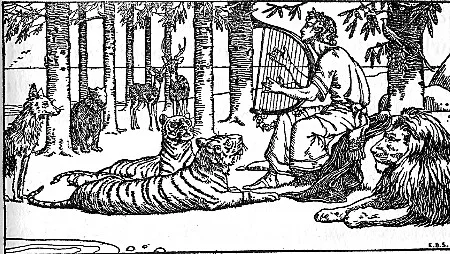
This must have been a magic harp, for if one else touched it, no sound was heard, but when Runoia touched the strings, the trees bent down their branches to listen, the little blossoms put their heads out shyly, and even the wind was hushed.それはきっと、ふしぎなたて琴だったのでしょう。ほかの人がさわっても音は出ないのに、ルノイアが糸をはじくと、木々はえだをかがめて耳をすまし、小さな花たちははずかしそうに顔を出し、風までもしずかになりました。 All kinds of beasts and birds came about him as he played, and the sun and the moon stood still in the heavens to hear the wonderful music.ルノイアがひいていると、いろいろなけものや鳥がまわりに集まってきて、お日さまとお月さまも、空で止まって、そのすばらしい音楽を聞きました。 All these beautiful things happened whenever Runoia touched the strings.ルノイアが糸をはじくたびに、こんなすてきなことがおこったのです。
Sometimes Runoia's music was sad.ときどき、ルノイアの音楽はかなしいこともありました。 Then the sun and the moon hid their faces behind the clouds, the wind sang mournfully, and the lilies bent low their snow-white blossoms.そんなときは、お日さまとお月さまは雲のうしろに顔をかくし、風はかなしそうに歌い、ユリはまっ白な花を低くたれました。
One day Runoia roamed far away till he came to the shores of the great sea.ある日、ルノイアは遠くまで歩きつづけて、大きな海の岸辺にやってきました。 The sun had set, darkness hid the sky and the water, not a star was to be seen.お日さまはしずみ、空も海もまっくらで、星ひとつ見えません。 Not a sound was heard but the wailing of the sea.聞こえるのは、海の泣くような音だけでした。 No friend was near.そばには友だちもいません。 "I have no friends," he said.「わたしには友だちがいない」とルノイアは言いました。 He laid his hand upon his harp, and of themselves the strings gave forth sweet sounds, at first softly and shyly.ルノイアがたて琴に手をのせると、糸がひとりでにやさしい音を出しはじめました。はじめは小さく、はずかしそうに。 Then the sounds grew louder, and soon the world was full of music, such as even Runoia had never heard before, for it was the music of the gods.それから音はだんだん大きくなり、やがて世界じゅうが音楽でいっぱいになりました。それはルノイアでさえ聞いたことのない音楽でした。神さまたちの音楽だったのです。 "It is really true," he said to himself softly.「本当なんだ」とルノイアは小さな声でつぶやきました。 "My harp is giving me music to drive away my sadness."「たて琴が、わたしのかなしみをふきとばす音楽をくれている。」