
原田英語の多読ベストジュニア このサイトについてはじめて

The Sing-Song of Old Man Kangaroo

カンガルーじいさんのうた
★★★★☆8分1181語朗読 Tim Bulkeley (1948-2019)原文そのまま一致率 86.1%

むかし、カンガルーは短い4本足の動物でした。「ほかの動物とちがうようにして」と神さまにたのむと、黄色い犬ディンゴが……。

PDFで印刷(A4 12まい)
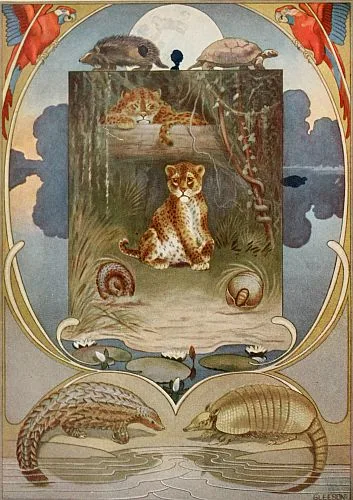
The Sing-Song of Old Man Kangaroo の挿絵(Rudyard Kipling / Joseph M. Gleeson)

always was the Kangaroo as now we do behold him, but a Different Animal with four short legs.カンガルーは、むかしから今わたしたちが見ているようなすがただったのではなく、短い足が4本ある、ちがう動物でした。 He was grey and he was woolly, and his pride was inordinate: he danced on an outcrop in the middle of Australia, and he went to the Little God Nqa.カンガルーは灰色で、もこもこの毛がはえていて、とてもいばりんぼうでした。オーストラリアのまん中の岩山の上でおどり、小さな神さまのンカのところへ行きました。

He went to Nqa at six before breakfast, saying, 'Make me different from all other animals by five this afternoon.'朝ごはんの前の6時に、カンガルーはンカのところへ行って言いました。「きょうの午後5時までに、ぼくをほかのどんな動物ともちがうようにしてください。」

Up jumped Nqa from his seat on the sand-flat and shouted, 'Go away!'ンカは、砂地の上のすわっていた所からとびあがって、さけびました。「あっちへ行け!」

He was grey and he was woolly, and his pride was inordinate: he danced on a rock-ledge in the middle of Australia, and he went to the Middle God Nquing.カンガルーは灰色で、もこもこの毛がはえていて、とてもいばりんぼうでした。オーストラリアのまん中の岩だなの上でおどり、まん中の神さまのンクィンのところへ行きました。

He went to Nquing at eight after breakfast, saying, 'Make me different from all other animals; make me, also, wonderfully popular by five this afternoon.'朝ごはんのあとの8時に、カンガルーはンクィンのところへ行って言いました。「ぼくをほかのどんな動物ともちがうようにしてください。それから、きょうの午後5時までに、すばらしく人気者にしてください。」

Up jumped Nquing from his burrow in the spinifex and shouted, 'Go away!'ンクィンは、スピニフェックスの草むらの中のあなからとびだして、さけびました。「あっちへ行け!」

He was grey and he was woolly, and his pride was inordinate: he danced on a sandbank in the middle of Australia, and he went to the Big God Nqong.カンガルーは灰色で、もこもこの毛がはえていて、とてもいばりんぼうでした。オーストラリアのまん中の砂の土手の上でおどり、大きな神さまのンコンのところへ行きました。

He went to Nqong at ten before dinner-time, saying, 'Make me different from all other animals; make me popular and wonderfully run after by five this afternoon.'お昼ごはんの前の10時に、カンガルーはンコンのところへ行って言いました。「ぼくをほかのどんな動物ともちがうようにしてください。人気者にして、きょうの午後5時までに、みんなにすばらしくおいかけられるようにしてください。」

Up jumped Nqong from his bath in the salt-pan and shouted, 'Yes, I will!'ンコンは、しおの原っぱのおふろからとびだして、さけびました。「よし、そうしてやろう!」

Nqong called Dingo—Yellow-Dog Dingo—always hungry, dusty in the sunshine, and showed him Kangaroo.ンコンはディンゴ――黄色い犬のディンゴ――いつもおなかをすかせて、日ざしの中でほこりまみれ――をよんで、カンガルーを見せました。 Nqong said, 'Dingo!ンコンは言いました。「ディンゴ! Wake up, Dingo!おきろ、ディンゴ! Do you see that gentleman dancing on an ashpit?灰すて場の上でおどっている、あのだんなが見えるか? He wants to be popular and very truly run after.あいつは人気者になって、ほんとうにおいかけられたいそうだ。 Dingo, make him so!'ディンゴ、そうしてやれ!」

Up jumped Dingo—Yellow-Dog Dingo—and said, 'What, that cat-rabbit?'ディンゴ――黄色い犬のディンゴ――はとびあがって言いました。「なに、あのネコウサギみたいなやつのことですか?」

Off ran Dingo—Yellow-Dog Dingo—always hungry, grinning like a coal-scuttle,—ran after Kangaroo.ディンゴ――黄色い犬のディンゴ――は、いつもおなかをすかせて、石炭入れみたいに口をあけてにやにやしながら、カンガルーをおいかけて走りだしました。

Off went the proud Kangaroo on his four little legs like a bunny.いばりんぼうのカンガルーは、ウサギみたいに小さな4本の足で、にげだしました。

This, O Beloved of mine, ends the first part of the tale!これで、いとしい子よ、お話の前半はおしまいです!

He ran through the desert; he ran through the mountains; he ran through the salt-pans; he ran through the reed-beds; he ran through the blue gums; he ran through the spinifex; he ran till his front legs ached.カンガルーは砂ばくを走りぬけ、山を走りぬけ、しおの原っぱを走りぬけ、アシのしげみを走りぬけ、ユーカリの林を走りぬけ、スピニフェックスの草むらを走りぬけ、前足がいたくなるまで走りました。

He had to!そうするしかなかったのです!

Still ran Dingo—Yellow-Dog Dingo—always hungry, grinning like a rat-trap, never getting nearer, never getting farther,—ran after Kangaroo.それでもディンゴ――黄色い犬のディンゴ――は、いつもおなかをすかせて、ネズミとりみたいににやにやしながら、近づきもせず、はなれもせず、カンガルーをおいかけて走りました。

He had to!そうするしかなかったのです!

Still ran Kangaroo—Old Man Kangaroo.それでもカンガルー――カンガルーじいさん――は走りました。 He ran through the ti-trees; he ran through the mulga; he ran through the long grass; he ran through the short grass; he ran through the Tropics of Capricorn and Cancer; he ran till his hind legs ached.ティーツリーの林を走りぬけ、マルガの林を走りぬけ、長い草むらを走りぬけ、短い草むらを走りぬけ、南回帰線と北回帰線を走りぬけ、うしろ足がいたくなるまで走りました。
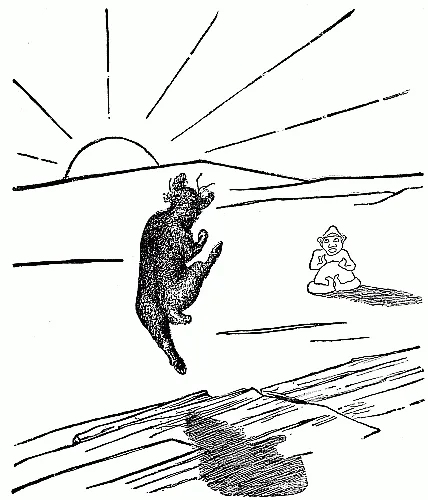
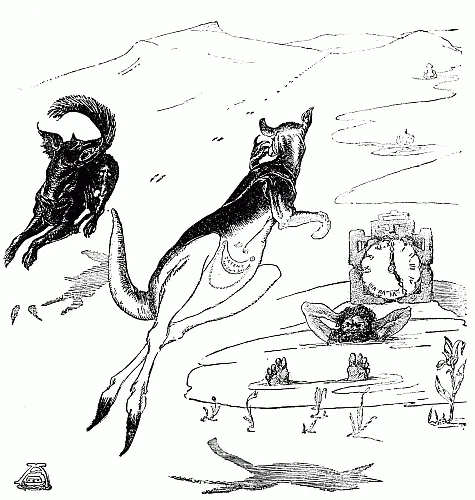
The Sing-Song of Old Man Kangaroo の挿絵(Rudyard Kipling / Joseph M. Gleeson)

Thisこれは

The Kangaroo hasn't any real name except Boomer.カンガルーには、ブーマー(大きなオスのカンガルーのこと)という名前のほかに、ほんとうの名前はありません。 He lost it because he was so proud.いばりすぎたので、名前をなくしてしまったのです。

He had to!そうするしかなかったのです!

Still ran Dingo—Yellow-Dog Dingo—hungrier and hungrier, grinning like a horse-collar, never getting nearer, never getting farther; and they came to the Wollgong River.それでもディンゴ――黄色い犬のディンゴ――は、ますますおなかをすかせて、馬の首わみたいににやにやしながら、近づきもせず、はなれもせず、走りました。そしてふたりは、ウォルゴング川にやってきました。

Now, there wasn't any bridge, and there wasn't any ferry-boat, and Kangaroo didn't know how to get over; so he stood on his legs and hopped.さて、そこには橋もなく、わたし船もなく、カンガルーはどうやってわたればいいかわかりませんでした。そこで、うしろ足で立って、ぴょんととびました。

He had to!そうするしかなかったのです!

He hopped through the Flinders; he hopped through the Cinders; he hopped through the deserts in the middle of Australia.フリンダーズの山々をぴょんぴょんこえ、シンダーズ(もえがらの原)をぴょんぴょんこえ、オーストラリアのまん中の砂ばくをぴょんぴょんこえていきました。 He hopped like a Kangaroo.カンガルーみたいに、ぴょんぴょんとんだのです。

First he hopped one yard; then he hopped three yards; then he hopped five yards; his legs growing stronger; his legs growing longer.はじめは1ヤードとび、つぎに3ヤードとび、それから5ヤードとびました。足はどんどん強くなり、足はどんどん長くなっていきました。 He hadn't any time for rest or refreshment, and he wanted them very much.休むひまも、何か食べるひまもありませんでした。どちらも、とてもほしかったのですが。

Still ran Dingo—Yellow-Dog Dingo—very much bewildered, very much hungry, and wondering what in the world or out of it made Old Man Kangaroo hop.休むひまも、何か食べたりのんだりするひまもありませんでした。どちらも、とてもほしかったのですが。

For he hopped like a cricket; like a pea in a saucepan; or a new rubber ball on a nursery floor.なにしろカンガルーは、コオロギみたいに、おなべの中のマメみたいに、子ども部屋のゆかの新しいゴムまりみたいに、ぴょんぴょんとんだのです。

The Sing-Song of Old Man Kangaroo の挿絵(Rudyard Kipling / Joseph M. Gleeson)

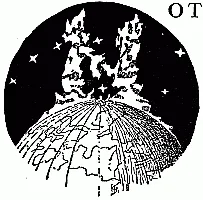
Thisこれは

I don't know the names of the flowers growing round Nqong's bath.ンコンのおふろのまわりにさいている花の名前は、わたしは知りません。 The two little squatty things out in the desert are the other two gods that Old Man Kangaroo spoke to early in the morning.砂ばくの中のずんぐりした二つの小さなものは、カンガルーじいさんが朝早く話しかけた、ほかのふたりの神さまです。 That thing with the letters on it is Old Man Kangaroo's pouch.字が書いてあるものは、カンガルーじいさんのおなかのふくろです。 He had to have a pouch just as he had to have legs.カンガルーには、足がなければならなかったのと同じように、ふくろもなければならなかったのです。

He had to!そうするしかなかったのです!

He tucked up his front legs; he hopped on his hind legs; he stuck out his tail for a balance-weight behind him; and he hopped through the Darling Downs.カンガルーは前足をちぢめ、うしろ足でとび、しっぽをうしろにつきだしてバランスをとるおもりにして、ダーリング・ダウンズをぴょんぴょんこえていきました。

He had to!そうするしかなかったのです!

Still ran Dingo—Tired-Dog Dingo—hungrier and hungrier, very much bewildered, and wondering when in the world or out of it would Old Man Kangaroo stop.それでもディンゴ――つかれた犬のディンゴ――は、ますますおなかをすかせて、すっかりとまどって、いったいいつになったらカンガルーじいさんはとまるんだろうと思いながら、走りました。

Then came Nqong from his bath in the salt-pans, and said, 'It's five o'clock.'そのとき、ンコンがしおの原っぱのおふろから出てきて言いました。「5時だ。」

Down sat Dingo—Poor Dog Dingo—always hungry, dusky in the sunshine; hung out his tongue and howled.ディンゴ――かわいそうな犬のディンゴ――は、すわりこみました。いつもおなかをすかせて、日ざしの中でうすぐらく見えるディンゴは、したをだらりとたらして、ウォーンとほえました。

Down sat Kangaroo—Old Man Kangaroo—stuck out his tail like a milking-stool behind him, and said, 'Thank goodness that's finished!'カンガルー――カンガルーじいさん――もすわりこみ、しっぽを乳しぼりのいすのようにうしろにつきだして言いました。「やれやれ、やっとおわった!」

Then said Nqong, who is always a gentleman, 'Why aren't you grateful to Yellow-Dog Dingo?すると、いつもれいぎ正しいンコンが言いました。「どうして黄色い犬のディンゴにかんしゃしないのかね? Why don't you thank him for all he has done for you?'あいつがおまえのためにしてくれたことに、どうしてお礼を言わないのかね?」

Then said Kangaroo—Tired Old Kangaroo—'He's chased me out of the homes of my childhood; he's chased me out of my regular meal-times; he's altered my shape so I'll never get it back; and he's played Old Scratch with my legs.'するとカンガルー――つかれたカンガルーじいさん――は言いました。「あいつは、ぼくを子どものころからのすみかから追い出したんです。いつものごはんの時間からも追い出したんです。ぼくの形をかえてしまって、もう二度ともとにもどれません。それに、ぼくの足をめちゃくちゃにしてしまったんですよ。」

Then said Nqong, 'Perhaps I'm mistaken, but didn't you ask me to make you different from all other animals, as well as to make you very truly sought after?するとンコンは言いました。「わしのかんちがいかもしれないが、おまえは、ほかのどんな動物ともちがうようにしてくれ、それに、みんなにほんとうにおいかけられるようにしてくれと、わしにたのまなかったかね? And now it is five o'clock.'そして、いまは5時だ。」

'Yes,' said Kangaroo.「はい」とカンガルーは言いました。 'I wish that I hadn't.「たのまなければよかった。 I thought you would do it by charms and incantations, but this is a practical joke.'あなたが、おまじないやじゅもんでやってくれると思ったのに、これじゃあ、ただのいたずらじゃないですか。」

'Joke!' said Nqong from his bath in the blue gums.「いたずらだと!」とンコンは、ユーカリの林のおふろから言いました。 'Say that again and I'll whistle up Dingo and run your hind legs off.'「もう一度言ってみろ。ディンゴを口ぶえでよんで、おまえのうしろ足がすりきれるまで走らせてやるぞ。」

'No,' said the Kangaroo.「いいえ」とカンガルーは言いました。 'I must apologise.「あやまります。 Legs are legs, and you needn't alter 'em so far as I am concerned.足は足ですから、ぼくとしては、もうかえていただかなくてけっこうです。 I only meant to explain to Your Lordliness that I've had nothing to eat since morning, and I'm very empty indeed.'ぼくはただ、朝から何も食べていなくて、おなかがぺこぺこだということを、えらい神さまにお話ししたかっただけなんです。」

'Yes,' said Dingo—Yellow-Dog Dingo,—'I am just in the same situation.「はい」とディンゴ――黄色い犬のディンゴ――は言いました。「わたしも、まったく同じです。 I've made him different from all other animals; but what may I have for my tea?'わたしはこいつを、ほかのどんな動物ともちがうようにしてやりました。でも、わたしのおやつには何をもらえるんですか?」

Then said Nqong from his bath in the salt-pan, 'Come and ask me about it to-morrow, because I'm going to wash.'わたしはこいつを、ほかのどんな動物ともちがうようにしてやりました。でも、わたしの夕ごはんには何をもらえるんですか?

So they were left in the middle of Australia, Old Man Kangaroo and Yellow-Dog Dingo, and each said, 'That's your fault.'こうして、カンガルーじいさんと黄色い犬のディンゴは、オーストラリアのまん中にとりのこされ、おたがいに「おまえのせいだ」と言いあいました。

This is the mouth-filling songこれは、口いっぱいになるような歌Of the race that was run by a Boomer,ブーマーが走った、かけっこの歌Run in a single burst—only event of its kind—ひといきに走った、ただ一度きりのかけっこ――Started by big God Nqong from Warrigaborrigarooma,ワリガボリガルーマから、大きな神さまンコンがスタートさせたOld Man Kangaroo first: Yellow-Dog Dingo behind.カンガルーじいさんが先、黄色い犬のディンゴがあとKangaroo bounded away,カンガルーはぴょんととびだしたHis back-legs working like pistons—うしろ足は、ピストンみたいに動いて――Bounded from morning till dark,朝から夜までとびつづけたTwenty-five feet to a bound.ひとっとびで25フィートYellow-Dog Dingo lay黄色い犬のディンゴはLike a yellow cloud in the distance—遠くの黄色い雲みたいに見えた――Much too busy to bark.いそがしくて、ほえるひまもないMy! but they covered the ground!まあ! ふたりはなんと遠くまで走ったことか!Nobody knows where they went,ふたりがどこへ行ったのか、だれも知らないOr followed the track that they flew in,とんでいったそのあとを、たどった人もいないFor that Continentなにしろ、その大陸にはHadn't been given a name.まだ名前がついていなかったからThey ran thirty degrees,ふたりは地図の上で30度ぶんも走ったFrom Torres Straits to the Leeuwinトレスかいきょうからルーウィンみさきまで(Look at the Atlas, please),(地図帳で見てごらん)And they ran back as they came.そして、来た道をもどってきたS'posing you could trotもしもきみが、かけ足でFrom Adelaide to the Pacific,アデレードから太平洋までFor an afternoon's run—午後のあいだに走ったら――Half what these gentlemen did—このおふたりの半分のきょりだけど――You would feel rather hot,きみはかなりあつくなるだろうBut your legs would develop terrific—でも足は、ものすごくきたえられる――Yes, my importunate son,そうだよ、せがんでばかりのぼうやYou'd be a Marvellous Kid!きみはすばらしい子になるよ!
The Sing-Song of Old Man Kangaroo の挿絵(Rudyard Kipling / Joseph M. Gleeson)

さいごまで よめたね!

「よめた!」をおすと、スタンプがもらえて おはなしの森 に木や動物がふえるよ。

PDFで印刷(A4 12まい)

おうちの方・大人の学習者へ
「He had to!」などのくり返しが楽しいお話。カンガルーの長い足としっぽのわけを考えながらどうぞ。

出典台帳 — このページの「本物」の証明

英文
原文そのまま(1語も書きかえていません)。Project Gutenberg 電子書籍 #32488(Rudyard Kipling、1902年の本)
挿絵
Rudyard Kipling / Joseph M. Gleeson(同じ本の初版の挿絵。パブリックドメイン)
朗読
Tim Bulkeley (1948-2019)(LibriVox のボランティア。Just So Stories (version 4)「THE SING-SONG OF OLD MAN KANGAROO」)。録音はパブリックドメインで、元のファイルをそのまま使っています(音質を落とす加工なし)。
照合
朗読を音声認識(Whisper)で文字起こしし、原文と1語ずつ照らし合わせました。一致率 86.1%
文が光るタイミングはこの照合で決めています。
聞き比べ
LibriVox にある 2 本の録音を自動で聞き比べて選びました(原文との一致・雑音の少なさ・話す速さ)。
朗読者点数一致速さ
Tim Bulkeley (1948-2019) ← 採用88.4188%162語/分
Phil Chenevert00%-語/分
和訳
和訳はAIと人が作成。AIは3重チェック。人の目でも順次確認しています。英文には一切手を入れていません。