
原田英語の多読ベストジュニア このサイトについてはじめて

the Tarantula

タランチュラ
★★★★★33分5707語朗読 Devorah Allen原文そのまま一致率 97.1%

おそろしいと言われるタランチュラ。ハチの首をひとかみでしとめるかりのわざと、子グモをせなかにのせて7か月も運ぶ、母グモのおどろきのすがたを観察します。

PDFで印刷(A4 30まい)

The Spider has a bad name: most of us think her a horrid animal, and hasten to crush her under our feet.クモは評判がよくありません。たいていの人は、クモをぞっとする生き物だと思い、急いで足でふみつぶそうとします。 Nevertheless, any one who observes her knows that she is a hard worker, a talented weaver, a wily huntress, and very interesting in other ways.けれども、クモを観察したことのある人なら、クモがよく働き、才能ある機織りで、ずるがしこいかりゅうどで、ほかにもいろいろおもしろいところのある生き物だと知っています。 Yes, the Spider is well worth studying, apart from any scientific reasons; but she is said to be poisonous, and that is her crime and the main reason why we hate her.そうです、科学の理由はさておいても、クモはじゅうぶん調べるねうちがあります。ところが、クモには毒があると言われていて、それがクモの罪であり、わたしたちがクモをきらういちばんの理由なのです。 She is poisonous, in a way, if by that we understand that the animal is armed with two fangs which cause the immediate death of the little victims that she catches; but there is a great difference between killing a Midge and harming a Man.2本のきばをもっていて、つかまえた小さなえものをたちまち殺してしまう、という意味なら、たしかにクモには毒があります。でも、ユスリカを殺すことと、人間を傷つけることとでは、大きなちがいがあります。 However quickly the Spider’s poison kills insects, it is not as a rule serious for us and causes less trouble than a gnat-bite.クモの毒がどんなにすばやく虫を殺しても、ふつう、わたしたちにとっては大したことはなく、ブヨにさされるよりもめんどうが少ないのです。 That, at least, is what we can safely say about the great majority of Spiders.少なくとも、ほとんど大部分のクモについては、そう言ってまちがいありません。

Nevertheless, a few are to be feared.とはいえ、中にはおそろしいクモも少しいます。 The Italians say that the Tarantula produces convulsions and frenzied dances in the person stung by her.イタリアの人たちは、タランチュラにかまれた人は、けいれんを起こし、くるったようにおどりだすと言います。 Music is the only cure for this, and they tell us some tunes are better than others.これをなおすには音楽しかなく、しかも、曲によってききめがちがうのだそうです。 The tarantella, a lively dance, probably owes its name to this idea of the Italian peasants.タランテラという速いおどりの名前は、たぶん、イタリアの農民たちのこの考えから来ているのでしょう。 The story makes us feel like laughing, but, after all, the bite of the Tarantula may possibly bring on some nervous trouble which music will relieve; and possibly a very energetic dance makes the patient break out into a perspiration and so get rid of the poison.この話は笑いたくなりますが、もしかすると、タランチュラにかまれると、何か神経のぐあいが悪くなって、それが音楽でやわらぐのかもしれません。それに、とてもはげしくおどると、かまれた人があせをかいて、毒が出ていくのかもしれません。

The most powerful Spider in my neighborhood, the Black-bellied Tarantula, will presently show us what her poison can do.わたしの家の近所でいちばん強いクモ、おなかの黒いタランチュラ(ナルボンヌコモリグモ)が、これから、その毒がどんなことをするのか見せてくれるでしょう。 But first I will introduce her to you in her home, and tell you about her hunting.でもまず、このクモを家にいるところでしょうかいし、そのかりりの話をしましょう。

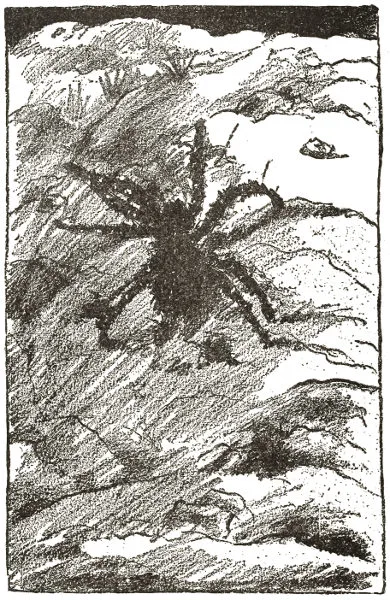
This Tarantula is dressed in black velvet on the lower surface, with brown stripes on the abdomen and gray and white rings around the legs.このタランチュラは、体の下がわに黒いビロードを着ていて、おなかには茶色のしまがあり、あしには灰色と白の輪があります。 Her favorite dwelling-place is the dry, pebbly ground, covered with sun-scorched thyme.このクモのお気に入りのすみかは、日にこげたタイムがおいしげる、かわいた小石だらけの地面です。 In my plot of waste ground, there are quite twenty of these Spiders’ burrows.わたしのあれ地には、このクモのあながたっぷり20はあります。 I hardly ever pass by one of these haunts without giving a glance down the pit where gleam, like diamonds, the four great eyes, the four telescopes of the hermit.わたしは、こうしたすみかのそばを通るとき、たいていあなの中をちらりとのぞいてみます。そこでは、このひとりぐらしのクモの4つの大きな目、4つの望遠鏡が、ダイヤモンドのように光っているのです。 The four other eyes, which are much smaller, are not visible at that depth.ほかの4つの目はずっと小さいので、その深さでは見えません。

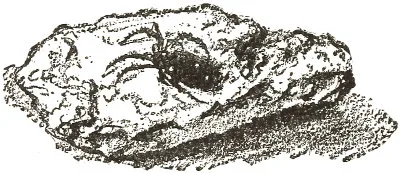
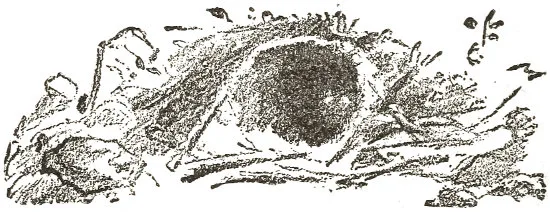
The Tarantula’s dwellings are pits about a foot deep, dug by herself with her fangs, going straight down at first and then bent elbow-wise.タランチュラのすみかは、深さ1フィート(約30センチ)ほどのたてあなで、クモが自分のきばでほったものです。はじめはまっすぐ下へのび、それからひじのように曲がっています。 They are about an inch wide.はばは1インチ(約2.5センチ)ほどです。 On the edge of the hole stands a curb, formed of straw, bits and scraps of all sorts, and even small pebbles, the size of a hazel-nut.あなのふちには、わらや、いろいろなかけらやくず、それにヘーゼルナッツくらいの小石までつかってつくった、かこいが立っています。 The whole is kept in place and cemented with the Spider’s silk.ぜんたいは、クモの糸でとめられ、かためられています。 Sometimes this curb, or little tower, is an inch high; sometimes it is a mere rim.このかこい、つまり小さなやぐらは、高さが1インチほどのこともあれば、ただのふちほどしかないこともあります。

I wished to catch some of these Spiders, so I waved a spikelet of grass at the entrance of the burrow to imitate the humming of a Bee.わたしはこのクモを何びきかつかまえたかったので、ハチの羽音をまねて、あなの入り口で草のほをふってみました。 I expected that the Tarantula would rush out, thinking she heard a prey.えものの音がしたと思って、タランチュラがとび出してくるだろうと思ったのです。 My scheme did not succeed.わたしの作戦はうまくいきませんでした。 The Tarantula, indeed, came a little way up her tube to find out the meaning of the sounds at her door; but she soon scented a trap; she remained motionless at mid-height and would not come any farther.タランチュラは、たしかに戸口の音がなんなのかたしかめようと、つつの中を少しのぼってきました。でも、すぐにわなだと気づいて、とちゅうの高さでじっと止まったまま、それ以上は出てこようとしませんでした。

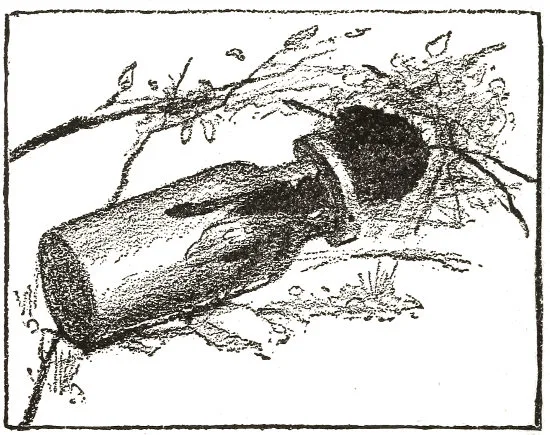
I found that the best method to secure the wily Tarantula was to procure a supply of live Bumble-bees.このずるがしこいタランチュラをつかまえるいちばんよい方法は、生きたマルハナバチをたくさん用意することだとわかりました。 I put one into a little bottle with a mouth just wide enough to cover the opening of the burrow; and I turned the apparatus thus baited over the opening.わたしは、口がちょうどあなの入り口をおおうくらいの小さなびんに一ぴき入れて、こうしてえさをしかけた道具を、あなの上にさかさまにかぶせました。 The powerful Bee at first fluttered and hummed about her glass prison; then, seeing a burrow like that made by her own family, she went into it without much hesitation.力の強いハチは、はじめはガラスのろうやの中でばたばた、ぶんぶんしていましたが、やがて、自分の家族がつくるようなあなを見つけると、あまりためらわずにその中へ入っていきました。 She was very foolish: while she went down, the Spider came up; and the meeting took place in the perpendicular passage.なんとおろかなことでしょう。ハチが下りていくと、クモがのぼってきて、たてのトンネルの中で出会ってしまったのです。 For a few moments, I heard a sort of death-song: it was the humming of the poor Bumble-bee.しばらくのあいだ、死の歌のようなものが聞こえました。かわいそうなマルハナバチの羽音でした。 This was followed by a long silence.そのあと、長いしずけさが続きました。 I removed the bottle and explored the pit with a pair of pincers.わたしはびんをとりのけて、ピンセットであなの中をさぐりました。 I brought out the Bumble-bee, motionless, dead.マルハナバチを引っぱり出すと、動かず、死んでいました。 A terrible tragedy must have happened.おそろしいことが起こったにちがいありません。 The Spider followed, refusing to let go so rich a booty.クモも、こんなにすばらしいえものをはなすまいとして、ついて出てきました。 Game and huntress were brought outside the hole, which I stopped up with a pebble.えものとかりゅうどはあなの外へ引き出され、わたしはあなを小石でふさぎました。 Outside her own house the Tarantula is timid and hardly able to run away.自分の家の外では、タランチュラはおくびょうで、にげることもろくにできません。 To push her with a straw into a paper bag was the work of a second.わらでおして紙ぶくろに入れるのは、あっというまでした。 Soon I had a colony of Tarantulas in my laboratory.まもなく、わたしの研究室には、タランチュラの集団ができました。
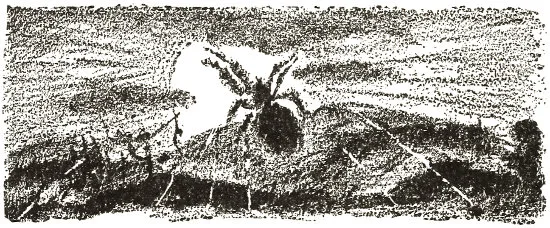
the Tarantula の挿絵((1919 edition))

I did not give the Tarantula the Bee merely in order to capture her.わたしがタランチュラにハチをあたえたのは、ただつかまえるためだけではありませんでした。 I wished to know also her manner of hunting.そのかりりのやり方も知りたかったのです。 I knew that she is one of those insects who live from day to day on what they kill.タランチュラは、殺したえもので、その日その日をくらしている虫のひとつだということは知っていました。 She does not store up preserved food for her children, like the Beetles; she is not a “paralyzer,” like the Wasps you have read about, who cleverly spare their game so as to leave it a glimmer of life and keep it fresh for weeks at a time; she is a killer, who makes a meal off her capture on the spot.こうちゅうのように、子どものために保存食をたくわえることはしません。みなさんが前に読んだかりバチのような「まひさせ屋」でもありません。かりバチは、えものをかしこく生かしておいて、ほんのわずかに命をのこし、何週間も新しいままにしておくのです。タランチュラは「殺し屋」で、つかまえたえものを、その場で食べてしまうのです。 I wished to find out how she kills them so quickly.どうやってそんなにすばやく殺すのか、わたしは知りたかったのです。

She does not go in for peaceable game.タランチュラは、おとなしいえものばかりをねらうわけではありません。 The big Grasshopper, with the powerful jaws, the Bee and other wearers of poisoned daggers must fall into her hole from time to time, and the duel she fights with them is nearly equal as far as weapons go.強いあごをもった大きなキリギリスや、ハチなど、毒の短刀をもったものたちも、ときどきあなに落ちてくるにちがいありません。そうなると、たたかいは、武器の点ではほとんど五分五分です。 For the poisonous fangs of the Spider the Wasp has her poisoned dagger or sting.クモの毒のきばに対して、ハチには毒の短刀、つまり針があるのです。 Which of the two bandits shall have the best of it?二ひきの悪者のうち、どちらが勝つでしょう? The Tarantula has no second means of defense, no cord to bind her victim, as the Garden Spiders have.タランチュラには、オニグモのなかまのように、えものをしばるつなという、二つ目の守りの手段がありません。 These cover the captives with their silk, making all resistance impossible.オニグモのなかまは、とらえたえものを糸でくるんで、まったく手向かいできなくしてしまいます。 The Tarantula has a riskier job.タランチュラの仕事は、もっと危険です。 She has only her courage and her fangs, and she must leap upon her dangerous prey and kill it quickly.タランチュラにあるのは勇気ときばだけで、危険なえものにとびかかって、すばやく殺さなければなりません。 She must know exactly where to strike, for, strong though her poison is, I cannot believe it would kill the prey instantly at any point where she happens to bite.どこをさせばよいのか、正確に知っていなければなりません。毒が強いといっても、たまたまかみついたところがどこでも、えものがすぐに死ぬとは、わたしには思えないからです。 She must bite in some spot of vital importance.命にかかわる大事な場所にかみつかなければならないのです。

the Tarantula の挿絵((1919 edition))

A FIGHT WITH A CARPENTER-BEEクマバチとのたたかい

Instead of with the Bumble-bee, who enters the Spider’s burrow, I wish to make the Tarantula fight with some other insect, who will stay above ground.クモのあなに入ってしまうマルハナバチではなく、地上にとどまっている、ほかの虫とタランチュラをたたかわせてみたいと思います。 For this purpose I take one of the largest and most powerful Bees that I can find, the Carpenter-bee, clad in black velvet, with wings of purple gauze.そのために、見つけられるかぎりいちばん大きくて強いハチのひとつ、クマバチをつれてきます。黒いビロードを着て、むらさき色のうすい布のような羽をもったハチです。 She is nearly an inch long; her sting is very painful and produces a swelling that hurts for a long time.体の長さは1インチ近くあり、その針にさされるとたいへんいたくて、長いあいだいたむはれができます。 I know, because I have been stung.さされたことがあるので、知っているのです。 Here indeed is a foe worthy of the Tarantula.これこそ、タランチュラにふさわしい相手です。

I catch several Carpenter-bees, place them one by one in bottles, and choose a strong, bold Tarantula, one moreover who appears to be very hungry.わたしは何びきかのクマバチをつかまえて、一ぴきずつびんに入れます。そして、強くて大たんで、しかもとてもおなかがすいていそうなタランチュラをえらびます。 I put the bottle baited with a Carpenter-bee upside down over her door.クマバチを入れたびんを、そのクモの戸口の上にさかさまにかぶせます。 The Bee buzzes gravely in her glass bell; the Spider comes up from the recesses of her cave; she is on the threshold, but inside; she looks; she waits.ハチはガラスのつりがねの中で、おもおもしくぶんぶん言っています。クモはほらあなのおくからのぼってきて、入り口まで来ますが、中にいたままです。見ています。待っています。 I also wait.わたしも待ちます。 The quarters, the half-hours pass; nothing happens.15分、30分とすぎていきますが、何も起こりません。 The Spider goes down again: she probably thought the attempt too dangerous.クモはまた下りていきます。きっと、やってみるには危険すぎると思ったのでしょう。 I try in this way three more Tarantulas, but cannot make them leave their lairs.こうして、さらに3びきのタランチュラでためしてみますが、すみかから出てこさせることはできません。

At last I have better success.とうとう、もっとうまくいきます。 A Spider suddenly rushes from her hole: she is unusually warlike, doubtless because she is very hungry.一ぴきのクモが、とつぜんあなからとび出してきます。いつになくたたかう気まんまんなのは、きっと、とてもおなかがすいているからでしょう。 She attacks the Bee in the bottle, and the combat lasts for but the twinkling of an eye.クモはびんの中のハチにおそいかかり、たたかいはまばたきするほどのあいだで終わります。 The sturdy Carpenter-bee is dead.がんじょうなクマバチは死んでいます。 Where did the murderess strike her?殺し屋は、どこをさしたのでしょう? Right in the nape of the neck; her fangs are still there.首のうしろのちょうどまん中です。きばはまだそこにささっています。 She has the knowledge which I suspected: she has bitten the only point she could bite to produce sudden death.わたしが思っていたとおりの知識を、クモはもっていたのです。すぐに死なせるためにかみつけるただ一つの場所に、かみついたのです。 She has struck the center of the victim’s nervous system.えものの神経のおおもとをさしたのです。

I make more experiments and find that it is only once in a while that the Tarantula will come out to fight the Carpenter-bee, but each time that she does so she kills it in the same way.さらに実験をしてみると、タランチュラがクマバチとたたかいに出てくるのはたまにしかありませんが、出てきたときは、いつも同じやり方で殺すことがわかります。 The reason of the Tarantula’s hesitation is plain.タランチュラがためらうわけは、はっきりしています。 An insect of this kind cannot be seized recklessly: the Tarantula who missed her strike by biting at random would do so at the risk of her life.このような虫は、むやみにつかまえるわけにはいきません。でたらめにかみついて、ねらいをはずしたら、タランチュラは命があぶないのです。 Stung in any other place, the Bee might live for hours and manage to sting her foe with her poisoned dagger.ほかの場所をかまれたのなら、ハチは何時間も生きていて、毒の短刀で相手をさすことができるかもしれません。 The Spider is well aware of this.クモは、そのことをよく知っています。 In the safe shelter of her threshold she watches for the right moment; she waits for the big Bee to face her, when the neck is easily grabbed.入り口の安全なかくれがから、クモはちょうどよいときをうかがっています。大きなハチが自分のほうを向いて、首がつかみやすくなるときを待っているのです。

the Tarantula の挿絵((1919 edition))

THE TARANTULA’S POISONタランチュラの毒

The Tarantula’s poison is a pretty dangerous weapon, as we shall see.これから見るように、タランチュラの毒は、かなり危険な武器です。 I make a Tarantula bite the leg of a young, well-fledged Sparrow, ready to leave the nest.巣立ちまぢかの、羽のよく生えそろった若いスズメの足を、タランチュラにかませてみます。 A drop of blood flows; the wounded spot is surrounded by a reddish circle, changing to purple.血が一てき流れます。きずのまわりは赤っぽい輪になり、それがむらさき色にかわります。 The bird almost immediately loses the use of its leg, which drags, with the toes doubled in; it hops upon the other leg.スズメはほとんどすぐに、その足が使えなくなります。足は指を内がわにまげたまま引きずられ、スズメはもう一方の足でぴょんぴょんはねます。 Aside from this, the patient does not seem to trouble much about his hurt; his appetite is good.そのほかは、きずのことをあまり気にしていないようで、食欲もあります。 My daughters feed him on Flies, bread-crumb, apricot-pulp.わたしのむすめたちが、ハエやパンくずや、アンズの実をあたえます。 He is sure to get well; he will recover his strength; the poor victim of the curiosity of science will be restored to liberty.きっとよくなるでしょう。元気をとりもどすでしょう。科学の知りたい気持ちのぎせいになったかわいそうなスズメは、自由の身にもどれるでしょう。 This is the wish and intention of us all.それが、わたしたちみんなのねがいであり、つもりでした。 Twelve hours later, we are still more hopeful; the invalid takes nourishment readily; he clamors for it, if we keep him waiting.12時間たっても、わたしたちはもっと希望をもっています。病気のスズメはよく食べますし、待たせると、えさをねだって鳴きます。 Two days after, he refuses his food.2日たつと、スズメはえさを食べなくなります。 Wrapping himself stoically in his rumpled feathers, the Sparrow hunches into a ball, now motionless, now twitching.くしゃくしゃになった羽にじっとがまんして身をつつみ、スズメはまるくなってうずくまり、じっとしていたかと思うと、ぴくぴくふるえたりします。 My girls take him in the hollow of their hands and warm him with their breath.むすめたちはスズメを手のひらにのせて、息をふきかけてあたためます。 The spasms become more frequent.ひきつけが、だんだんひんぱんになります。 A gasp tells us that all is over.はっと一つ息をして、すべてが終わったことがわかります。 The bird is dead.スズメは死んでしまいました。

There is a certain coolness among us at the evening meal.夕食のとき、わたしたちのあいだには、なんとなくひえびえとした空気がながれます。 I read silent reproaches, because of my experiment, in the eyes of the home-circle; I know they think me cruel.家族の目に、わたしの実験をせめる、声にならない気持ちが読みとれます。みんな、わたしをひどい人だと思っているのです。 The death of the unfortunate Sparrow has saddened the whole family.かわいそうなスズメが死んだことで、家族みんなが悲しんでいます。 I myself feel remorseful: what I have found out seems to me too dearly bought.わたし自身も、心がいたみます。わたしがわかったことは、あまりにも大きなぎせいをはらって手に入れたように思えるのです。

Nevertheless, I had the courage to try again with a Mole who was caught stealing from our lettuce-beds.それでもわたしは、思いきってもう一度ためしてみました。うちのレタス畑をあらしているところをつかまったモグラを使ったのです。 I put him in a cage and fed him on a varied diet of insects—Beetles and Grasshoppers.わたしはモグラをおりに入れて、こうちゅうやバッタなど、いろいろな虫をえさにあたえました。 He crunched them up with a fine appetite.モグラはそれを、もりもりとかみくだいて食べました。 Twenty-four hours of this life convinced me that the Mole was making the best of the bill of fare and taking kindly to his captivity.24時間こうしてすごしてみて、モグラはこのこんだてで満足し、つかまったくらしにもなれてきたことがわかりました。

I made the Tarantula bite him at the tip of the snout.わたしは、タランチュラにモグラの鼻先をかませました。 When put back in his cage, the Mole kept on scratching his nose with his broad paws.おりにもどされると、モグラは広い前足で鼻をかきつづけました。 The thing seemed to burn, to itch.鼻が、ひりひりして、かゆいようでした。 From now on, he ate less and less of the store of insects: on the evening of the following day, he refused them altogether.それからは、用意してある虫をだんだん食べなくなり、次の日の夕方には、まったく食べなくなりました。 About thirty-six hours after being bitten, the Mole died during the night, and certainly not from starvation, for there were still many live insects in the cage.かまれてから36時間ほどたって、モグラは夜のうちに死にました。うえ死にでないことはたしかです。おりの中には、まだ生きた虫がたくさんいたのですから。

The bite of my Tarantula is therefore dangerous to other animals than insects: it is fatal to the Sparrow, it is fatal to the Mole.ですから、わたしのタランチュラにかまれると、虫ではないほかの動物にとっても危険なのです。スズメも、モグラも死んでしまうのです。 I did not make any more experiments, but I should say that people had better beware of the bite of this Spider.わたしはそれ以上の実験はしませんでしたが、人もこのクモにかまれないよう気をつけたほうがよいと思います。 It is not to be trifled with.あなどってはいけないクモなのです。

Think, just for a moment, of the skill of the Spider, the insect-killer, as contrasted with the skill of the Wasps, the insect-paralyzers.ここでちょっと、虫を殺すクモの技と、虫をまひさせるかりバチの技をくらべて考えてみてください。 These insect-killers, who live on their prey, strike the game dead at once by stinging the nerve-centers of the neck; the paralyzers, on the other hand, who wish to keep the food fresh for their larvæ, destroy the power of movement by stinging the game in the other nerve-centers, lower down.えものを食べてくらす「殺し屋」たちは、首の神経のおおもとをさして、えものをたちまち殺します。いっぽう、幼虫のために食べ物を新しいままにしておきたい「まひさせ屋」たちは、もっと下のほうにある、ほかの神経のおおもとをさして、動く力だけをうばうのです。 They do not acquire this knowledge, they have it as soon as they are born.虫たちは、この知識を習いおぼえるのではありません。生まれたときからもっているのです。 And they teach those of us who think that there is something behind it all, that there is Some One who has planned things for insects and men alike.そして、すべてのうらには何かがあると考える人たちに、虫たちは教えてくれます。虫のためにも人間のためにも、同じようにすべてを計画してくださっただれかがいるのだ、と。

THE TARANTULA’S HUNTINGタランチュラのかりり

From the Tarantulas whom I have captured and placed in pans filled with earth in my laboratory, I learn still more about their hunting.つかまえて、研究室で土を入れたなべに入れておいたタランチュラから、わたしはかりりについて、さらに多くのことを学びます。 They are really magnificent, these captives.このとりこたちは、ほんとうにりっぱです。 With their great bodies inside their burrows, their heads outside, their glassy eyes staring, their legs gathered for a spring, for hours and hours they wait, motionless, bathing luxuriously in the sun.大きな体をあなの中に入れ、頭は外に出し、ガラスのような目でじっと見つめ、とびかかれるようにあしをちぢめて、何時間も何時間も、動かずに待っています。ぜいたくに日光浴をしながらです。

Should a titbit to her liking happen to pass, at once the watcher darts from her tall tower, swift as an arrow from the bow.もし、すきなごちそうが通りかかろうものなら、見はり番はたちまち高いやぐらからとび出します。弓から放たれた矢のように速く。 With a dagger-thrust in the neck, she stabs the Locust, Dragon-fly, or other prey; and she as quickly climbs her tower and retires with her capture.首に短刀をひとつきして、バッタやトンボなどのえものをさします。そして同じようにすばやくやぐらにのぼり、えものをもって引きこもるのです。 The performance is a wonderful exhibition of skill and speed.このわざは、うでまえと速さの見事な見本です。

She very seldom misses the game, provided that it pass at a convenient distance, within reach of her bound.えものが、ひととびでとどく、ちょうどよいきょりを通りさえすれば、タランチュラはめったにしくじりません。 But if it be farther away she takes no notice of it.でも、それより遠いと、まったく気にとめません。 Scorning to go in pursuit, she allows it to roam at will.追いかけるなどばかばかしいとばかりに、えものを好きなように歩きまわらせておきます。

This proves that the Tarantula has great patience, for the burrow has nothing that can serve to attract victims.このことから、タランチュラがとてもしんぼう強いことがわかります。あなには、えものをひきよせるようなものが何もないのですから。 At best, refuge provided by the tower may, once in a long while, tempt some weary wayfaring insect to use it as a resting-place.せいぜい、やぐらがかくれがになるので、ごくたまに、旅につかれた虫が休み場所に使おうとやってくるくらいです。 But, if the game does not come to-day, it is sure to come to-morrow, the next day, or later, for there are many Locusts hopping in the waste land, and they are not always able to regulate their leaps.でも、今日えものが来なくても、明日か、あさってか、もっとあとには、きっと来ます。あれ地にはバッタがたくさんはねていて、いつもうまくとぶ方向を決められるわけではないからです。 Some day or other, chance is bound to bring one of them near the burrow.いつかは、きっとぐうぜんが、その一ぴきをあなの近くへ運んでくるのです。 Then the Spider springs upon the victim from the ramparts.そうしたら、クモはとりでからえものにとびかかります。 Until then, she stoically watches and fasts.それまでは、じっとがまんして見はり、何も食べずにいます。 She will dine when she can; but she will finally dine.食べられるときに食べる。でも、さいごにはきっと食べるのです。

The Tarantula really does not suffer much from a long fast.タランチュラは、長いあいだ食べなくても、ほんとうにあまりこまりません。 She has an accommodating stomach, which is satisfied to be gorged to-day and to remain empty afterwards for goodness knows how long.タランチュラの胃ぶくろはつごうよくできていて、今日おなかいっぱいつめこめば、そのあとは、どれだけ長いか見当もつかないほど、からっぽでもへいきなのです。 When I had the Spiders in my laboratory, I sometimes neglected to feed them for weeks at a time, and they were none the worse for it.研究室でクモを飼っていたとき、わたしはときどき何週間もえさをやるのをわすれていましたが、クモはそれでもへいきでした。 After they have fasted a long time, they do not pine away, but are smitten with a wolf-like hunger.長いあいだ食べずにいたあとも、やせおとろえることはなく、オオカミのようなはげしい空腹におそわれるだけです。

In her youth, before she has a burrow, the Tarantula earns her living in another manner.若いころ、まだあなをもたないうちは、タランチュラはちがう方法でくらしを立てています。 Clad in gray like her elders, but without the black-velvet apron which she receives on reaching the marriageable age, she roams among the stubby grass.親と同じように灰色の服を着ていますが、おとなになったときにもらう黒いビロードの前かけはまだありません。そのすがたで、短い草のあいだを歩きまわっています。 This is true hunting.これこそ、ほんとうのかりりです。 When the right kind of game heaves in sight, the Spider pursues it, drives it from its shelters, follows it hot-foot.ちょうどよいえものが見えると、クモはそれを追いかけ、かくれがから追い出し、ぴったりあとをつけていきます。 The fugitive gains the heights, and makes as though to fly away.にげるものは高い所へのぼり、飛びさろうとするそぶりを見せます。 He has not the time.でも、そのひまはありません。 With an upward leap, the Tarantula grabs him before he can rise.タランチュラは上へとびあがって、えものがまいあがる前につかまえてしまいます。

I am charmed with the quick way in which my year-old Spider boarders seize the Flies that I provide for them.わたしは、1さいになる下宿人のクモたちが、わたしのあたえるハエをすばやくつかまえるのに、うっとりします。 In vain does the Fly take refuge a couple of inches up, on some blade of grass.ハエが数センチ上の草の葉ににげても、むだです。 With a sudden spring into the air, the Spider pounces on her prey.クモはさっと空中へとびあがって、えものにとびかかります。 No Cat is quicker in catching her Mouse.ネズミをつかまえるネコだって、これほど速くはありません。

But these are the feats of youth not handicapped by fatness.でもこれは、太っていて動きにくくなる前の、若いころのはなれわざです。 Later, when the bag of eggs has to be trailed along, the Tarantula cannot indulge in gymnastics.あとになって、たまごのふくろを引きずって歩かなければならなくなると、タランチュラは体そうなどしていられません。 She then digs herself her hunting-lodge, and sits in her watch-tower, on the lookout for game.そうなると、自分でかりりの小屋をほり、見はりのやぐらにすわって、えものを待ちかまえるのです。

the Tarantula の挿絵((1919 edition))

THE TARANTULA’S BAGタランチュラのたまごのふくろ

You will be surprised to hear how devoted this terrible Tarantula is to her family.このおそろしいタランチュラが、どんなに家族思いかを聞いたら、きっとおどろくでしょう。

Early one morning in August, I found a Tarantula spinning on the ground a silk network covering an extent about as large as the palm of one’s hand.8月のある朝早く、わたしは、一ぴきのタランチュラが地面の上で、手のひらくらいの広さの絹のあみをはっているのを見つけました。 It was coarse and shapeless, but firmly fixed.それはあらくて形もありませんが、しっかりとめてありました。 This is the floor on which the Spider means to work.これは、クモが仕事をするためのゆかなのです。 It will protect her nest from the sand.このゆかが、巣をすなから守ってくれるのです。

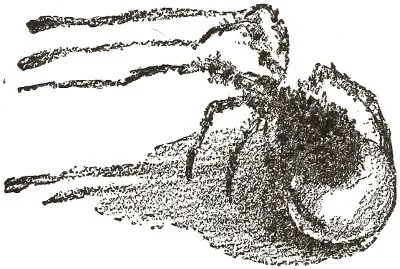
On this floor she weaves a round mat, about the size of a fifty-cent piece and made of superb white silk.このゆかの上に、クモは50セント玉くらいの大きさの丸いしき物をおります。すばらしい白い絹でできています。 She thickens the outer part of it, until it becomes a sort of bowl, surrounded by a wide, flat edge.クモはそのまわりの部分をあつくしていき、とうとう広くて平らなふちにかこまれた、おわんのようなものにします。 Upon this bowl she lays her eggs.このおわんの上に、クモはたまごをうみます。 These she covers with silk.そして、たまごを絹でおおいます。 The result is a pill set in the middle of a circular carpet.こうして、丸いじゅうたんのまん中に、丸薬のような玉がのったものができます。

With her legs she takes up and breaks off one by one the threads that keep the round mat stretched on the coarse floor.クモは、丸いしき物をあらいゆかの上にぴんとはっている糸を、あしで一本ずつ持ち上げては切っていきます。 At the same time, she grips this sheet with her fangs, lifts it by degrees, tears it from its base, and folds it over upon the globe of eggs.同時に、きばでそのしき物をつかみ、少しずつ持ち上げ、ゆかからひきはがして、たまごの玉の上にかぶせるようにおりたたみます。 It is hard work.これはたいへんな仕事です。 The whole thing totters, the floor collapses, heavy with sand.ぜんたいがぐらぐらして、すなで重くなったゆかがくずれます。 The Tarantula, by a movement of her legs, casts these soiled shreds aside.タランチュラはあしを動かして、よごれた切れはしをわきへはらいのけます。 She pulls with her fangs and sweeps with her broom-like legs, till she has pulled away her bag of eggs.クモはきばで引っぱり、ほうきのようなあしではらって、とうとうたまごのふくろを引きはなします。

It is like a white-silk pill, soft and sticky to the touch, as big as an average cherry.それは白い絹の丸薬のようで、さわるとやわらかくてべたべたしていて、ふつうのサクランボくらいの大きさです。 If you look closely, you will notice, running horizontally around the middle, a fold which a needle is able to raise without breaking it.よく見ると、まん中のまわりを横に一周する、ひだがあるのに気づくでしょう。はりで持ち上げても、切れたりしません。 This is the edge of the circular mat, drawn over the lower half of the bag.これは、丸いしき物のふちで、ふくろの下半分にかぶせてあるのです。 The upper half, through which the young Tarantulas will go out, is less well protected: its only wrapper is the silk spun over the eggs immediately after they were laid.上半分は、子グモたちが出ていく所ですが、あまりしっかり守られていません。そのつつみは、たまごをうんだすぐあとに、その上にはった絹だけなのです。

Inside, there is nothing but the eggs: no mattress, no soft eider down, like that of the Banded Spider.中には、たまごしかありません。ナガコガネグモのような、マットレスも、やわらかい羽毛ぶとんもありません。 This Tarantula has no need to guard her eggs against the weather, for the hatching will take place long before the cold weather comes.このタランチュラは、天気からたまごを守る必要がないのです。寒くなるずっと前に、たまごがかえってしまうからです。

The mother has been busy the whole morning over her bag.母グモは、朝のあいだずっと、ふくろづくりにいそがしくしていました。 Now she is tired.今はつかれています。 She embraces her dear pill and remains motionless.大事な玉をだきかかえて、じっと動きません。 I shall see her no more to-day.今日はもう、このクモを見ることはないでしょう。 Next morning I find the Spider carrying her bag of eggs slung behind her.次の朝、クモはたまごのふくろを体のうしろにぶら下げて運んでいます。

For three weeks and more the Tarantula trails the bag of eggs hanging to her spinnerets.3週間以上も、タランチュラは糸いぼにぶら下げたたまごのふくろを引きずって歩きます。 When she comes up from her shaft to lean upon the curb and bask in the sun, when she suddenly retires underground in the face of danger, and when she is roaming the country before settling down, she never lets go her precious bag, though it is a very inconvenient burden in walking, climbing or leaping.たてあなからのぼってきて、かこいによりかかって日なたぼっこをするときも、危険を前にさっと地下へ引っこむときも、すみかを決める前に野原を歩きまわるときも、クモはだいじなふくろを決してはなしません。歩くにも、のぼるにも、とぶにも、とてもじゃまな荷物なのにです。 If, by some accident, it become detached from the fastening to which it is hung, she flings herself madly on her treasure and lovingly embraces it, ready to bite the person who would take it from her.もし何かのはずみで、ふくろがぶら下がっている所からはずれると、クモは死にものぐるいで宝物にとびついて、いとおしそうにだきかかえます。とりあげようとする人がいたら、かみつくかまえです。 She restores the pill to its place with a quick touch of her spinnerets, and strides off, still threatening.クモは糸いぼでさっとさわって玉をもとの場所にもどし、まだいかくしながら大またで去っていきます。

Towards the end of summer, every morning, as soon as the sun is hot, the Tarantulas come up from the bottom of their burrows with their bags and station themselves at the opening.夏の終わりごろになると、毎朝、日ざしが熱くなるとすぐ、タランチュラたちはふくろを持ってあなの底からのぼってきて、入り口にじんどります。 Earlier in the season they have taken long naps on the threshold in the sun in the middle of the day; but now they ascend for a different reason.季節のはじめのころは、昼のさなかに、入り口で日なたぼっこをしながら長いひるねをしていました。でも今は、ちがう理由でのぼってくるのです。 Before, the Tarantula came out into the sun for her own sake.前は、タランチュラは自分のために日なたに出てきていました。 Leaning on the parapet, she had the front half of her body outside the pit and the back half inside.かこいにもたれて、体の前半分をあなの外に、うしろ半分をあなの中に入れていました。 Her eyes took their fill of light; the body remained in the dark.目は光をたっぷりあびていましたが、体は暗い所にありました。 When carrying her egg-bag the Spider reverses her position: the front is in the pit, the rear outside.たまごのふくろを運んでいるときは、クモは向きを反対にします。前があなの中、うしろが外です。 With her hind-legs she holds the white pill, bulging with germs, lifted above the entrance; gently she turns and re-turns it, so as to present every side to the life-giving rays of the sun.あと足で、命のもとがいっぱいにつまってふくらんだ白い玉を、入り口の上に持ち上げ、そっと回しては、また回します。命をあたえる太陽の光に、どの面も当たるようにするためです。 And this goes on for half the day, as long as the temperature is high; and it is repeated daily, with exquisite patience, during three or four weeks.これが、気温が高いあいだ、半日ずっと続きます。そして3、4週間のあいだ、毎日、すばらしいしんぼう強さでくりかえされるのです。 To hatch its eggs, the bird covers them with the quilt of its breast; it strains them to the furnace of its heart.たまごをかえすために、鳥はむねの羽ぶとんでたまごをおおい、心ぞうのぬくもりに、だきよせます。 The Tarantula turns hers in front of the hearth of hearths: she gives them the sun as an incubator.タランチュラは、いちばん大きなだんろの前で、たまごを回します。太陽を、ふ卵器(たまごをあたためる器械)にしているのです。

the Tarantula の挿絵((1919 edition))

THE TARANTULA’S BABIESタランチュラの赤ちゃん

In the early days of September, the young ones, who have been some time hatched, are ready to come out.9月のはじめ、しばらく前にかえっていた子グモたちが、外に出るじゅんびをととのえます。 The pill rips open along the middle fold.玉は、まん中のひだにそってさけます。 We have read of this fold.このひだのことは、前に読みましたね。 Does the mother, feeling the brood quicken inside the satin wrapper, herself break open the vessel at the right moment?母グモが、サテンのつつみの中で子どもたちが動きだすのを感じて、ちょうどよいときに、自分でその入れ物をやぶるのでしょうか? It seems probable.そうらしく思えます。 On the other hand, it may burst of itself, as does the Banded Spider’s balloon, a tough wallet which opens a breach of its own accord, long after the mother has ceased to exist.でもいっぽうで、ナガコガネグモの気球のように、ひとりでにはじけるのかもしれません。あちらは、母グモがいなくなってずっとたってから、ひとりでにさけ目ができる、じょうぶなふくろでした。

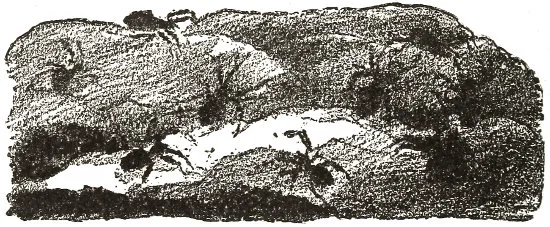
As they come out of the pill, the little Tarantulas, to the number of about a couple of hundred, clamber on the mother Tarantula’s back and there sit motionless, jammed close together, forming a sort of bark of mingled legs and bodies.玉から出てくると、200ぴきほどの子グモたちは、母グモのせなかによじのぼり、ぎっしりとくっつきあって、じっとすわります。あしと体がいりまじって、木の皮のようなものになるのです。 The mother cannot be recognized under this live cloak.この生きたマントの下では、母グモのすがたはわかりません。 When the hatching is over, the wallet is loosened from the spinnerets and cast aside as a worthless rag.子どもたちがかえりおわると、ふくろは糸いぼからはずされて、役に立たないぼろきれのようにすてられます。

The little ones are very good: none stirs, none tries to get more room for himself at his neighbor’s expense.子グモたちはとてもおりこうです。だれもさわがず、となりの子をおしのけて自分の場所を広げようとする子もいません。 What are they doing there, so quietly?こんなにおとなしく、そこで何をしているのでしょう? They allow themselves to be carted about, like the young of the Opossum.オポッサムの赤ちゃんのように、運んでもらっているのです。 Whether she sit in long meditation at the bottom of her den, or come to the opening, in mild weather, to bask in the sun, the Tarantula never throws off her greatcoat of swarming youngsters until the fine season comes.あなの底で長いあいだ考えごとをするようにすわっていても、おだやかな天気の日に日なたぼっこをしに入り口へ出てきても、タランチュラは、よい季節が来るまで、うじゃうじゃした子どもたちのコートを決してぬぎません。

If, in the middle of winter, in January, or February, I happen, out in the fields, to ransack the Spider’s dwelling, after the rain, snow, and frost have battered it and, as a rule, destroyed the curb at the entrance, I always find her at home, still full of vigor, still carrying her family.真冬の1月や2月に、野原でクモのすみかをほりかえしてみると、雨や雪やしもにいためつけられて、たいてい入り口のかこいがこわれてしまっていますが、クモはいつも家にいて、あいかわらず元気いっぱいで、家族をせおっています。 This upbringing of her youngsters on her back lasts five or six months at least, without interruption.せなかの上で子どもを育てるのは、少なくとも5、6か月、休みなく続きます。 The celebrated American carrier, the Opossum, who lets her children go after a few weeks’ carting, cuts a poor figure beside the Tarantula.子どもを数週間運んだだけで手ばなしてしまう、アメリカの有名な子運び名人オポッサムも、タランチュラとくらべるとかないません。

the Tarantula の挿絵((1919 edition))

“Does she help them to regain their place on her back?”「母グモは、子どもたちがせなかの場所にもどるのを手伝うのでしょうか?」

What do the little ones eat on their mother’s spine?子グモたちは、母グモのせなかの上で何を食べているのでしょう? Nothing, so far as I know.わたしの知るかぎり、何も食べていません。 I do not see them grow larger.子グモたちが大きくなるようすは見られません。 I find them, when they finally leave to shift for themselves, just as they were when they left the bag.とうとう自分の力で生きていくために出ていくとき、子グモたちは、ふくろから出たときとまったく同じなのです。

During the bad season, the mother herself eats very little.寒い季節のあいだ、母グモ自身もほとんど食べません。 At long intervals she accepts, in my jars, a belated Locust, whom I have captured, for her benefit, in the sunnier nooks.わたしのびんの中では、ずいぶん長いあいだをおいて、季節おくれのバッタを食べます。それは、わたしが母グモのために、日当たりのよいすみでつかまえてきたものです。 In order to keep herself in condition, as she is when she is dug up in the course of my winter excavations, she must therefore sometimes break her fast and come out in search of prey, without, of course, discarding her live cloak of youngsters.冬にわたしがほりおこしたときのような元気を保つには、母グモもときには絶食をやめて、えものをさがしに出なければならないはずです。もちろん、子どもたちの生きたマントはせおったままです。

The expedition has its dangers.この遠出には危険があります。 The little Spiders may be brushed off by a blade of grass.子グモたちは、草の葉にはらい落とされるかもしれません。 What becomes of them when they have a fall?落ちたら、子グモたちはどうなるのでしょう? Does the mother give them a thought?母グモは、子どもたちのことを気にかけるでしょうか? Does she help them to regain their place on her back?子どもたちがせなかの場所にもどるのを手伝うのでしょうか? Not at all.いいえ、ぜんぜん。 The affection of a Spider’s heart, divided among some hundreds, can spare but a very feeble portion to each.何百ぴきにも分けられたクモの心の愛情は、一ぴき一ぴきには、ほんのわずかしかまわせないのです。 The Tarantula hardly troubles, whether one youngster fall from his place, or six, or all of them.子どもが一ぴき落ちても、六ぴき落ちても、ぜんぶ落ちても、タランチュラはほとんど気にしません。 She waits quietly for the victims of the mishap to get out of their own difficulty, which they do for that matter, and very nimbly.災難にあった子どもたちが自分で困ったことからぬけ出すのを、母グモはしずかに待っています。そして実際、子どもたちは、とてもすばしこくそうするのです。

I sweep the whole family from the back of one of my boarders with a hair-pencil.わたしは毛のふでで、下宿人の一ぴきのせなかから、家族ぜんぶをはらい落としてみます。 Not a sign of emotion, not an attempt at search on the part of the mother.母グモには、心が動いたようすもなければ、さがそうとするそぶりもありません。 After trotting about a little on the sand, the dislodged youngsters find, these here, those there, one or another of the mother’s legs, spread wide in a circle.落とされた子グモたちは、すなの上を少しちょこちょこ走りまわったあと、こちらで、あちらで、輪のように広げた母グモのあしのどれか一本を見つけます。 By means of these climbing-poles they swarm to the top, and soon the group on the mother’s back resumes its original form.このあしを登り棒にして、子グモたちはどんどんのぼっていき、まもなく母グモのせなかの集団はもとの形にもどります。 Not one of the lot is missing.一ぴきも欠けていません。 The Tarantula’s sons know their trade as acrobats to perfection: the mother need not trouble her head about their fall.タランチュラの子どもたちは、曲芸師の仕事をかんぺきに身につけているのです。母グモは、子どもたちが落ちることなど心配する必要がないのです。

the Tarantula の挿絵((1919 edition))

A MEAL OF SUNSHINE日光のごはん

Does the Tarantula at least feed the youngsters who, for seven months, swarm upon her back?では、7か月ものあいだせなかにむらがっている子どもたちに、タランチュラはせめて食べ物をあたえるのでしょうか? Does she invite them to the party when she has captured a prize?ごちそうをつかまえたら、子どもたちをパーティーにまねくのでしょうか? I thought so at first; and I gave special attention to watching the mothers eat.わたしは、はじめはそう思っていました。それで、母グモが食べるところをとくに注意して見ていました。 Usually, the prey is devoured out of sight, in the burrow; but sometimes a meal is taken on the threshold, in the open air.ふつう、えものはあなの中で、見えない所で食べられてしまいます。でも、ときには入り口で、外の空気の中で食事をすることもあります。 Well, I see then that while the mother eats, the youngsters do not budge from their camping ground on her back.さて、そのとき見ていると、母グモが食べているあいだ、子どもたちはせなかのキャンプ場から少しも動きません。 Not one quits its place or gives a sign of wishing to slip down and join in the meal.一ぴきも場所をはなれず、すべりおりて食事にくわわりたいようなそぶりも見せません。 Nor does the mother invite them to come and refresh themselves, or put any left-over food aside for them.母グモのほうも、子どもたちに来て食べなさいとまねくこともなければ、のこりものをとっておいてやることもありません。 She feeds and the others look on, or rather remain indifferent to what is happening.母グモが食べ、ほかのものはそれをながめています。いいえ、むしろ、何が起こっていても知らん顔をしています。 Their perfect quiet during the Tarantula’s feast is a proof that they are not hungry.タランチュラのごちそうのあいだ、子どもたちがまったくおとなしいのは、おなかがすいていないしょうこです。

Then what do they live upon, during their seven months’ upbringing on the mother’s back?では、母グモのせなかで育てられる7か月のあいだ、子どもたちは何を食べて生きているのでしょう? One thinks of their absorbing nourishment from their mother’s skin.母グモの皮ふから栄養をすいとっているのではないか、と考える人もいるでしょう。 We must give up this notion.この考えはすてなければなりません。 Never are they seen to put their mouths to it.子どもたちが、母グモの皮ふに口をつけているところは、一度も見られないのです。 And the Tarantula, far from being exhausted and shriveling, keeps perfectly well and plump; she even puts on flesh.それに、タランチュラは、やつれてしなびるどころか、まったく元気でまるまるとしていて、太ることさえあるのです。

Once more, with what do the little ones keep up their strength?もう一度聞きます。子どもたちは何で体力をたもっているのでしょう? We do not like to suggest that they are still living on the food they received in the egg, especially when we consider that they must use the energy drawn from this food to produce silk, a material of the highest importance, of which a plentiful use will be made presently.子どもたちが、まだたまごの中でもらった栄養で生きているとは、考えにくいのです。とくに、その栄養からとりだした力を使って、糸をつくらなければならないことを考えるとなおさらです。糸は、まもなくたっぷり使われる、とても大事な材料なのです。 There must be other powers at play in the tiny animal’s machinery.この小さな動物のしくみの中では、何か別の力が働いているにちがいありません。

We could understand their not needing anything to eat if they did not move; complete quiet is not life.もし子どもたちが動かないのなら、何も食べなくてよいのもわかります。でも、まったく動かないのは、生きているとは言えません。 But the young Spiders, although usually quiet on their mother’s back, are at all times ready for exercise and for agile swarming.ところが、子グモたちは、ふだんは母グモのせなかでおとなしくしていますが、いつでも運動したり、すばしこくのぼったりする用意ができているのです。 When they fall from the mother’s baby-carriage, they briskly pick themselves up, briskly scramble up a leg and make their way to the top.母グモの「うば車」から落ちると、きびきびと起き上がり、きびきびとあしをよじのぼって、てっぺんまでたどりつきます。 It is a splendidly nimble and spirited performance.それは、見事にすばしこく、元気いっぱいのわざです。 Besides, once seated, they have to keep a firm balance; they have to stretch and stiffen their little limbs in order to hang on to their neighbors.それに、いったんすわっても、しっかりつりあいをとっていなければなりません。となりの子にしがみつくために、小さな手足をのばして、ぴんとはっていなければならないのです。 As a matter of fact, there is no absolute rest for them.じつは、子どもたちには、まったくの休みというものはないのです。

Now physiology teaches us that not a muscle works without using up energy.さて、生理学(体のはたらきを調べる学問)によれば、どんな筋肉も、エネルギーを使わずに働くことはありません。 The animal is like a machine; it must renew its body, which wears out with movement, and it must have something to make heat, which is turned into action.動物は機械のようなものです。動くとすりへる体を新しくしなければなりませんし、動きにかえる熱をつくり出すものももっていなければなりません。 We can compare it with the locomotive-engine.これは、蒸気機関車にたとえることができます。 As the iron horse does its work, it gradually wears out its pistons, its rods, its wheels, its boiler-tubes, all of which have to be made good from time to time.この鉄の馬は、働くうちに、ピストンや、ロッドや、車輪や、ボイラーの管を少しずつすりへらしていきます。それらはみんな、ときどき直さなければなりません。 The foundry-man and the blacksmith repair it, supply it with new parts; it is as if they were giving it food to renew itself.いもの工場の人や、かじ屋さんがそれを修理して、新しい部品をつけてやります。まるで、体を新しくするための食べ物をあたえているようなものです。 But, although it be brand-new, it cannot move until the stoker shovels some coal into its inside and sets fire to it.でも、まっさらの新品であっても、かまたきが石炭をシャベルで中に入れて火をつけるまでは、動くことができません。 This coal is like energy-producing food; it makes the engine work.この石炭は、エネルギーをつくる食べ物のようなものです。機関車を動かすのです。

Things are just the same with the animal.動物の場合も、まったく同じです。 Since nothing is made from nothing, the little new-born animal is made from the food there was in the egg.何もないところからは何も生まれませんから、生まれたばかりの小さな動物は、たまごの中にあった栄養からできています。 This is tissue-forming food which increases the body, up to a certain point, and renews it as it wears away.これは体をつくる食べ物で、ある程度まで体を大きくし、すりへるにつれて体を新しくします。 But it must have heat-food, or energy-food, too.でも、熱をつくる食べ物、つまりエネルギーのもとになる食べ物もなければなりません。 Then the animal will walk, run, jump, swim, fly, or move in any one of a thousand manners.そうすれば、動物は歩いたり、走ったり、とんだり、泳いだり、飛んだり、ほかにも何千ものやり方で動いたりするのです。

To return to the young Spiders: they grow no larger until after they leave their mother.子グモたちの話にもどりましょう。子グモたちは、母グモからはなれるまでは、まったく大きくなりません。 At the age of seven months they are the same as at birth.7か月たっても、生まれたときと同じです。 The egg supplied the food necessary for their tiny frames; and they do not need more tissue-forming food as long as they do not grow.たまごが、小さな体に必要な栄養をあたえてくれました。そして、大きくならないあいだは、それ以上体をつくる食べ物はいらないのです。 This we can understand.これはわかります。 But where do they get the energy-food that makes them able to move about so actively?でも、あんなに活発に動きまわれるエネルギーのもとになる食べ物を、子グモたちはどこから手に入れるのでしょう?

Here is an idea.ここで、ひとつの考えがあります。 What is coal, the energy-food of the locomotive?機関車のエネルギーのもとになる石炭とは、何でしょう? It is the fossil remains of trees which, ages ago, drank the sunlight with their leaves.それは、大むかしに葉で日光を飲んでいた木々が、化石になって残ったものです。 Coal is really stored-up sunlight and the locomotive, devouring it, is devouring sunlight.石炭は、じつは、たくわえられた日光なのです。ですから、石炭を食べる機関車は、日光を食べているのです。

Beasts of flesh and blood act no otherwise.肉と血でできた動物も、同じことをしています。 Whether they eat one another or plants, they always live on the stimulant of the sun’s heat, a heat stored in grass, fruit, seed, and those which feed on such.動物どうしで食べあっても、植物を食べても、いつも太陽の熱という元気のもとで生きているのです。その熱は、草や果物やたね、そしてそれを食べる動物の中にたくわえられています。 The sun, the soul of the universe, is the supreme giver of energy.宇宙のたましいである太陽こそ、エネルギーをあたえる最高のものなのです。

Instead of being served up in food and being digested through the stomach, could not this sun-energy enter the animal directly and charge it with activity, just as the electric battery charges an accumulator with power?この太陽のエネルギーが、食べ物の中にこめられて胃でこなされるのではなく、電池がちく電池(電気をためておく電池)に力をためるように、動物の体にじかに入って、活動する力をみたすことはできないのでしょうか? Why not live on sun, seeing that, after all, we find nothing but sun in the fruits which we eat?わたしたちが食べる果物の中にも、けっきょくは太陽しか見つからないのですから、太陽で生きてもいいのではないでしょうか?

The chemists say they are going to feed us some day on artificial food-stuffs put up in drug-stores.化学者たちは、いつか、薬屋さんで売っている人工の食べ物で、わたしたちをやしなうようになるだろうと言っています。 Perhaps the laboratory and the factory will take the place of the farm.もしかすると、研究室や工場が農場にとってかわるかもしれません。 Why should not physical science do as well?物理学だって、同じくらいのことができてもいいではありませんか? It would leave to the chemist the preparation of tissue-forming food; it would give us energy-food.体をつくる食べ物の用意は化学者にまかせて、物理学はエネルギーのもとになる食べ物をあたえてくれるでしょう。 With the help of some ingenious apparatus, it would pump into us our daily supply of sun-energy, to be later spent in movement, so that we could keep going without eating at all.何かうまい器械を使って、毎日の分の太陽エネルギーをわたしたちの体にポンプでおくりこみ、それをあとで動くのに使うのです。そうすれば、まったく食べなくても動きつづけられるでしょう。 What a delightful world, where one would lunch off a ray of sunshine!ひとすじの日の光でお昼ごはんがすむなんて、なんてすてきな世界でしょう!

Are we dreaming, or will something like this happen some day?わたしたちは夢を見ているのでしょうか、それとも、いつか、こんなことが起こるのでしょうか? It is worth while surely for the scientists to think about it.科学者たちが考えてみるねうちは、きっとあるでしょう。

the Tarantula の挿絵((1919 edition))

THE FLIGHT OF THE BABY TARANTULASタランチュラの赤ちゃんの旅立ち

As the month of March comes to an end, the mother Tarantula is outside her burrow, squatting on the parapet at the entrance.3月が終わりに近づくと、母タランチュラはあなの外に出て、入り口のかこいの上にしゃがんでいます。 It is time for the youngsters to leave her.子どもたちが母親からはなれるときが来たのです。 She lets them do as they please, seeming perfectly indifferent to what is happening.母グモは、子どもたちのすきなようにさせて、何が起こっているのかまったく気にしていないようです。

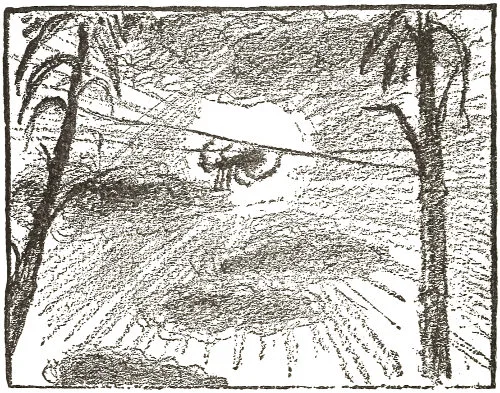
The departure begins during glorious weather, in the hottest hours of the morning.旅立ちは、すばらしい天気の日の、朝のいちばん暑い時間に始まります。 First these, then those, of the little ones, according as they feel themselves soaked with sunshine, leave the mother in batches, run about for a moment on the ground, and then quickly reach the trellis-work of the cage in my laboratory, which they climb with surprising quickness.子グモたちは、こちらのものが、次にあちらのものがと、日光がしみこんだと感じたものから順に、何びきかずつまとまって母グモからはなれ、少しのあいだ地面を走りまわってから、すぐに研究室のおりの格子にたどりつき、おどろくほどの速さでのぼっていきます。 They all make for the heights, though their mother is accustomed to stay on the solid ground.母グモはかたい地面の上にいるのがふつうなのに、子グモたちはみんな高い所をめざすのです。 There is an upright ring at the top of the cage.おりのてっぺんには、たてに立てた輪がついています。 The youngsters hurry to it.子グモたちは、そこへいそいで行きます。 They hang out threads across the opening; they stretch others from the ring to the nearest points of the trellis-work.輪の中をよこぎるように糸をはり、輪から格子のいちばん近い所へも糸をのばします。 On these foot-bridges they perform slack-rope exercises.この橋の上で、子グモたちはつなわたりの練習をします。 The tiny legs open out from time to time as though to reach the most distant points.小さなあしが、ときどき、いちばん遠い所までとどこうとするように広がります。 I begin to realize that they wish to go higher.わたしは、子グモたちがもっと高く行きたいのだとわかりはじめます。

I top the trellis with a branch as high again.そこで、格子の上に、同じくらいの高さの枝をのせます。 The little Spiders hastily scramble up it, reach the tip of the topmost twigs and from there send out threads that fasten themselves to every surrounding object.子グモたちは大いそぎでそれをのぼり、いちばん上の小枝の先までたどりつくと、そこから糸を出して、まわりのあらゆるものにくっつけます。 These are suspension-bridges; and my beasties nimbly run along them, incessantly passing to and fro.これはつり橋です。わたしのちびっこたちは、その上をすばしこく走って、ひっきりなしに行ったり来たりします。 They seem to wish to climb still higher.子グモたちは、まだもっと高くのぼりたいようです。

I take a nine-foot reed, with tiny branches spreading right up to the top, and place it above the cage.わたしは、てっぺんまで小枝がのびている9フィート(約2.7メートル)のアシをもってきて、おりの上に立てます。 The little Tarantulas clamber to the very summit.子グモたちは、てっぺんまでよじのぼります。 Here they send out longer threads, which are left to float, and which again form bridges when their loose ends touch some object.ここで子グモたちはもっと長い糸を出します。その糸はただようままにされ、ゆるい先が何かにふれると、また橋になります。 The rope-dancers embark upon them and form garlands which the least breath of air swings daintily.つなわたりの名人たちは、その上に乗り出して、花かざりのようにつらなります。それが、ほんのかすかな風にも、ゆらゆらとゆれるのです。 One cannot see the threads at all unless they come between the eyes and the sun; the Spiders look as if they were dancing in the air.糸は、目と太陽のあいだにこないかぎり、まったく見えません。ですから、クモたちは空中でおどっているように見えます。

Then, suddenly, shaken by the air-currents, the delicate mooring breaks and flies through space.そのうち、とつぜん、空気の流れにゆすられて、細いもやいづなが切れ、空へ飛んでいきます。 Behold the little Spiders fly off and away, hanging to their threads!ほら、小さなクモたちが、糸にぶら下がって、遠くへ飛んでいきます! If the wind be favorable, they can land at great distances.風がよければ、とても遠くまで行って着地することができます。

The bands of little Spiders keep on leaving thus for a week or two, if the weather is fine.天気がよければ、子グモたちの集団は、こうして1、2週間、出発しつづけます。 On cloudy days, none dreams of going.くもりの日には、だれも出発しようとは思いません。 The travelers need the kisses of the sun, which give them energy and vigor.旅人たちには、太陽のキスが必要なのです。太陽が、子グモたちに力と元気をあたえてくれるからです。

At last, the whole family has disappeared, carried afar by its flying-ropes.とうとう家族はみんな、空飛ぶつなに運ばれて遠くへ行ってしまいました。 The mother is alone.母グモはひとりきりです。 The loss of her children hardly seems to distress her.子どもたちがいなくなっても、母グモはほとんど悲しんでいないようです。 She goes on with her hunting with greater energy, now that she is not hampered with her coat of little ones.子どもたちのコートがなくなって身軽になったので、前よりももっと元気にかりりを続けます。 She will have other families, become a grandmother and a great-grandmother, for the Tarantulas live several years.母グモはまたほかの家族をもち、おばあさんにも、ひいおばあさんにもなるでしょう。タランチュラは何年も生きるのです。

In this species of Tarantula, as we have seen, a sudden instinct arises in the young ones, to disappear, as promptly and forever, a few hours later.見てきたように、この種類のタランチュラでは、子どもたちに、とつぜん、ある本能があらわれます。そして、その本能は、ほんの数時間後には、あらわれたときと同じくらいすばやく、永久に消えてしまうのです。 This is the climbing-instinct, which is unknown to the older Tarantula and soon forgotten by the young ones, who alight upon the ground and wander there for many a long day before they begin to build their burrows.それは「のぼる本能」です。おとなのタランチュラはそんな本能を知りませんし、子どもたちも、地面におりたつとすぐにわすれてしまいます。子どもたちは、あなをつくりはじめるまで、長い日々、地面を歩きまわるのです。 Neither of them dreams of climbing to the top of a grass-stalk.おとなも子どもも、草のくきのてっぺんにのぼろうなどとは夢にも思いません。 Yet here we have the young Tarantula, wishing to leave her mother and to travel far away by the easiest and swiftest methods, suddenly becoming an enthusiastic climber.ところが、ここに、母親からはなれて、いちばんかんたんで速い方法で遠くへ旅したいと思っている若いタランチュラがいて、とつぜん、熱心なのぼり手になるのです。 We know her object.わたしたちは、そのねらいを知っています。 From on high, finding a wide space beneath her, she sends a thread floating.高い所から、下に広い空間があるのを見つけると、クモは糸をただよわせます。 It is caught by the wind, and carries her hanging to it.糸は風にとらえられ、ぶら下がったクモを運んでいきます。 We have our aeroplanes; she too possesses her flying-machine.わたしたちには飛行機があります。このクモも、自分の飛行機をもっているのです。 She makes it in her hour of need, and when the journey is finished thinks no more about it.クモは必要なときにそれをつくり、旅が終わると、もうそれのことなど考えないのです。

the Tarantula の挿絵((1919 edition))

さいごまで よめたね!

「よめた!」をおすと、スタンプがもらえて おはなしの森 に木や動物がふえるよ。

PDFで印刷(A4 30まい)

おうちの方・大人の学習者へ
ここでの「タランチュラ」は南ヨーロッパのコモリグモのなかまで、人がかまれても命の心配はほとんどありません。子グモが食べずに動ける力は、太陽からではなく、たまごからもらった栄養をたくわえているからだと今は考えられています。

出典台帳 — このページの「本物」の証明

英文
原文そのまま(1語も書きかえていません)。Project Gutenberg 電子書籍 #45812(J. Henri Fabre (adapted by Louise Seymour Hasbrouck)、1919年の本)
挿絵
(1919 edition)(同じ本の初版の挿絵。パブリックドメイン)
朗読
Devorah Allen(LibriVox のボランティア。Insect Adventures「The Tarantula」)。録音はパブリックドメインで、元のファイルをそのまま使っています(音質を落とす加工なし)。
照合
朗読を音声認識(Whisper)で文字起こしし、原文と1語ずつ照らし合わせました。一致率 97.1%
文が光るタイミングはこの照合で決めています。
和訳
和訳はAIと人が作成。AIは3重チェック。人の目でも順次確認しています。英文には一切手を入れていません。