原田英語の多読ベストジュニア このサイトについてはじめて

the Pine Caterpillar

マツノギョウレツケムシ
★★★★★37分5201語朗読 realisticspeakers原文そのまま一致率 96.3%

マツの木にすむ行列毛虫は、絹の糸をたどって一列に進み、みんなで巣をつくります。ファーブルのゆかいな「ぐるぐる行列」の実験も。

PDFで印刷(A4 29まい)

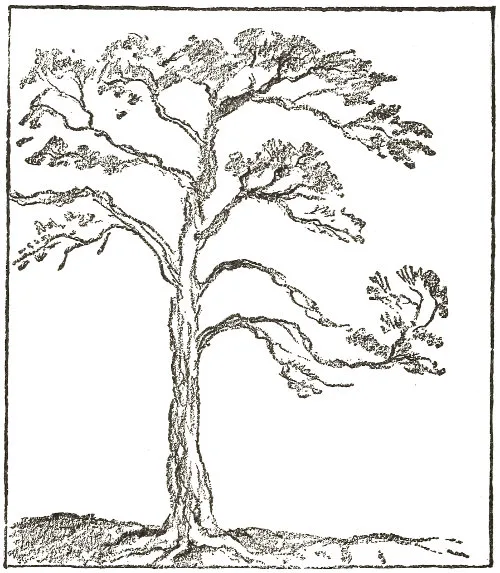
In my piece of waste ground stand some pine-trees.私の荒れ地には、マツの木が何本か立っています。 Every year the Caterpillar takes possession of them and spins his great purses in their branches.毎年、毛虫がその木を自分のものにして、枝に大きなさいふのような巣をつむぎます。 To protect the pine-needles, which are horribly eaten, I have to destroy the nests each winter with a long forked stick.ひどく食べられてしまう松葉を守るため、私は毎年冬になると、先がふたまたになった長い棒で巣をこわさなければなりません。

You hungry little Caterpillars, if I let you have your way, I should soon be robbed of the murmur of my once so leafy pines.おなかをすかせた小さな毛虫くんたち、きみたちの好きにさせておいたら、かつては葉がよくしげっていた私のマツのざわめきは、すぐに聞けなくなってしまうでしょう。 But I am going to make a compact with you.でも、きみたちと約束をしようと思います。 You have a story to tell.きみたちには、聞かせてくれるお話がありますね。 Tell it to me; and for a year, for two years or longer, until I know more or less about it, I will leave you undisturbed.それを私に話しておくれ。そうしたら1年、2年、あるいはもっと長く、だいたいのことがわかるまで、きみたちをそっとしておいてあげましょう。

The result of my compact with the Caterpillars is that I soon have some thirty nests within a few steps of my door.毛虫たちとこの約束をしたおかげで、まもなく家の戸口から数歩の所に、30ほどの巣ができました。 With such treasures daily before my eyes, I cannot help seeing the Pine Caterpillar’s story unfolded at full length.こんな宝物を毎日目の前にしていれば、マツの毛虫の一生のお話を、すみからすみまで見ないわけにはいきません。 These Caterpillars are also called the Processionaries, because they always go abroad in a procession, one following closely after the other.この毛虫は「行列毛虫」ともよばれます。出かけるときはいつも、一ぴきがもう一ぴきのすぐあとについて、行列をつくって進むからです。

the Pine Caterpillar の挿絵((1919 edition))

First of all, the egg.まずは、卵からです。 During the first half of August, if we look at the lower branches of the pines, we shall discover, here and there on the foliage, certain little whitish cylinders spotting the dark green.8月の前半にマツの下のほうの枝を見ると、葉のあちこちに、こい緑の中に白っぽい小さなつつのようなものが点々とついているのが見つかります。 These are the Pine Moth’s eggs; each cylinder is the cluster laid by one mother.これがマツノギョウレツガの卵です。つつ一つ一つが、一ぴきの母親の産んだ卵のかたまりです。 The cylinder is like a tiny muff about an inch long and a fifth or sixth of an inch wide, wrapped around the base of the pine-needles, which are grouped in twos.つつは、長さ2.5センチほど、太さ4〜5ミリほどの小さなマフ(手をあたためるつつ)のようで、2本ずつ組になった松葉のつけねにまきついています。 This muff has a silky appearance and is white slightly tinted with russet.このマフは絹のようなつやがあり、白にほんのり赤茶色がかっています。 It is covered with scales that overlap like the tiles on a roof.屋根のかわらのように重なり合ったうろこでおおわれています。 The whole thing resembles somewhat a walnut-catkin that is not yet full-grown.全体は、まだ育ちきっていないクルミの花のふさに少しにています。

The scales, soft as velvet to the touch and carefully laid one upon the other, form a roof that protects the eggs.さわるとビロードのようにやわらかなうろこが、ていねいに重ねられて、卵を守る屋根になっているのです。 Not a drop of rain or dew can penetrate.雨や夜つゆが一てきも中にしみこみません。 Where did this soft covering come from?このやわらかいおおいは、どこから来たのでしょう。 From the mother Moth; she has stripped a part of her body for her children.母ガからです。母ガは、子どもたちのために自分の体の一部をはいだのです。 Like the Eider-duck, she has made a warm overcoat for her eggs out of her own down.ケワタガモのように、自分の羽毛で卵のためのあたたかいコートをつくったのです。

If one removes the scaly fleece with pincers the eggs appear, looking like little white-enamel beads.ピンセットでうろこの毛皮を取りのぞくと、卵があらわれます。白いエナメルの小さなビーズのようです。 There are about three hundred of them in one cylinder.一つのつつに、だいたい300個も入っています。 Quite a family for one mother!母親一ぴきにしては、大家族ですね! They are beautifully placed, and remind one of a tiny cob of Indian corn.たまごは美しくならんでいて、小さなトウモロコシのほを思い出させます。 Nobody, young or old, learned or ignorant, could help exclaiming, on seeing the Pine Moth’s pretty little spike,マツノギョウレツガのかわいい小さなふさを見たら、子どもでも大人でも、学者でもそうでない人でも、だれもが思わずさけばずにはいられないでしょう。

“How handsome!”「なんてきれいなんだろう!」

And what will strike us most will be not the beautiful enamel pearls, but the way in which they are put together with such geometrical regularity.そしていちばん心をうたれるのは、美しいエナメルの真じゅそのものではなく、それが図形のように規則正しく、きっちりと並べられていることでしょう。 Is it not strange that a tiny Moth should follow the laws of order?小さなガが、きちんとした決まりに従うなんて、ふしぎではありませんか。 But the more we study nature, the more we realize that there is order everywhere.けれども、自然を調べれば調べるほど、どこにでも決まり(ちつじょ)があることがわかってきます。 It is the beauty of the universe, the same under every sun, whether the suns be single or many, white or red, blue or yellow.それは宇宙の美しさで、どの太陽の下でも同じです。その太陽が一つでもたくさんでも、白くても赤くても、青くても黄色くても。 Why all this regularity in the curve of the petals of a flower, why all this elegance in the chasings on a Beetle’s wing-cases?なぜ花びらの曲線はこんなに規則正しいのでしょう。なぜ甲虫のかたい羽(前ばね)のもようはこんなに上品なのでしょう。 Is that infinite grace, even in the tiniest details, the result of brutal, uncontrolled forces?ごく小さなところにまで見られるこのかぎりない美しさは、らんぼうで、でたらめな力から生まれたものなのでしょうか。 It seems hardly likely.そうとは、とても思えません。 Is there not Some One back of it all, Some One who is a supreme lover of beauty?すべての後ろに、だれかがいるのではないでしょうか。美しいものを何よりも愛するだれかが。 That would explain everything.そう考えれば、すべて説明がつきます。

These are very deep thoughts about a group of Moth-eggs that will bear a crop of Caterpillars.毛虫が生まれてくるガの卵のかたまりについて考えるにしては、ずいぶん深い考えですね。 It cannot be helped.でも、しかたがありません。 The minute we begin to investigate the tiniest things in nature, we have to begin asking “Why?”自然の中のいちばん小さなものを調べはじめたとたん、私たちは「なぜ?」と問いかけずにはいられなくなるのです。 And science cannot answer us.そして、科学はそれに答えてくれません。 That is the strange part of it.そこがふしぎなところなのです。

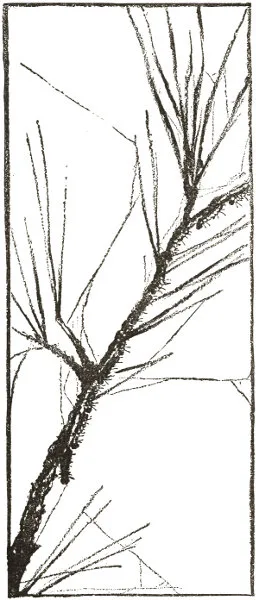
The Pine Moth’s eggs hatch in September.マツノギョウレツガの卵は9月にかえります。 If one lifts the scales of the little muff, one can see black heads appear, which nibble and push back their coverings.小さなマフのうろこを持ち上げてみると、黒い頭があらわれて、おおいをかじっておしのけるのが見えます。 The tiny creatures come out slowly all over the surface.小さな生き物たちは、表面のあちこちから、ゆっくりと出てきます。 They are pale yellow, with a black head twice as large as their body.体はうすい黄色で、黒い頭は体の2倍もの大きさです。 The first thing they do is to eat the pine-needles on which their nest was placed; then they fall to on the near-by needles.まず最初にするのは、巣がついていた松葉を食べることです。それから近くの松葉にとりかかります。

From time to time, three or four who have eaten as much as they want fall into line and walk in step in a little procession.ときどき、おなかいっぱい食べた三、四ひきが一列に並んで、足なみをそろえて小さな行列をつくって歩きます。 This is practice for the coming processions.これは、これからの行列のための練習です。 If I disturb them, they sway the front half of their bodies and wag their heads.私がじゃまをすると、体の前半分をゆらし、頭をふります。

the Pine Caterpillar の挿絵((1919 edition))

“When winter is near they will build a stronger tent.”「冬が近づくと、もっとじょうぶなテントをつくります。」

The next thing they do is to spin a little tent at the place where their nest was.次にするのは、巣のあった場所に小さなテントをつむぐことです。 The tent is a small ball made of gauze, supported on some leaves.テントは、何まいかの葉にささえられた、ガーゼでできた小さなボールです。 Inside it the Caterpillars take a rest during the hottest part of the day.毛虫たちは、一日のいちばん暑いあいだ、その中で休みます。 In the afternoon they leave this shelter and start feeding again.午後になるとこの家を出て、また食べはじめます。

In less than an hour, you see, after coming from the egg, the young Caterpillar shows what he can do.ほら、卵から出て1時間もたたないうちに、幼い毛虫は自分にできることを見せてくれるのです。 He eats leaves, he forms processions, and he spins tents.葉を食べ、行列をつくり、テントをつむぐのです。

In twenty-four hours the little tent has become as large as a hazel-nut, and in two weeks it is the size of an apple.24時間で、小さなテントはヘーゼルナッツほどの大きさになり、2週間でリンゴくらいの大きさになります。 But it is still only a temporary summer tent.けれども、これはまだ、夏のあいだだけのかりのテントです。 When winter is near, they will build a stronger one.冬が近づくと、もっとじょうぶなテントをつくります。 In the meantime, the Caterpillars eat the leaves around which their tent is stretched.そのあいだ、毛虫たちはテントが張られているまわりの葉を食べます。 Their house gives them at the same time board and lodging.家が、住まいと食事を同時にあたえてくれるのです。 This is a good arrangement, because it saves them from going out, and they are so young and so tiny that it is dangerous for them to go out yet awhile.これはうまいしくみです。外に出なくてすむからです。毛虫たちはまだとても幼くて小さいので、しばらくは外に出るとあぶないのです。

When this tent gives way, owing to the Caterpillars having nibbled the leaves supporting it, the family moves on, like the Arabs, and erects a new tent higher up on the pine-tree.毛虫たちがテントをささえている葉をかじってしまってテントがくずれると、一家はアラブの遊牧民のように引っこして、マツの木のもっと高い所に新しいテントを張ります。 Sometimes they reach the very top of the tree.ときには木のてっぺんまで行きつきます。

In the meantime the Caterpillars have changed their dress.そのあいだに、毛虫たちは服を着がえています。 They now wear six little bright red patches on their backs, surrounded with scarlet bristles.今では背中に、真っ赤な毛にかこまれた明るい赤のもようを六つつけています。 In the midst of these red patches are specks of gold.その赤いもようのまん中には、金色の点があります。 The hairs on their sides and underneath are whitish.わき腹とおなかの毛は白っぽい色です。

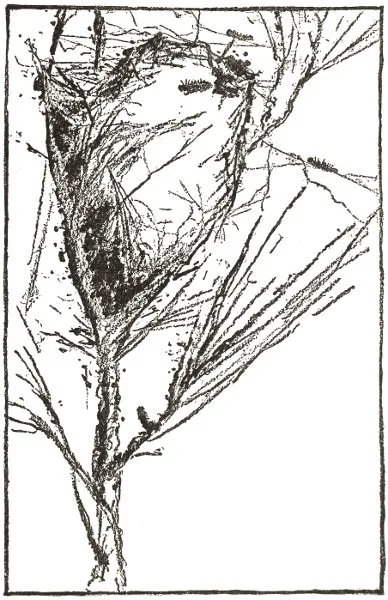
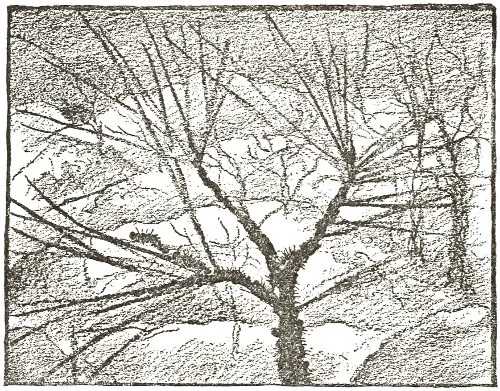
In November they begin to build their winter tent high up in the pine at the tip of a bough.11月になると、マツの高い所、枝の先に冬のテントをつくりはじめます。 They surround the leaves at the end of the bough with a network of silk.枝の先の葉を、絹のあみでつつみこむのです。 Leaves and silk together are stronger than silk alone.葉と絹をいっしょにしたほうが、絹だけよりもじょうぶです。 By the time it is finished it is as large as a half-gallon measure and about the shape of an egg, with a sheath over the supporting branch.できあがるころには、2リットル入りのますくらいの大きさになり、だいたい卵の形をしていて、ささえの枝にはさやのようなおおいがかぶさっています。 In the center of the nest is a milk-white mass of thickly-woven threads mingled with green leaves.巣のまん中には、びっしりと編まれた糸が緑の葉とまじり合った、ミルクのように白いかたまりがあります。 At the top are round openings, the doors of the house, through which the Caterpillars go in and out.てっぺんにはまるい穴があいています。これが家の戸口で、毛虫たちはそこから出入りします。 There is a sort of veranda on top made of threads stretched from the tips of the leaves projecting from the dome, where the Caterpillars come and doze in the sun, heaped one upon the other, with rounded backs.上には、ドームからつき出た葉の先から糸を張ってつくったベランダのようなものがあります。毛虫たちはそこへ出てきて、背中をまるめ、重なり合って日なたでうとうとします。 The threads above are an awning, to keep the sun from being too warm for them.上に張った糸は日よけで、日ざしが毛虫たちに暑くなりすぎないようにしています。

The inside of the Caterpillars’ nest is not at all a tidy place; it is full of rags, shreds of the Caterpillars’ skins, and dirt.毛虫の巣の中は、ちっともきれいではありません。ぼろくずや、毛虫のぬけがらのかけら、ごみでいっぱいです。

The Caterpillars stay in their nest all night, and come out about ten o’clock in the morning to take the sun on their terrace or veranda.毛虫たちは夜のあいだずっと巣の中にいて、朝の10時ごろにテラス、つまりベランダに出てきて日なたぼっこをします。 They spend the whole day there, dozing.一日じゅう、そこでうとうとして過ごします。 Motionless, heaped together, they steep themselves deliciously in warmth and from time to time show their bliss by nodding and wagging their heads.じっと動かず、ひとかたまりになって、あたたかさに気持ちよくひたり、ときどき頭をこくりこくりとふって、しあわせな気分をあらわします。 At six or seven o’clock, when it grows dark, the sleepers awake, bestir themselves, and go their several ways over the surface of the nest.6時か7時、あたりが暗くなると、ねむっていた毛虫たちは目をさまして動きだし、それぞれ巣の表面を思い思いに進んでいきます。

the Pine Caterpillar の挿絵((1919 edition))

Wherever they go, they strengthen the nest or enlarge it by the threads of silk that come out of their mouths and trail behind them.どこへ行っても、口から出て後ろに引いていく絹の糸で、巣をじょうぶにしたり大きくしたりします。 More green leaves are taken in, and the tent becomes bigger and bigger.緑の葉がさらに取りこまれて、テントはどんどん大きくなっていきます。 They are busy doing this for an hour or two every evening.毛虫たちは毎晩1、2時間、この仕事にいそがしくはげみます。 So far, they have known nothing but summer; but they seem to realize that winter is coming.今まで夏しか知らないのに、冬が来ることがわかっているようです。 They work away at their house with an ardor that seems to say:まるでこう言っているかのような熱心さで、家づくりにはげみます。

“Oh, how nice and warm we shall be in our beds here, nestling one against the other, when the pine-tree swings aloft its frosted candelabra!「ああ、マツの木が、しもでこおった枝をシャンデリアのように高くゆらすころ、ここでみんなでよりそってベッドに入ったら、どんなにあたたかくて気持ちがいいだろう! Let us work with a will!”さあ、心をこめて働こう!」

Yes, Caterpillars, my friends, let us work with a will, great and small, men and grubs alike, so that we may fall asleep peacefully; you with the torpor that makes way for your transformation into Moths, we with that last sleep which breaks off life only to renew it.そうだね、毛虫くんたち、私の友だちよ、心をこめて働こう。大きいものも小さいものも、人間も虫も同じように。安らかにねむれるように。きみたちは、ガに生まれかわるための深いねむりにつき、私たちは、命をいったん終わらせて、また新しくするための最後のねむりにつくのです。 Let us work!さあ、働こう!

After the day’s work comes their dinner.一日の仕事が終わると、夕ごはんです。 The Caterpillars come down from the nest and begin on the pine-needles below.毛虫たちは巣からおりてきて、下の松葉を食べはじめます。 It is a magnificent sight to see the red-coated band lined up in twos and threes on each needle and in ranks so closely formed that the green sprigs of the branch bend under the load.赤い服の一団が、松葉1本に二、三びきずつ並び、すきまなく列をつくるので、緑の小枝がその重みでしなるほどです。それはすばらしいながめです。 The diners, all motionless, all poking their heads forward, nibble in silence, placidly.食事をする毛虫たちはみんなじっと動かず、みんな頭を前につき出して、だまって静かにかじっています。 Their broad black foreheads gleam in the rays of my lantern.広い黒いおでこが、私のランタンの光にてらされてかがやきます。 They eat far into the night.夜おそくまで食べ続けます。 Then they go back to the nest, where, for a little longer, they continue spinning on the surface.それから巣にもどり、もうしばらく表面で糸をつむぎ続けます。 It is one or two o’clock in the morning when the last of the band goes indoors.最後の一ぴきが家に入るのは、夜中の1時か2時です。

The Pine Caterpillars eat only three kinds of pine: the Scotch pine, the maritime pine, and the Aleppo pine; never the leaves of the other cone-bearing trees, with one exception.マツノギョウレツケムシが食べるのは、ヨーロッパアカマツ、カイガンショウ、アレッポマツの3種類のマツだけです。ほかの、まつかさのような実をつける木(針葉樹)の葉は、一つをのぞいて決して食べません。 In vain I offer them other foliage from the evergreens in my yard: the spruce, the yew, the juniper, the cypress.庭にある、ほかの一年じゅう緑の木の葉、トウヒやイチイ、ネズ、イトスギをあげてみても、むだです。 What!なんだって! Am I asking them, the Pine Caterpillars, to bite into that?わたしは、マツノギョウレツケムシたちに、そんなものをかじれと言っているのでしょうか? They will take good care not to, in spite of the tempting resinous smell!やにのいいにおいがして食欲をそそっても、決して口にしようとはしません! They would die of hunger rather than touch it!そんなものにさわるくらいなら、うえ死にしたほうがましだというのです! One cone-bearing tree and one only is excepted: the cedar.たった一つだけ、例外の針葉樹があります。シーダー(ヒマラヤスギのなかま)です。 They will eat the leaves of that.その葉なら食べるのです。 Why the cedar and not the others?なぜシーダーは食べて、ほかの木は食べないのでしょう。 I do not know.私にはわかりません。 The Caterpillar’s stomach is as particular as ours, and has its secrets.毛虫のおなかも、私たちのおなかと同じくらい好ききらいがあって、ひみつを持っているのです。

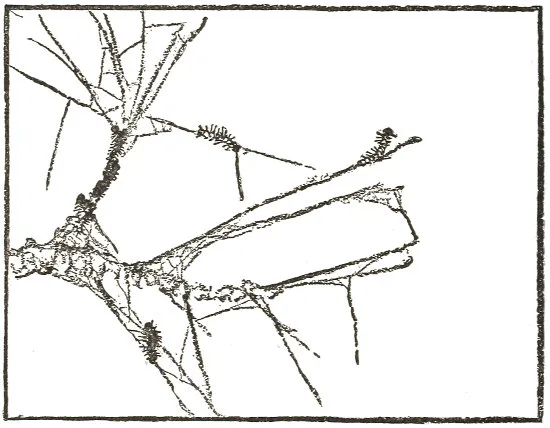
To guide them as they wander about their tree, the Caterpillars have their silk ribbon, formed by threads from their mouths.木の上を歩き回るときの道しるべとして、毛虫たちは口から出す糸でつくった絹のリボンを持っています。 They follow this on their return.帰りには、これをたどって帰ります。 Sometimes they miss it and strike the ribbon made by another band of Caterpillars.ときにはそれを見うしなって、別の毛虫の一団がつくったリボンにぶつかります。 They follow it and reach a strange dwelling.それをたどっていくと、よその家に着いてしまいます。 No matter!かまいません! There is not the least quarreling between the owners and the new arrivals.家の持ち主と、新しくやってきたものたちのあいだに、けんかはまったく起こりません。 Both go on browsing peacefully, as though nothing had happened.どちらも、何事もなかったかのように、のんびりと葉を食べ続けます。 And all without hesitation, when bedtime comes, make for the nest, like brothers who have always lived together; all do some spinning before going to rest, thicken the blanket a little, and are then swallowed up in the same dormitory.そしてねる時間になると、みんなまよわずに巣に向かいます。ずっといっしょに暮らしてきた兄弟のように。みんなねる前に少し糸をつむいで毛布を少し厚くし、同じねむり部屋に入っていくのです。 By accidents like these some nests grow to be very large.こうしたできごとから、とても大きくなる巣もあります。 Each for all and all for each.一人はみんなのために、みんなは一人のために。 So says the Processionary, who every evening spends his little capital of silk on enlarging a shelter that is often new to him.行列毛虫はそう言って、毎晩、絹という自分の少しばかりの財産を使って、ときには自分にとって初めての住まいを大きくするのです。 What would he do with his puny skein, if alone?一ぴきだけだったら、そのわずかな糸のたばで何ができるでしょう。 Hardly anything.ほとんど何もできません。 But there are hundreds and hundreds of them in the spinning-mill; and the result of their tiny contributions is a stuff belonging to all, a thick blanket splendidly warm in winter.でも、この糸つむぎ工場には何百、何百という毛虫がいます。そして一ぴき一ぴきのわずかな出し合いから、みんなのものになる布、冬にすばらしくあたたかい厚い毛布ができあがるのです。 In working for himself, each works for the others; and the others work for him.自分のために働くことが、ほかのみんなのために働くことになり、ほかのみんなも自分のために働いてくれるのです。 Lucky Caterpillars that know nothing of property, the cause of strife!争いのもとになる「自分のもの」というものを知らない、しあわせな毛虫たちよ!

THE PROCESSIONARIES行列毛虫

There is an old story about a Ram which was thrown into the water from on board ship, whereupon all the sheep leaped into the sea one after the other; “for,” says the teller of the story, “it is the nature of the sheep always to follow the first, wheresoever it goes; which makes Aristotle mark them for the most silly and foolish animals in the world.”船の上からオスのヒツジを一頭海に投げこんだら、ほかのヒツジもみんな次々と海へとびこんだ、という昔話があります。話し手はこう言っています。「なぜなら、ヒツジというものは、先頭のヒツジがどこへ行こうと、いつもついていく性質があるからだ。だからアリストテレスは、ヒツジを世界でいちばんおろかな動物だと書いたのだ。」

The Pine Caterpillars are even more sheeplike than sheep.マツノギョウレツケムシは、ヒツジ以上にヒツジらしいのです。 Where the first goes all the others go, in a regular string, with not an empty space between them.先頭が行く所へは、ほかのみんなもついていきます。きちんと一列になって、あいだに少しのすきまもありません。

They proceed in single file, each touching with its head the rear of the one in front of it.一列になって進み、それぞれが前の毛虫のおしりに頭をつけています。 No matter how the one in front twists and turns, the whole procession does the same.先頭がどんなにくねくね曲がっても、行列全体が同じように曲がります。 Another odd thing: they are all, you might say, tight-rope walkers; they all follow a silken rail.もう一つおもしろいのは、みんないわばつなわたりの名人だということです。みんな絹のレールをたどっていくのです。 The leading Caterpillar dribbles his thread on the path he makes, the second Caterpillar steps on it and doubles it with his thread; and all the others add their rope, so that after the procession has passed, there is left a narrow white ribbon whose dazzling whiteness shimmers in the sun.先頭の毛虫は自分の通る道に糸をたらしていき、2番目の毛虫がその上をふんで自分の糸を重ねます。ほかのみんなも自分の糸を足していくので、行列が通ったあとには細い白いリボンが残り、そのまぶしい白さが日の光にきらきらかがやきます。 This is a sumptuous manner of road-making: we sprinkle our roads with broken stones and level them by the pressure of a heavy steam-roller; they lay over their paths a soft satin rail!なんとぜいたくな道路づくりでしょう。私たちは道に、くだいた石をまいて重いスチームローラーでおして平らにします。毛虫たちは道に、やわらかいサテンのレールをしくのです!

the Pine Caterpillar の挿絵((1919 edition))

“They Proceed in Single File.”「一列になって進む」

What is the use of all this luxury?このぜいたくは、何の役に立つのでしょう。 Could they not, like other Caterpillars, walk about without these costly preparations?ほかの毛虫のように、こんなに手間のかかる用意をしないで歩き回ることはできないのでしょうか。 I see two reasons.私には理由が二つ思いうかびます。 It is night when the Processionaries go forth to feed, and they follow a very winding route.行列毛虫が食事に出かけるのは夜で、とても曲がりくねった道を通ります。 They go down one branch, up another, from the needle to the twig, from the twig to the branch, and so on.ある枝をおり、別の枝をのぼり、松葉から小枝へ、小枝から枝へ、というように進みます。 When it is time to go home, they would have hard work to find their way if it were not for the silken thread they leave behind them.家に帰る時間になったとき、後ろに残してきた絹の糸がなかったら、帰り道を見つけるのはたいへんでしょう。 It reminds one of the story of Theseus (in the “Tanglewood Tales,” or the old mythologies), who would have been lost in the Cretan labyrinth if it had not been for the clue of thread which Ariadne gave him.それは、テセウスのお話(『タングルウッド物語』や昔の神話にあります)を思い出させます。テセウスは、アリアドネがくれた糸玉がなかったら、クレタ島の迷宮で迷子になってしまったことでしょう。

Sometimes, too, they take longer expeditions by day, marching in procession for thirty yards or so.ときには、昼間にもっと遠くまで出かけて、30メートル近くも行列で行進することもあります。 They are not looking for food; they are off on a trip, seeing the world, perhaps looking for a place to bury themselves later on, in the second stage before they become Moths.食べ物をさがしているのではありません。旅に出て世の中を見ているのです。もしかすると、ガになる前の第二の時期のために、あとで土にもぐる場所をさがしているのかもしれません。 In a walk of this distance, the guiding-thread is very necessary.これだけの道のりを歩くには、道しるべの糸がとても大切です。

The guiding-thread, too, brings them all back home to the nest when they are separated, hunting for food in the pine-tree.道しるべの糸は、マツの木の中で食べ物をさがしてばらばらになったときにも、みんなを巣へ連れもどしてくれます。 They pick up their threads, and come hurrying from a host of twigs, from here, from there, from above, from below, back to the group.毛虫たちは自分の糸を見つけて、たくさんの小枝から、こちらから、あちらから、上から、下から、急いで群れのところへもどってきます。 So the silk is more than a road: it is a social bond that keeps all the members of the community united.ですから絹は、ただの道以上のものです。なかまのみんなを一つに結びつけておく、きずななのです。

At the head of every procession, long or short, goes the first Caterpillar, the leader.長い行列にも短い行列にも、先頭には最初の毛虫、つまりリーダーがいます。 He is leader only by chance; everything depends upon the order in which they happen to line up.リーダーになったのはたまたまです。すべては、どんな順番で並んだかによって決まります。 If the file should break up, for some reason, and form again, some other Caterpillar might have first rank.何かのわけで列がくずれて、また並びなおせば、ほかの毛虫が先頭になるかもしれません。 But the leader’s temporary duties give him airs of his own.けれども、一時的とはいえリーダーの役目があると、えらそうなそぶりも出てきます。 While the others follow passively in a close file, he, the captain, tosses himself about and flings the front of his body hither and thither.ほかの毛虫たちがぴったり列をつくっておとなしくついてくるあいだ、隊長は体をゆさぶり、体の前のほうをあちこちにふり回します。 As he marches ahead he seems to be seeking his way.先頭を進みながら、道をさがしているように見えます。 Does he really explore the country?本当にあたりを調べているのでしょうか。 Does he choose the best places?いちばんよい場所をえらんでいるのでしょうか。 Or are his hesitations only the result of the absence of the guiding-thread the rest follow?それとも、ほかのみんながたどる道しるべの糸がないから、まよっているだけなのでしょうか。 Why cannot I read what passes under his black, shiny skull, so like a drop of tar?タールのしずくのような、黒くてつやつやした頭の中で何が起きているのか、なぜ私には読みとれないのでしょう。 To judge by actions, he has sense enough to recognize very rough places, over-slippery surfaces, dusty places, and, above all, the threads left by other Caterpillars.行動から判断すると、リーダーには、とてもでこぼこした所、すべりすぎる所、ほこりっぽい所、そして何よりも、ほかの毛虫が残した糸を見分けるくらいの知恵はあります。 This is all, or nearly all, that my long acquaintance with the Processionaries has taught me about their brain power.長いあいだ行列毛虫とつきあってきて、その頭の力についてわかったのは、これだけ、あるいはほとんどこれだけです。

The processions vary greatly in length.行列の長さは、いろいろです。 The finest one I ever saw was twelve or thirteen yards long and numbered about three hundred Caterpillars, drawn up with absolute precision in a wavy line.私が見たいちばん見事な行列は、長さが11〜12メートルもあって、およそ300びきの毛虫が、波打つ線をえがいて、少しのくるいもなく並んでいました。 If there were only two in a row, however, the order would still be perfect: the second touches and follows the first.でも、たった二ひきの行列でも、順番はやはり完ぺきです。2番目が1番目にふれて、ついていくのです。

I make up my mind to play a trick upon the Caterpillars which have hatched out in my greenhouse.私は、温室でかえった毛虫たちに、ちょっといたずらをしてみることにしました。 I wish to arrange their silken track so that it will join on to itself and form an endless circuit, with no branch tracks leading from it.毛虫の絹の道がぐるりとつながって、わかれ道のない、終わりのない輪になるようにしてみたいのです。 Will the Processionaries then go round and round upon a road that never comes to an end?そうしたら行列毛虫は、いつまでも終わらない道を、ぐるぐる回り続けるでしょうか。

Chance makes it easy for me to arrange something of this sort.たまたま、こういうしかけをかんたんに用意することができました。 On the shelf in my greenhouse in which the nests are planted stand some big palm vases measuring nearly a yard and a half in circumference at the top.温室の、巣を置いてあるたなの上に、ヤシを植えた大きなつぼがいくつかあり、その口のまわりは1.4メートル近くあります。 The Caterpillars often scale the sides and climb up to the molding which forms a cornice or ledge around the opening.毛虫たちはよくつぼの側面をよじのぼって、口のまわりをかざりのように取りまいている出っぱりのふちまで上がってきます。 This place suits them for their processions.この場所は、毛虫たちの行列にぴったりです。 It provides me with a circular track all ready-made.私にとっては、できあがったまるいコースをあたえてくれるのです。

One day I discover a numerous troop making their way up and gradually reaching the favorite ledge.ある日、たくさんの毛虫の一団がのぼっていき、だんだんお気に入りのふちにたどり着くのを見つけます。 Slowly, in single file, the Caterpillars climb the great vase, mount the ledge, and advance in regular procession, while others are constantly arriving and continuing the series.毛虫たちはゆっくりと一列になって大きなつぼをのぼり、ふちに上がって、きちんと行列をつくって進みます。そのあいだにも、ほかの毛虫たちが次々とやってきては列に続きます。 I wait for the string to close up, that is to say, for the leader, who is following the circular track, to return to the point from which he started.私は列が輪になってとじるのを待ちます。つまり、まるいコースをたどっているリーダーが、出発した所にもどってくるのを待つのです。 This happens in a quarter of an hour.15分で、そうなります。 I now have a circle of Caterpillars around the top of the vase.これで、つぼのふちを毛虫の輪がぐるりと取りまきました。

The next thing is to get rid of the rest of the Caterpillars who are on their way up and who might disturb the experiment; we must also do away with all the silken paths that lead from the top of the vase to the ground.次は、のぼってくるとちゅうで実験のじゃまになるかもしれない、残りの毛虫たちを取りのぞくことです。また、つぼのふちから地面までの絹の道もすべて消さなければなりません。 With a thick hair-pencil I sweep away the Caterpillars; with a big brush I carefully rub down the vase and get rid of every thread which the Caterpillars have laid on the march.太い毛筆で毛虫をはらいのけ、大きなはけでつぼをていねいにこすって、毛虫たちが行進しながら引いた糸を一本残らず取りのぞきます。 When these preparations are finished, a curious sight awaits us.こうして用意がすむと、ふしぎな光景が私たちを待っています。

The Caterpillars are going round and round on the ledge at the top of the vase.毛虫たちは、つぼのふちを、ぐるぐる回っているのです。 They no longer have a leader, because the circle is continuous; but they do not know this, and each follows the one in front of him, who he thinks is the leader.輪がとぎれずにつながっているので、もうリーダーはいません。けれども毛虫たちはそれを知らず、それぞれ前の毛虫をリーダーだと思って、そのあとについていくのです。

The rail of silk has grown into a narrow ribbon, which the Caterpillars keep adding to.絹のレールは細いリボンになり、毛虫たちはそれにどんどん糸を足していきます。 It has no branches anywhere.わかれ道はどこにもありません。 Will they walk endlessly round and round until their strength gives out entirely?毛虫たちは、力がすっかりつきるまで、いつまでもぐるぐる歩き続けるのでしょうか。

the Pine Caterpillar の挿絵((1919 edition))

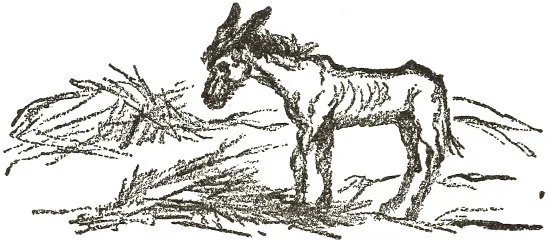
Old-fashioned scholars were fond of quoting the tale of the Donkey who, when placed between two bundles of hay, starved to death because he was unable to decide in favor of either.昔の学者たちは、こんな話をよく引き合いに出したものです。二つのほし草のたばのあいだに置かれたロバが、どちらにするか決められずに、うえ死にしてしまったという話です。 They slandered the worthy animal.学者たちは、このりっぱな動物に、ぬれぎぬを着せたのです。 The Donkey, who is no more foolish than any one else, would feast off both bundles.ロバは、ほかのだれよりもおろかなわけではありませんから、両方のたばをごちそうになるでしょう。 Will my Caterpillars show a little of his common-sense?私の毛虫たちは、ロバくらいの常識を少しは見せてくれるでしょうか。 Will they make up their minds to leave their closed circuit, to swerve to this side or that?とじた輪からぬけ出して、こちらかあちらへそれようと、決心するでしょうか。 I thought that they would, and I was wrong.私はそうすると思いましたが、まちがっていました。 I said to myself:私はこう考えていました。

“The procession will go on turning for some time, for an hour, two hours perhaps; then the Caterpillars will perceive their mistake.「行列はしばらくのあいだ、1時間か、もしかすると2時間くらい回り続けるだろう。それから毛虫たちはまちがいに気づくだろう。 They will abandon the deceptive road and make their descent somewhere or other.”まやかしの道をすてて、どこかから下りていくだろう。」

That they should remain up there, hard pressed by hunger and the lack of shelter, when nothing prevented them from going away, seemed to me unthinkable foolishness.何もじゃましていないのに、おなかもすき、休む場所もないまま、あそこに残っているなんて、私にはとても考えられないおろかさに思えました。 Facts, however, forced me to accept the incredible.けれども、事実は、信じられないことを私にみとめさせたのです。

The Caterpillars keep on marching round the vase for hours and hours.毛虫たちは、何時間も何時間も、つぼのまわりを行進し続けます。 As evening comes on, there are more or less lengthy halts; they go more slowly at times, especially as it grows colder.夕方になると、長かったり短かったりする休みが入ります。とくに寒くなるにつれて、ときどき進み方がゆっくりになります。 At ten o’clock in the evening the walk is little more than a lazy swaying of the body.夜の10時には、歩いているというより、体をのろのろゆらしているだけのようになります。 Grazing-time comes, when the other Caterpillars come crowding out from their nests to feast on the pine-needles.食事の時間がやってきます。ほかの毛虫たちは巣からぞろぞろ出てきて、松葉のごちそうを食べています。 The ones on the vase would gladly take part in the feast; they must have an appetite after a ten hours’ walk.つぼの上の毛虫たちだって、喜んでそのごちそうに加わりたいでしょう。10時間も歩いたあとですから、おなかがすいているはずです。 A branch of pine is not a hand’s breadth away from them.マツの枝は、毛虫たちから手のはば一つもはなれていません。 To reach it they have only to go down the vase; and the poor wretches, foolish slaves of their ribbon that they are, cannot make up their minds to do so.そこへ行くには、つぼを下りるだけでいいのです。それなのに、かわいそうな毛虫たちは、リボンのおろかなどれいになってしまって、そう決心することができません。 At half-past ten I leave them to go to bed; I am sure that during the night they will come to their senses.10時半、私はねるために毛虫たちのそばをはなれます。夜のうちにきっと正気にもどるだろうと思いながら。 At dawn I visit them again.夜明けに、また見に行きます。 They are lined up as on the day before, but motionless.毛虫たちは前の日と同じように並んでいますが、じっと動きません。 When the air grows a little warmer, they shake off their torpor, revive, and start walking again in their circle.空気が少しあたたかくなると、毛虫たちはぼんやりした状態からさめて元気をとりもどし、また輪になって歩きはじめます。

Things go on as before during the next day.次の日も、同じことが続きます。 The following night is very cold.その次の夜は、とても寒くなります。 The poor Caterpillars spend a bad night.かわいそうな毛虫たちは、つらい夜を過ごします。 I find them clustered in two heaps on the top of the vase, without any attempt at order.見ると、毛虫たちはつぼのふちで、列もばらばらに、二つのかたまりになっています。 They have huddled together to keep warm.あたたまるために、身をよせ合っていたのです。 Perhaps, now that they are divided into two parts, one of the leaders, not being obliged to follow a Caterpillar in front of him, will have the sense to break away.二つに分かれた今なら、リーダーのどちらかが、前の毛虫についていかなくてもよいので、思い切って列をはなれる知恵を出すかもしれません。 I am delighted to see them lining up by degrees into two distinct files, with two leaders, free to go where they please.毛虫たちがだんだん二つの別々の列に並んでいくのを見て、私はうれしくなります。二ひきのリーダーがいて、どこへでも好きな所へ行けるのです。 At the sight of their large black heads swaying anxiously from side to side, I am inclined to think they will leave the enchanted circle.大きな黒い頭が心配そうに左右にゆれるのを見ていると、まほうの輪からぬけ出すのではないかと思えてきます。 But I am soon undeceived.けれども、すぐにその思いはくつがえされます。 As the ranks fill out, the two sections of the chain meet and the circle is formed again.列がのびていくと、二つにわかれたくさりがまたつながって、ふたたび輪ができてしまいます。 Again the Caterpillars march round and round all day.また毛虫たちは、一日じゅうぐるぐる行進します。

The next night is again cold, and the Caterpillars gather in a heap which overflows both sides of the fatal ribbon.次の夜もまた寒く、毛虫たちは一つのかたまりになって、運命のリボンの両がわにあふれ出ます。 Next morning, when they awake, some of them who find themselves outside the track actually follow a leader who climbs to the top of the vase and down the inside.次の朝、目をさますと、コースの外に出ていた何びきかが、なんとリーダーについていきます。リーダーはつぼのふちのてっぺんにのぼり、内側を下りていきます。 There are seven of these daring ones.この勇かんな毛虫たちは七ひきです。 The rest pay no attention to them and walk round the circle again.残りの毛虫たちは七ひきには目もくれず、また輪を回りはじめます。

The Caterpillars inside the vase find no food there, and retrace their steps along their thread to the top, strike the procession again, and slip back into the ranks.つぼの中に入った毛虫たちはそこで食べ物を見つけられず、自分の糸をたどってふちまでもどり、行列にぶつかって、また列の中にすべりこんでしまいます。

Another day passes, and another.また一日が過ぎ、もう一日が過ぎます。 The sixth day is warm, and for the first time I see daring leaders, who, drunk with heat, stand on their hind-legs at the extreme edge of the vase and fling themselves forward into space.6日目はあたたかく、私は初めて、勇かんなリーダーたちを見ます。リーダーたちは暑さによったようになって、つぼのふちのいちばんはしで後ろあしで立ち上がり、何もない空中へ体をのり出すのです。 At last one of them decided to take the plunge.とうとう、そのうちの一ぴきが思い切ってとびこむことにしました。 He slips under the ledge and four follow him.その毛虫はふちの下へすべりこみ、四ひきがあとに続きます。 They go halfway down the vase, then their courage fails and they climb up again and rejoin the procession.つぼの半分まで下りたところで勇気がなくなり、またのぼって行列にもどってしまいます。 But a start has been made and a new track laid.けれども、最初の一歩はふみ出され、新しい道がしかれたのです。 Two days later, on the eighth day of the experiment, the Caterpillars—now singly, then in small groups, then again in strings of some length—come down from the ledge by starting on this fresh path.2日後、実験の8日目に、毛虫たちは、一ぴきずつ、それから小さなグループで、それからまたかなり長い列になって、この新しい道を通ってふちから下りてきます。 At sunset the last of the Caterpillars is back in the nest at the foot.日がしずむころには、最後の毛虫が、つぼの下の巣にもどりました。

I figure that they have walked for eighty-four hours, and covered a good deal more than a quarter of a mile while traveling in the circle.計算してみると、毛虫たちは84時間も歩き続け、輪を回りながら400メートルよりずっと長いきょりを進んだことになります。 It was only the disorder due to the cold nights that ever set them off the track and back to safety.毛虫たちがコースからはずれて無事にもどれたのは、寒い夜のせいで列がみだれたからにすぎませんでした。 Poor, stupid Caterpillars!かわいそうな、おばかさんの毛虫たち! People are fond of saying that animals can reason, but there are no beginnings of a reasoning power to be seen in them.動物にも考える力があると人はよく言いますが、この毛虫たちには、考える力のめばえさえ見られません。

the Pine Caterpillar の挿絵((1919 edition))

THE CATERPILLARS AS WEATHER PROPHETS天気を予言する毛虫

In January the Pine Caterpillar sheds his skin for the second time.1月になると、マツノギョウレツケムシは2度目の皮ぬぎをします。 He is not nearly so pretty afterwards, but he has gained some new organs which are very useful.そのあとは、前ほどきれいではありませんが、とても役に立つ新しい器官を手に入れています。 The hairs on the middle of his back are now of a dull reddish color, made paler still by many long white hairs mixed in with them.背中のまん中の毛は、くすんだ赤っぽい色になり、そこに長い白い毛がたくさんまじっているので、もっと色あせて見えます。 This faded costume has an odd feature.この色あせた服には、おかしなところがあります。 On the back may be seen eight gashes, like mouths, which open and close at the Caterpillar’s will.背中に、口のような切れ目が八つあって、毛虫が思いのままに開いたりとじたりできるのです。 When the mouths are open there appears in each of them a little swelling, which seems extremely sensitive, for at the slightest irritation it goes in again.口が開くと、その一つ一つに小さなふくらみがあらわれます。とても感じやすいらしく、ほんの少ししげきしただけで、また引っこんでしまいます。

What is the use of these queer mouths and tumors, as we call the little swellings?このおかしな口と、こぶ(小さなふくらみをこうよぶことにします)は、何の役に立つのでしょう。 Certainly not to breathe with, for no one, not even a Caterpillar, breathes from the middle of his back.もちろん息をするためではありません。毛虫だって、だれも背中のまん中で息をしたりはしないのですから。 Let us consider the habits of the Pine Caterpillar, and perhaps we shall find out.マツノギョウレツケムシのくらし方を考えてみれば、わかるかもしれません。

The Pine Caterpillar is most active during the winter, and at night.マツノギョウレツケムシは、冬に、そして夜に、いちばん活発に動きます。 But if the north wind blow too violently, if the cold be too piercing, if it snow, or rain, or if the mist thicken into an icy drizzle, the Caterpillars prudently stay at home, sheltering under their waterproof tent.けれども、北風がはげしすぎたり、寒さがきびしすぎたり、雪や雨がふったり、きりがこくなってこおるようなきり雨になったりすると、毛虫たちはかしこく家にとどまり、水を通さないテントの下で身を守ります。

It would be convenient to foresee these disagreeable weather conditions.こうしたいやな天気を前もって知ることができたら、便利でしょう。 The Caterpillar dreads them.毛虫はそういう天気がこわいのです。 A drop of rain sets him in a flutter; a snowflake exasperates him.雨が一てきふっただけでおろおろし、雪がひとひらふっただけでいらいらします。 To start for the grazing-grounds at dark of night, in uncertain weather, would be dangerous, for the procession goes some distance and travels slowly.天気がはっきりしない夜の暗やみに食事の場所へ出かけるのは、あぶないことでしょう。行列はかなり遠くまで行き、ゆっくり進むからです。 The flock would have a bad time of it before regaining shelter, if they were caught in a sudden storm, such as are frequent in the bad season of the year.寒い季節によくあるような急なあらしにあったら、群れは家にもどるまでにひどい目にあうでしょう。 Can the Pine Caterpillar possibly be able to foretell the weather?マツノギョウレツケムシには、ひょっとして天気を予報する力があるのでしょうか。 Let me tell how I came to suspect this.私がどうしてそう考えるようになったのか、お話ししましょう。

One night some friends came to see my Caterpillars in the greenhouse start on their nightly pilgrimage.ある夜、何人かの友だちが、温室の毛虫たちが毎晩の行進に出発するのを見にやってきました。 We waited till nine o’clock, then went in.私たちは9時まで待って、それから温室に入りました。 But, but ... what is this?ところが、ところが……これはどうしたことでしょう。 Not a Caterpillar outside the nests!巣の外に毛虫が一ぴきもいないのです! Last night and on the nights before they came out in countless numbers; to-night not one is to be seen.ゆうべも、その前の夜も、数えきれないほど出てきたのに、今夜は一ぴきも見えません。 We waited till ten o’clock, till eleven, till midnight.私たちは10時まで、11時まで、真夜中まで待ちました。 Then, very much mortified, I had to send my friends away.それから、すっかりきまり悪い思いで、友だちに帰ってもらうしかありませんでした。

Next day I found that it had rained in the night and again in the morning, and that there was snow on the mountains.次の日、夜のあいだに雨がふり、朝にもまたふったこと、そして山には雪がつもったことがわかりました。 Had the Caterpillars, more sensitive than any of us to atmospheric changes, refused to venture out because they had known what was going to happen?毛虫たちは、空気の変化を私たちのだれよりも感じとる力が強くて、何が起こるかわかっていたから、外に出ようとしなかったのでしょうか。 After all, why not?そうだとしても、ふしぎはないでしょう? I thought I would keep on observing them.私は観察を続けてみようと思いました。

I found that whenever the weather chart in the newspaper announced a coming depression of the atmosphere, such as is made by storms, my greenhouse Caterpillars stayed at home, though neither rain, snow, nor cold could affect them in their indoor shelter.すると、新聞の天気図が、あらしのときのような低気圧が近づいていると知らせるときには、いつも温室の毛虫たちは家から出てこないことがわかりました。温室の中にいる毛虫には、雨も雪も寒さも、何のえいきょうもないのにです。 Sometimes they foretold the storm two days ahead.ときには、2日も前からあらしを予報しました。 Their gift for scenting bad weather very soon won the confidence of the household.悪い天気をかぎつける毛虫たちの才能は、まもなく家族みんなに信用されるようになりました。 When we had to go into town to buy provisions, we used to consult our Caterpillars the night before; and according to what they did, we went or stayed at home.町へ食料を買いに行かなければならないときは、前の晩に毛虫にたずねるのがならわしになりました。毛虫たちのようすしだいで、出かけたり家にいたりしたのです。

The second dress of the Pine Caterpillar, therefore, seems to bring with it the power to foretell the weather.ですから、マツノギョウレツケムシの2番目の服には、天気を予報する力がそなわっているようです。 And this power is probably given by the wide mouths, which yawn open to sample the air from time to time and to give a warning of the sudden storm.そしてこの力は、たぶん、あの大きな口がくれるのでしょう。ときどき大きく開いて空気をためし、急なあらしを知らせてくれるのです。

THE PINE MOTHマツノギョウレツガ

When March comes, the Caterpillars leave their nest and their pine-tree and go on their final trip.3月になると、毛虫たちは巣とマツの木をはなれて、最後の旅に出ます。 On the twentieth of March I spent a whole morning watching a file about three yards long, containing about a hundred of the Caterpillars, now much faded as to their coats.3月20日、私は午前中ずっと、長さ3メートルほどの行列をながめて過ごしました。毛虫はおよそ100ぴきで、そのころには毛の色もすっかりあせていました。 The procession toils grimly along, up and down over the uneven ground.行列は、でこぼこの地面を上ったり下ったりしながら、もくもくと苦労して進みます。 Then it breaks into groups, which halt and form independent processions.それからいくつかのグループに分かれ、それぞれ止まって、別々の行列をつくります。

They have important business on hand.大事な仕事が待っているのです。 After two hours or so of marching, the little procession reaches the foot of a wall, where the soil is powdery, very dry, and easy to burrow in.2時間ほど行進すると、小さな行列はへいのふもとにたどり着きます。そこの土は粉のようで、とてもかわいていて、もぐりやすいのです。 The Caterpillar at the head of the row explores, and digs a little, as if to find out the nature of the ground.列の先頭の毛虫があたりを調べ、土の性質をたしかめるかのように、少しほってみます。 The others, trusting their leader, follow him blindly.ほかの毛虫たちはリーダーを信じて、何も考えずについていきます。 Whatever he decides will be adopted by all.リーダーが決めたことは、何でもみんなが受け入れます。 Finally the leading Caterpillar finds a spot he likes; he stops, and the others break up into a swarming heap.ついに先頭の毛虫が気に入った場所を見つけます。止まると、ほかの毛虫たちは列をくずして、うじゃうじゃとしたかたまりになります。 All their backs are joggling pell-mell; all their feet are raking; all their jaws are digging the soil.みんなの背中がごちゃごちゃにゆれ、みんなのあしが土をかき、みんなのあごが土をほります。 Little by little, they make a hole in which to bury themselves.少しずつ、自分たちがもぐるための穴をつくっていきます。 For some time to come the tunneled soil cracks and rises and covers itself with little mole-hills; then all is still.しばらくのあいだ、トンネルのほられた土はひびわれてもり上がり、モグラのほったあとのような小さな土の山でおおわれます。それから、すべてが静かになります。 The Caterpillars have descended to a depth of three inches, and are weaving, or about to weave, their cocoons.毛虫たちは8センチほどの深さまでもぐって、まゆを編んでいるか、これから編もうとしているのです。

Two weeks later I dug down and found them there, wrapped in scanty white silk, soiled with dirt.2週間後にほってみると、毛虫たちはそこにいて、土でよごれた、うすい白い絹にくるまれていました。 Sometimes, if the soil permits, they bury themselves as deep as nine inches.土によっては、23センチもの深さまでもぐることもあります。

How, then, does the Moth, that delicate creature, with her flimsy wings and sweeping antennæ-plumes, make her way above ground?では、うすい羽と、ふさふさの羽かざりのようなしょっかくを持つ、きゃしゃな生き物のガは、どうやって地上に出てくるのでしょう。 She does not appear till the end of July or in August.ガがあらわれるのは、7月の終わりか8月です。 By that time the soil is hard, having been beaten down by the rain and baked by the sun.そのころには、土は雨にたたかれ、日に焼かれて、かたくなっています。 Never could a Moth break her way through unless she had tools for the purpose and were dressed with great simplicity.そのための道具を持ち、とても身軽なかっこうをしていなければ、ガはとても土をつきやぶって出られないでしょう。


the Pine Caterpillar の挿絵((1919 edition))

From some cocoons that I kept in test-tubes in my laboratory I found that the Pine Moth, on coming out of the cocoon, has her finery bundled up.実験室で試験管に入れておいたまゆを調べて、マツノギョウレツガはまゆから出てくるとき、美しいかざりを小さくまとめていることがわかりました。 She looks like a cylinder with rounded ends.両はしがまるいつつのような形をしています。 The wings are pressed against her breast like narrow scarfs; the antennæ have not yet unfolded their plumes and are turned back along the Moth’s sides.羽は細いスカーフのように胸におしつけられ、しょっかくはまだ羽かざりを広げておらず、体のわきにそって後ろに向いています。 Her hair fleece is laid flat, pointing backwards.毛皮の毛は、後ろ向きにぺったりとねかされています。 Her legs alone are free, to help her through the soil.あしだけが自由に動き、土の中を進むのを助けます。

She needs even more preparation, though, to bore her hole.けれども、穴をほり進むには、もっと用意が必要です。 If you pass the tip of your finger over her head you will feel a few very rough wrinkles.ガの頭を指先でなでてみると、とてもざらざらしたしわがいくつかあるのがわかります。 The magnifying-glass shows us that these are hard scales, of which the longest and strongest is the top one, in the middle of her forehead.虫めがねで見ると、それはかたいうろこで、いちばん長くて強いのが、おでこのまん中のいちばん上にあるうろこです。 There you have the center-bit of her boring-tool.これが、ガの穴ほり道具の、ドリルの先なのです。 I see the Moths in the sand in my test-tubes butting with their heads, jerking now in one direction, now in another.試験管の砂の中で、ガたちが頭でつつき、あちらへ、こちらへと体をぐいぐい動かしているのが見えます。 They are boring into the sand.砂に穴をほっているのです。 By the following day they will have bored a shaft ten inches long and reached the surface.次の日までには、25センチもの長さのたて穴をほって、地上に着いているでしょう。

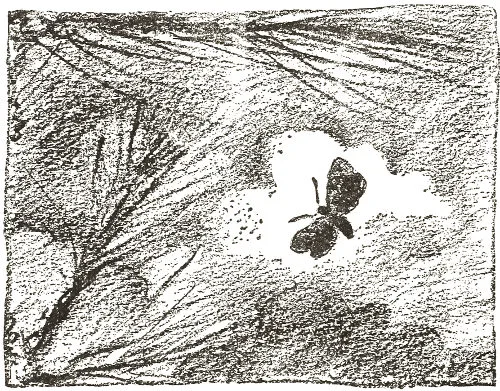
When at last the Moth reaches the surface, she slowly spreads her bunched wings, extends her antennæ, and puffs out her fleece.ついに地上にたどり着くと、ガはまとめていた羽をゆっくり広げ、しょっかくをのばし、毛皮をふくらませます。 She is all dressed now, as nicely as she can be.これで、せいいっぱいすてきに身じたくがととのいました。 To be sure, she is not the most brilliant of our Moths, but she looks very well.たしかに、いちばんはなやかなガというわけではありませんが、なかなかりっぱに見えます。 Her upper wings are gray, striped with a few crinkly brown streaks; her under-wings white; throat covered with thick gray fur; abdomen clad in bright-russet velvet.上の羽は灰色で、ちぢれた茶色のすじが何本か入っています。下の羽は白く、のどは厚い灰色の毛でおおわれ、おなかは明るい赤茶色のビロードを着ています。 The tip end of her body shines like pale gold.体のいちばん先は、うすい金色に光っています。 At first sight it looks bare, but it is not: it is covered with tiny scales, so close together that they look like one piece.ちょっと見ると何もないように見えますが、そうではありません。とても小さなうろこがびっしりついていて、一まいのように見えるのです。

There is something interesting about these scales.このうろこには、おもしろいことがあります。 However gently we touch them with the point of a needle, they fly off in great numbers.針の先でどんなにそっとさわっても、たくさんとび散ってしまうのです。 This is the golden fleece of which the mother robs herself to make the nest or muff for her eggs at the base of the pine-needles which we spoke of at the beginning of the story.これが、お話のはじめにお話しした、松葉のつけねにある卵の巣、つまりマフをつくるために、母ガが自分の体からはぎとる金色の毛皮なのです。

the Pine Caterpillar の挿絵((1919 edition))

さいごまで よめたね!

「よめた!」をおすと、スタンプがもらえて おはなしの森 に木や動物がふえるよ。

PDFで印刷(A4 29まい)

おうちの方・大人の学習者へ
つぼのふちを84時間も回り続けた実験は、昆虫記でも有名です。背中の「口」は、今では天気を感じる器官ではなく、かゆみを起こす毒の毛を出す所だとわかっています。この毛虫を見つけても、さわらないようにしましょう。

出典台帳 — このページの「本物」の証明

英文
原文そのまま(1語も書きかえていません)。Project Gutenberg 電子書籍 #45812(J. Henri Fabre (adapted by Louise Seymour Hasbrouck)、1919年の本)
挿絵
(1919 edition)(同じ本の初版の挿絵。パブリックドメイン)
朗読
realisticspeakers(LibriVox のボランティア。Insect Adventures「The Pine Caterpillar」)。録音はパブリックドメインで、元のファイルをそのまま使っています(音質を落とす加工なし)。
照合
朗読を音声認識(Whisper)で文字起こしし、原文と1語ずつ照らし合わせました。一致率 96.3%
文が光るタイミングはこの照合で決めています。
和訳
和訳はAIと人が作成。AIは3重チェック。人の目でも順次確認しています。英文には一切手を入れていません。